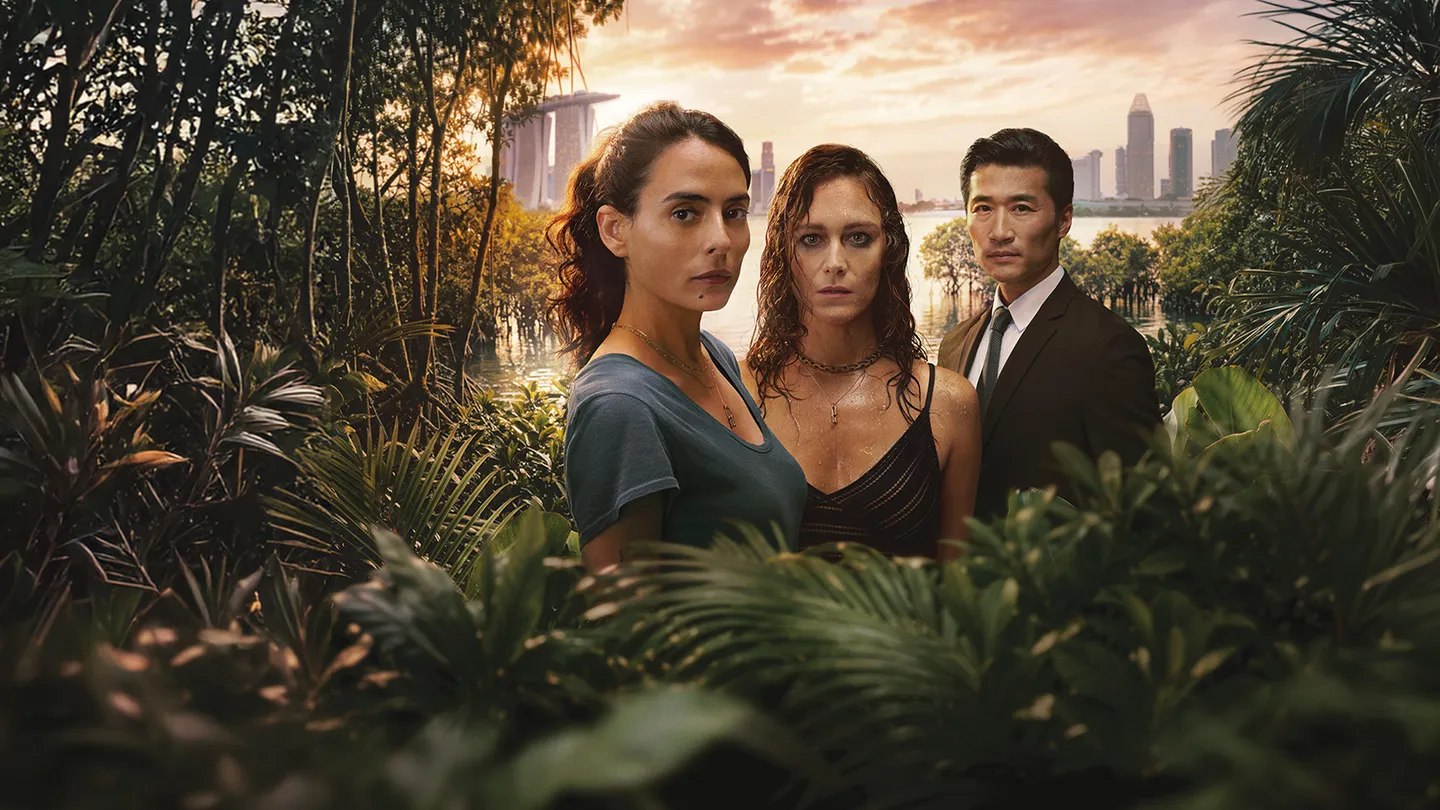
CANAL+’s new six-part crime thriller Singapura premiered on 2 November 2026 with Singapore in its title, its setting and its promotional imagery. Yet the people at the centre of its story are not Singaporeans. They are French expatriates, whose marriages, secrets and moral crises unfold against a city that rarely gets to speak for itself.
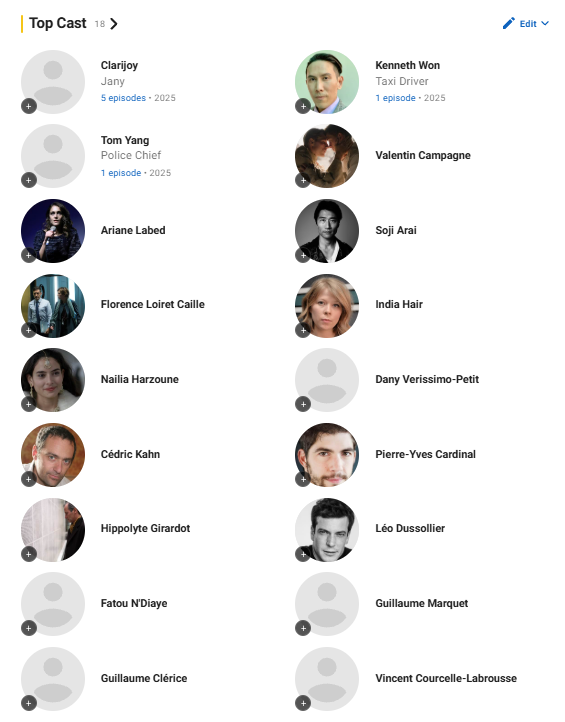
The official CANAL+ cast list features Naïlia Harzoune, Soji Arai, India Hair, Ariane Labed, Cédric Kahn, Pierre-Yves Cardinal, Léo Dussollier, Florence Loiret Caille, Dany Verissimo-Petit, Hippolyte Girardot and Valentin Campagne. None is Singaporean.
The series follows Justine, a Frenchwoman who arrives in Singapore with her family and enters a tightly knit community of French expatriates. When a murder disrupts their privileged world, she joins Inspector Adam Wong to investigate the secrets, lies and betrayals beneath its polished surface.
Singapore as a Stage
Singapura is adapted from Elsa Marpeau’s novel L’Expatriée, and its perspective is unmistakably French. Singapore supplies the heat, the skyline, the mangroves and the sense of dislocation; the French characters supply the drama.
That is a legitimate creative choice. French television can tell stories about French people abroad, and expatriation is a rich subject. But Singapura does not merely centre French expatriates—it appears to reduce Singapore itself to an exotic, humid backdrop for their inner lives.
Read more: Why ‘Ah Girl’ Shows That Asian Family Silence Hurts Children More Than Divorce
The title makes this tension especially conspicuous. Singapura invokes the Malay name for Singapore, yet the series is less about Singapore than about what Singapore does to French people who move there.
Locals at the Edges
The most prominent local institution in the story, the police investigation, is led by Inspector Adam Wong, played by Japanese actor Soji Arai. Singapore’s legal and civic authority is therefore embodied by another non-Singaporean performer, while the French ambassador, French families and French socialites occupy the series’ principal roles.
The supporting roles reinforce the pattern. Clarijoy plays Jany, Kenneth Won plays a taxi driver, and Tom Yang plays the police chief. These characters may add local texture, but they do not appear to possess the narrative centrality given to the French expatriate circle.
A taxi driver appears in the credits; a French expatriate carries the series. That asymmetry reflects a familiar screen convention: locals provide service, atmosphere and procedural legitimacy, while outsiders receive complexity, desire, secrets and emotional depth.
View this post on Instagram
There is nothing inherently wrong with a story about expatriates. The problem is when expatriates become the only people with an inner life.
Singapore is not merely a luxury backdrop for French dissatisfaction. It is a country of nearly six million people, with its own histories, class divisions, languages, ambitions and everyday tensions. A crime thriller set there could have asked what the French expatriate bubble looks like from the outside—from a taxi driver, a domestic worker, a neighbour, a police officer or a Singaporean who sees expatriate privilege up close.
Instead, Singapura seems to reproduce the insularity it may wish to examine. Its French characters look at Singapore, but Singaporeans are seldom permitted to look back.
A Missed Opportunity
CANAL+ calls Singapura a French original series, and it was created by Elsa Marpeau from her own novel. A French viewpoint is not illegitimate; it is simply incomplete when presented as the whole story of a city.
The series could still have included Singaporeans as fully realised characters: colleagues, friends, rivals, witnesses, investigators, family members or people whose lives are changed by the same crime. It did not need to abandon its French protagonists to do so. It only needed to let Singaporeans exist beyond the margins of their story.
Read more: ‘Attack on Titan’ Musical World Tour Begins April 2027, Debuts in Singapore
Singapura uses Singapore’s name, streets and skyline. But by making French expatriates the story and Singaporeans the scenery, it turns a city into a set—and misses the richer, more honest thriller that could have been told.