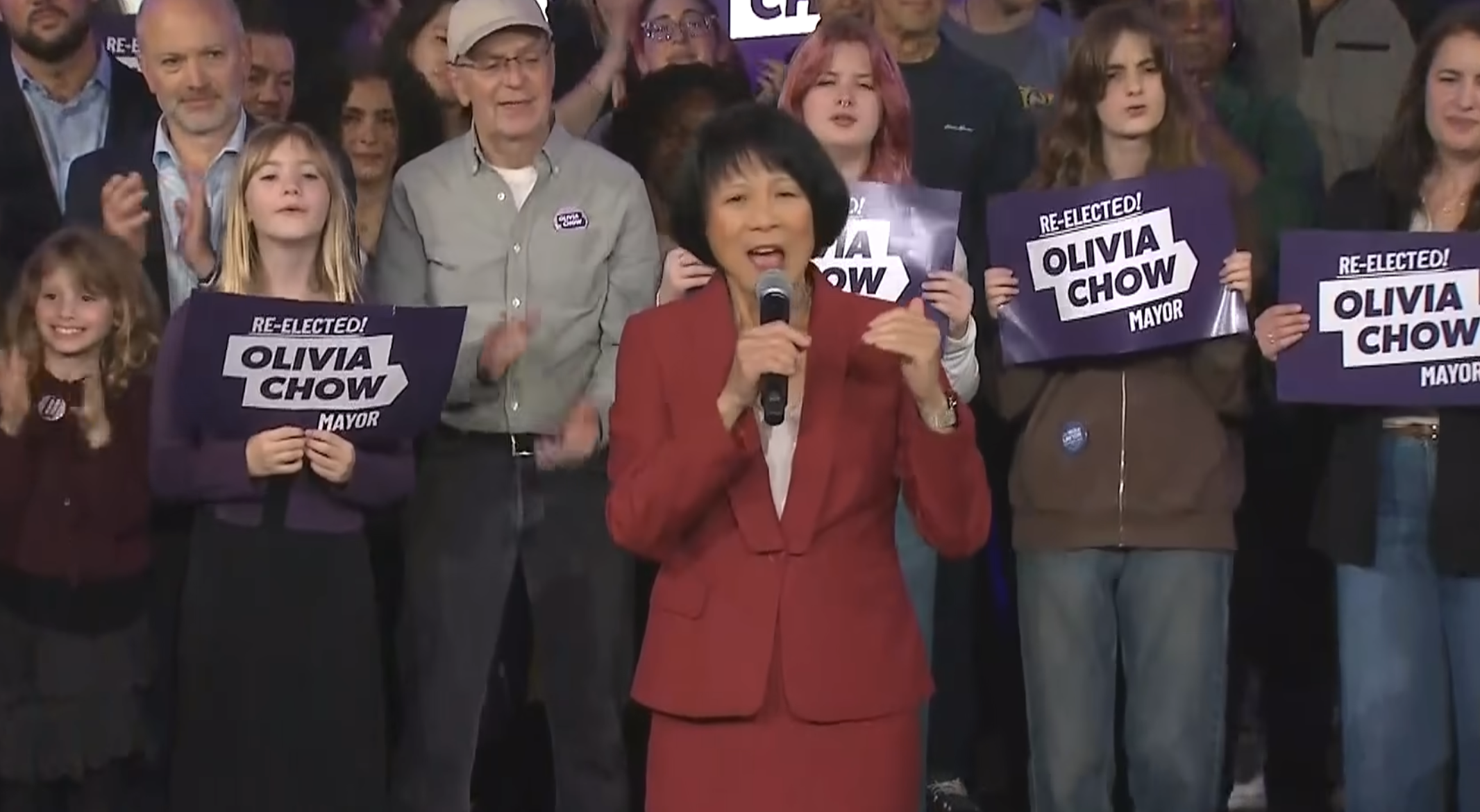
Voters in Canada’s largest metropolis have given Olivia Chow a ringing mandate to steer the city for another four years.
Chow secured a commanding victory in the Toronto mayoral election on Monday, 26 October 2026, capturing 54 per cent of the ballots cast, amounting to roughly 532,000 votes. Her principal challenger, former Beaches-East York city councillor Brad Bradford, trailed with 41 per cent, collecting around 404,000 votes.
The double-digit gap surprised analysts who had predicted a nail-biter following weeks of tight late-autumn polling.
Chow first assumed the mayoralty after winning the 2023 by-election to fill the vacancy left by John Tory. Her re election marks her first full four-year term in office, extending an unbroken historic streak: no incumbent Toronto mayor seeking re election has ever lost.
Taking the stage before an ecstatic crowd at her campaign headquarters, the 69-year-old leader pledged to represent every corner of the municipality regardless of political loyalty.
“Every person who calls Toronto home, whatever your background, whatever you believe, whoever you love, wherever you live. I will listen to you,” Chow stated. “I will listen to you. I will stand up for you, and I will work every day to earn your trust because that’s what being mayor means to me – it means serving everyone.”
Immigrant Roots and Decades on the Front Lines
Chow’s municipal victory represents another milestone in a public life that spans more than four decades.
She immigrated to Canada from Hong Kong at age 13, settling with her parents in a modest apartment in Toronto’s St. James Town neighbourhood. Mentored by federal New Democratic Party politician Dan Heap, she won election to the Toronto school board in 1985 before stepping up to City Council in 1991 alongside her late husband, federal NDP leader Jack Layton. She later served as a federal Member of Parliament for Trinity-Spadina between 2006 and 2014.
During her victory remarks, Chow reflected on her personal path and the community that welcomed her family decades ago.
Read more: From Hong Kong’s Golden Era to Corporate Hollywood: Director Peter Chan’s Cautionary Tale
“I have never forgotten what Toronto gave my family and I have spent my life trying to give back,” Chow told supporters. “Because Toronto is a city that believes in people. A progressive city, a city of compassion, a city that welcome newcomers.”
She framed her campaign around common community investments: “A city that stands up for working people, celebrates our differences and believes everyone deserves a fair chance – not because we always agree, we don’t, but because deep down we understand something important. We are stronger when we care for each other, and that is the Toronto I believe in. That is the Toronto we voted to keep building tonight.”
View this post on Instagram
Tackling Housing and Everyday Living Costs
Chow based her campaign platform on expanding municipal social safety nets and confronting a worsening metropolitan affordability squeeze.
Her second-term agenda prioritises the construction of more affordable rental housing, establishing free school lunch programmes for local children, and implementing a 10-ride fare cap alongside transit-signal priorities for Toronto Transit Commission (TTC) vehicles. She has also promised targeted tax relief for independent neighbourhood grocers to help reduce shelf prices.
During her initial term, Chow stabilised municipal finances through structured property tax adjustments and negotiated a landmark infrastructure deal transferring operating costs for the Gardiner Expressway and Don Valley Parkway directly to the Ontario provincial government.
Read more: “Don’t Let It Go to Waste”: GOP Candidate Suggests Sending Kittens to Chinese Restaurants
Her opponent ran an aggressive law-and-order campaign, pledging tax reductions, additional police hiring, and the creation of a stand-alone public corporation to run the city’s water utility. The Chow campaign countered strongly, warning voters that restructuring the water system would risk creeping utility privatisation.
Bradford conceded the race on Monday night, adopting an open tone after an intense campaign season.
“When the mayor succeeds, whether that’s mayor Bradford or mayor Chow or anybody else, Toronto succeeds,” Bradford told his campaign gathering. “I want her to succeed. And my supporters and the nearly 400,000 people that cast a vote for us tonight, they want her to succeed too. We all love this city. We know it can be better.”
A Progressive Council Majority at City Hall
Chow begins her new term alongside a City Council heavily stacked with like-minded allies.
Returning and newly elected councillors include former federal MP Nate Erskine-Smith, Chow’s stepson Mike Layton, and prominent housing advocate Diana Chan McNally, who becomes the first tenant renter to hold a seat on Toronto City Council.
With substantial council support behind her core policies, Chow confirmed she does not intend to rely on provincial strong-mayor veto powers to pass her legislative agenda.
Chow reminded her team that the hard work starts immediately.
“Tomorrow we get back to work because an election victory isn’t the finish line: it is a responsibility,” she said. “We’ve come a long way together and we have so much more to do, so let’s keep moving forward together with each other for every neighbourhood, every community, every person. Let’s get to work building the Toronto we love.”