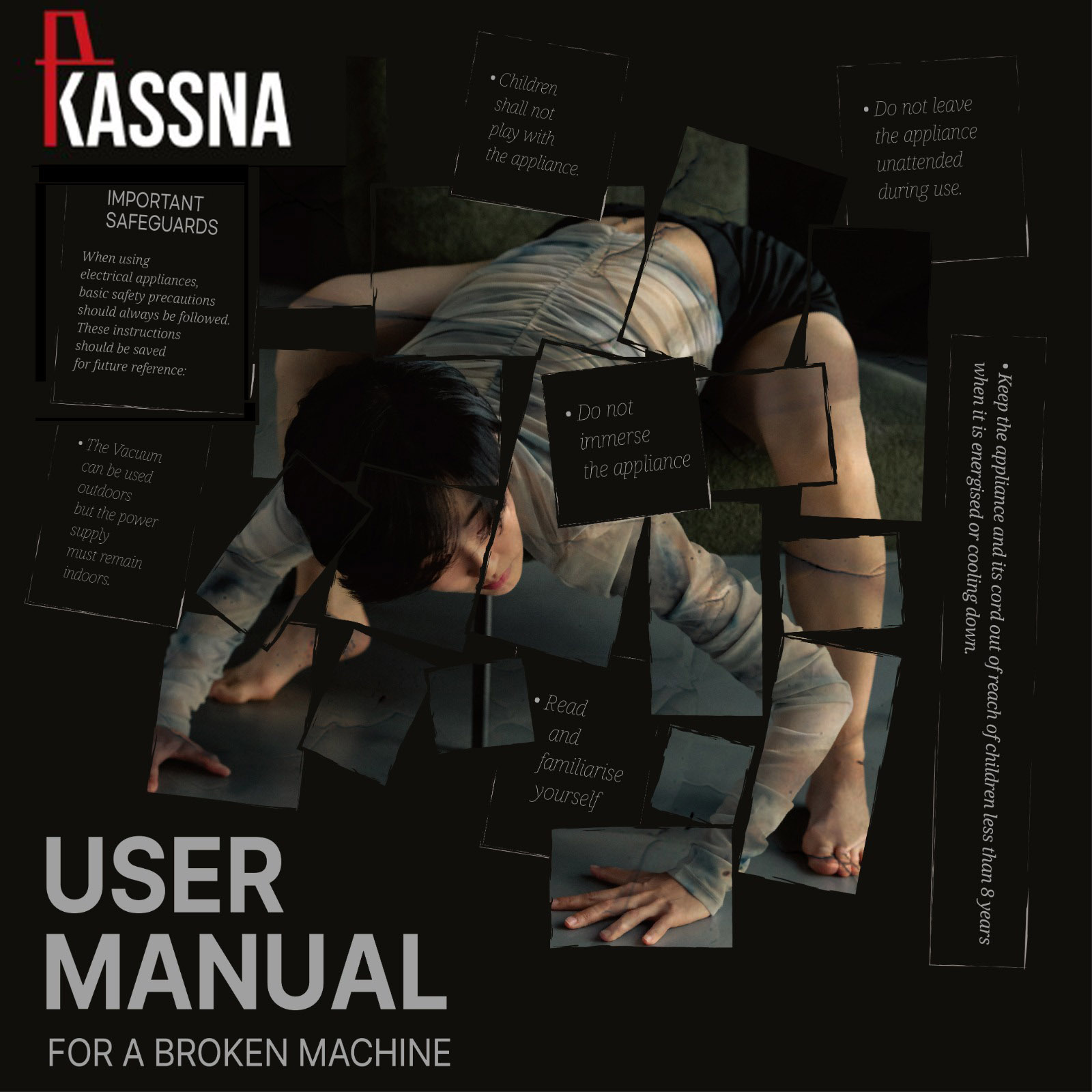
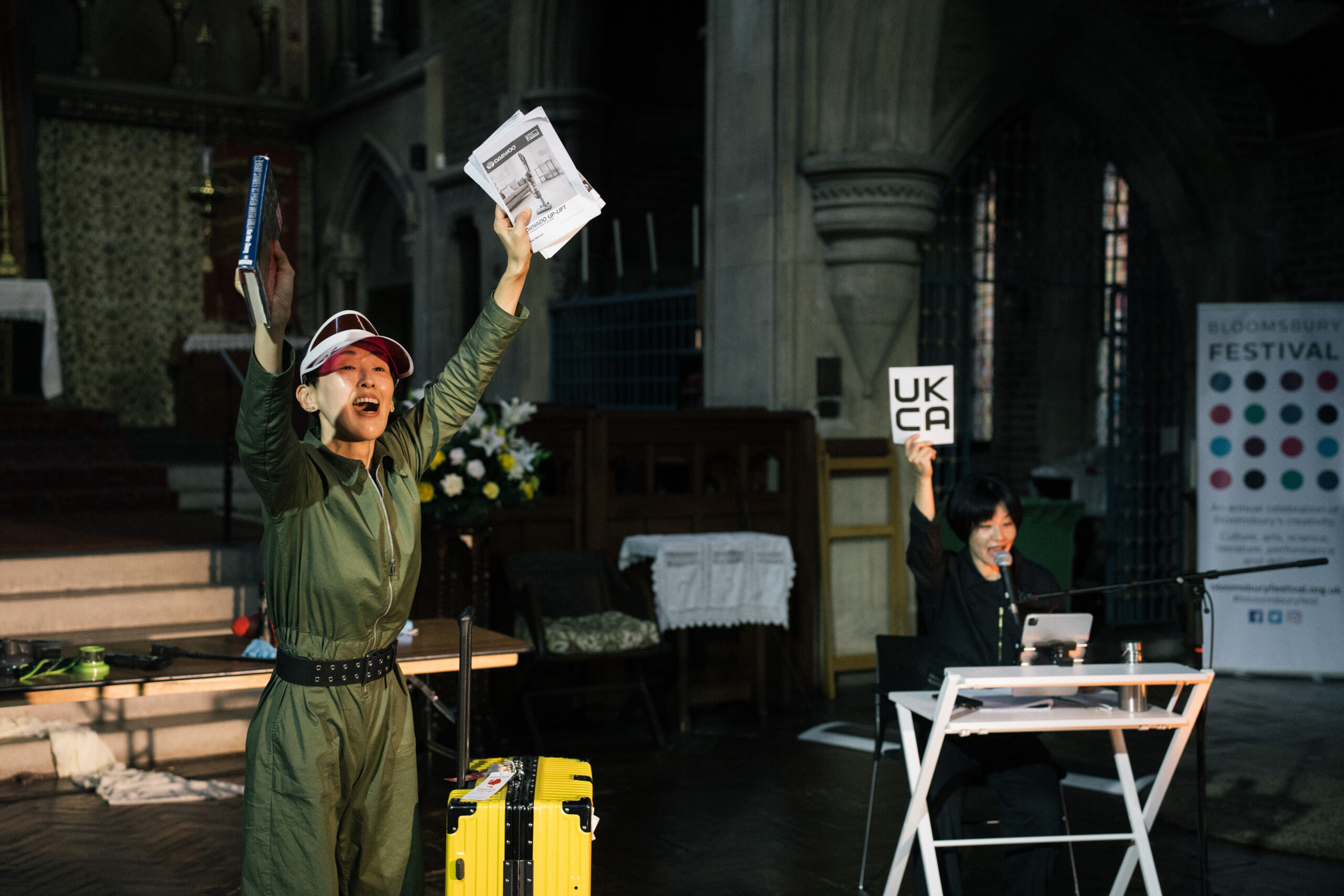
In the middle of a stage at Theatro Technis in Camden, an old Daewoo vacuum cleaner sits in pieces. It is the sort of domestic appliance that filled flats across Seoul in the nineteen-nineties, manufactured by a conglomerate that dissolved during the Asian financial crisis. Three performers gather around the plastic casing with a printed guide in hand. They read the repair steps aloud. They recite trouble-shooting questions, translate the warnings into physical routines, and try to restore suction to an object that has ceased to function.
This is the premise of User Manual for a Broken Machine, a sixty-minute production by the performance group KASSNA. The collective, led by South Korean artists Namoo Chae Lee and Suyoung Park, presents the work at the Voila! Theatre Festival on 11 and 12 November.
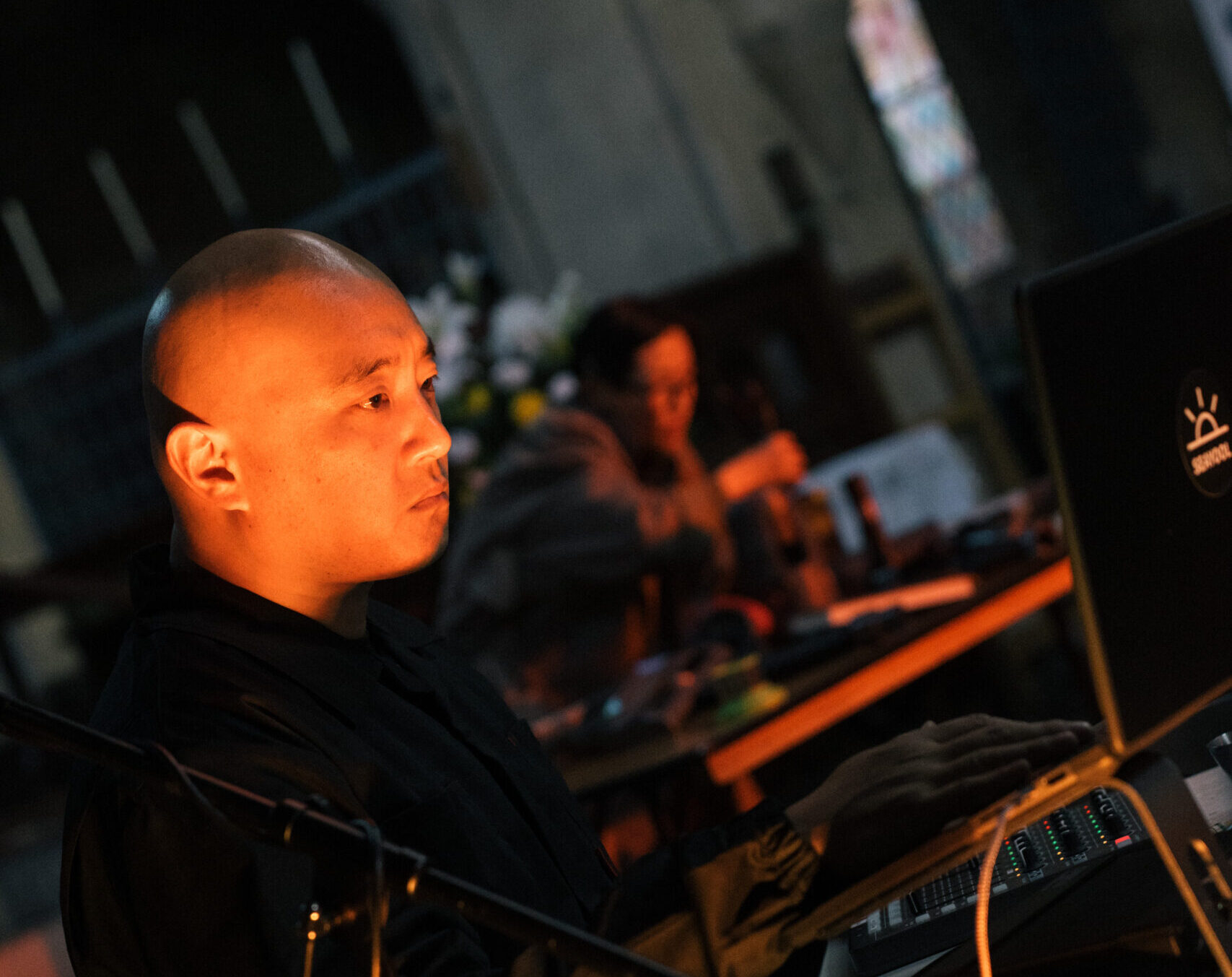
The piece treats technical prose as dramatic text. Eden Jun, Suyoung Park, and Seayool Kim take on the roles of Reader, Mover, and Player. Together, they work through the sequence of maintenance routines, treating manufacturer instructions as scripts for physical movement. The performers repeat translated passages until the language begins to unravel. An electronic score, composed and performed live by Seayool, pairs traditional Korean instrumentation with synthesised audio. Video projections from multimedia designer Wilfred Wong wash over the set, mixing recorded video with live digital avatars.
The name KASSNA comes from kat, the horsehair hat worn by men during Korea’s Joseon period. The term later became a regional insult in the south of the peninsula, used to describe women who acted outside prescribed boundaries. The collective adopted the name to stage works that address social expectations placed on East Asian women.
In User Manual for a Broken Machine, the pressure to perform function attaches to both the appliance and the people handling it. South Korea’s industrial expansion after the Korean War relied on heavy labour and strict workplace hierarchy. Conglomerates like Daewoo built cars, electronics, and shipping vessels while workers maintained rigorous hours. The script draws a direct parallel between an appliance that overheats and a worker who collapses from overwork. When an individual stops functioning within an economic system, common practice treats the breakdown as an individual failure. KASSNA reverses that perspective, asking whether the manual itself is the source of the malfunction.
The performance arrives in London following an initial showing at Holy Cross Church during the Bloomsbury Festival in October. For the run at Theatro Technis, director Namoo Chae Lee has expanded the production. The staging incorporates automated avatars and live video cameras that film the audience and the cast in real time. These images project onto screens behind the actors, making the inspection process visible from several vantage points at once.
Choreographer Suyoung Park designed the physical vocabulary around the gestures of mechanical maintenance. The cast checks cords, tests switches, and bends over circuit boards. Over the course of an hour, the physical actions become deliberate rituals of refusal, suggesting that stepping away from productivity can be an intentional choice.
Tickets for the London performances on 11 and 12 November are available directly on the Voila! Theatre Festival website.