Patrick is 72, a retired military man and a grandfather of three. He spent his life spotting threats. Then his phone rang. The caller said they were from his bank.
They knew what he had recently bought online, item by item. There was a problem with his account; it was urgent and needed fixing now. By the time Patrick entered his username and password, about US$10,000 was gone. He moved fast enough to get the bank to close the account before it got worse.
“I was so convinced it was the bank because the caller was able to share about my e-commerce purchases accurately.”
A woman in her mid-60s, a retiree, got a video call. On the screen, police officers in uniform told her she was linked to insurance fraud. They knew her policy. They knew her details. She lost more than S$20,000.
“When I saw the police officers in uniform, I was immediately convinced they were legitimate, as it was a video call. They were able to share my insurance details accurately, and their presence brought a sense of authority that immediately made me comply with what they said and believe them.”
Read more: ‘Singapura’: When French Expats Are the Story and Singaporeans Become the Scenery
Nicholas is in his late 20s. He met someone on a dating app. They clicked. They talked every day. Eventually, the conversation turned to crypto, and his match showed him how to invest. The first returns were small but real, and he could see them land. So he put in more. And more. By the end, he had lost close to $100,00, to someone he had never met in person.
Three people. Three generations. Three completely different scams. One military man trained to spot danger, one careful retiree, one digital native who grew up online. None of them were careless. All of them were played.
It’s Not Just Your Grandparents
We love to picture scam victims as confused old folks who can’t work a smartphone. The data disagrees. In Singapore, police figures show that in 2025, 85.2% of scam victims were youths, young adults, and adults under 65.
Malay Mail reported this month on a 22-year-old final-year business student in Kuching. She was looking for part-time work on Facebook and found an “online accounting job” paying RM100 a day. The job, it turned out, was receiving money from strangers into her bank account and passing it on.
Read more: Why ‘Ah Girl’ Shows That Asian Family Silence Hurts Children More Than Divorce
More than RM32,000 moved through her accounts in about a week. She was never paid. She only realized what had happened when her bank account was frozen, and three police reports had already been filed against it.
She didn’t just get scammed. They turned her into a money mule, a link in the very chain that robs people like Patrick.
Scammers don’t target a type of person. They target a type of moment: when you’re stressed, lonely, broke, scared,d or in a hurry. And everybody has those.
Scams Are Southeast Asia’s Most Profitable Start-Up
Zoom out and the numbers stop sounding like crime statistics and start sounding like GDP.
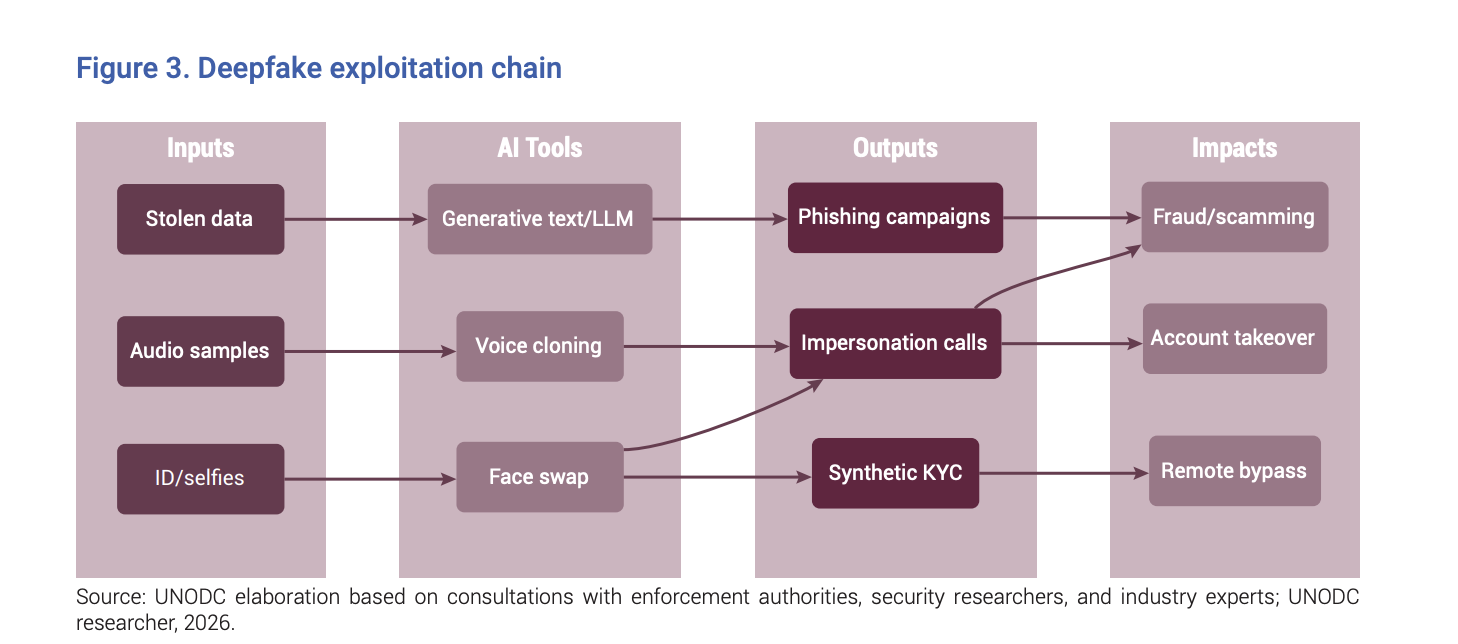
Southeast Asians lost an estimated US$23.6 billion to scams in 2024, according to the Global Anti-Scam Alliance, and that’s only what got reported. A July 2026 UNODC report put losses across East and Southeast Asia, Australia and New Zealand at up to US$114.1 billion in 2025, roughly triple the 2023 estimate.
The UN says the business model “looks like corporate franchising”. These aren’t lone hackers in hoodies. They’re operations with org charts, scripts and KPIs.
Singapore lost S$913.1 million to scams in 2025. Malaysian police reported more than 34,000 cases and around RM1.2 billion in losses in 2023.
And here’s the stat I can’t stop thinking about. A regional survey cited by The ASEAN Magazine found that 78% of adults believe they can recognise a scam, yet nearly two-thirds have already experienced one. Collectively, we are very confident and very wrong. Ask anyone if they’d fall for a scam, and they’ll say no. So would I.
Same Tricks, Different Costumes
Line the four stories up and the costumes change: a bank, the police, a lover, an employer. The tricks underneath don’t.
- “This is your bank calling.” Borrowed authority. A uniform on a video call convinced the retiree more than any argument could. Scammers impersonate the people we’re raised to obey.
- Hurry, decide now. Patrick wasn’t given time to hang up and call his bank back. Urgency is designed to stop you thinking, and it works.
- Small win, then bigger. Nicholas saw real returns before he lost real money. The Kuching student was promised easy pay for an easy task. A harmless first step makes the next one feel normal.
- “We know you.” Patrick’s purchase history. The retiree’s insurance policy. Personal details, often bought from data leaks, make a stranger feel like an insider.
Notice what’s missing from that list: stupidity. These tricks don’t exploit a lack of intelligence. They exploit things we’re supposed to have, like respect for authority, a sense of responsibility, hope, and trust.
That’s why “just be careful” is useless advice. Patrick was careful for a living.
You Can’t Learn to Swim by Reading About Water
Be honest. You’ve sat through a scam awareness talk. At work, at the community centre, maybe a very patient officer with a projector and 47 slides of scam types. You nodded. You took the free lanyard. You forgot most of it by dinner.
This isn’t a dig at the people giving those talks. They do important work. The problem is the format. Knowing scams exist isn’t the same as noticing, in the moment, that one is happening to you. A scam doesn’t arrive labeled “Investment Scam, Type 3”. It arrives as a panicked voice, a deadline, a familiar logo, a uniform on a screen. It hits your emotions faster than your memory can kick in.
Read more: “Wrong Winston Lee”: Asian Men Harassed Online Amid Cornell Rape Case
Psychologists have a name for what does work: inoculation. Like a vaccine, you’re exposed to a weakened version of the threat in a safe place, so your defences are ready when the real one shows up. You don’t just hear about the trick. You feel it work on you, and you learn what that moment feels like.
In other words, the best way to learn not to get scammed is to get scammed. Safely. On purpose.
Scammers Use Familiar Faces. So Should We.
That’s the thinking behind Scam Ready ASEAN, a regional program run by the ASEAN Foundation with a US$5 million grant from Google.org. Over two and a half years, it aims to reach 3 million people and train 2,000 master trainers, who will in turn reach 550,000 students, parents, teachers, caregivers and older adults across the region.
One tool is a free role-play game called Be Scam Ready. It takes about 15 minutes on your phone, and its job is to fool you, then show you how it did it.
In a randomised trial with 3,000 people, players got noticeably better at spotting scams than those who watched standard awareness videos, and the improvement held when a group was retested three weeks later.
But the part I find most interesting isn’t the tool. It’s who carries it. The ASEAN Foundation brings what no tech company can buy: trust and roots in eleven very different countries. A scam in Jakarta doesn’t sound like one in Manila or Johor Bahru.
Instead of relying only on billboards and official channels, the program works with local advocates, community changemakers, and creators. I’m one of them, a Scam Ready Mover. We run guided sessions with the groups we already belong to, then sit down afterward to compare notes on what nearly worked.
Scams spread through trust, so the fix has to spread through trust too. People scroll past a government ad. They don’t ignore a friend in the group chat saying, “Eh, try this, it got me.” Scammers figured out long ago that the most powerful channel in Southeast Asia is a familiar face. It’s about time the rest of us used it.
Panic Is Their Tool. Practice Is Ours.
Patrick got lucky. He moved fast enough to stop the bleeding. The retiree and Nicholas didn’t get that chance, and the Kuching student is now untangling a frozen account at 22.
None of them needed a lecture. They needed one rehearsal: one moment, before the real call came, where they’d felt that rush of urgency and authority and learned to stop.
So here’s my ask, and it takes less time than your coffee order. Play the game at https://bit.ly/CJPlayTogether. Notice which trick got you. Then send it to the person in your life who would never fall for a scam. That’s usually the one who will.
If someone you love gets a call from a serious-sounding officer with an urgent problem, remember this: real police and real banks will never ask you to transfer money or enter your password over the phone.
Hang up. Call back on a number you trust. Let the panic pass.