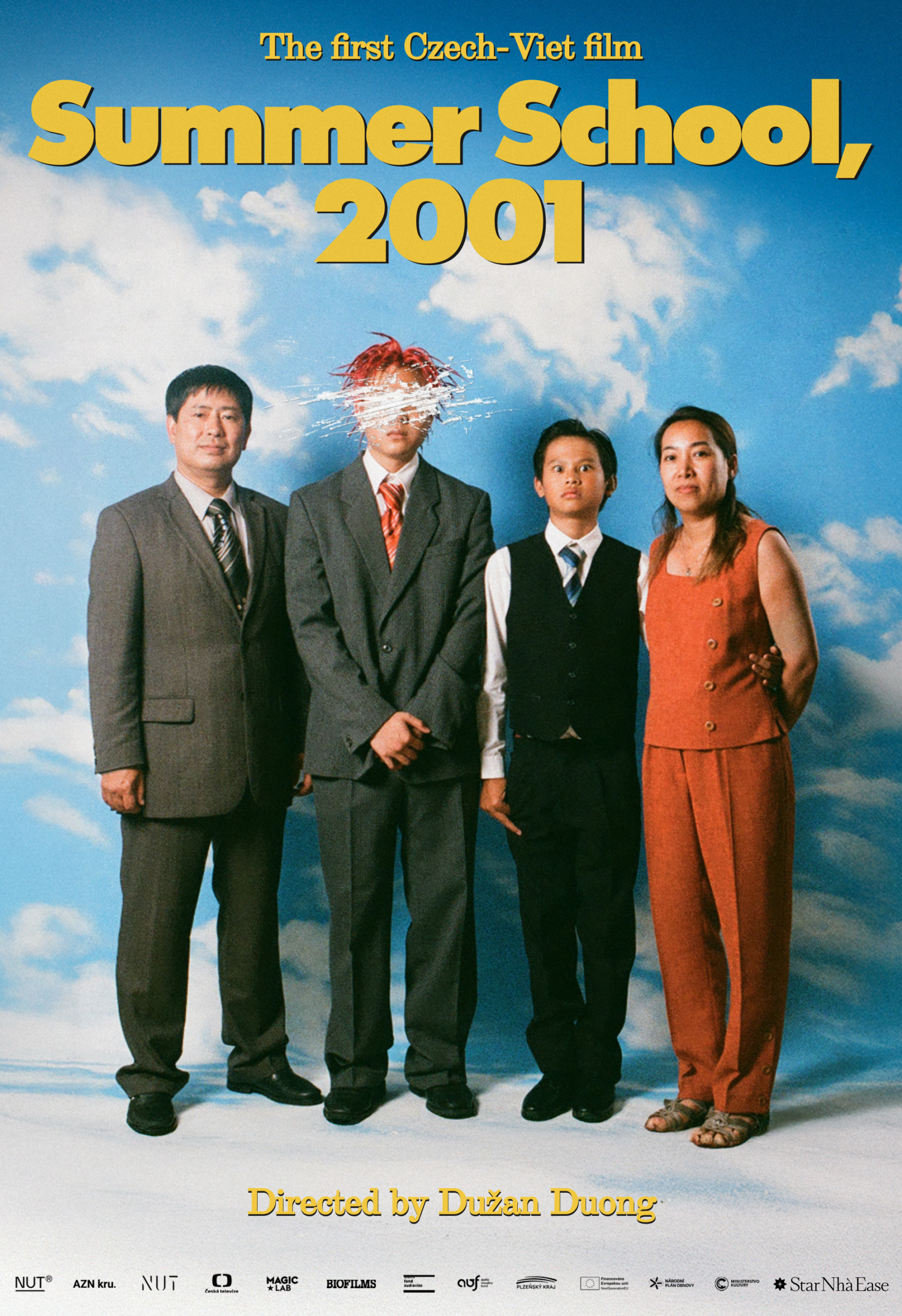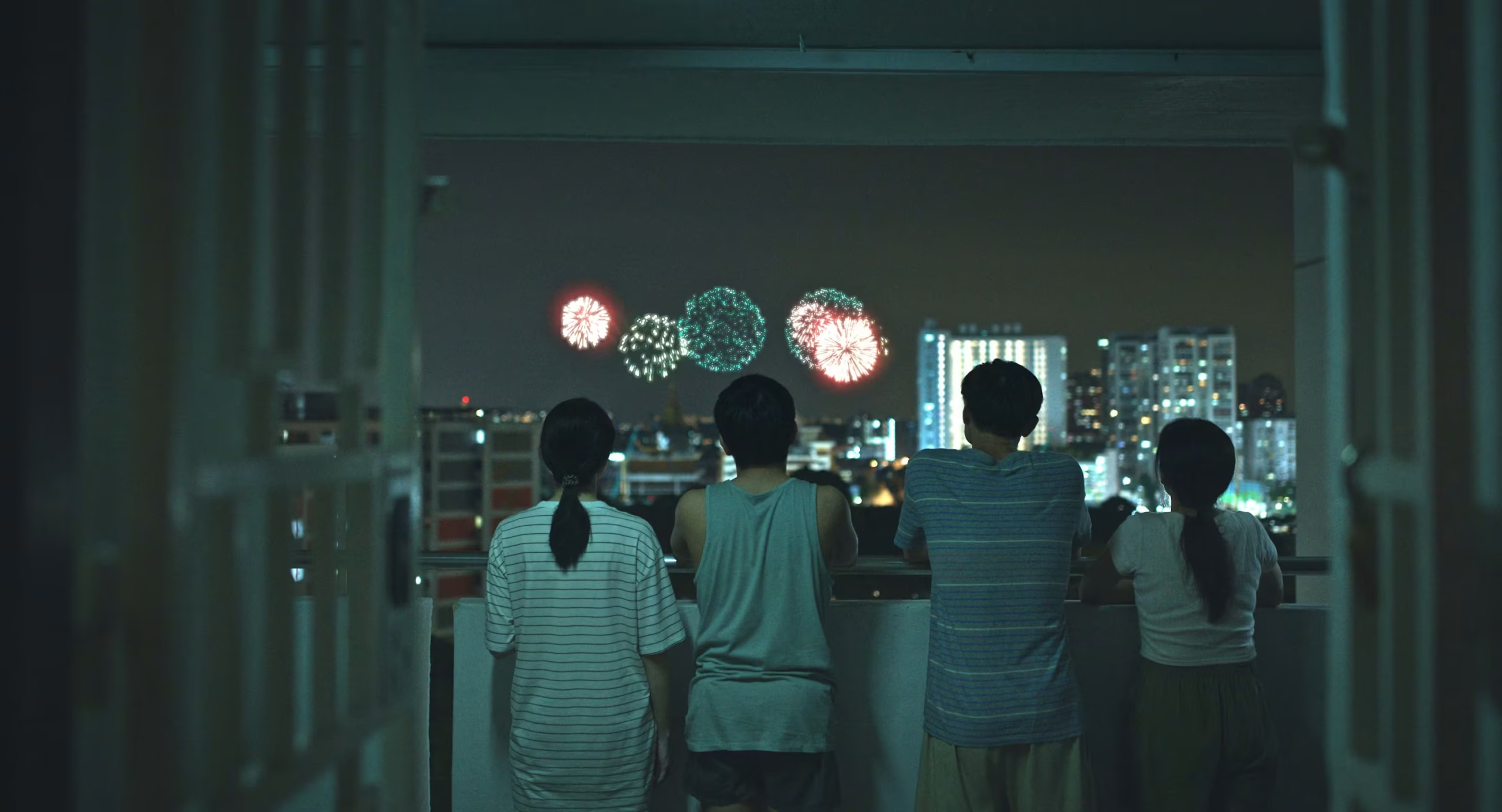
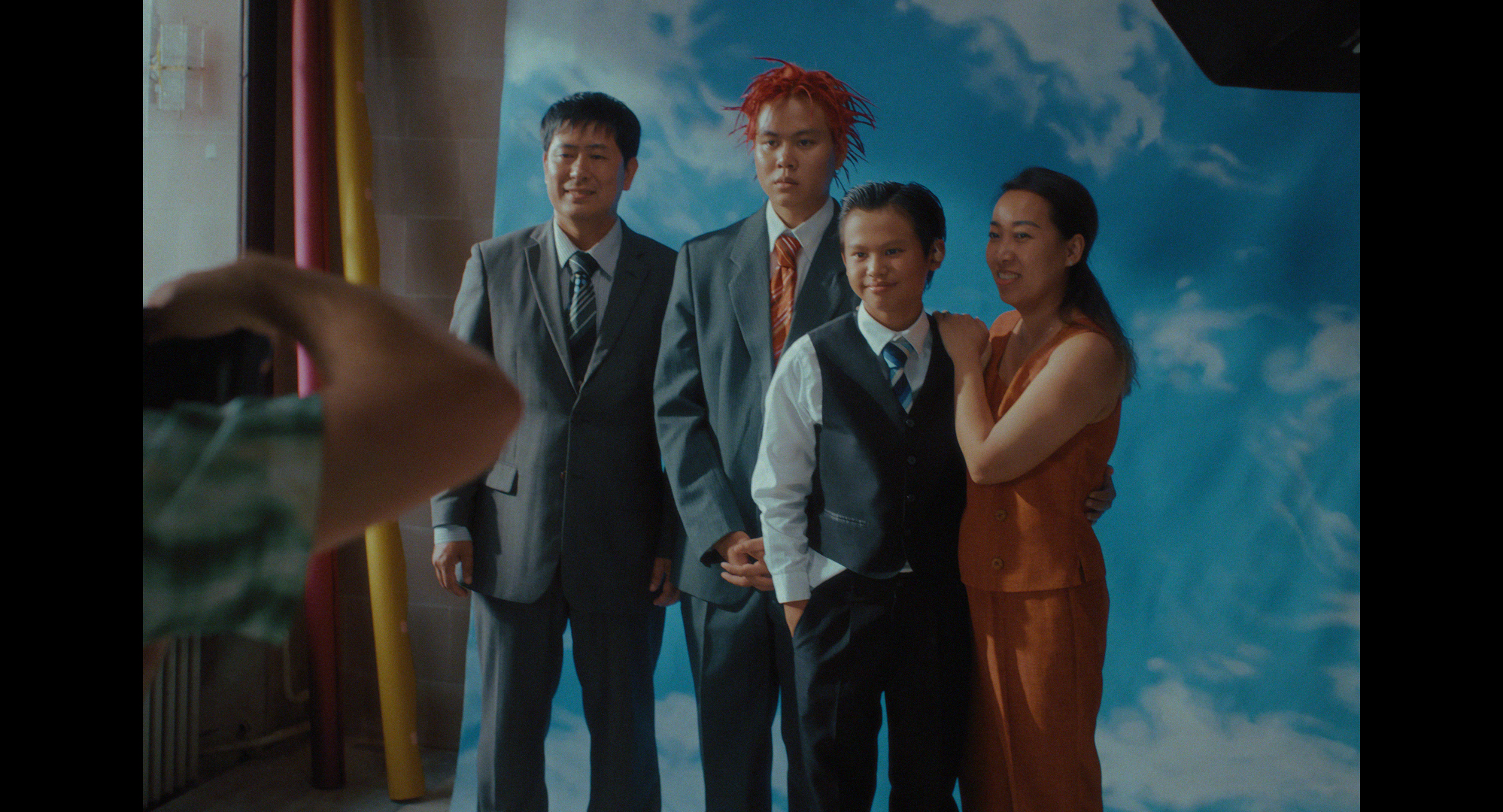
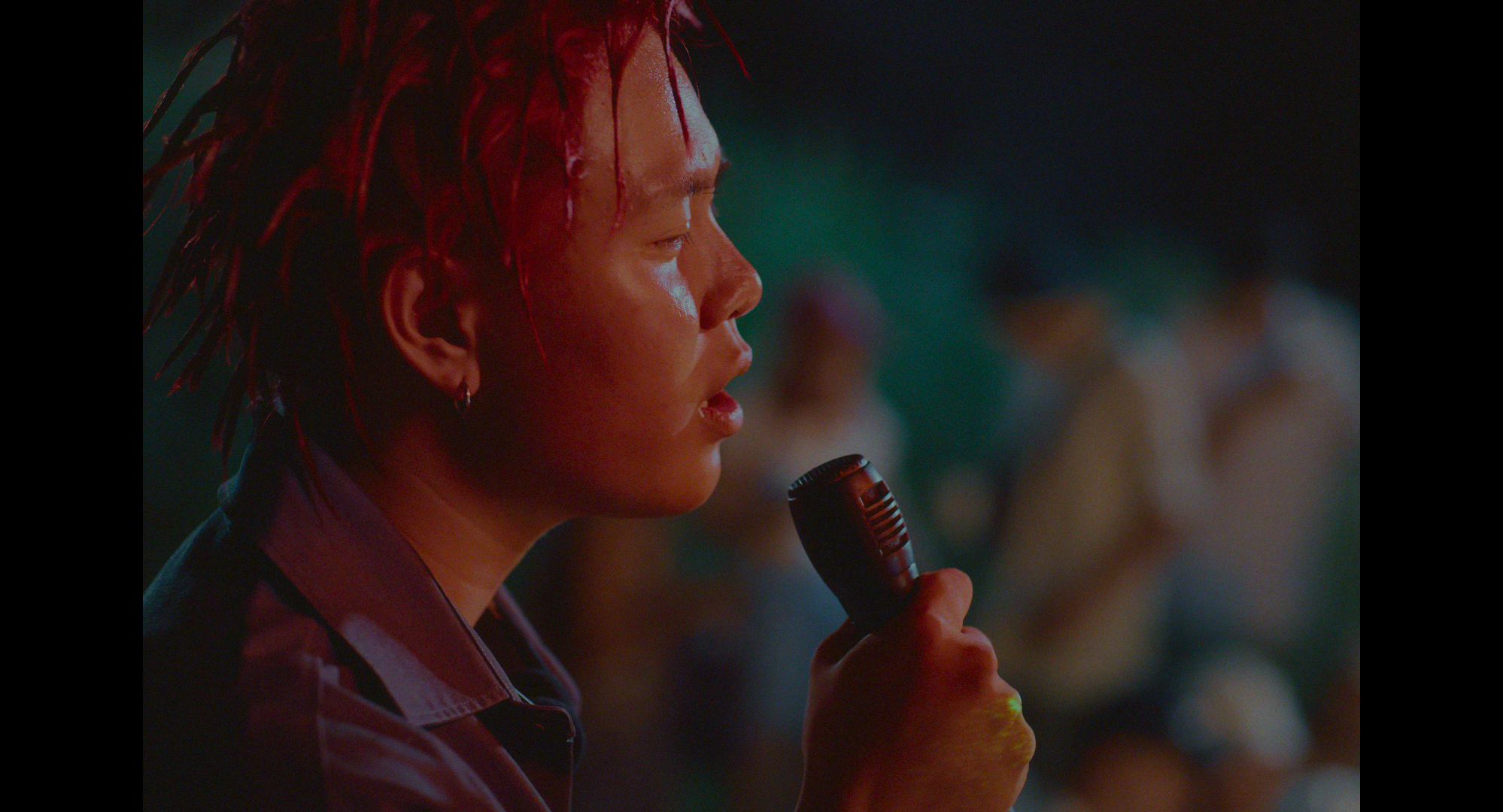
A teenage Vietnamese boy with blazing red hair, gelled up into Y2K Liberty Spikes, walking through the Czech airport, is not an image you forget easily. This scene in Summer School, 2001 (2026) visually articulates one of the film’s central questions: What does it mean to be a man, a Vietnamese immigrant in the West, and a perpetual outsider, all at once?
The answer is not at all simple – the film takes one family, three distinct parts, and roughly 100 minutes to unpack it. Resonate sat down with writer and director Duzan Duong to explore his perspective on masculinity, identity, and survival within the Vietnamese diaspora.
Dialing in from Prague, Duong is relaxed and cheerful, laughing as he answers each question. From his demeanor, one could not guess that he has experienced much of the same darkness portrayed in the film. Summer School, which Duong describes as “semi-autobiographical”, follows a family in the Vietnamese enclave of Cheb, a border town in the Czech Republic. Each of the film’s three sections adopts the perspective of a different male figure: Dǔng, the family’s weary patriarch, Tai, the playful youngest son, and Kien, the eldest son and red-haired rebel who has just returned after 10 years in Vietnam.
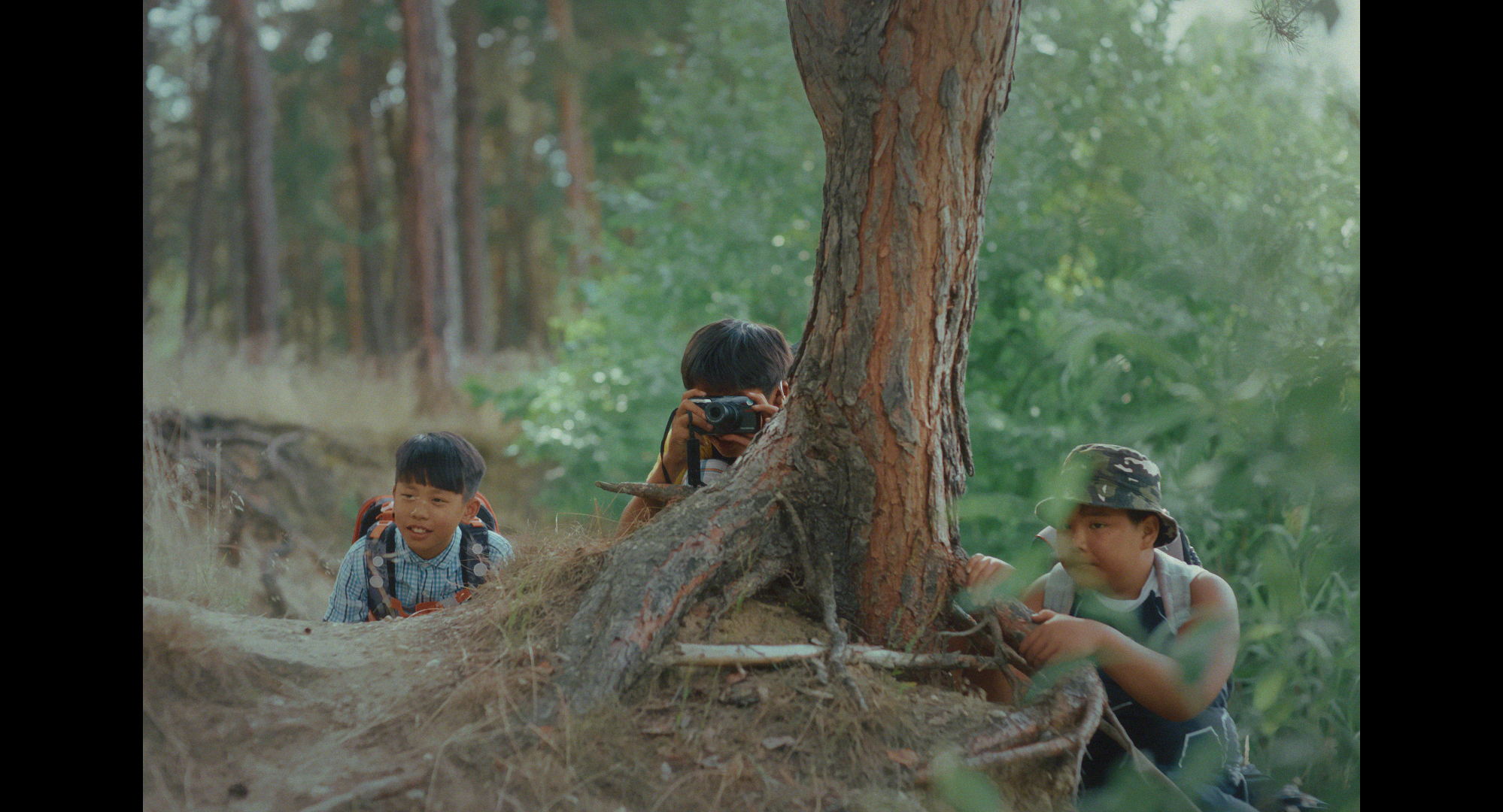
As the first Czech-Vietnamese feature film and Duong’s debut feature-length project, Summer School has a lot riding on it – primarily, the responsibility to represent the Vietnamese community. Speaking at the Star Nha Ease film festival, Duong says a key concern was to challenge the portrayal of the Vietnamese diaspora community as a monolith. Given his vow to reality and authenticity, it is no surprise Duong lifted much of the film’s story right out of his very own life.
“I don’t know where the fiction begins or ends,” he says. “If it didn’t happen to me, it happened to someone in my community.” Indeed, much like the family in Summer School, Duong’s parents ran a counterfeit designer clothing stall in Cheb’s bustling open-air Vietnamese marketplace.
Read more: Drexler’s Song ‘Brothers’ Is an Ode to His Father’s Childhood, From the New Record Olympia-5
“That was the only way to survive in the Czech Republic. Immigrants could stay in the country after the Velvet Revolution only if they started a business,” he explains. “This is how so many Vietnamese people secured their permit to stay, which led to a massive community forming around the marketplace. I have so many vivid memories of riding my bike through the stalls and watching crowds of German tourists coming across the border to buy goods.”
Set in 2001, the film subtly illustrates how the legacy of the Cold War (which brought the Vietnamese to Europe), precarity, and the ever-present hierarchy between white Czechs and Vietnamese immigrants created a bustling, close-knit community that keeps itself alive.
Duong explains: “You are alone in the Czech society, so you have to create this bubble where you can still keep your tradition, your language alive. That is the defining part of the Vietnamese diaspora in the Czech Republic – people stick together.”
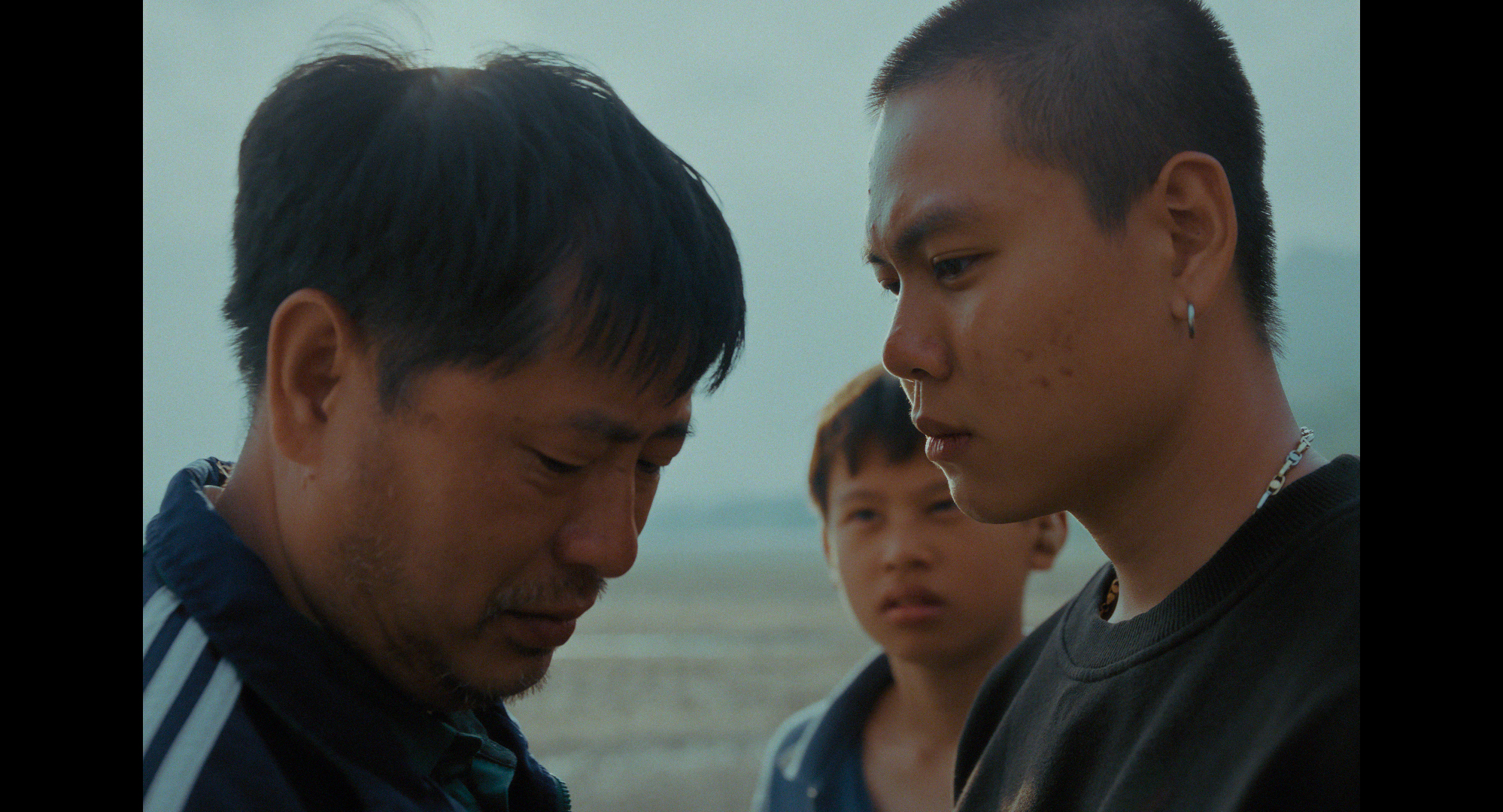
He continues, “Growing up, I had a lot of uncles, aunties that were not blood relatives but I had known them from day one … If you look at my Czech friends, they don’t have these [kinds of relationships]”.
Another pivotal event from Duong’s life, however, was the summer school, which the lives of Tai and Kien in the film also revolve around. Just like the boys in the film, Duong was enrolled in summer school in order to prepare for grammar school applications. He says, “We had to study a lot because, being an immigrant, it means that you have to excel in your studies, otherwise you will end up like your parents in the marketplace.” With a fond smile, Duong concludes, “Summer school was something that shaped me quite a lot.”
Read more: A Place I’d Never Been: Reflections on ‘Filipino Mixtape: Balik Bayan’
Yet Duong is keen to emphasise that the film, as is life in the Vietnamese diaspora, is not purely warmth and nostalgia. Beneath fond memories of homemade bún chả, karaoke nights, and games played in the marketplace alleys lies an underlying decay. That decay is greed bred from the need to survive as an immigrant in Czech society, even if it means trampling over your own people.
He reiterates, “I portrayed a community that is not always positive. There are always some people who want to make money off other people…Some of them fought or killed each other. It was always here, this negativity in the community. ”
In the film, this tension materialises in the character of Fong, the sly owner of the market who secretly promises Czech investors to replace the enclave with a luxury hotel. This, Duong says, is based on several “uncles” he used to know. “I remembered them and I just assembled this character who would be almost like family, but never really family,” he explains. “You know that behind that smile is something different.”
Yet Summer School is careful not to pin all of society’s struggles onto a single antagonist. . The film also spotlights another decay, one that is located in a much more intimate place: the family unit. Duong emphasises that in addition to his summer school and marketplace memories, it was his family and the way they pushed and pulled against traditional masculine norms that most inspired the film.
“Having parents who don’t have time to take care of you, to be with you, just to play with you…That’s also one of the biggest things in the film,” he says. “I realised growing up, what I missed the most was the father, the role model. I think, unconsciously, I just made these decisions to portray: How to be a man? How not to be a man? What is being a man?”
Read more: Timothy Koh Directs Pangdemonium’s Final Production ‘Come From Away’ – 25 Years After 9/11
Indeed, the family relationships in Summer School are complicated, to say the least. The father Dǔng, haunted by the societal pressures to be the breadwinner, leads him to neglect both his sons and his broader responsibilities.
As Duong explains, “He’s trying to be the man because everybody expects him to deliver and bring home money for his children, …But he compromises his morality because his priority is to get money to take care of his family.”
This, according to him, is not an uncommon feeling among immigrant men. “You have this big burden on your shoulders that you have to perform, you have to make a lot of money so that your family in Vietnam would be proud of you,” he claims. “Otherwise, it would be shameful to come back to Vietnam without any money. Because of this, you can forget about what’s important.”
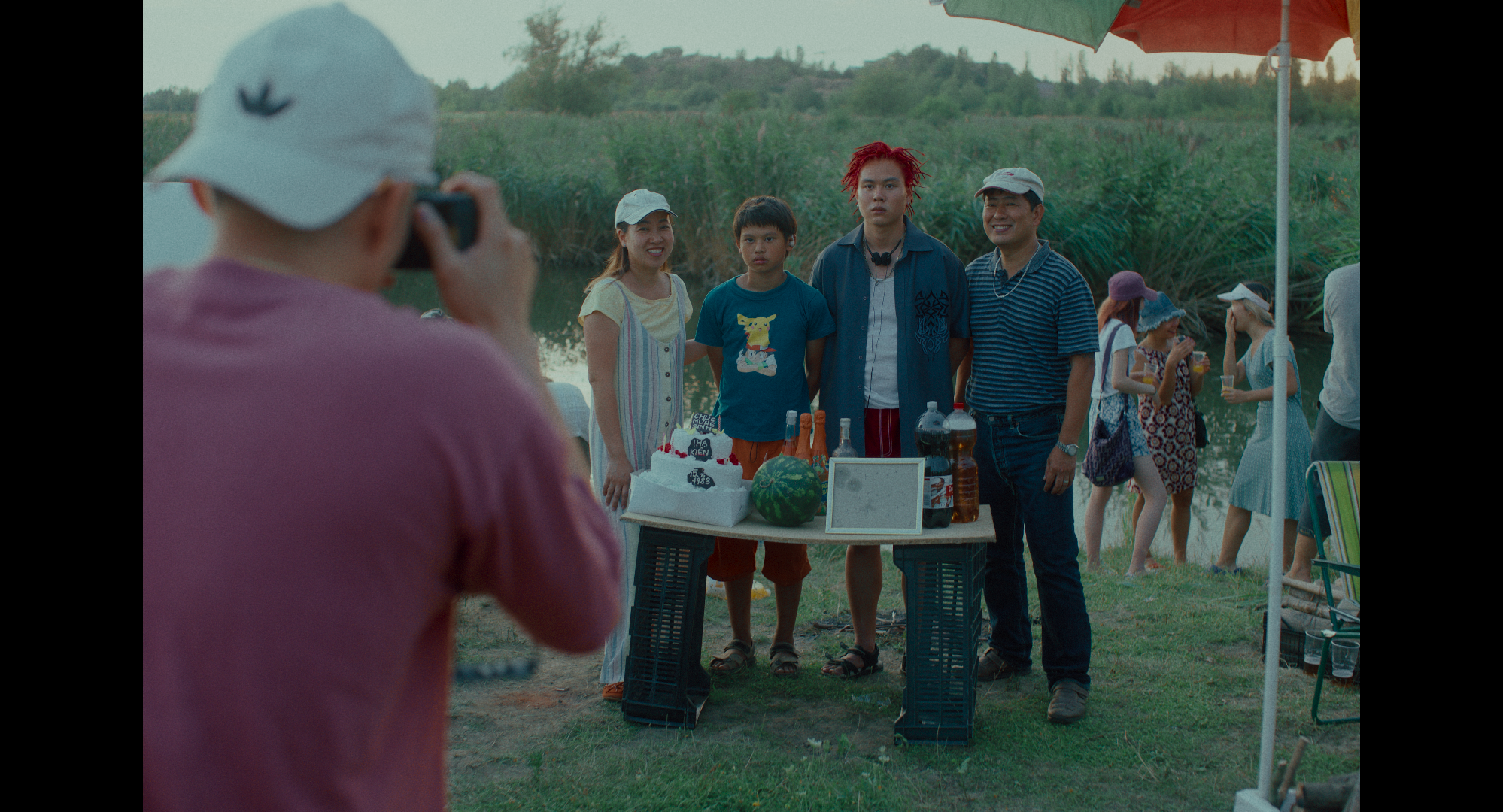
These very questions similarly torment Tai and Kien, as they grapple with growing up in these circumstances. Namely, Tai retaliates when he loses the spotlight as the overachieving, golden boy, while Kien struggles to fit together the pieces of young manhood, queerness, immigrant identity, and an emotionally distant father. These dynamics, Duong proclaims, “are the core topics of masculinity.”
As it turns out, the deeply personal core of the film was actually one of its biggest obstacles. Duong took a total of eight years to create Summer School, six of which were spent at the drawing board, unpacking his feelings and memories about his family.
“I wasn’t happy with [the script] because I was running away from my trauma, I was running away from the family topic,” he recalls. “But somehow that was the piece that was missing in this film…Once I admitted that, I could finally finish the script.”
This dedication to lived experience carried straight into production. He hired amateur actors, some even family friends and neighbours he grew up with, who pulled lines from their own lives and familiar conversations instead of a rigid script.
What comes out of this, ultimately, is a serious yet lighthearted, dark yet uplifting film that prioritises not mainstream sheen but reality and lived experiences. Although zoning in on a particular small diaspora group, Summer School, 2001 articulates a feeling many struggle to – the comforting yet asphyxiating nature of family and community.