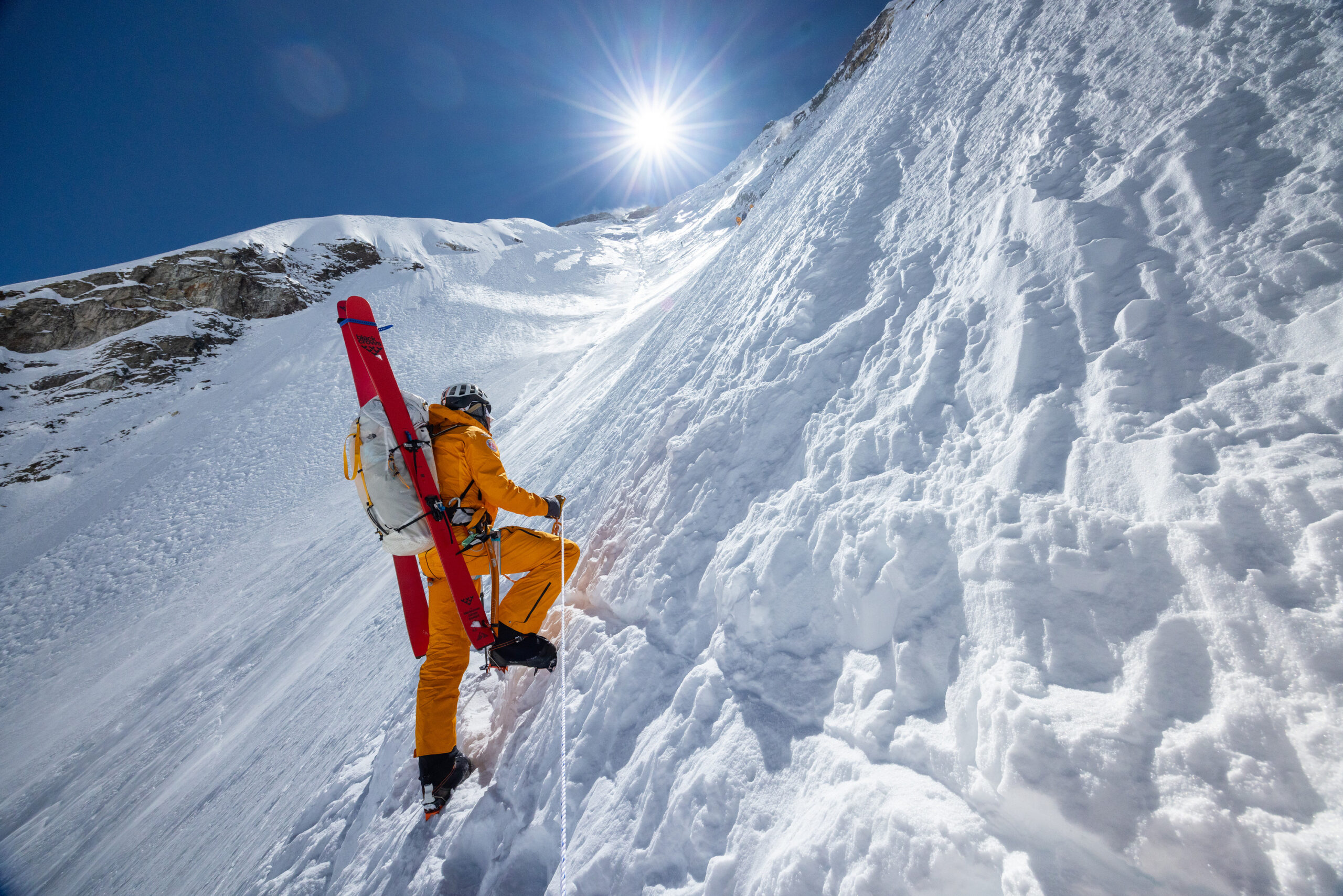
At twenty-nine thousand feet, human bodies decay. The atmosphere holds a third of the oxygen found at sea level, ambient temperatures freeze bare skin within minutes, and the simplest miscalculation triggers a fatal drop. For decades, commercial expeditions have crept up the southeast ridge from Nepal, following a well-trodden route equipped with fixed ropes, established ladders, and commercial infrastructure. Almost nobody attempts the North Face from the Tibetan plateau. It is a forbidding expanse of ice and black rock where the Hornbein Couloir drops vertically towards the glacier below.
In Everest: The Other Side, directors Elizabeth Chai Vasarhelyi and Jimmy Chin set their cameras on this exact wall. Their subjects, elite ski mountaineers Jim Morrison and Hilaree Nelson, arrive with an audacious plan: scale the North Face and ski down its icy gullies. It is a feat that has defeated every prior generation of extreme athletes.
For Vasarhelyi and Chin, the terrain carries familiar professional weight. The pair built their reputation on films about people who willingly court oblivion, from Alex Honnold clinging to El Capitan to British cave divers navigating flooded limestone chambers in northern Thailand. This time, the vantage point shifts. Chin is not merely behind the camera calling shots from a comfortable distance; he is on the mountain, an active member of the expedition bearing crampons and ropes.

That choice breaks the traditional distance of non-fiction filmmaking. Viewers watch a domestic reality fray against the demands of the mountain. In one early domestic exchange, Vasarhelyi sits opposite Chin and asks him to count the acquaintances who have eaten dinner at their house and subsequently perished in alpine accidents. Chin pauses, unable to offer an immediate tally. In another scene, his young daughter points out that his departure for the Himalayas means he will miss her birthday and her first day of school. These moments carry a dry weight. The directors do not smooth over the domestic strain, allowing their private disagreements about physical danger to sit squarely on screen.
Visually, the film is designed for the largest screens possible. High-altitude cinematographers Clair Popkin and Christopher Murphy deploy GoPros, heavy zoom lenses, and drones capable of operating in thin air. On an IMAX screen, the mountain looks indifferent. Sweeping wide shots show tiny yellow tents clinging to wind-scoured ridges, dwarfed by blue-grey seracs and rolling cloud banks. When the wind picks up, the theatre sound system shakes with a low rumble that makes you pull your coat closer. POV footage captures the metallic scraping of ski edges over blue ice, where a single slip sends a skier straight down thousands of feet.
Read more: Hunger Strike at 5,030 Metres: How One Man Fasted on a Mountain to Stop the Next Nepal Flood
The documentary gains its most compelling human texture through the Sherpa team leading the physical work. Pur Bahadur “Yukta” Gurung, the expedition’s lead guide, commands the screen whenever he appears. While the Western athletes talk through their private ambitions and personal grief, the Sherpa crew carries hundreds of pounds of supplies up sheer headwalls, setting the anchors and checking the ropes.
The cultural friction between the climbers and their guides is present throughout. When conditions deteriorate and a route becomes untenable, an argument breaks out over whether to continue or retreat. One Sherpa remarks plainly that they do not have to follow every command issued by foreigners. It is a moment of clear reality that strips away the romantic mythology of Himalayan travel. These men work on the mountain because it feeds their families, facing avalanches and broken bones to support expeditions funded by corporate sponsors. The film lets Yukta’s quiet authority stand, giving proper weight to the people who actually make Himalayan travel possible.
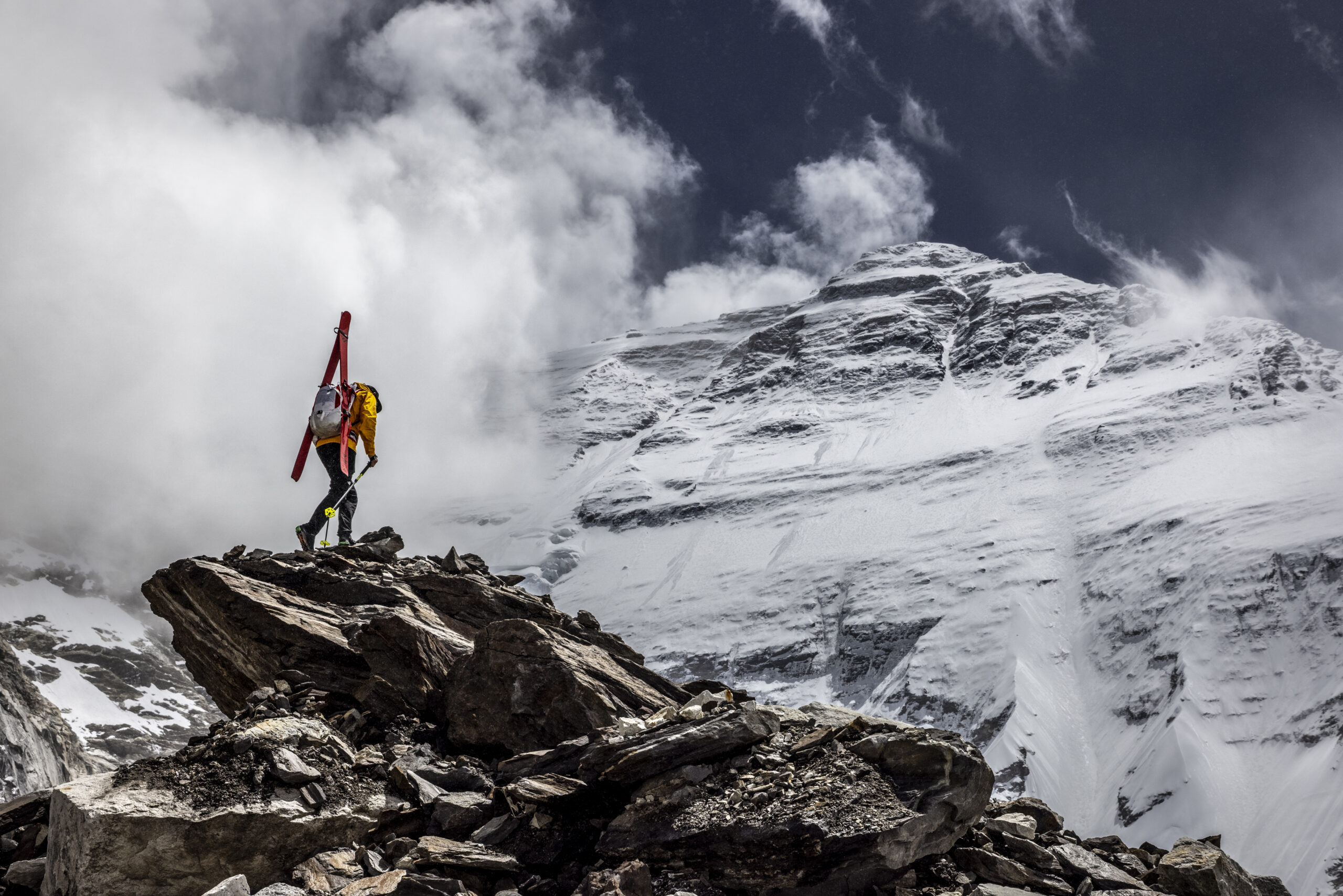
Morrison and Nelson provide the emotional centre of the climbing party. Both are veteran alpinists who found companionship through extreme adventure. Nelson talks openly about the friction between raising her two teenage sons, Grayden and Quinn, and answering the impulse to ski extreme peaks. Her sons appear on camera, speaking candidly about their anxieties whenever their mother packs her gear for another Himalayan season. Morrison brings his own quiet sorrow to the slope, having endured immense personal tragedy years earlier when his first wife and children were killed in an aviation accident.
Their partnership is practical and focused. On the slopes of the world’s highest peak, romantic sentiment gives way to cold physical tasks: checking oxygen regulators, boiling snow for water, and studying satellite weather maps for an elusive break in the jet stream.
Read more: Why ‘Ah Girl’ Shows That Asian Family Silence Hurts Children More Than Divorce
As the expedition pushes into the upper reaches of the mountain, the weather collapses. The autumn window between the monsoon season and the arrival of winter storms proves exceptionally narrow. Avalanches sweep through the lower camps, burying supplies and injuring crew members. The film tracks these setbacks with cold efficiency, capturing the exhaustion that sets in when climbers remain trapped in cramped nylon tents at extreme altitude for days on end.
Everest: The Other Side is an exhausting, visually staggering record of modern expedition culture. Vasarhelyi and Chin deliver an intense technical achievement that captures the real physical terror of the Himalayas, while keeping its lens trained on the immense human cost required to reach the top.