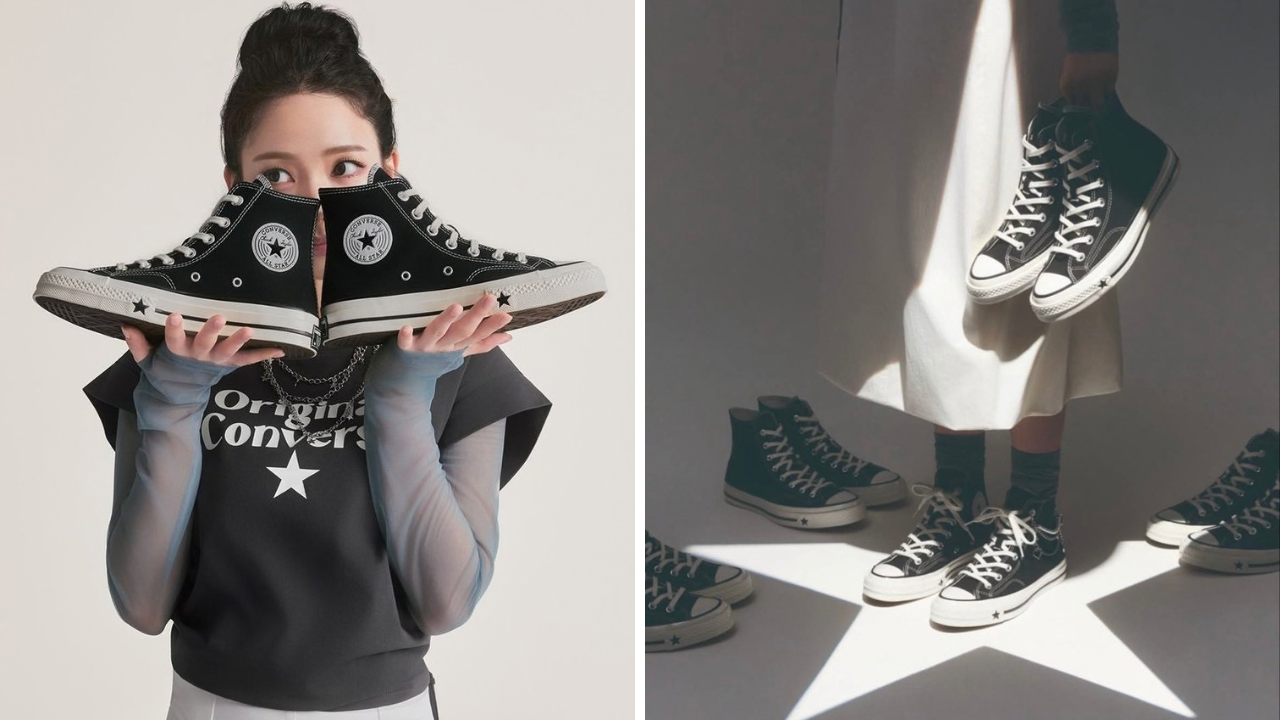
A global marketing campaign designed to celebrate street footwear has instead triggered an international corporate controversy over racial imagery. Converse, the American footwear brand owned by Nike, has issued an apology and pulled a prominent promotional photograph featuring South Korean singer Karina, a member of the popular K-pop group Aespa.
The image, distributed across digital platforms to advertise the Chuck 70 X trainer, showed the twenty-six-year-old performer standing inside a star-shaped beam of overhead spotlighting while wearing a long white skirt and holding a pair of black high-top sneakers by the laces.
Online viewers quickly observed that the bright overhead illumination turned the fabric of the white skirt into a sharp triangular silhouette resembling a Ku Klux Klan hood. At the same time, the dangling high-tops positioned beneath her frame drew comparisons to the feet of a hanging lynching victim.
Corporate Apology and Vetting Questions
As uncropped versions of the image circulated across Threads, X, and Instagram, public criticism widened beyond fashion circles to include civil rights attorneys and cultural commentators.
Converse published a statement acknowledging the severity of the reaction and confirming the immediate withdrawal of the material.
“We’re sorry,” the Boston-based footwear brand stated. “We understand why this image is deeply upsetting and recognize that we got this wrong. We removed it from our channels and are working to remove it everywhere it appeared. This should not have happened and we will do better.”
Despite the apology, Converse declined to answer specific inquiries regarding its internal approval chain, including how the photograph cleared legal, creative, and executive checkpoints prior to publication.
Read more: Stanford University Uses AI to Replace White Male With Black Student, Beautifies Asian Peer
The silence regarding corporate sign-off drew sharp criticism from civil rights advocates. Texas attorney Lee Merritt addressed the corporate response directly on social media, writing that an apology “doesn’t undo what got past legal, marketing and leadership at every step.”
“We keep having this conversation because corporations keep failing the same test,” Merritt noted. “Do better means catching this before it airs – not after we’re offended.”
Public figures echoed those concerns online. Actor Yvette Nicole Brown reacted to the composition on Threads, asking, “That’s a lynching, yes?”
Chicago-based photographer Stephanie Schwartz pointed to the formal technical elements of the shoot: “Shadow, light, and composition. Every photographer can tell you, whoever did this ad knew EXACTLY what they were doing.”
United States Representative Troy A. Carter Sr. of Louisiana also called for accountability from leadership at Nike and Converse, stating: “This campaign should never have been created, approved or released.”
I’m late to this. Apparently, a new Converse sneaker ad/commercial featuring K-Pop star Karina was deemed “racist” because it reminded black people of the KKK and lynching. I genuinely thought it was a joke, but it’s not a joke. Converse has pulled the ad and apologized 😬 pic.twitter.com/VXNacxUbad
— Asian Dawn (@AsianDawn4) September 21, 2026
Global Reach and Context Collapse
The episode highlights the hazards modern apparel brands face when distributing centralised visuals across international markets without adequate cultural risk checks.
The involvement of an internationally recognised K-pop star ensured the image travelled rapidly through global fan networks, detaching the single photograph from the wider video campaign and placing it directly into American historical discussions around white supremacist terror.
Concerns intensified when internet users paired the Karina photograph with a separate Converse campaign released through regional partner channels in Malaysia. That secondary image, created for a collaboration with Copenhagen brand Palmes, depicted footwear hanging from a tree branch, prompting social media users to draw direct connections to Billie Holiday’s anti-lynching anthem “Strange Fruit.”
Neither Karina nor her management company, SM Entertainment, have made public statements regarding the promotional materials. Converse continues working to scrub the visual assets from third-party advertising displays worldwide.