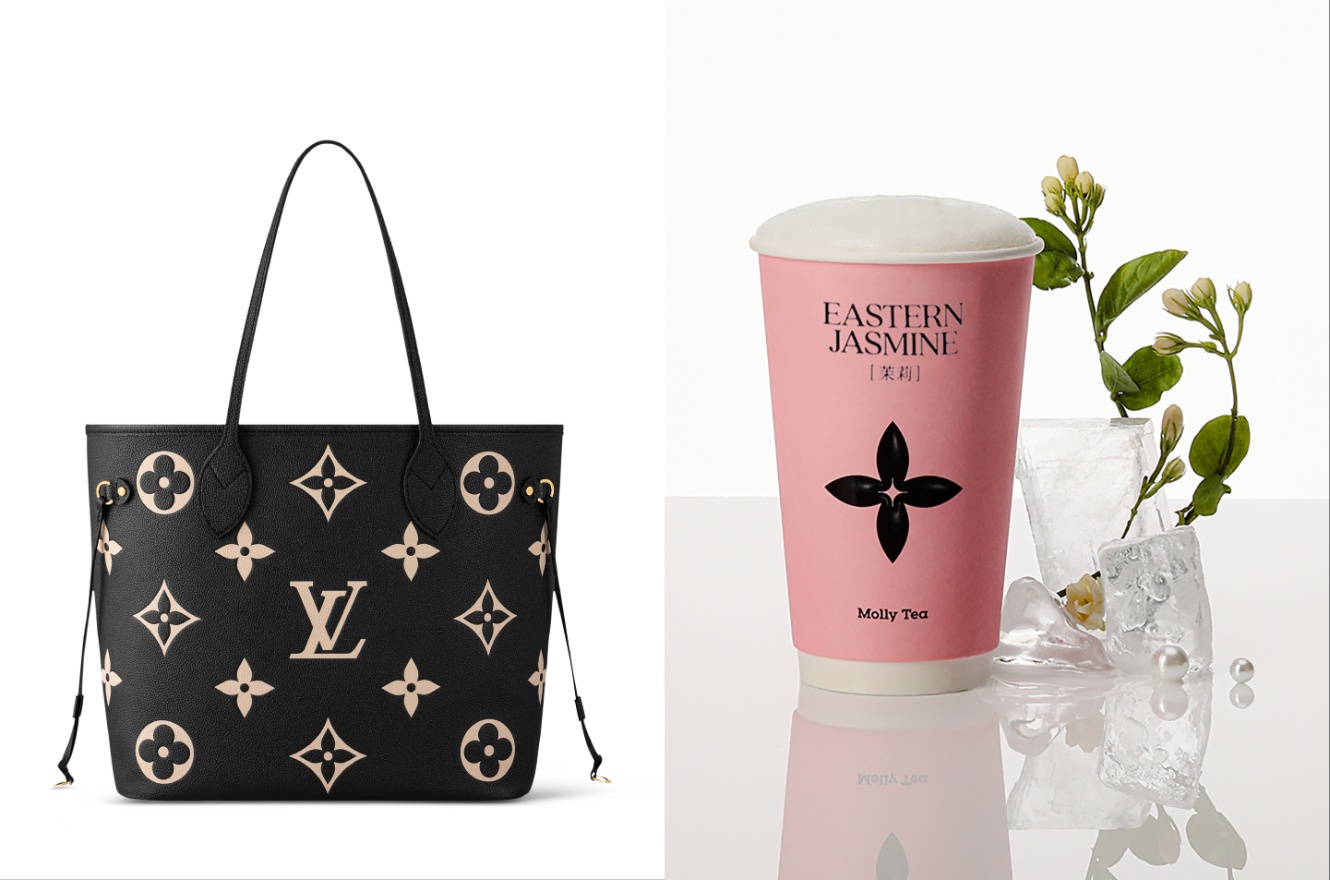
Popular Chinese beverage chain Molly Tea is trending on Chinese social media after losing a high-profile trademark infringement lawsuit against French luxury house Louis Vuitton. A court in Suzhou ruled that Molly Tea’s four-petal flower logo was excessively similar to one of Louis Vuitton’s registered monogram designs.
As a result, the tea company was ordered to cease using the mark, issue an apology, and pay approximately US$1.5 million in damages. The judgment, however, has touched a sensitive chord in China, sparking a fierce debate online over intellectual property rights versus shared cultural heritage.
A Cultural Debate Beyond Legal Boundaries
While the court focused strictly on trademark law, critics and public observers see the dispute as far more than a disagreement between two commercial brands. At the center of the controversy is whether a foreign luxury brand should be allowed to use trademark laws to claim broad control over a traditional Suzhou flower pattern deeply rooted in Chinese history.
Although the two company logos feature subtle structural differences. Molly Tea’s flower features a diamond-shaped center cut-out, whereas Louis Vuitton’s design incorporates a circular center. Critics argue that both bear striking similarities to historical floral motifs seen in ancient Chinese art, such as decorative lattice windows in Suzhou’s historic gardens or Tang Dynasty artefacts.
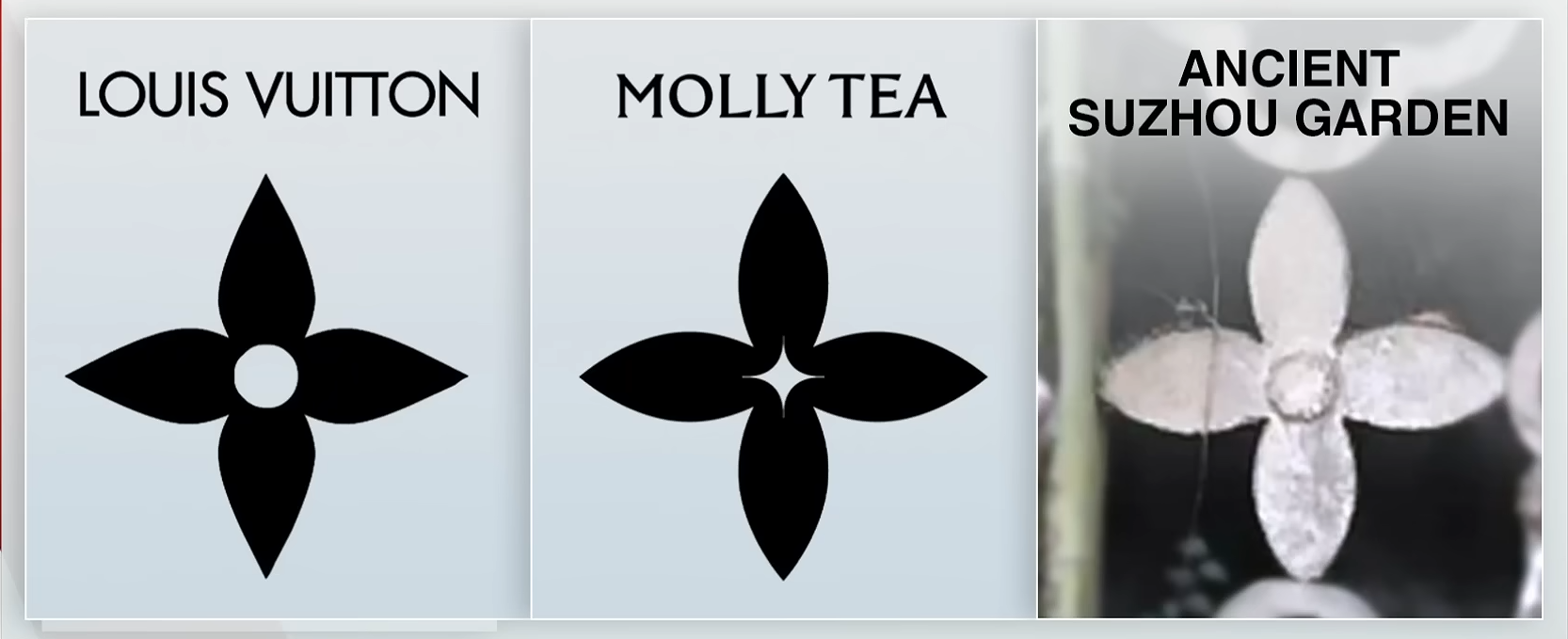
To gauge public sentiment, CNA spoke with residents on the street in Shanghai regarding the controversial court verdict. “It did not completely copy Louis Vuitton’s design, and it did not use the LV lettering. You can say the pattern looks very similar to LV’s, but you could also say it resembles ancient patterns,” said one commenter.
“Creative exchange should be diverse. Building on patterns from China’s traditional culture to create something new is a good thing,” another said.
“This may actually be good for Molly Tea. LV has amplified its name more than a collaboration might have done. Even negative publicity is still publicity.”
Read more: Hanfu, Tang Suits, and Sneakers: Why Gen Z Is Wearing Qipao to University in 2026
Despite the legal setback, the widespread controversy appears to have boosted Molly Tea’s public profile.
According to a report, Molly Tea’s official Weibo account gained roughly 250,000 new followers in the month following the public announcement of the lawsuit.
Furthermore, the brand earned significant public goodwill after donating approximately US$150,000 in flood relief funds to Hengzhou in Guangxi, a primary jasmine flower-growing region deeply tied to Molly Tea’s signature jasmine-infused teas and brand identity, with “Molly” sounding similar to Moli, the Chinese word for jasmine.
The Suzhou Court’s Legal Reasoning
Despite the cultural debate surrounding the ancient Suzhou flower motif, the Suzhou Intermediate People’s Court rendered its decision based on legal metrics of visual representation and market perception.
The court focused strictly on the shape, symmetry, and overall visual impression created by the four-petal designs. Given the growing frequency of high-profile collaborations between luxury fashion labels and beverage chains in China (such as Louis Vuitton’s previous local pop-up partnerships), the court concluded that consumers could easily be misled into believing the two brands had entered an official licensing partnership.
Additionally, the court noted that after Louis Vuitton issued formal legal letters in 2024, Molly Tea actually expanded the usage of the disputed floral motif across its store signage, cups, and merchandise. Molly Tea’s founder has publicly confirmed that the company intends to appeal the decision.
Historical Roots of Geometric Motifs
The broader question remains regarding where the visual history of this famed four-petal shape truly begins, and whether any single brand can effectively own a variation of the ancient Suzhou flower.
Historical records presented by Louis Vuitton indicate that its iconic monogram, created in 1896, was designed as a repeating system of initials, floral shapes, and geometric elements influenced by 19th-century Japonism, Art Nouveau, and Gothic aesthetics.
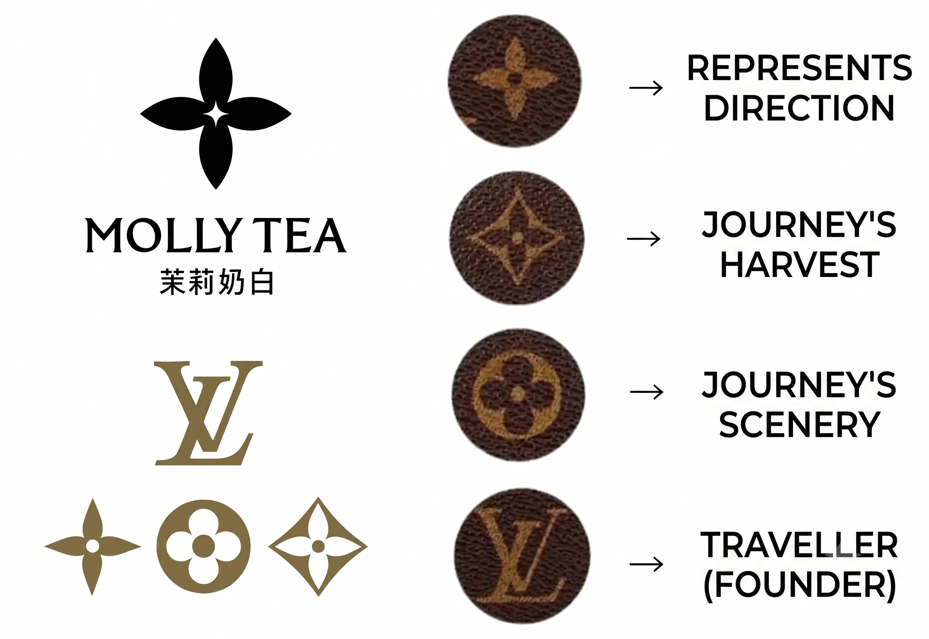
However, many of those Japanese design traditions (such as family mon crests) were historically shaped by early cultural exchanges with Tang Dynasty China. Furthermore, geometric patterns in Western design were also heavily influenced by Chinoiserie and Islamic geometric art.
Because cross-cultural trade and design borrowings have taken place across centuries, drawing a clear line on the ultimate origin of simple geometric floral ornamentation remains complex, a key reason why this legal case has captured such widespread public interest.