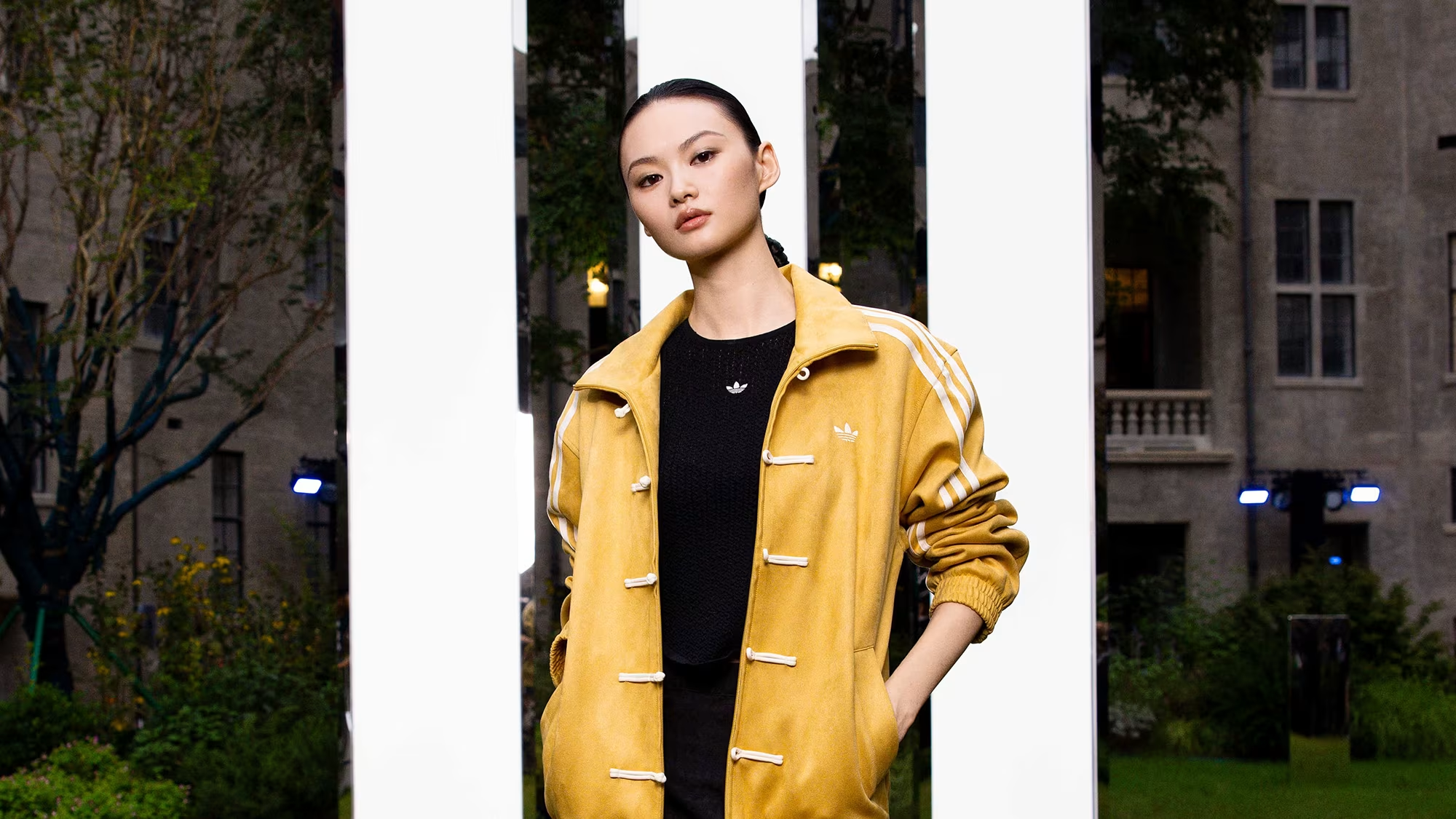
It begins with a collar, a fastening, a cut of cloth that feels familiar but not quite formal. A mandarin neckline peeks out from beneath a cardigan. Frog buttons line a cropped jacket. A pleated skirt sways just enough to look traditional, until the sneakers come into view. That is the look now appearing on campuses, in cafés, and on city streets: heritage, made ordinary.
For years, traditional Chinese clothing belonged to specific moments. You wore it for Chinese New Year, for weddings, for performances, or for family portraits. It had a ceremonial gravity, which also made it feel distant from everyday life. Gen Z is changing that by wearing hanfu-inspired pieces, qipao silhouettes, and cheongsam details in ways that feel relaxed, practical, and completely current. What was once reserved for special occasions is being folded into the rhythm of ordinary days.
View this post on Instagram
That shift is more than a fashion tweak. It reflects a broader change in how young people think about identity. Across East Asian and diaspora communities, there is growing comfort with dressing in ways that signal culture without treating it as performance. A qipao top worn with sneakers does not need explanation. A hanfu skirt paired with a tote bag does not feel ironic. The clothes work because they are being worn as part of real life, not staged as a cultural exhibit.
The appeal also lies in how adaptable the style has become. Instead of heavy silks or formal tailoring, many of the newest versions lean toward lighter fabrics, simpler shapes, and easier layering. The result is a wardrobe language that can move from classroom to café without effort. A long skirt can be paired with a T-shirt. A cropped jacket can borrow from tradition while still feeling sporty. Even the smallest details, like a knot button or a stand collar, can carry the whole look.
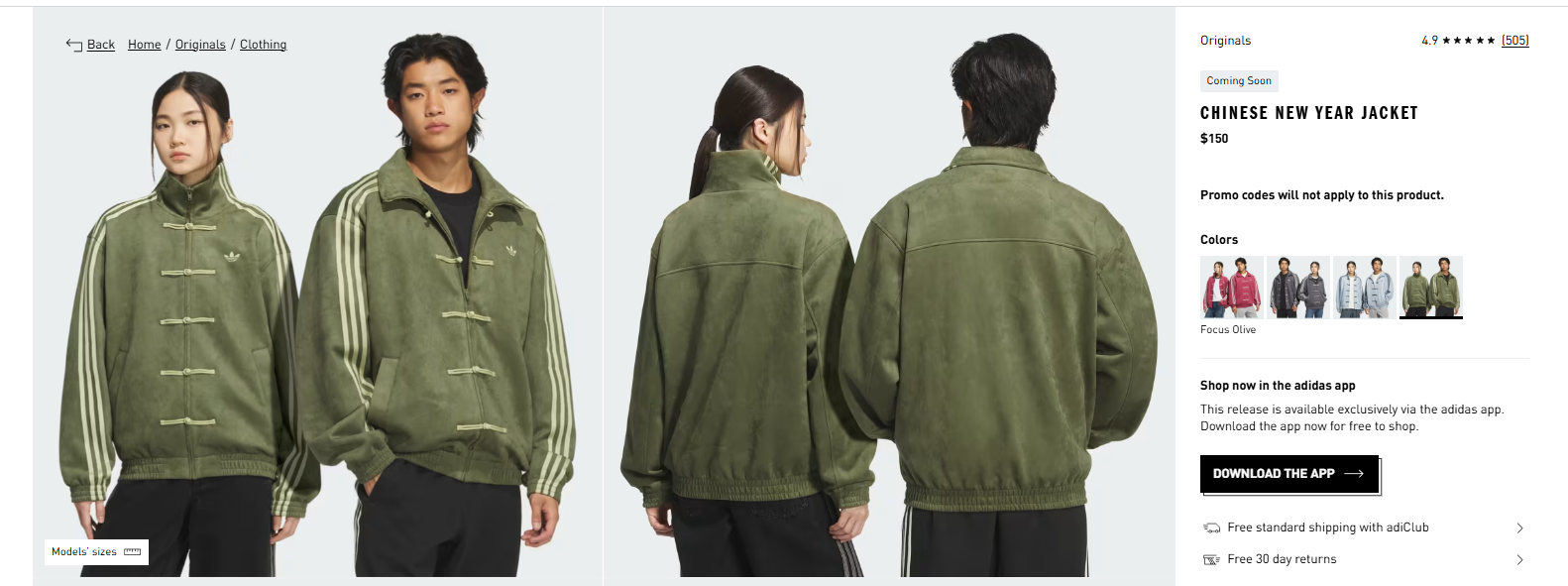
Global brands have noticed this shift. Adidas, for example, is releasing Chinese New Year jackets, AKA Tang suits, that blend Chinese-inspired design with familiar sportswear. The KT3847 jacket uses a loose fit, a stand-up collar, knot-button closure, and the brand’s signature three stripes, making it a clear example of how traditional references are being absorbed into mainstream streetwear. That matters because it shows the trend is no longer only coming from niche communities or independent designers. It is now visible at the level of major global fashion brands.
But the most interesting part of the trend is not what brands are doing. It is what wearers are doing on their own. Young people are styling traditional influences in ways that fit their own routines, climates, and aesthetics. In Singapore, that can mean a lighter cheongsam-inspired dress that works in the heat, or a hanfu-style skirt worn with sneakers for a day on campus. In New York or London, the same pieces may look slightly different, layered under jackets or mixed with streetwear. The point is not uniformity. The point is that the clothes adapt.
There is also a deeper conversation underneath the surface. Some people see the trend as cultural reclamation, a way of restoring visibility to garments that were once treated as niche or overly formal. Others worry that heritage is being flattened into an aesthetic. But that tension is part of what gives the trend its force. It asks an old question in a very current way: how do you keep tradition alive without freezing it?
The answer, for many young wearers, seems to be movement. Tradition does not have to stay unchanged to remain meaningful. It can be reinterpreted, simplified, paired with sneakers, or made into something you can wear to class. That does not make it less cultural. In some ways, it makes it more so, because it becomes part of a person’s actual life instead of something kept at a distance.
View this post on Instagram
That is why this trend feels bigger than a passing style cycle. It reveals a generation that is comfortable with layering history into the present rather than separating the two. The clothing is practical, yes, but it is also expressive. It says that heritage can be part of everyday dressing, not just ceremonial dressing. It can sit beside a laptop in a lecture hall, travel through a train station, or show up in a brand campaign without losing its meaning.
Read more: Ally Maki’s Asian American Girl Club Slammed For Target Partnership Amid Minneapolis ICE Controversy
In 2026, perhaps the most modern thing about traditional Chinese clothing is that it no longer needs a special occasion to matter. It can be worn casually, beautifully, and repeatedly. It can be worn to learn, to commute, to meet friends, or simply to get through the day. And when a young person steps out in a qipao-inspired top and sneakers, the message is understated but clear: culture does not have to wait for a celebration to be seen.