From Power Rangers to Aquaman to Mortal Kombat, Ludi Lin has been harnessing his superpowers on-screen, living out every nostalgic teenage boy’s fantasy. But off-screen, Lin’s superpower comes in the form of his pursuit to further Asian representation and combat stereotypes.
Throughout his career, Lin has worked across Western and Asian markets, in action-heavy studio films and smaller projects with more room for experimentation. Speaking to Resonate Voices, Lin discussed industry changes from the perspective of someone who has seen both its progress and its blind spots.
Born in China, Lin studied management and finance before pivoting fully into acting. Starting with early gigs in Asian television and film, Lin quickly jumped to stardom in Hollywood, landing roles in Marco Polo, Black Mirror, and more.
Now that Mortal Kombat II is just around the corner, the Chinese-Canadian was keen to discuss what it means to be an Asian man in 2025, how stereotypes cling to roles, and why hearing white people speak Chinese on screen so often feels like a gut‑punch in disguise.
Over the past decade, we’ve seen Hollywood make strides with Asian-led productions. The likes of Crazy Rich Asians and Shogun were met with critical success, but for Lin, the work is far from done.
“I still feel like we’re quite early in that evolution,” he said. “I think they’re starting to find more interesting angles, and they’re starting to make things more authentic, even in how characters speak—if they’re using local languages.”
Lin highlighted how interest in Asian culture is evolving away from being a novelty, allowing for more authentic stories to be told.
Read more: First ‘Street Fighter’ Live-Action Trailer Drops Feat. Callina Liang as Chun-Li, Andrew Koji as Ryu
“Asian culture and the Asian diaspora have been around for thousands of years, and for a long time, from a Western perspective, Asians were seen as this mysterious, cult-like thing,” he explained. “There’s fun in that, but times are changing. People are speaking up, so it’s no longer a cult. Asian culture and pop culture—K-pop, K-dramas, C-dramas—are beautiful, vibrant, loud, and open, and people are catching up to that.”
“So I feel like it’s a co-evolution: Asian culture is evolving, and the way Asians are portrayed in Western media has to evolve as well.”
Pan‑Asian mythology, filtered through Hollywood
Mortal Kombat is a franchise built on a pan‑Asian mythology—Kung Fu, Shaolin, martial‑arts rituals, and a pantheon of fighters that pulls from different East and Southeast Asian traditions—but it’s also a Western property made for a Western audience.
“The creators of Mortal Kombat are two guys who are obviously enamored with Asian lore—Kung Fu, Shaolin, martial arts and all of that,” Lin said. “Over the years, they’ve done it because they actually love it. When Ed Boon comes onto our set, he’s just so impressed. He’s been making these games for over 20 years, and there’s something magical about seeing it on screen. He’s the creator and he’s just so happy to have a cameo in the universe he built. He respects the culture.”
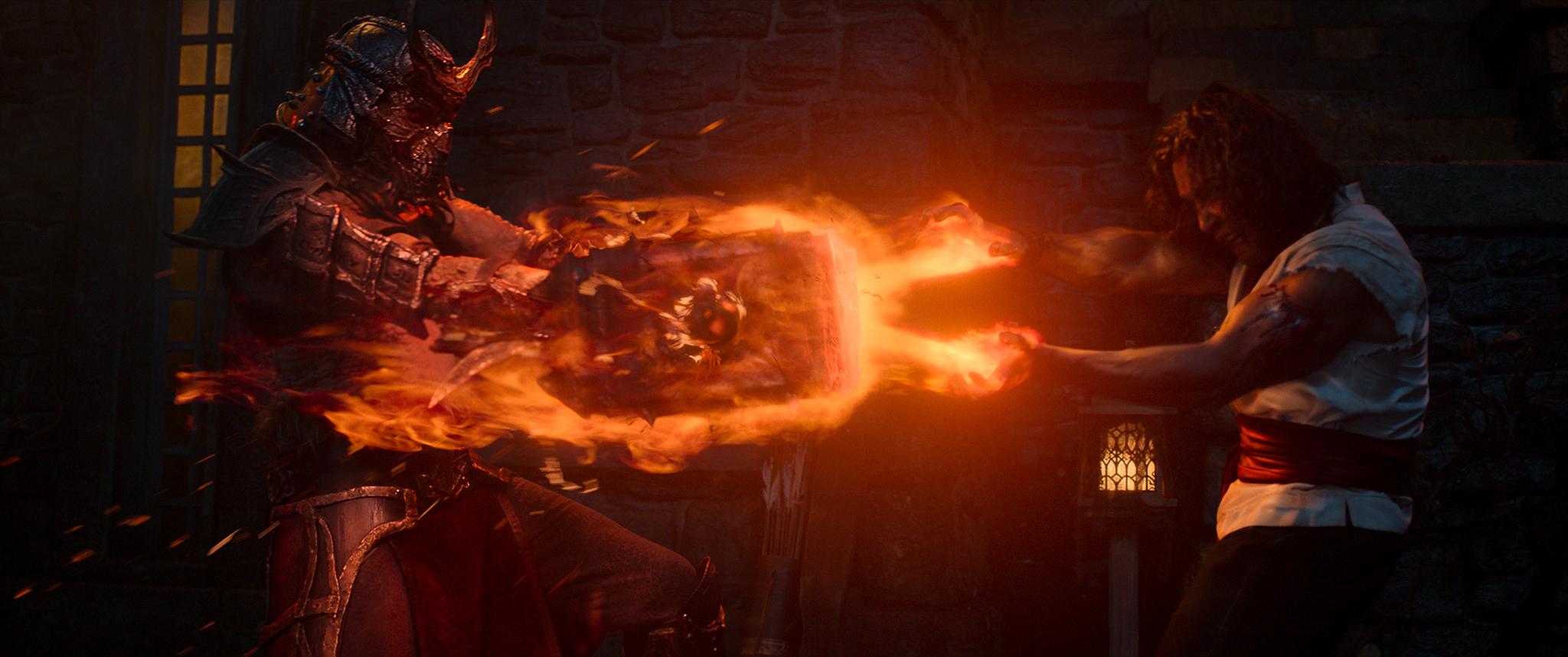
For Lin, the franchise offered an opportunity to rewrite stereotypes through representation. “Stereotypes are things another culture places on your culture,” he said. “So if I get the chance to reclaim stereotypes—if it’s a martial arts role, or if it’s a character who’s very good at maths or something—I love to take it. I want to reclaim it and make it my own, flesh it out, and not just do the two‑dimensional thing someone else has written. If I have a chance to educate through it, I’m more than happy to take that chance.”
Mortal Kombat II: brotherhood, friendship, and the worst roommate
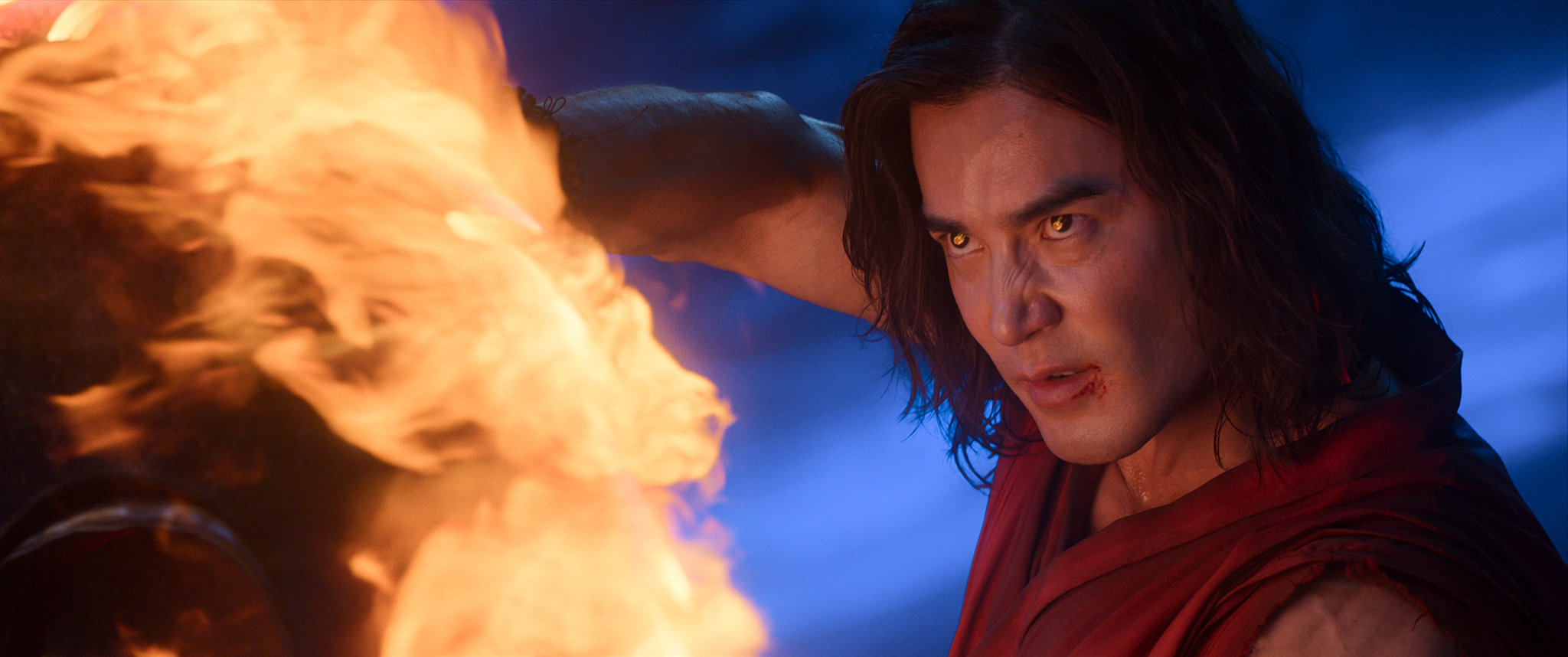
Reflecting on his Mortal Kombat character, Liu Kang, Lin said he was particularly drawn to the relationship his character built. “For me, it was brotherhood, because my character is very closely tied to Kung Lao,” he says. “And in the first film, that was the major event that affects him going forward. So for me, it’s brotherhood. And not to paraphrase Vin Diesel, but it’s also about family.”
Asked what he’d do if he had to survive in the Mortal Kombat universe with zero fighting skills, his answer is quite telling. “With zero fighting skills, I’d probably master the friendship Fatality and just try to befriend everyone. That’s actually a real thing in the universe.”
When we asked who would be the worst Mortal Kombat character to have as a roommate, Lin pointed to Queen Sindel. “She’s falling apart, she’s loud, there’s this scream she does, and she’s just rancid and smelly. It doesn’t sound very fun at all. Arraka is a cannibal, so that’s also kind of a downer. There aren’t many good choices for roommates in Mortal Kombat.”
For the other side of the equation, he picks Liu Kang. “I think Liu Kang would be a pretty good roommate,” he says. “He’s ascetic, like a monk, he doesn’t need too much, he can keep to himself. He probably just sits there and meditates all the time. If you’re cold, he heats things up—he can basically act as a stove or a barbecue. Overall, he’s pretty good. His personal hygiene might not be great, because there aren’t too many showers and baths over there, but he wouldn’t be bad. Kitana would be great, but it could get difficult—she has a temper.”
Not just the “martial arts guy”
For Lin, authenticity is crucial. Discussing working on Kung Fu with Tzi Ma, Lin reflected on the actor as “not giving a shit” in the sense that he’s ” just so outspoken and meticulous.”
“There was a scene where someone had to burn incense on a shrine, and there were too many sticks. He said, ‘No, there needs to be three, and you need to do this three times,’ and he gave everyone a 101 crash‑course in how to do it properly. He’s very outspoken and very much an advocate for that kind of authenticity.”
Read more: Li Jun Li Joins ‘The Last of Us’ Season 3 Cast as Seraphite Mother
That attitude extends to Mortal Kombat’s physical language, even if Lin doesn’t position himself as the sole tastemaker. “In terms of martial arts, we’re fortunately pretty hands‑off, because our stunt team who are so well‑versed in all the different martial arts,” he said.
“The fight coordinator knows different styles of Shaolin, Southern Shaolin, Northern Shaolin, and he understands which characters fit which styles. It all makes sense in terms of their nature and their story. So props to our stunt team—they’re incredible. We don’t have to worry about that at all.”
Toxic Asian masculinity
When the conversation turned to Asian masculinity, Lin expressed his frustration about the way some men weave their entire identity around sexual performance. “I’ve met some people—won’t name names—who are always talking about their penis,” he says. “They’re like – ‘Everyone thinks their dicks are small, but [their] life’s mission is to screw chicks and let them know how big [their] is’ – It’s always about that.”
View this post on Instagram
The joke lands, but under it is a longer, more serious sigh. “There’s just so much on your shoulders,” he says. “To be an Asian guy, you have to be good to your parents, you have to be good at school, you have to be hardworking, and you have to have a big dick. It’s just so much.”
Read more: ABCs of Attraction founder JT Tran – the world’s #1 Asian dating coach
For him, masculinity isn’t about ticking those boxes in the loudest, most performative way. “I feel a responsibility, but I think the responsibility is really toward myself to be a good Asian man, I suppose,” he said.
“To beat it too heavily over the nose doesn’t feel masculine at all. To try too hard at it doesn’t feel masculine either.” Instead, he leans on humour, openness, and a kind of self‑awareness that doesn’t require pretending the pressure doesn’t exist.
White people speaking Chinese, and why it keeps happening
If Asian men discussing penis sizes didn’t make it to the top of Lin’s pet peeves list, one phenomenon might just sit at the peak. “Just don’t make white people who don’t speak Chinese, speak Chinese,” Lin said with frustration. “It never goes well; it always sounds like mumbo‑jumbo, and it’s just not good.”
He brings up two specific examples: Companion and Passengers. “I remember watching the movie Companion, where they made a robot speak Chinese because it can speak all these different languages,” he says. “And then I thought of Passengers with Chris Pratt, where there’s an android that also speaks multiple languages. When they make it speak Chinese, it’s horribly done.”
The part that really grinds on him is the intention behind it. “You have to think: to make that real, someone deliberately programmed terrible Chinese,” he said. “Why would they do that? It just takes me right out of the movie, and it’s so jarring to the ear.”
Fortunately, Lin believes social media is one way that audiences can tell filmmakers that this simply won’t wash. “Everything’s connected—if something comes across as inauthentic, it gets blasted all over the internet, and people speak up,” he said. “And that’s pushing things in the right direction. It’s just the beginning.”
Hollywood vs. Asia: “In Asia, we’re just Asians”
Looking ahead, Lin is excited about the locations he hasn’t shot in yet—South America, Cape Town, Greece, Italy—but he’s also drawn back to the kinds of stories he’s seen flourish in Asia.
“There are two sides to that,” he says. “One is where the films are made—whether it’s an Asian studio, a Chinese studio, European, Southeast Asian, or Hollywood. Then there’s where it’s being filmed. There are so many places I’d love to film: I hear South America is beautiful, Cape Town is beautiful—I know One Piece was filmed there, and I was pretty close to getting a role there. I’ve never been to those places, and I haven’t travelled Europe too much, but last year I got the chance to do a film in Greece and Italy, and that was beautiful.”
“I’ve actually never been to the UK, but later this month I’m presenting at the BAFTA Games Awards, so I’ll get to see London. Then I’ll be in Manchester with a couple of mates for Comic‑Con; Manchester’s fun. Those kinds of places are definitely a huge perk of this job.”
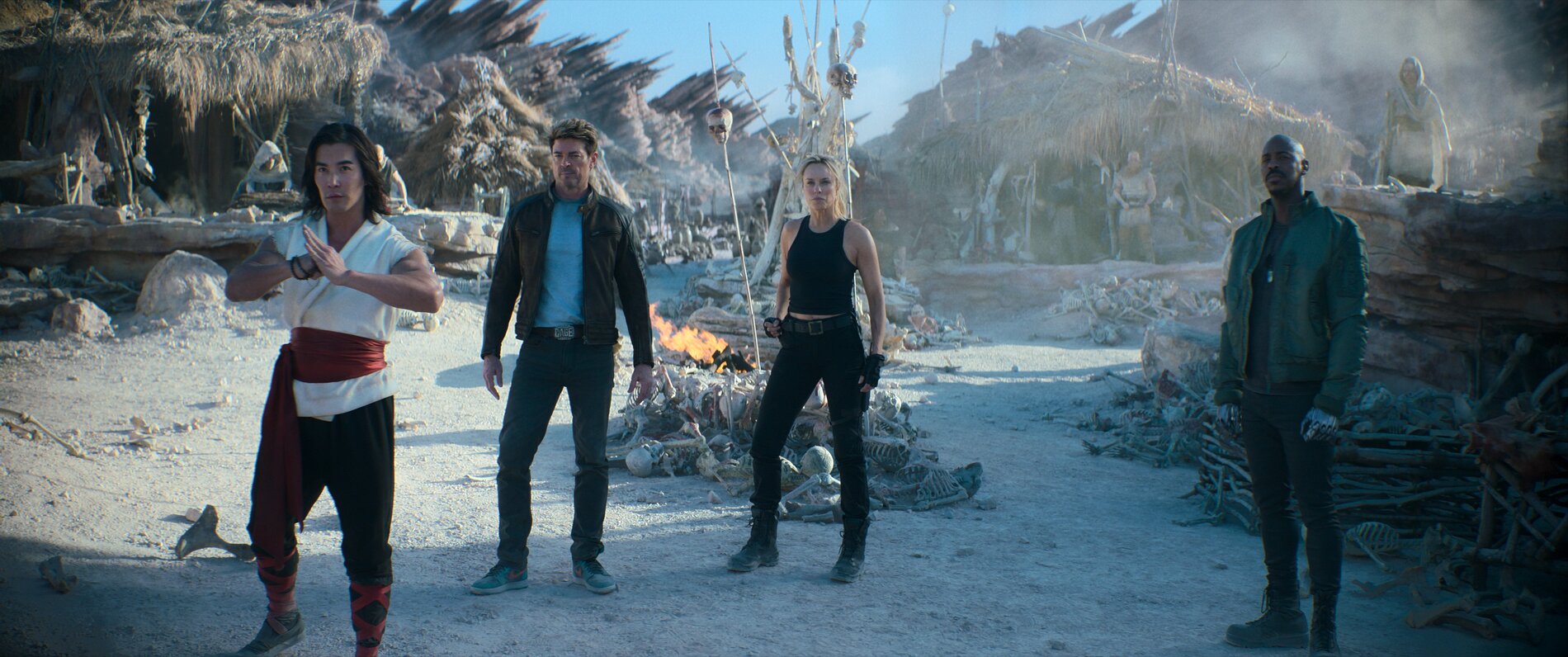
But in terms of markets, he’s more intentional. “In terms of markets, yeah, I want to work in Asia a lot more,” he says. “I love the stories here; I speak the language, and I want to use it. And then Hollywood will always be there.”
He compares the difference between working in Hollywood versus working in Asia with a simple line: “When I was in Asia, I felt less boxed into one role, because I got to explore lots of different roles for one reason or another,” he says.
Read more: Ludi Lin to Star in New Sci-Fi Thriller ‘The Unlucky’
“In Hollywood, there’s a lot of action—which I’m not complaining about—but maybe it’s also where I’ve been looking, because in the last couple of years I’ve been doing more indie work. There, I got to explore a lot more different roles that aren’t as recognisable or publicised, but for me, creatively, that’s very fulfilling.”
For Asia, he underscores the market’s breadth. “It felt like such a burgeoning market with so many things going on that there are lots of different opportunities to explore different types of stories and roles. And it didn’t have to be Asian‑American. In Asia, we’re just Asians; there are all types of people, so they write all types of stories.”