The room dims. A sweet, soapy incense smell spreads across the space. A mudang bangul (Korean shamanic bell) rings. Almost like you’re being taken into a religious ceremony.
It sends out a signal, emerging from a curiosity about other beings and environments, an openness to change, and a desire for connection. Your attention is drawn from the back of the room to the centre, and back again, as Korea-born director Soo Hahn moves around the floor through the audience.
Electronic sounds fill the background, reminding us of the theme of tonight’s performance:
“An input enters a system and produces an output. When that output returns as a new input and shapes what happens next, we call it feedback. Feedback can be technical or social. FEEDBACK IS EVERYWHERE.”
Feedback happens in your earphones when listening to music; when you order a coffee and receive what you ordered (or don’t); at work, on the tube, in your classroom. It happens through sound, mouth, air.
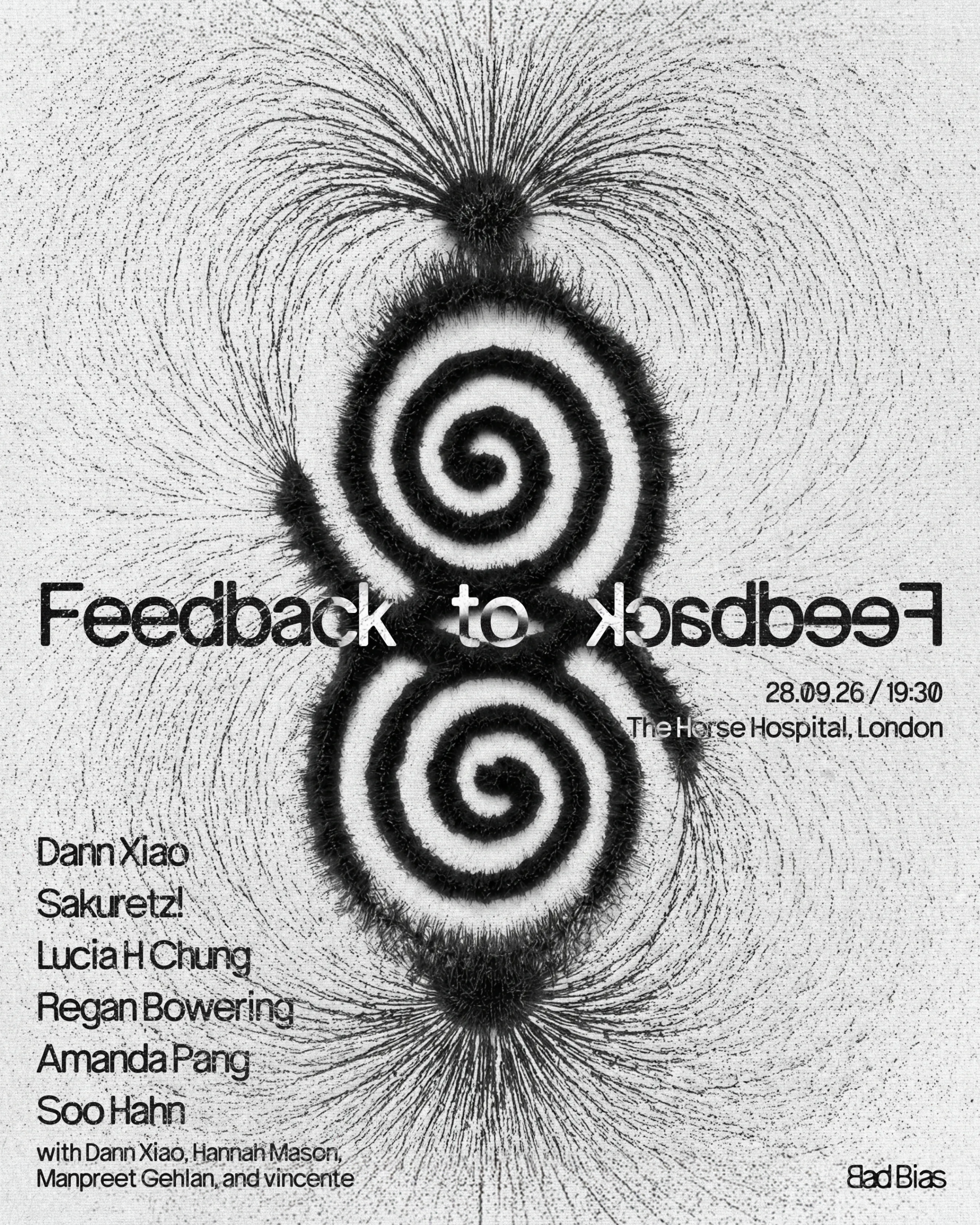
To explore these interactions with anything and everything in real life, London-based multidisciplinary collective Bad Bias presented a curated live programme exploring feedback through experimental sound and movement, bringing together women and gender-marginalised artists from East and Southeast Asian (ESEA) and diasporic backgrounds.
Themed around feedback, the show took place at the Horse Hospital, a venue long associated with London’s counterculture, on the evening of Monday 28 September.
Read more: Meet Callina Liang, the Star Playing Chun-Li in ‘Street Fighter’
The production of the show itself is a kind of feedback loop. According to Jihun Park, director of Bad Bias, the theme of feedback was suggested by sound artist Lucia H Chung, who was introduced to the collective by sound artist Angela Wai Nok Hui, who performed in Bad Bias’ debut show.
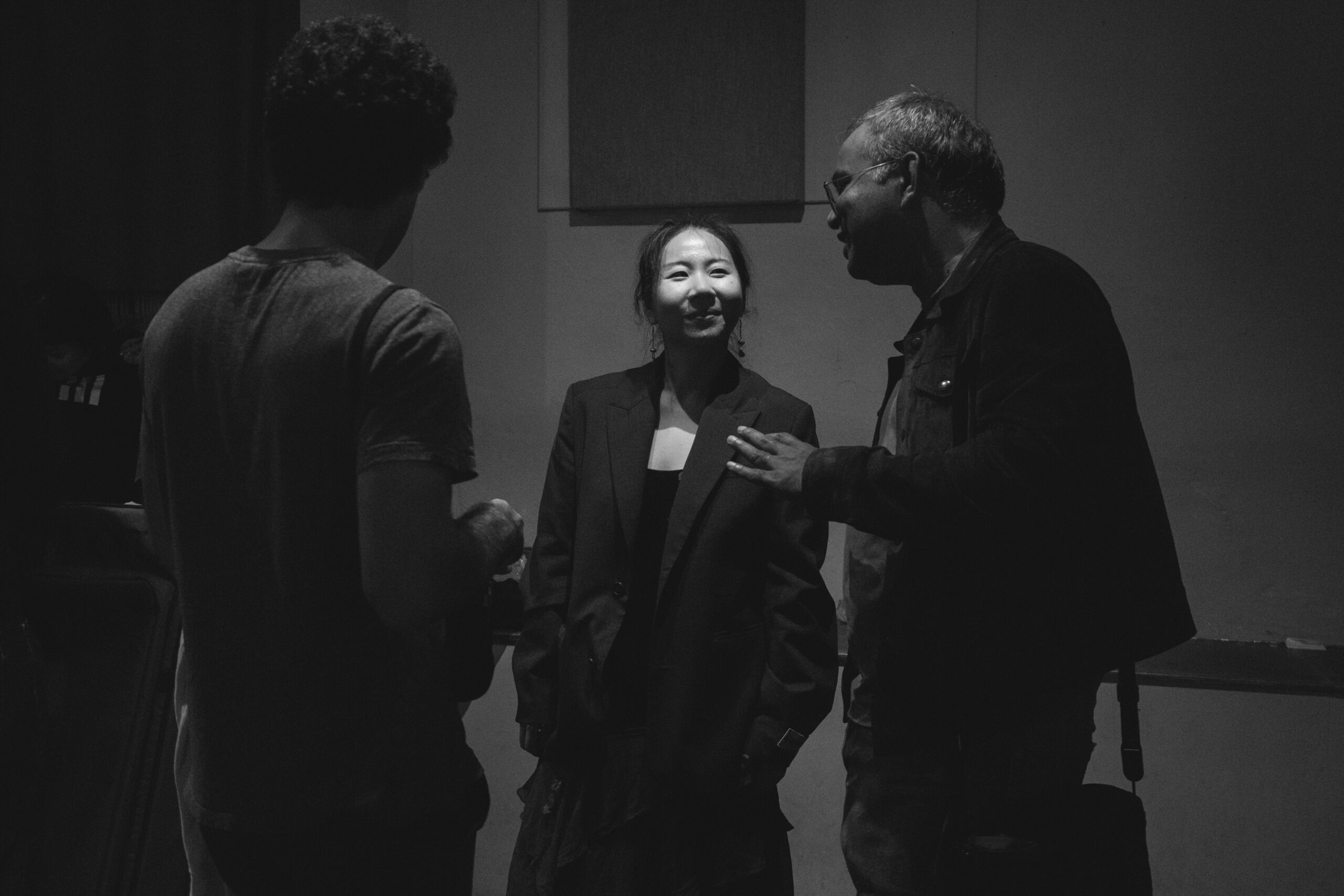
Jihun Park, in the middle, director of Bad Bias
No-input mixer feedback is a technique that generates sound by feeding a mixer’s output back into its own input, without an external sound source. Lucia’s work with no-input mixer feedback, she says, is often biased as “harsh noise”, or treated by some sound engineers as the wrong way to use a mixer. Jihun was also intrigued by the idea that “feedback itself could have something subversive, against the norm, and rebellious about it,” as Lucia had suggested to her.
Lucia also found herself often the only woman or the only non-British artist when performing in London. This resonated deeply with Jihun. While Bad Bias’ debut show focused on ESEA artists, its second edition brought together women and gender-marginalised artists from ESEA and diasporic backgrounds.
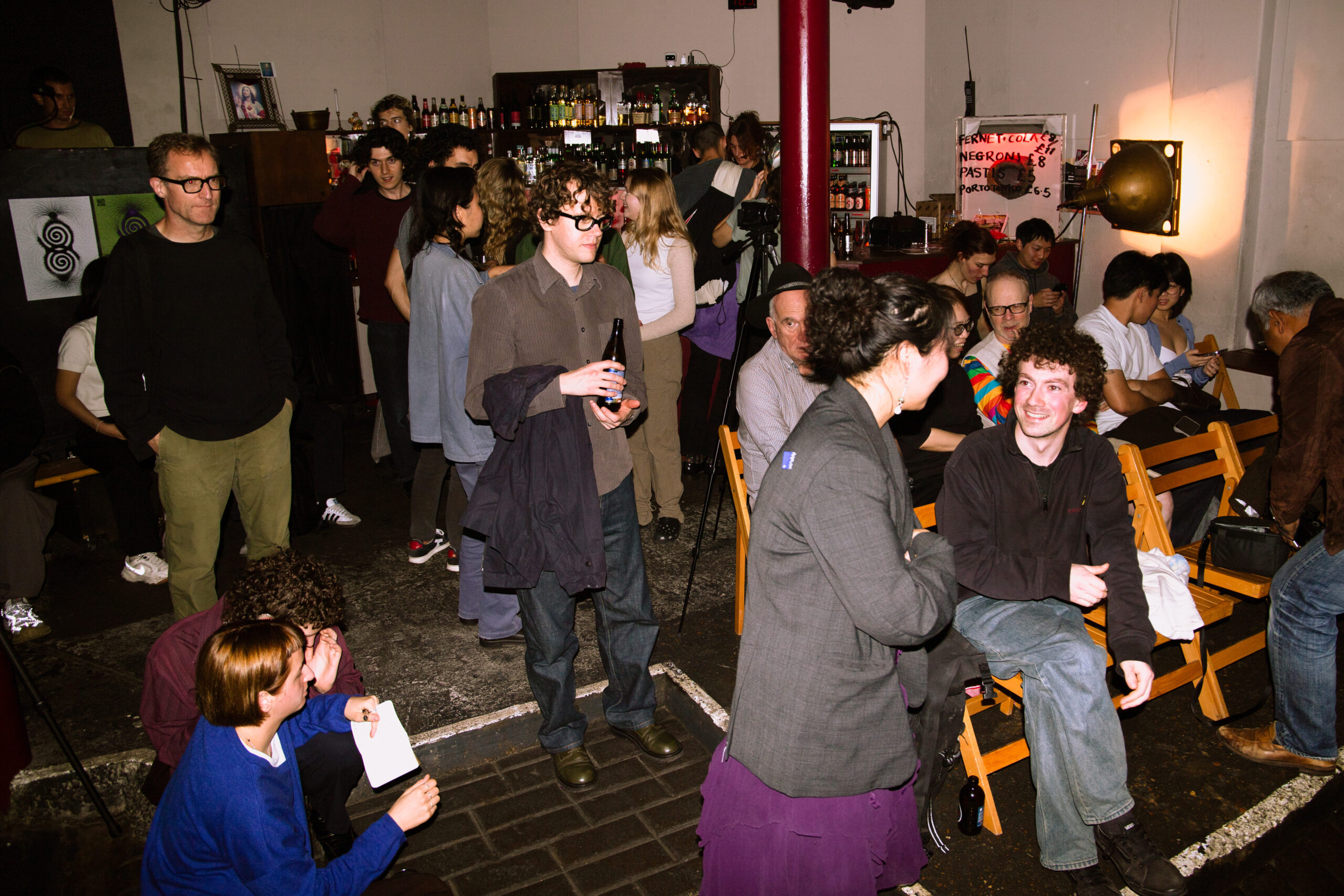
“I wanted to be flexible given the theme, which is why I did an open call as well this time to recruit artists,” Jihun says. Two of the recruited artists were, in fact, audience members from the first show — again, another example of feedback happening in real life.
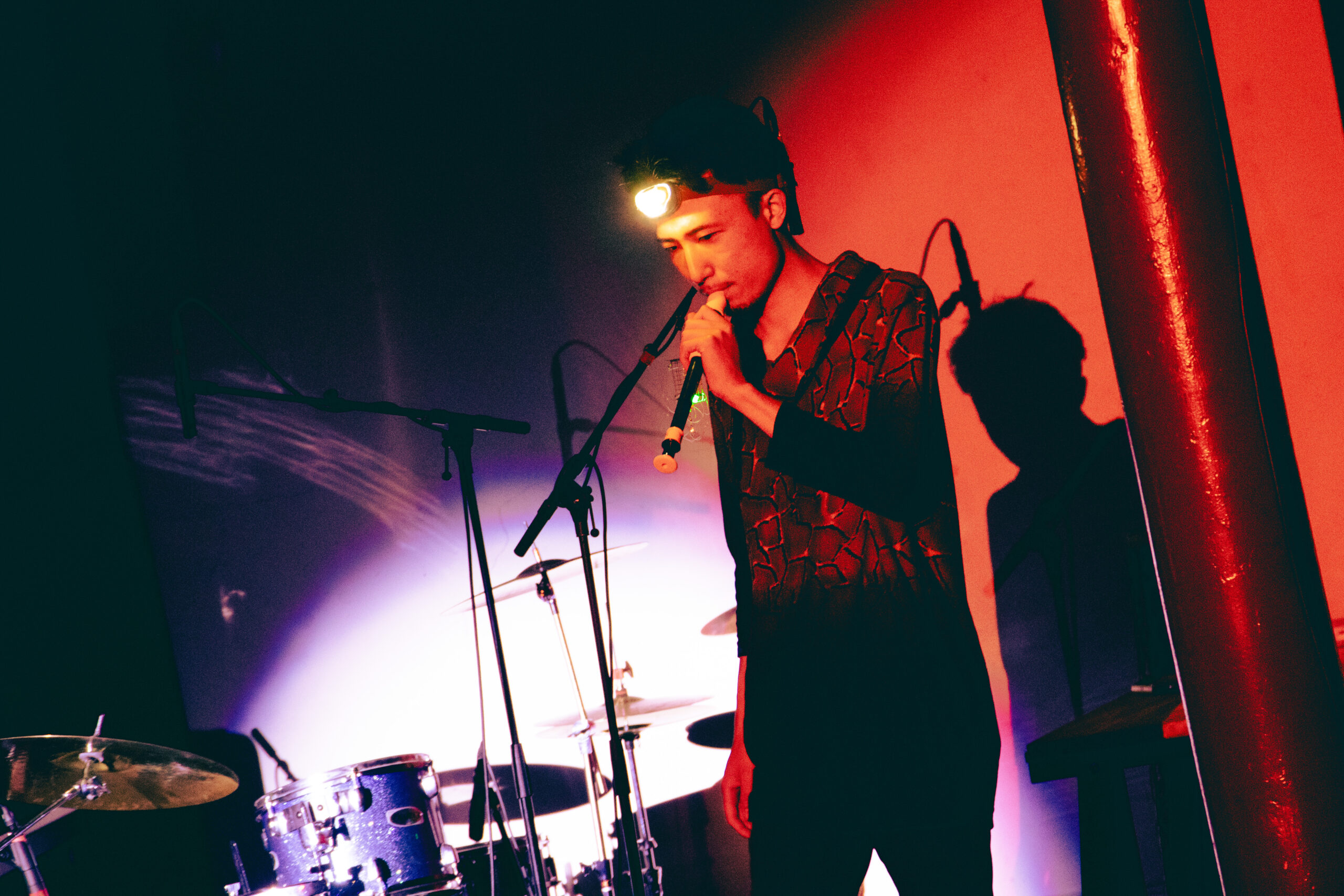
After the incense sets the scene, Japanese composer and performer Sakuretz! (Motoya) appears on stage wearing a head torch. Sakuretz! says they dream of being Michael Jackson, and they certainly appear well-versed in many musical instruments.
Read more: From Hong Kong to the US: The Journey of ‘We’re Nothing at All’
Throughout the act, they play a recorder, a pipe filled with sand, their own singing and humming, drums, piano and bells, alongside background music playing on a loop. They recreate an entire band by themselves, echoing and feeding back into their own sounds.
At one point, they play the piano with their back to the room, unaware of what is happening behind them, as Chinese artist Dann Xiao emerges from the audience.
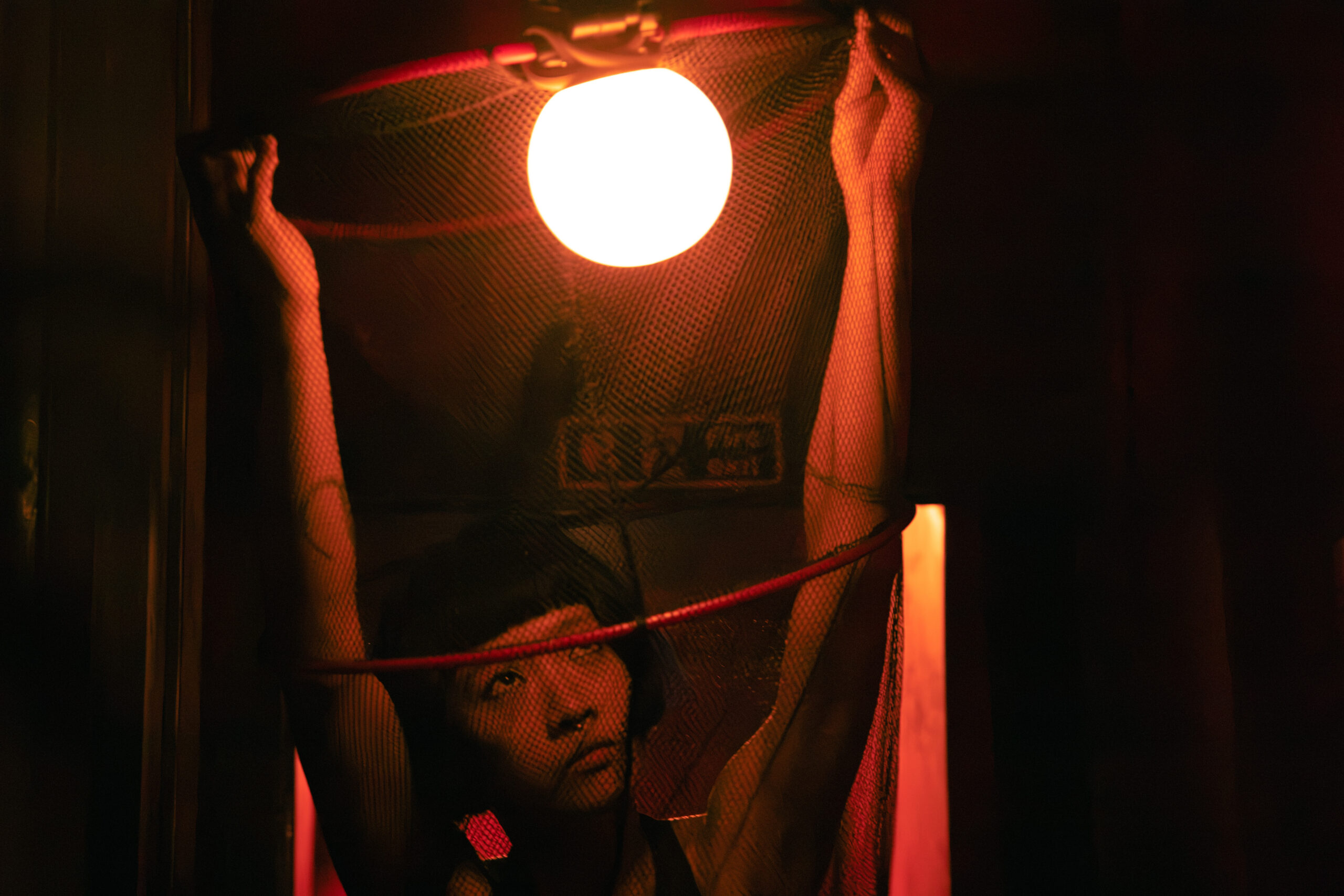
Dann is wrapped in a fishing net with a small ball attached to the top. Barefoot, she walks from outside towards the back of the room and then around the space among the audience. She walks, jumps, crawls and lies on the floor, struggling to get out of, or perhaps make sense of, the net.
Finally, she manages to free herself. She catches the dreamcatcher hanging on the wall and runs out of the door.
“I was stuck in the cage and looking at my desire,” Dann explains about her piece. “And finally I catch my bigger desire, the dreamcatcher.”
After a short break, Act 2 draws on ganying (感應), a Chinese cosmological idea of “stimulus and response”, to think about resonance between people and things, especially where certain experiences, conditions or qualities are shared. This also connects to Bad Bias’ curatorial focus on women and gender-marginalised artists from ESEA and diasporic backgrounds, whose overlapping experiences may deepen resonance and mutual influence.
The programme moves from the individual encounters of Act 1 towards the communities we form and move between, considering how these communities overlap and exist within a wider, interconnected ecology rather than in isolation.
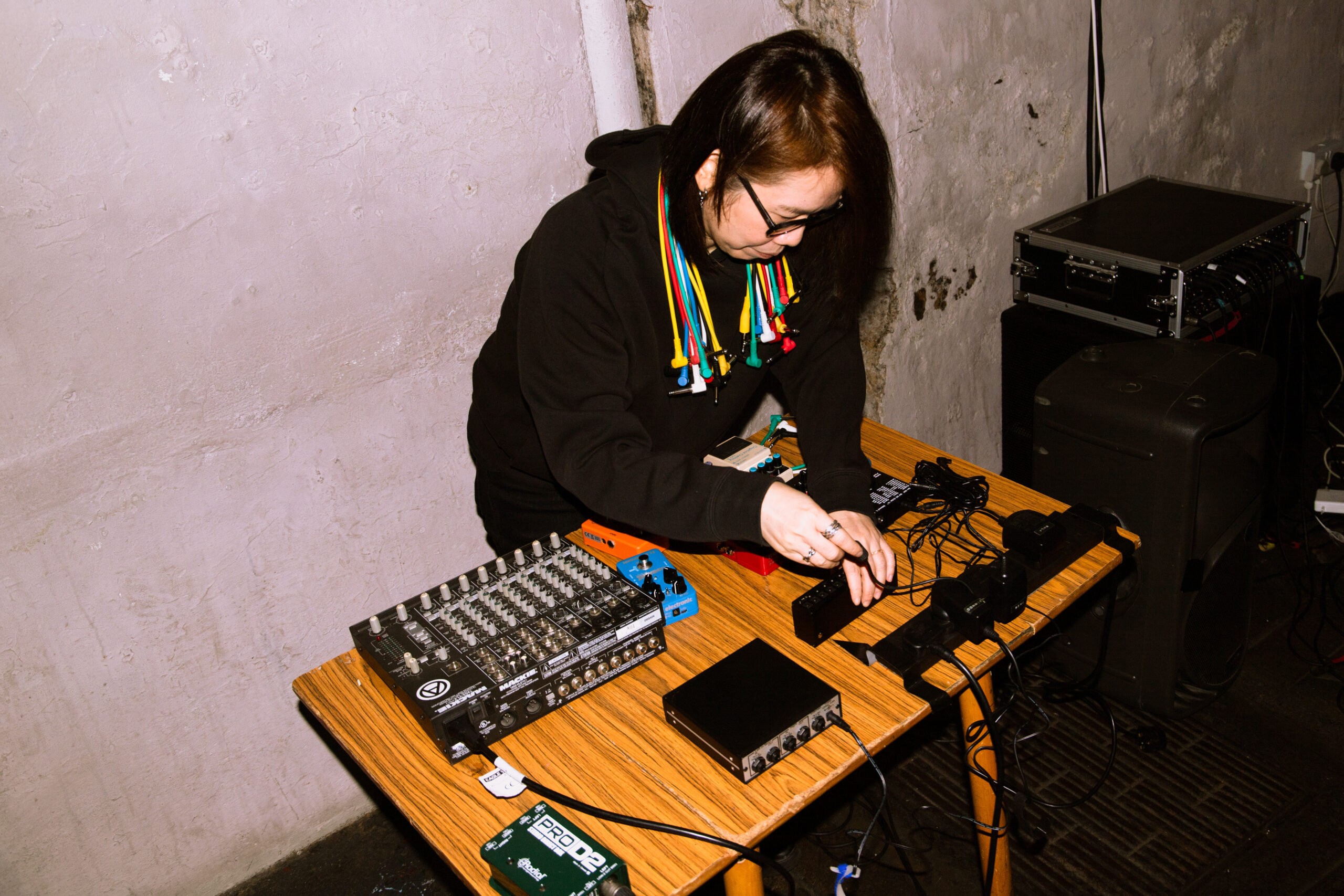
On one side of the stage sits Taiwanese experimental noise artist Lucia, working on a sound panel. On the other sits percussionist, improviser and sound artist Regan Bowering at a drum set. Two women sit facing each other, with little eye contact between them. Their sounds, however, meet, communicate and respond.
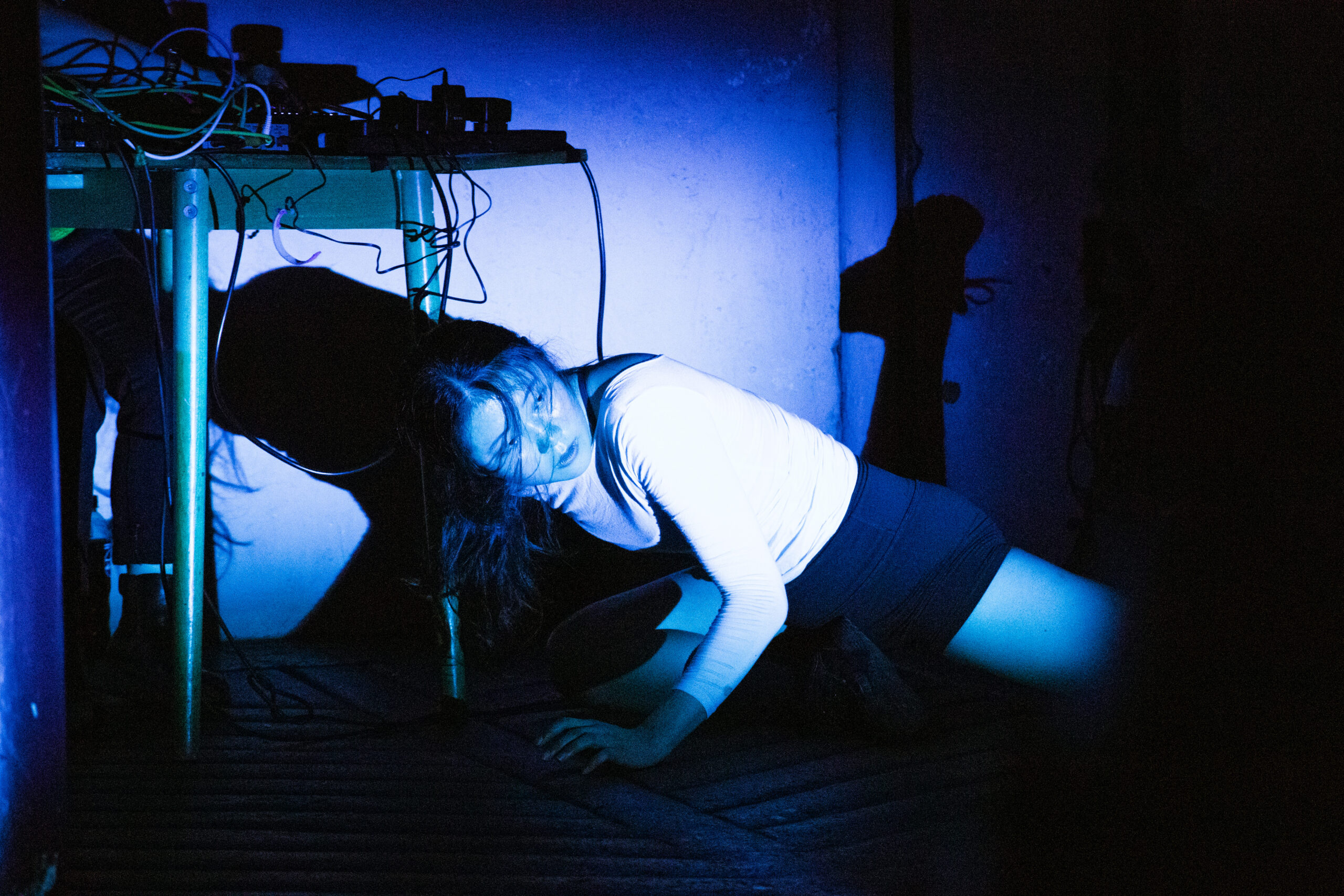
Singaporean dancer Amanda Pang then crawls out from the ground, dancing improvisationally to their sounds. The three women begin to echo one another through their own forms of expression, supporting each other without interfering or overstepping.
In the last act, Soo and Dann, who appeared in Act 0 and Act 1 respectively, return, creating a loop within the feedback system. Having passed through encounters with other beings, sounds and spaces, the signal returns transformed, carrying new relationships and responses into the next cycle.
Soo wears a flower ring on their head fitted with torches. They hold the bells again, bringing us back to the beginning of the show. Three other artists kneel at the side.
Then artist Hannah Mason was unable to perform on the day due to illness. vincente lights up their headband and sits in the corner of the stage, puffing as they tie knots into a long rope-like material, one by one. It feels almost like a funeral ceremony. People are grieving, remembering, memorialising in their own ways.
Incense and candles are lit. Background music begins to hum. vincente hits the kkwaenggwari (traditional Korean flat gong). Manpreet Gehlan lights their headband. The kkwaenggwari sounds again. Dann wakes.
It also feels like altars are waking up, one by one.
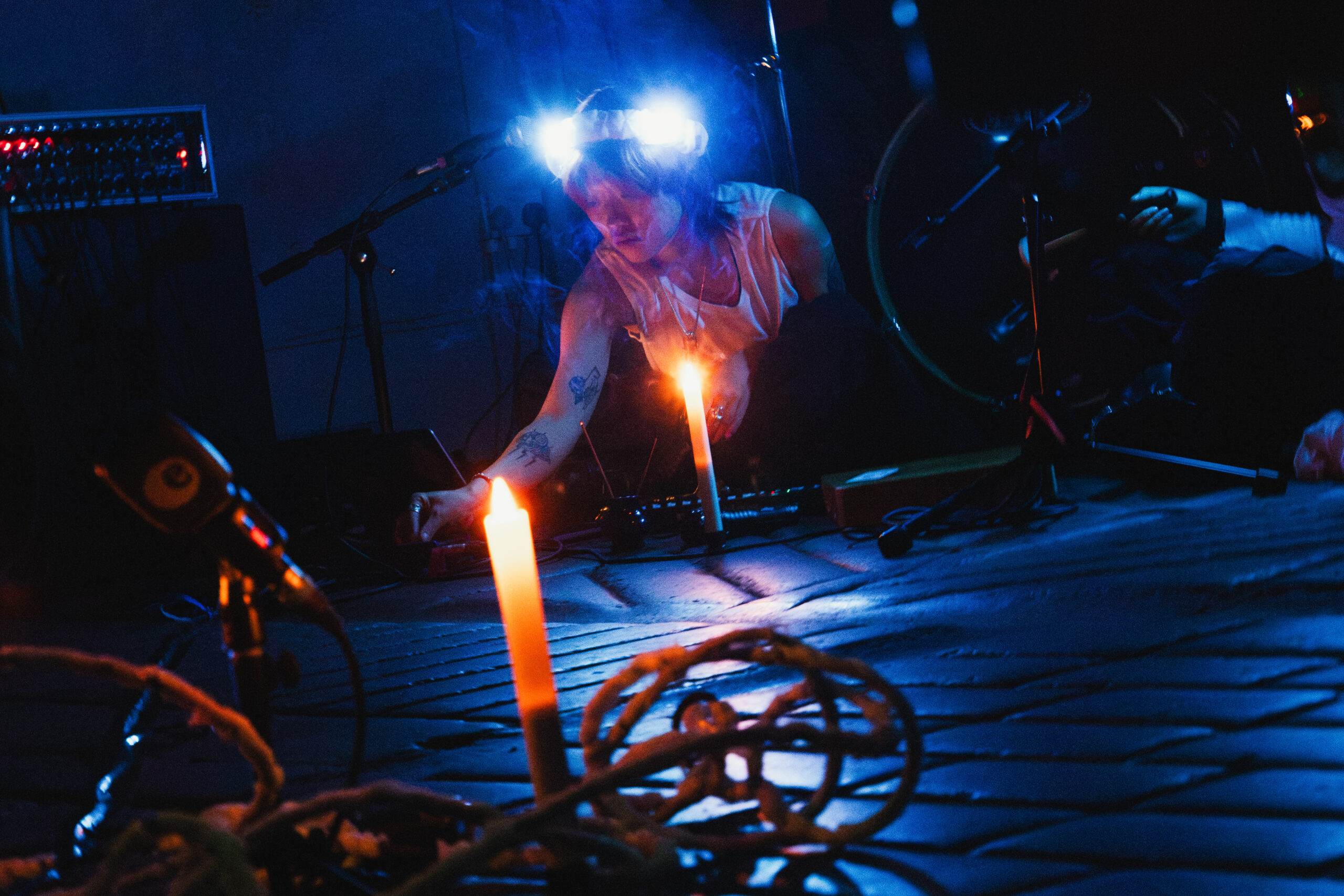
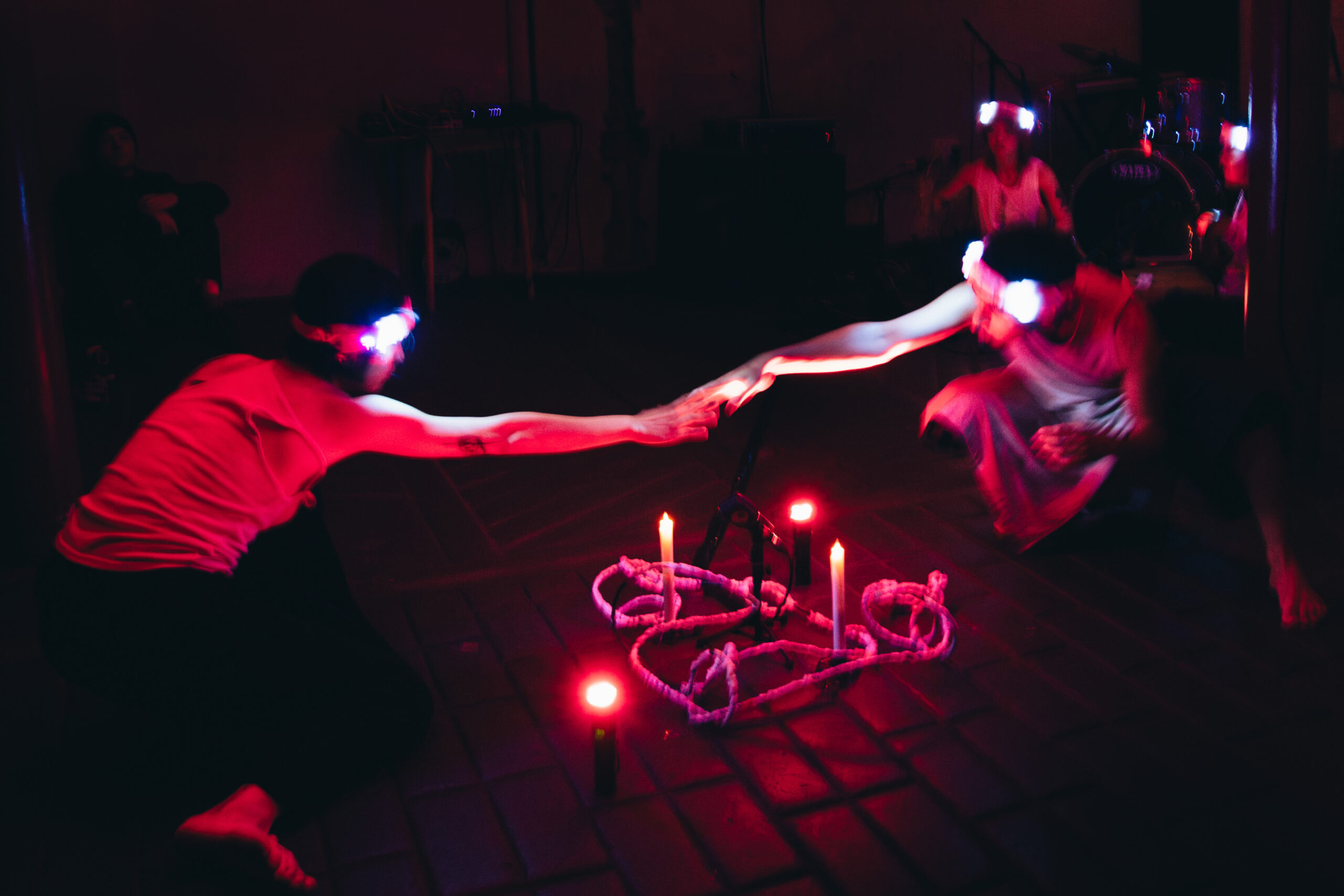
Performers’ sounds and movements are captured live and transformed into a sonic soundscape, which they then respond to in turn. A feedback loop emerges among the four artists. Dann and Gehlan move around each other, like two fireflies finding one another in a forest. Hand torches give off red light, moving like pumping hearts to the drumbeat in the background.
Are they mourning? Paying tribute to their dead lovers?
The two then face each other, mirroring one another’s movements. Finally, they hold hands.
Connected.
The show ends.
Soo explains that the concept was first developed as an attempt to reckon with their own shifting diasporic identity as a genderqueer, third-culture East Asian: “Like many other marginalised individuals, access to information and communication technology enabled me to construct an understanding of my own identity, diaspora, and history in ways that I was not safe to do in my physical surroundings. Yet, as so many experience, the increased integration of these technologies creates an echo chamber that limits human connection.”
For Soo, this produces a desire for “‘real’ shared experiences and connections outside the bounds of technology”.
This time, the feedback feels less like a technological mechanism and more like something bodily and human: one person moves, another responds; one sound emerges, another answers; someone leaves, someone else returns.
Read more: Inside Nina Porter’s New Venture Unpacking The Complex Realities Of British ESEA Ambition
“No community, just like no feedback loop, exists as a completely closed system. Different loops can meet, overlap, resonate and affect one another. That became one of the most important ideas behind the programme for me,” Jihun emphasises. “That is also what the title FEEDBACK TO FEEDB′ACK means to me. What returns through a feedback loop is not exactly what first entered it. B becomes B′.”
How does the audience engage with feedback in this show? I ask Jihun. Contrary to my thinking, she believes it’s less about asking the audience to actively participate but “more about paying attention to how their presence was already shaping the performance”. Each performer’s improvisation was responding not only to the other artists, but also to the space, the audience and the conditions of that particular moment, “so all of those elements were already feeding into what emerged in real time.”
And as Jihun puts it, as artists and audiences move their way out of The Horse Hospital, where they temporarily shared feedback for two hours, no one leaves exactly as they entered.
All images courtesy of Bad Bias and Elizabeth Quek