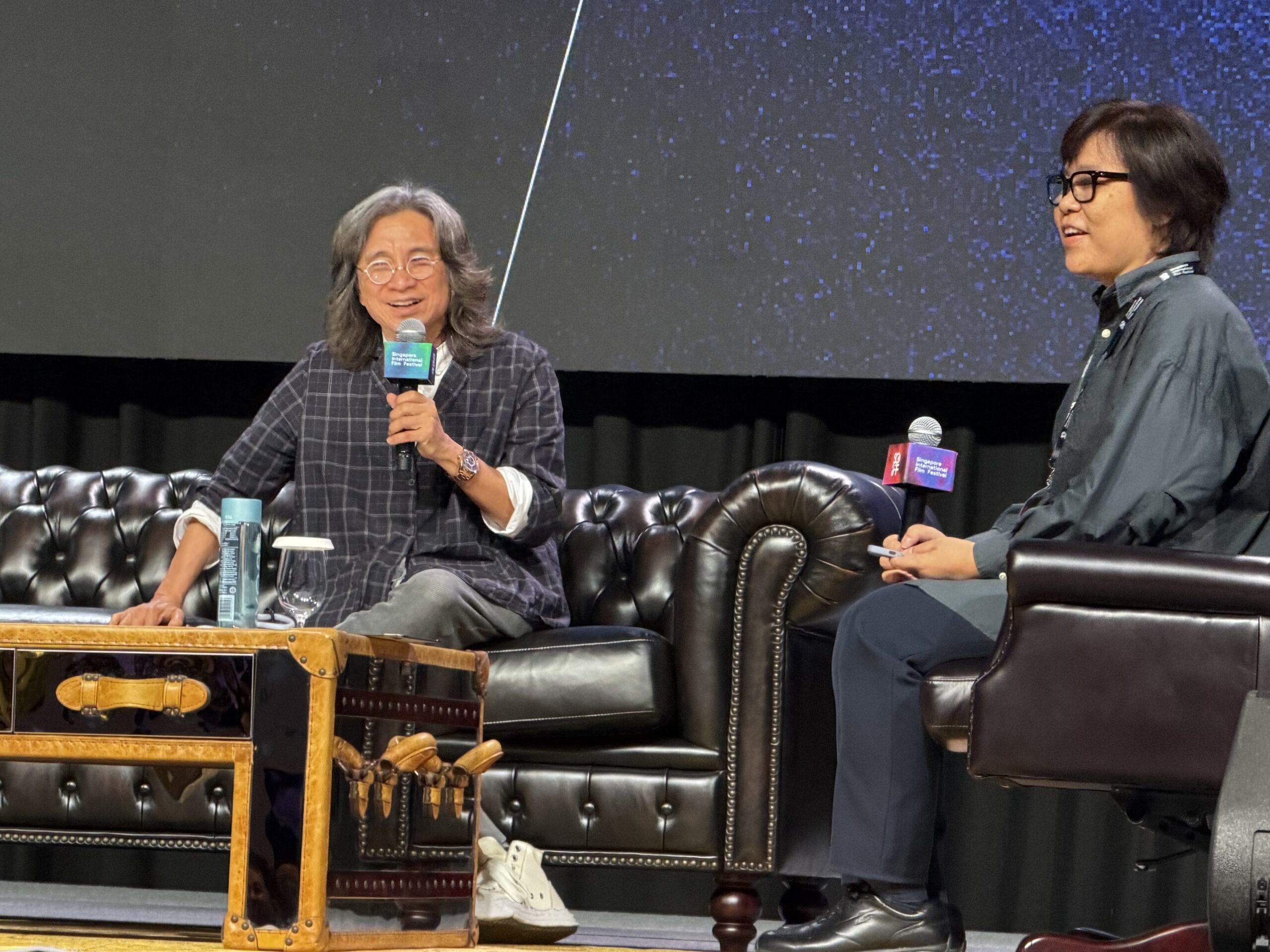
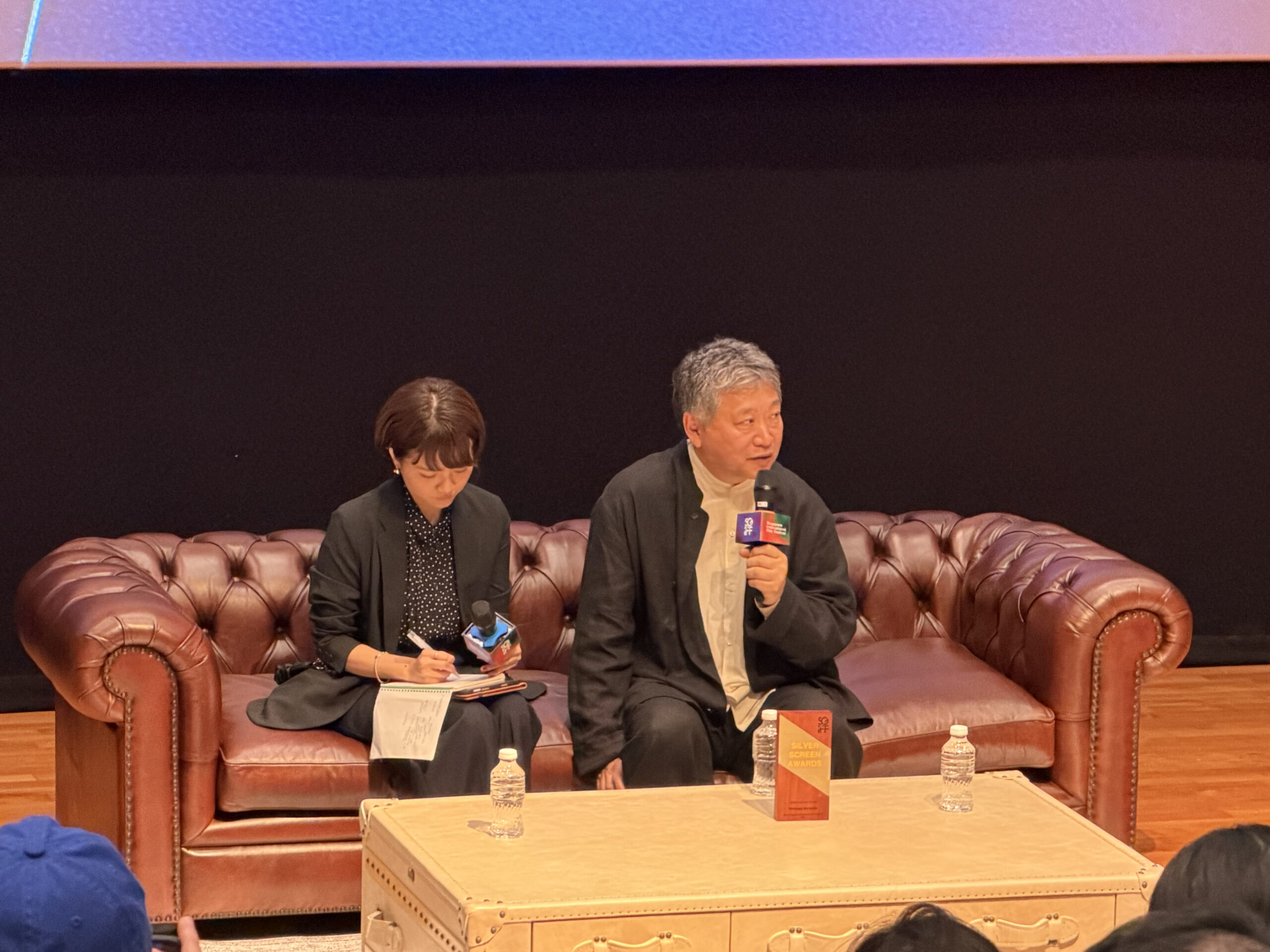
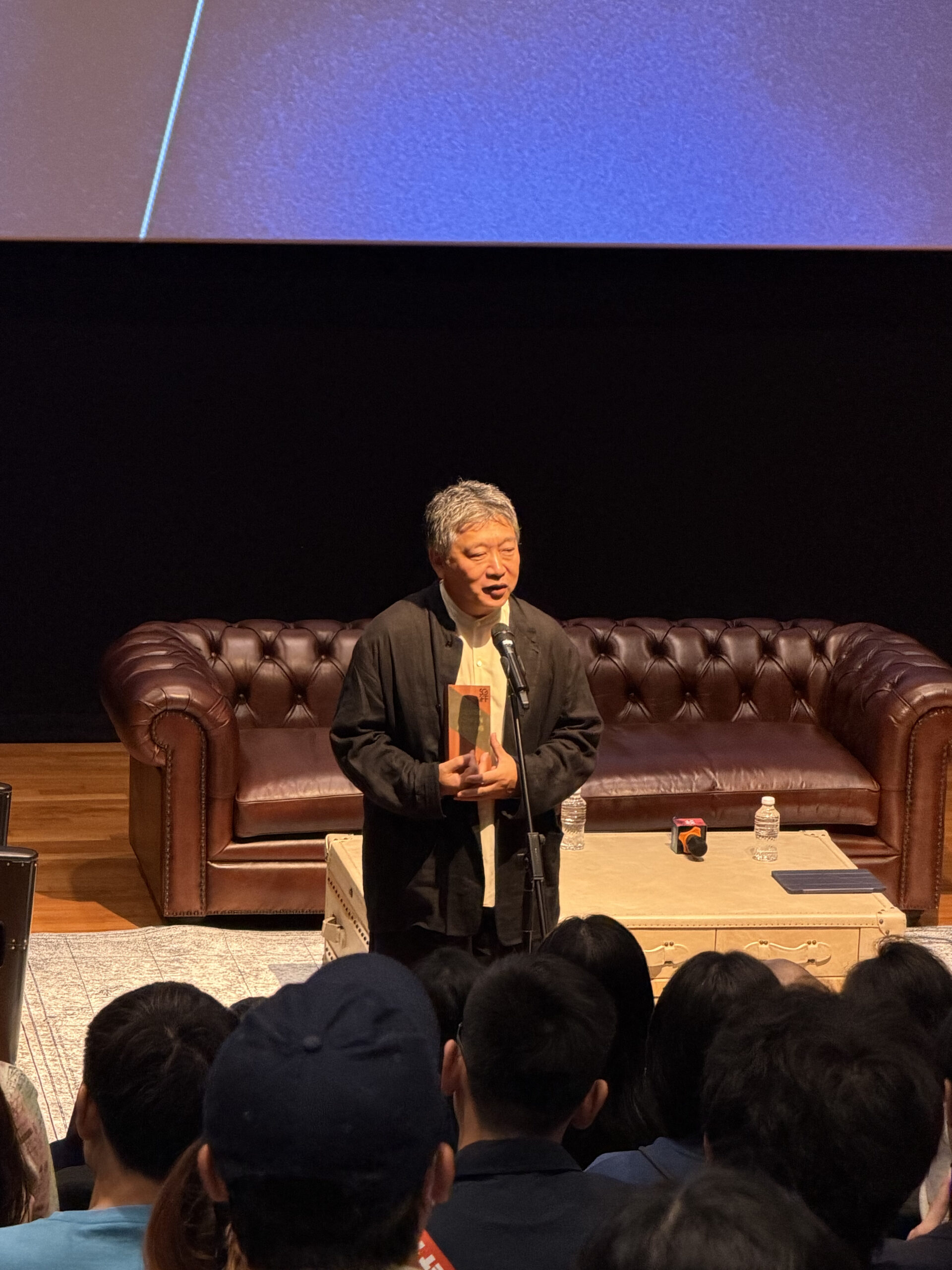
One of the most quietly electrifying moments at this year’s Singapore International Film Festival did not come from a red carpet. It came from a masterclass stage, when Hirokazu Kore-eda, in town to receive SGIFF’s Cinema Honorary Award, told a packed hall at the National Museum of Singapore how he let an artificial intelligence read one of his scripts, once, and why it will never happen again.
Then, almost as an afterthought, he revealed the one thing he will never film.
Together, the two admissions sketch a kind of manifesto from the 64-year-old Palme d’Or winner, whose new films Sheep in the Box and Look Back both screened at this 37th edition of the festival: feeling cannot be manufactured, only witnessed, and a director’s first job is to protect it, whether the thing at risk is a child’s face or his own conviction.
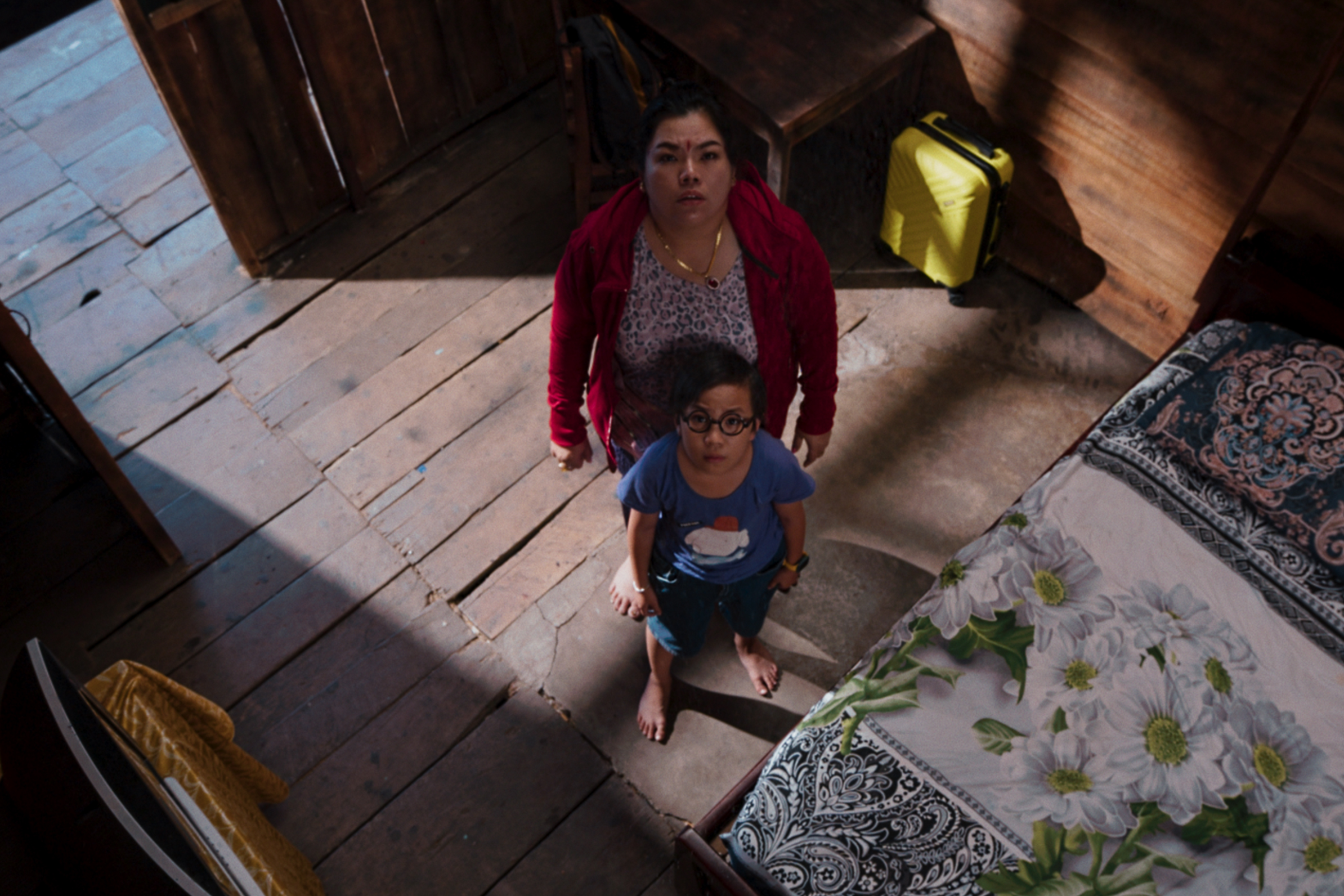
The story begins on Sheep in the Box, Kore-eda’s 2026 drama about grieving parents who welcome an artificial recreation of their deceased young son into their home. Given the subject, his producer made a proposal that sounds like a punchline.
“When my producer suggested it, ‘shall we try it?’, I thought, well, let’s hear it out, and for the first time I had an AI read my script,” Kore-eda told the audience on 24 October, speaking through his interpreter.
The machine was effusive.
“At first it said: ‘This is brilliant. This is without doubt a moving film,'” he recalled. “So I asked: if you had to point to anything, is there something that should be fixed? And it answered: ‘You might dig a little deeper into the mother’s character.'”
Read more: From Hong Kong’s Golden Era to Corporate Hollywood: Director Peter Chan’s Cautionary Tale
His verdict on that piece of development notes: “I know that already.”
The exchange went on for a few more rounds, but Kore-eda kept circling a single thought, one that drew the biggest reaction of the afternoon.
View this post on Instagram
“What I kept thinking was: this thing, surely, has never had a film change its life,” he said. “Obviously, it’s a machine. And there is nothing more boring than the opinion of a person, a thing, that has never been moved by a film. Knowledge-wise, it has plenty of knowledge, I’ll grant that. But that was the first and only time I’ve used AI, and I will never use it again.”
The irony is the point. The one film in his forty-year career where artificial intelligence entered the production process is the film about artificial grief, and the experiment confirmed what the film itself seems to know: that loss is not a dataset, and consolation cannot be generated.
Kore-eda was quick to insist the film is less science fiction than it appears. “Yes, AI is in it, but at its heart it’s grief work: how the living mourn the dead, the family. That’s actually the theme closest to my debut work,” he said, adding that watching Sheep in the Box and Look Back, his live action adaptation of Tatsuki Fujimoto’s beloved manga, back to back, “I feel they’re something of a return to my origins. I made them and thought, so this is me looking back at my young self.”
The rule he has never broken
If his rejection of machine feedback is a stance about where feeling comes from, his treatment of children on set is where that belief becomes visible, frame by frame. Asked by an audience member what he deliberately leaves unresolved in his films, Kore-eda answered with something unexpected: a vow.
“There is one thing I’ve decided: I will not shoot children crying,” he said. “It’s not that it can’t be done, or that it’s difficult. I don’t shoot it. I never film a child’s crying face, in tears. The ideal, to my mind, is a film where, after it ends, the viewer remembers the child’s smiling face and cries.”
For a director whose global reputation rests partly on the rawness of his child actors, the abandoned siblings of Nobody Knows, the shoplifting family of Shoplifters, the boys of Monster, the admission reframes what audiences have long taken for spontaneity as a matter of strict authorial discipline. The tears in a Kore-eda film, it turns out, are the audience’s job. Never the child’s.
His method behind the camera is built on the same protective logic. On Shoplifters and Broker he withheld scripts from his young casts entirely, studying each child in auditions and rewriting the dialogue around them. “I rewrite the script toward that child so they can stay exactly as they are in the role,” he explained. “Of course there’s still a character name and a setting, so it’s not equal to the child, but I write only words they can say with conviction. Doing that is what has made it possible for me to have them speak lines I whisper to them, or to just set up a situation and let them act.”
Read more: Aamir Khan Highlights Shared Values Between India and China, Jokingly Reflects on Piracy’s Role
On Monster, whose story demanded more care, he reversed course, deliberately handing out scripts so that “the child as a person is kept separate from the character,” which he judged “mentally safer” for the young actors.
And the rules of engagement on set are almost comically gentle. He does not scold. He does not rush. “The ideal is a shoot day that ends with the child saying, ‘Today was fun, I want to come back tomorrow.'”
And when a child refuses to listen to him? He writes the disobedience into the part. He told the story of auditioning a very naughty boy for Like Father, Like Son who would answer nothing, not his name, not where he came from, except “Y.” The staff gave up on him; Kore-eda cast him and made the character a boy who only says “Y.”
Kore-eda traces his craft with children to two directors he describes not as influences but as objects of pure fandom: Hou Hsiao-hsien and Ken Loach.
From Hou, he learned a technique he still uses: “When he wants to shoot children just playing naturally, he goes in and plays together with them, lets the camera roll while he’s playing, then quietly slips out and leaves the children playing, still natural. I do that too now when I’m filming small children.”
From Loach came a harder lesson, via the dead kestrel in Kes, the scene where the boy, discovering his beloved bird has been killed and dumped in a bucket, does not weep but brandishes the corpse at the brother who killed it. When a younger Kore-eda asked Loach whether shooting such a moment with a child wasn’t an ethical risk, Loach answered that the judgement is made one cut at a time, on accumulated trust: the relationship with the boy was strong enough that even if something cracked, “he had the confidence it could be repaired afterwards.”
“The strongest conviction I now hold is that the most dangerous thing in directing children is assuming that what worked on the previous shoot, or with the previous child, will work this time too,” Kore-eda said.
All images by Resonate Voices