
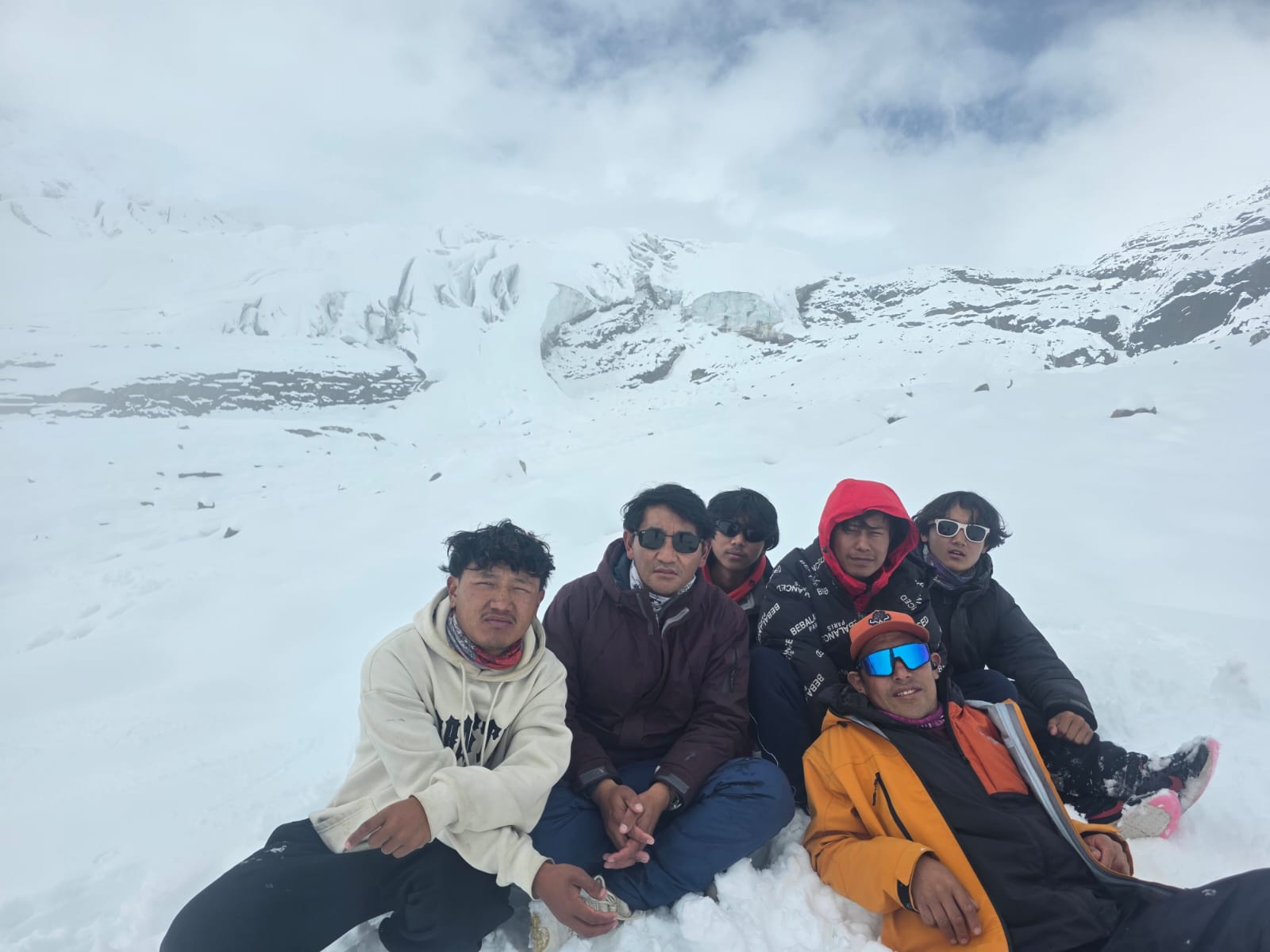
Here is something I did not expect to learn from a village of farmers at the foot of the world’s eighth-highest mountain: the most important piece of climate infrastructure in the Himalayas might be a siren.
Not a dam, a research station or another summit pledge. A loudspeaker on a pole, wired to a sensor on a lake, giving the people below enough time to run.
Samagaun does not have one. Dawa Norbu Lama, 36, went up the mountain to ask for it.
Speaking to Resonate Voices, Dawa talked about the glaciers his family has watched retreat, why he chose to protest at base camp rather than in Kathmandu, and the six-month promise that brought him back down.
“Before, There Used to Be Glaciers All the Way Down by Lakes”
Samagaun sits in Chumnubri Rural Municipality in northern Gorkha, on the trekking route around Mount Manaslu. Most of Dawa’s family are farmers, and they have watched the ice move within their own lifetimes.
“Before, there used to be glaciers all the way down by lakes, but now i they are very high up,” he says.
The change shows up in the fields as well. The rain no longer follows its old pattern, and snow arrives when nobody expects it. His family, Dawa says, is now unsure when to begin the farming work that used to follow a calendar everyone knew.
Our calendars may remind us of the seasonal holidays. In Samagaun, the seasons have stopped keeping their appointments.
What worries Dawa most is what the retreating ice leaves behind. Meltwater collects in lakes held back by loose rock and ice, and several new glacial lakes appeared around Manaslu this year. If one of those natural walls gives way, the result is a glacial lake outburst flood: water, rock and debris tearing down a valley with almost no warning.
A Flood With 34 Passports
On 26 August, a glacier collapse near the Nepal–Tibet border sent a wall of water, mud and debris down the Bhotekoshi and Trishuli rivers. In Nepal alone, more than 1,000 people have died and some 1.6 million have been affected. Across the border in Tibet, dozens more were killed and hundreds are still missing.
The heaviest price was paid by Nepalis: villagers, farmers, police officers, teachers and hydropower workers. But the valleys along that border are also among Asia’s busiest routes for trekkers and pilgrims, and the water did not check passports. By mid-September, 607 tourists from 34 countries were still missing in Nepal.
Read more: Sunscreen Diplomacy: Thailand’s Quiet Coup in Your Bathroom Cabinet
The list reads almost like Resonate Voices’ readership. Malaysia reported 55 citizens it could not reach. China said nearly 100 of its citizens in Nepal were missing. Nine South Koreans disappeared from a hydropower construction site. Nine Singaporeans were on the list too, alongside travellers from the Philippines and Vietnam, and from India, Ukraine, Britain, Australia, the United States and Canada.
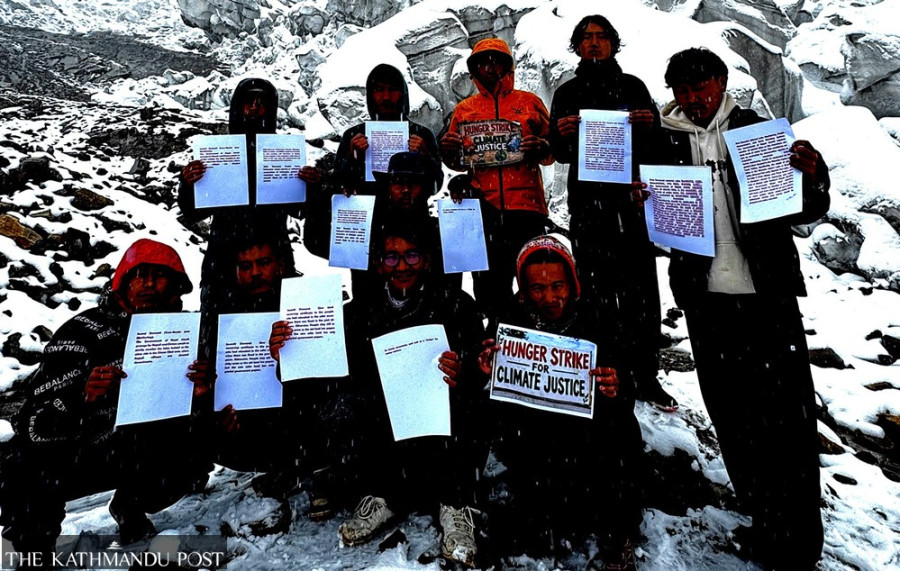
That disaster is what moved the youths of Samagaun to act. They announced their protest on 13 September, after watching the destruction in Rasuwa.
It is also why Dawa’s siren is not only Samagaun’s problem. The Himalayas belong to the people who farm them, but many of us borrow them, for a trek, a pilgrimage or a photo at base camp. A siren that warns a village also warns whoever is sleeping in its teahouse that night, whatever passport is in their bag.
You Might Not Have Guessed
Dawa is not who most people imagine when they hear “hunger strike at base camp.” He holds a master’s degree in Development Studies and works remotely as a data scientist from Samagaun. He has also published books on Amazon. He did community work after the 2015 earthquake, which struck his home district of Gorkha, and again during the pandemic lockdown.
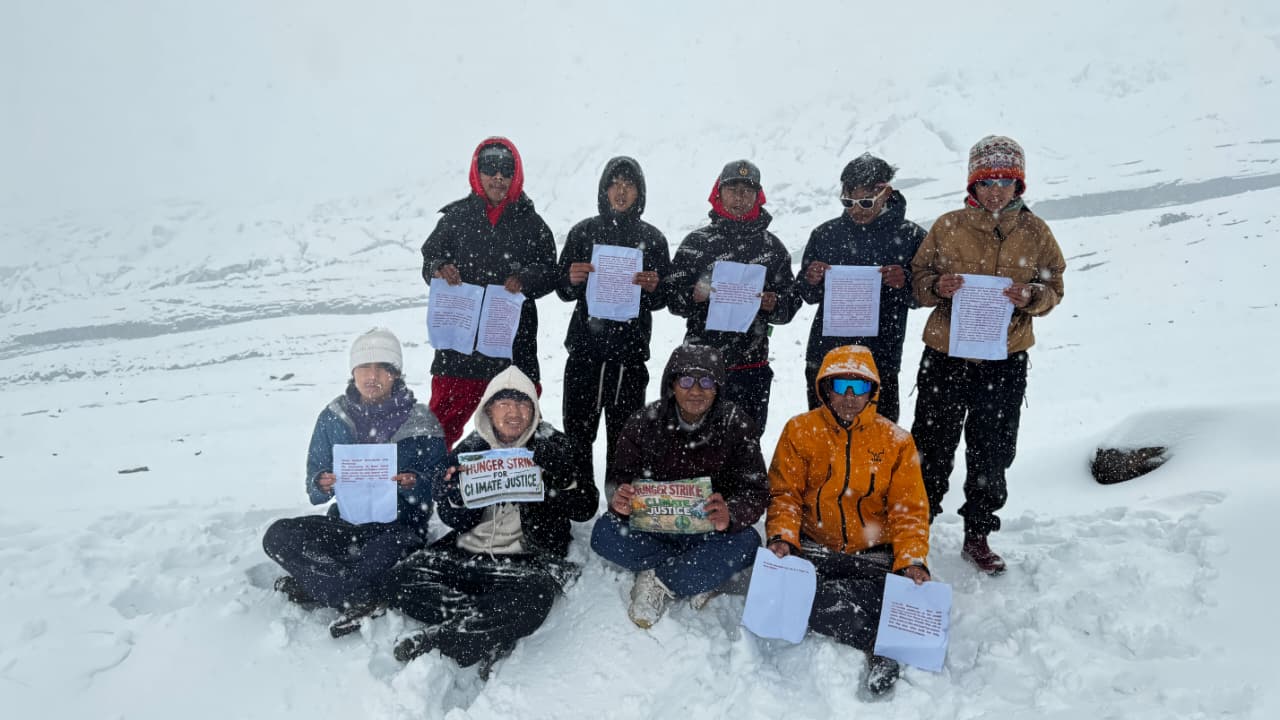
His reasoning for the location is blunt. “Not doing a hunger strike at an extreme point will not draw government attention,” he says. He also wanted the place itself to make the argument: to show the world, in person, that the glaciers are melting.
It is a data scientist’s logic, really. If nobody reads the report, you take your body to where the data is.
Wake Up and Break Up the Snow Above Our Tent
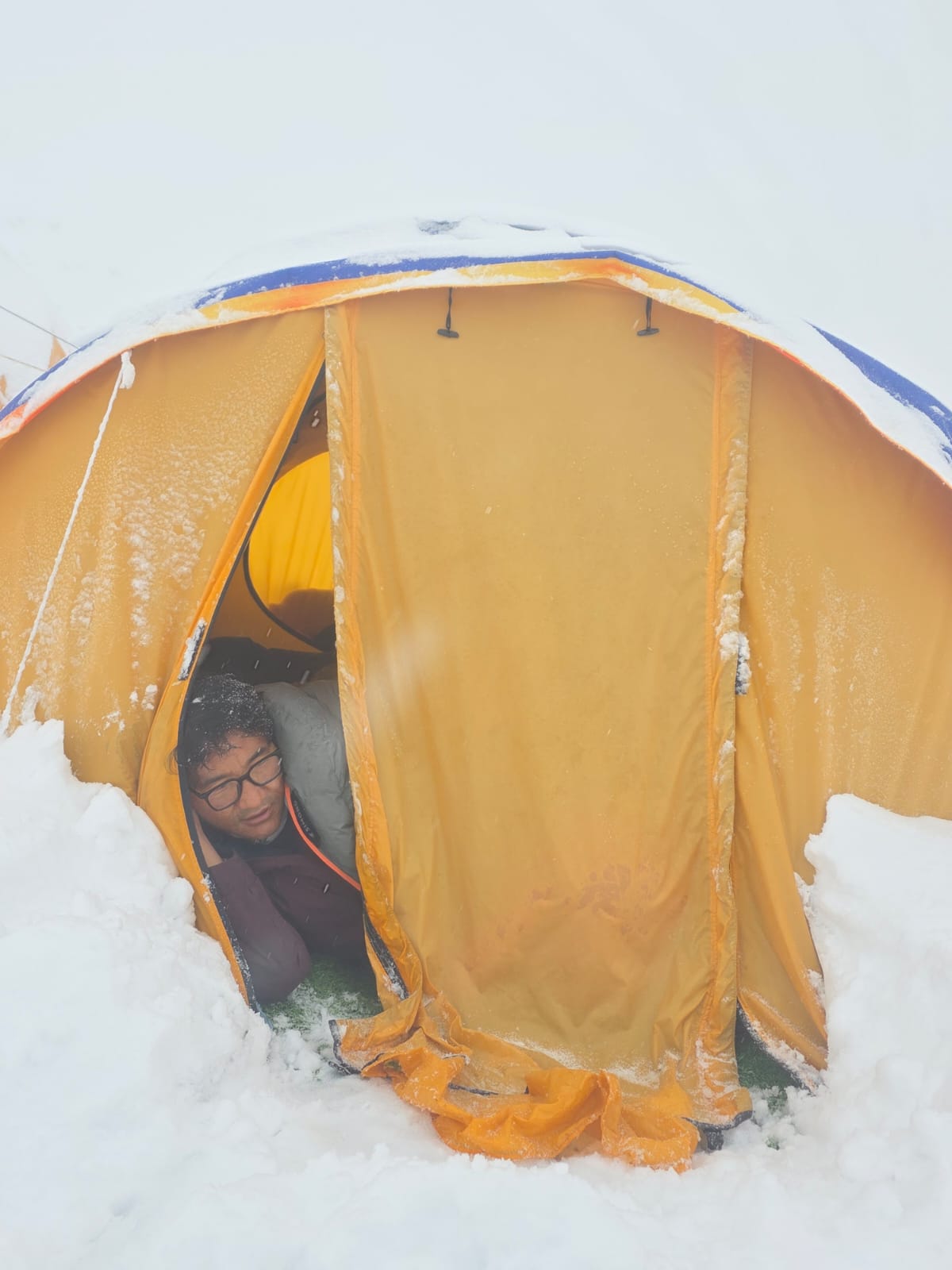
The strike began on 18 September. So did the snow.
“In the night time, we had to wake up and clear the snow above our tent,” Dawa says. By morning, four feet of snow had fallen.
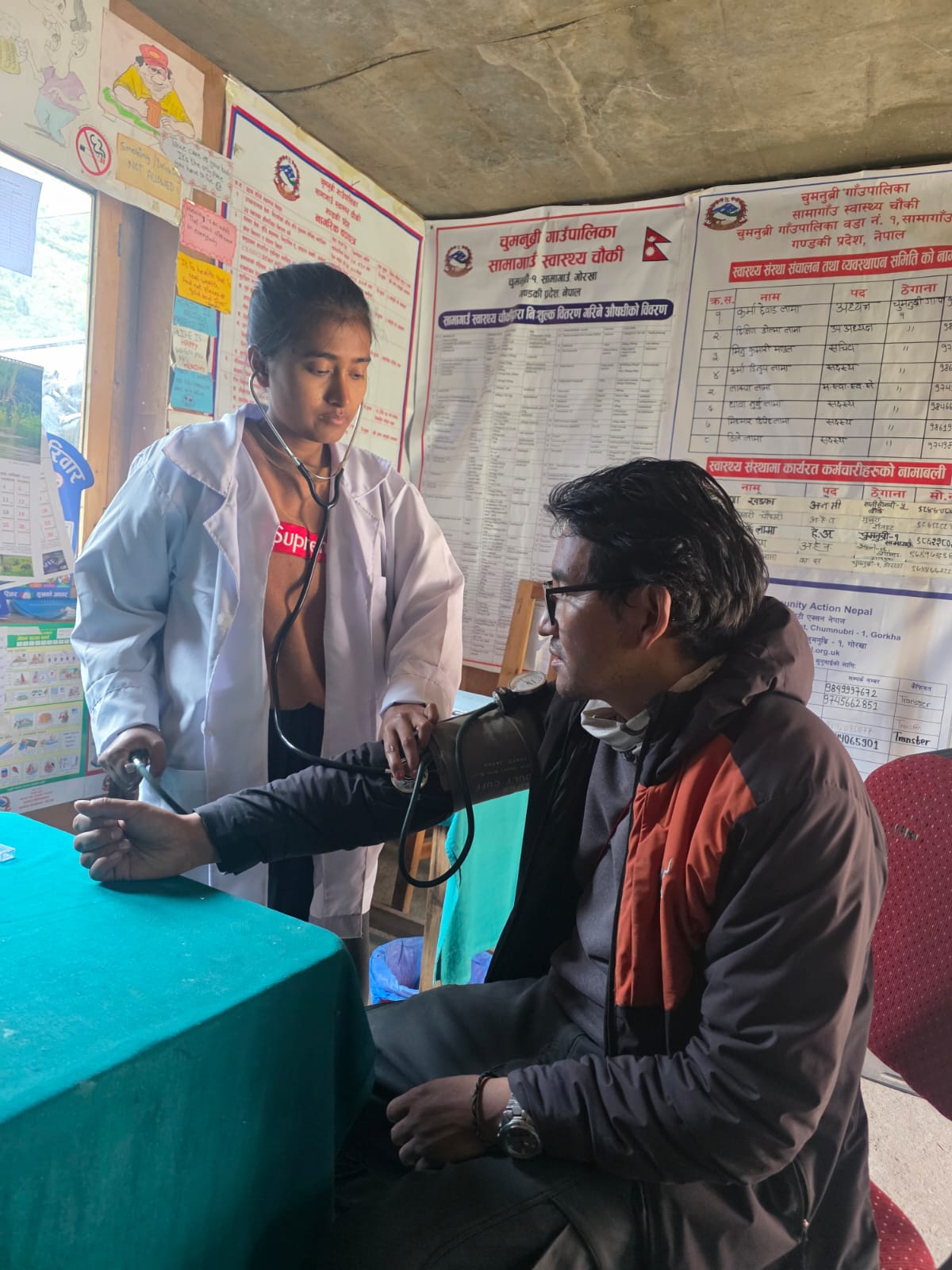
They went without food [and, Dawa says, without water]. By the third day, their bodies were keeping score. Dawa had a fever and chest pain, and several of the others were vomiting. He sent them back down.
He stayed.
Shorter Than a CVS Receipt
The demands behind all this are not radical, which is precisely the point. The group’s eight-point memorandum asks for:
1. aerial surveys and depth measurements of named lakes, including Birendra Lake, Kal Tal, and lakes near Pungyen, Ghunsarfuk and Nyochuthan
2. equipment to measure water levels, and sirens for the settlements below
3. joint monitoring with China of glacial lakes across the border
4. climate education in mountain schools
Not rocket science to the officials who received it; monitoring every lake in the Himalayas is a genuinely enormous job. But none of this asks for a new idea. It asks for someone to measure what is already there.
The imbalance behind it is hard to ignore. Nepal produces only around 0.04 per cent of global greenhouse gas emissions. Samagaun’s farmers did not create the heat that is moving their glaciers uphill, and the missing tourists did not either. They simply happened to be in the valleys where the consequences arrive first.
Six Months Counting, Starting Now
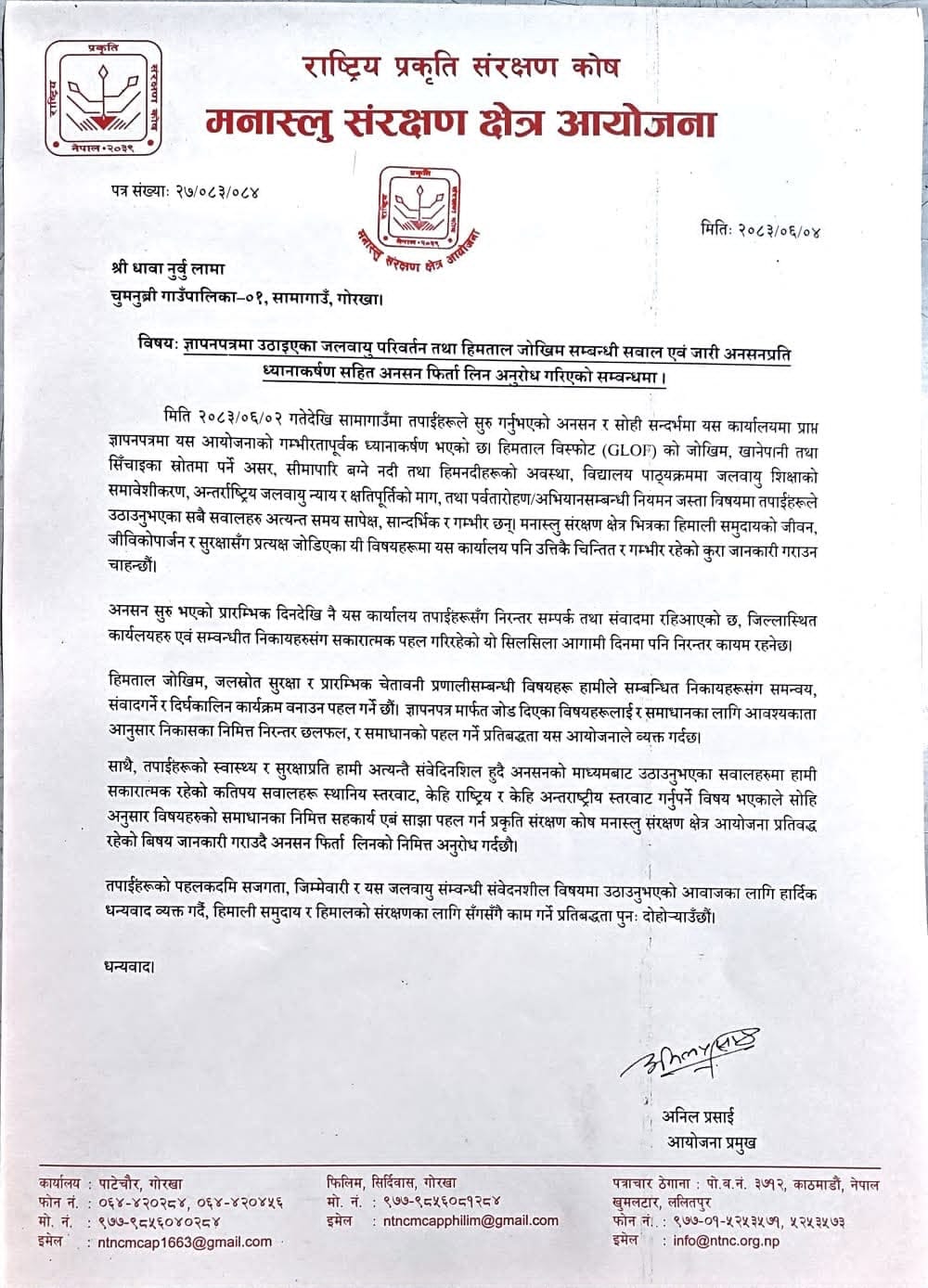
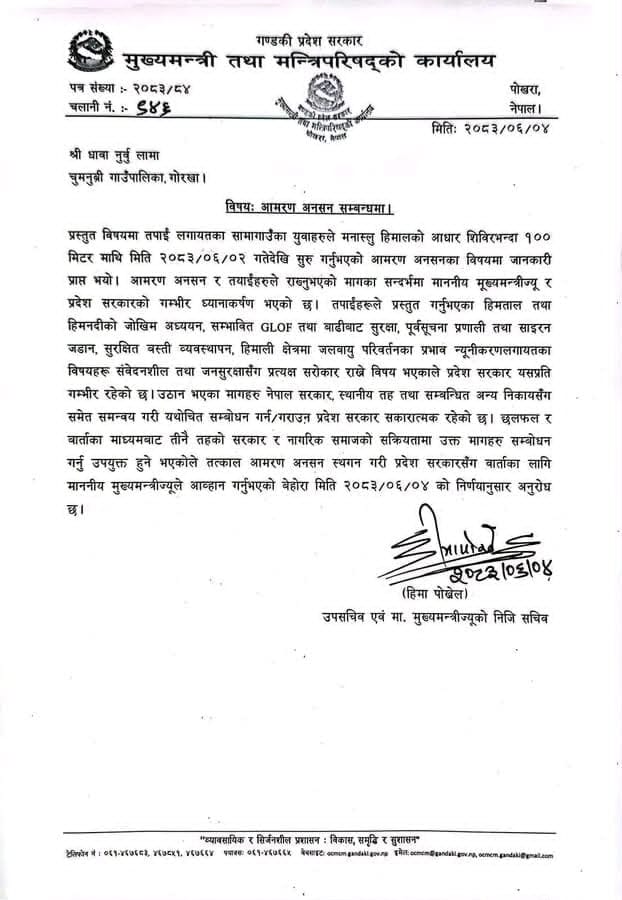
The strike ended with a promise. The Gandaki provincial government and the Manaslu Conservation Area Project pledged to act. According to Dawa, the government committed to monitoring the lakes and measuring their depths, working with the relevant conservation agencies, within six months.
That puts the deadline at around March 2027. The strike was suspended, not called off.
So this is a note to every traveller with Manaslu, Langtang or Everest Base Camp on their bucket list. When you book, ask your operator whether the valley you are sleeping in has an early-warning system. Ask again in March. Dawa has already done the hard part, in four feet of snow. The least the rest of us can do is keep count.
The glaciers have their own schedule. March is the government’s.