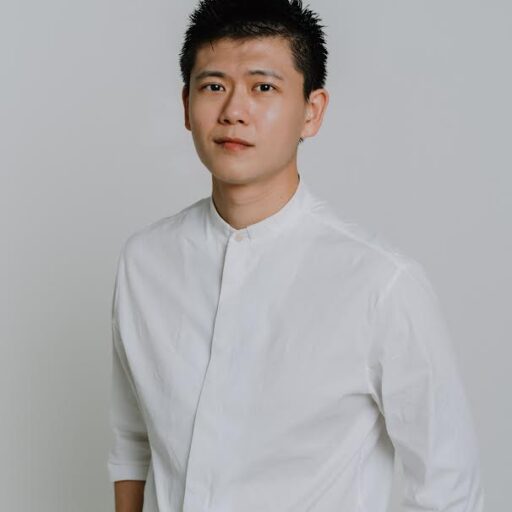
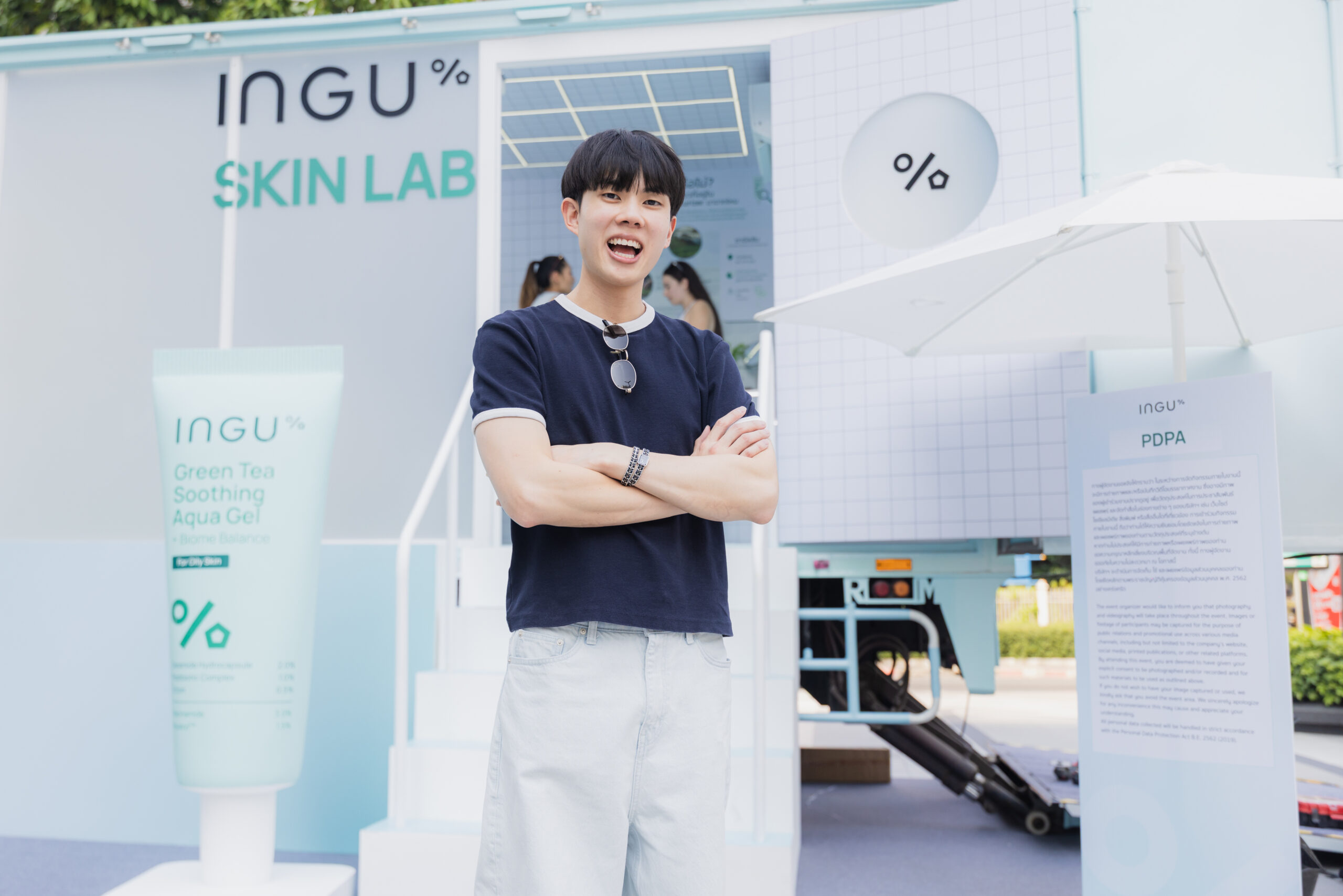
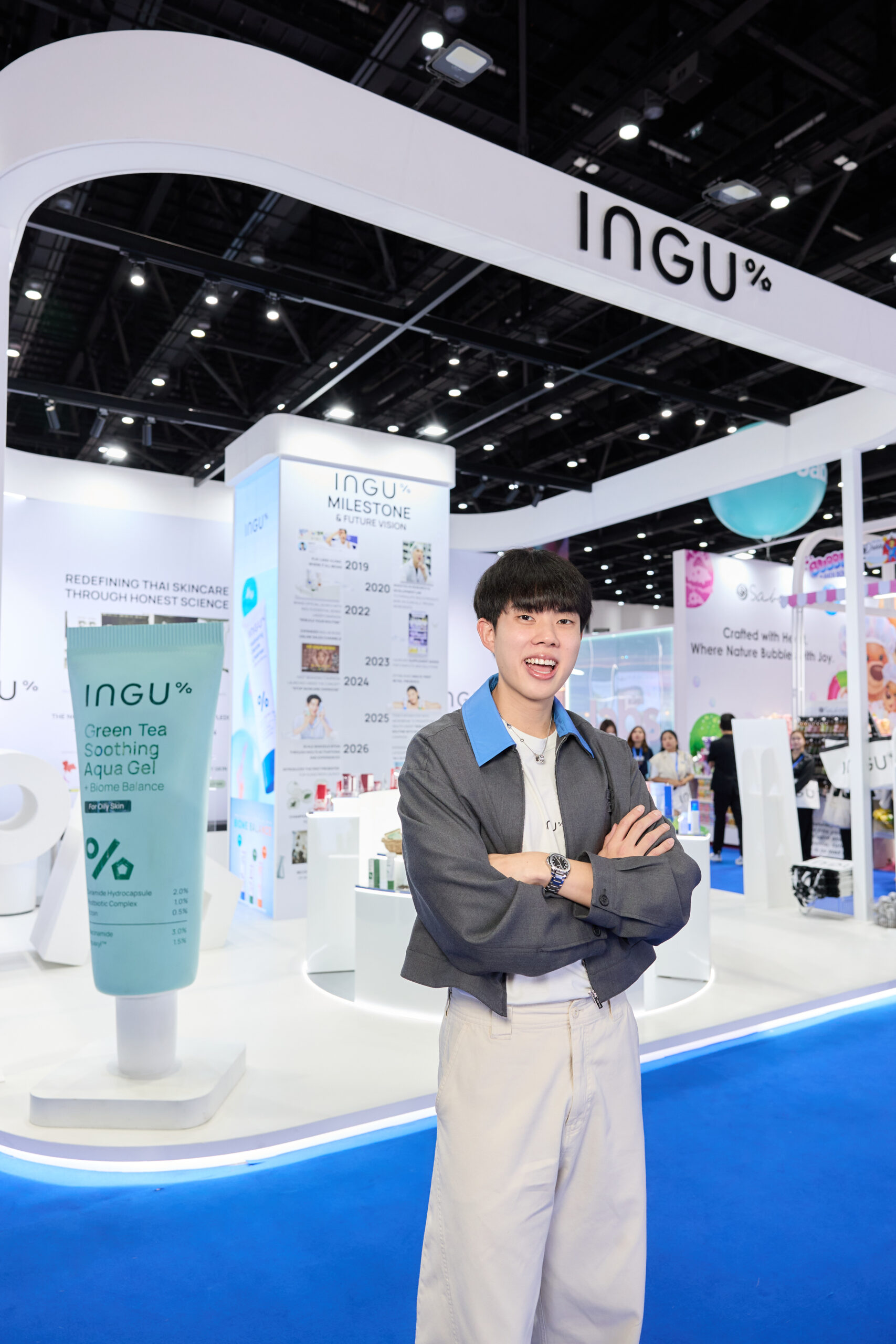
Long before he had a brand of his own, Ing (Chayadhorn Kitiyadisai) was “Flip the Box”, the reviewer who taught a generation of Thai shoppers to ignore the front of the packaging and read the ingredients on the back. Today he is the co-founder of INGU Skin, and the box being flipped is his own.
Ing grew up around formulation labs. His family has three generations in cosmetics manufacturing, roughly 70 years of quietly making skincare for other people’s brands. INGU is what happens when that family steps out from behind the curtain. The brand grew from US$2 million in revenue in 2022 to US$16.5 million in 2025, on a simplepitch: skincare designed for a country with no real winter, only sun, heat, and humidity.
It is a pitch that travels. When INGU held its first fan meet in Singapore, 8,000 people signed up for a room that could hold 1,000, some flying in from Kuala Lumpur and Manila, for a brand that wasn’t even sold in the country yet. As I wrote in Sunscreen Diplomacy: Thailand’s Quiet Coup in Your Bathroom Cabinet, Southeast Asia is finally buying for its own climate, and Thai brands are leading the way.
I asked Ing about maintaining a reviewer’s honesty once you’re the one selling, about the wedding sunscreen he made for his guests, and about whether T-Beauty should borrow Korea’s playbook at all.
Read our conversation below:
“The audience that grew up flipping the box will flip ours too”
Before INGU, you were “Flip the Box,” the guy who taught Thailand to turn the box around and read the ingredients. What made you want to go from explaining other people’s products to making your own? And how do you keep a reviewer’s honesty now that you’re the one selling?
Ing: Reviewing taught me exactly where the gap was. I could explain what an ingredient does, but I couldn’t change what was in the bottle. Growing up around formulation labs meant I could actually do something about that.
As for honesty, the conflict of interest is real, and I won’t pretend otherwise. The only answer I trust is to hold my own products to the same standard I use for everyone else’s: say what’s in it, say why it’s there, and back it up with independent testing instead of a good story. If I wouldn’t let another brand get away with a vague claim, I can’t let INGU get away with it either. The audience that grew up flipping the box will flip ours too, and they should.
Your family has three generations of experience in cosmetics manufacturing. What did you learn growing up around that, and what did you deliberately do differently?
Ing: I learned that a finished product is the end of a very long argument between stability, safety, cost, sourcing, and texture. Most consumers only see the last step. Growing up in that world cured me of believing that a good claim makes a good formula.
What I did differently was step out from behind the curtain. Our family spent 70 years making skincare for other brands, quietly, and doing it well. I wanted to put the science in front of the consumer, explain it plainly, and let people judge us on it. Same discipline in the lab, very different attitude toward the customer.
“Hot, hotter, and hot but wet”
You’ve said Thailand has no seasons, only sun, heat, and humidity. What does “built for this climate” actually mean in the lab?
Ing: To be fair, Thailand does have seasons: hot, hotter, and hot but wet. In the lab, “built for this climate” starts with texture, because at 34°C and 80% humidity nobody wants a rich cream on their face.
Read more: Sunscreen Diplomacy: Thailand’s Quiet Coup in Your Bathroom Cabinet
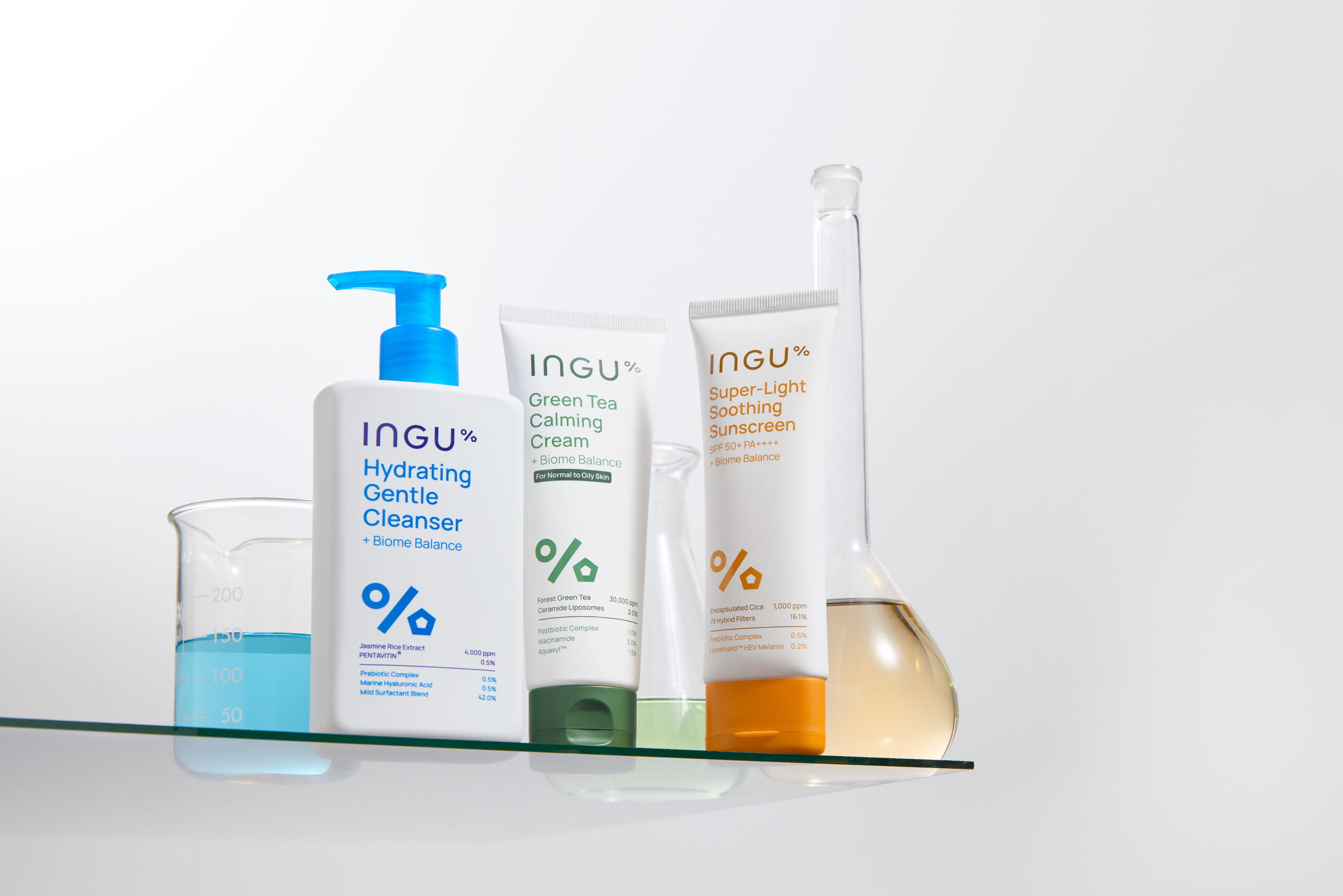
The catch is that light, water-based formulas usually get actives into the skin less well than heavy creams do. So people here have had to choose between the product that feels bearable and the one that actually works. Our patented technology removes that trade-off. It’s based on an ester that dissolves in both water and oil, so it helps water-soluble actives go deeper and takes the greasy feel out of the oils your barrier still needs. That’s how a texture that feels like water can perform more like a cream: weightless delivery, built for hot, humid skin.
What’s the most common mistake you see people in Southeast Asia make, because they’re following routines designed for colder climates?
Ing: Copying a routine built for dry, cold air and then fighting the results. Many of the routines people follow online were designed for a Korean winter, or a European apartment with the heating on. They layer essence, serum, ampoule, and a thick cream, and finish with a sleeping mask on top. Do all of that in Bangkok, where your skin is already sweating and producing oil before you’ve left the house, and you end up with congestion and a face that feels like it’s wearing a raincoat.
Then people overcorrect. They switch to harsh cleansers that strip everything and skip moisturizer entirely, and now their skin is oily and dehydrated at the same time, which is a special kind of unfair.
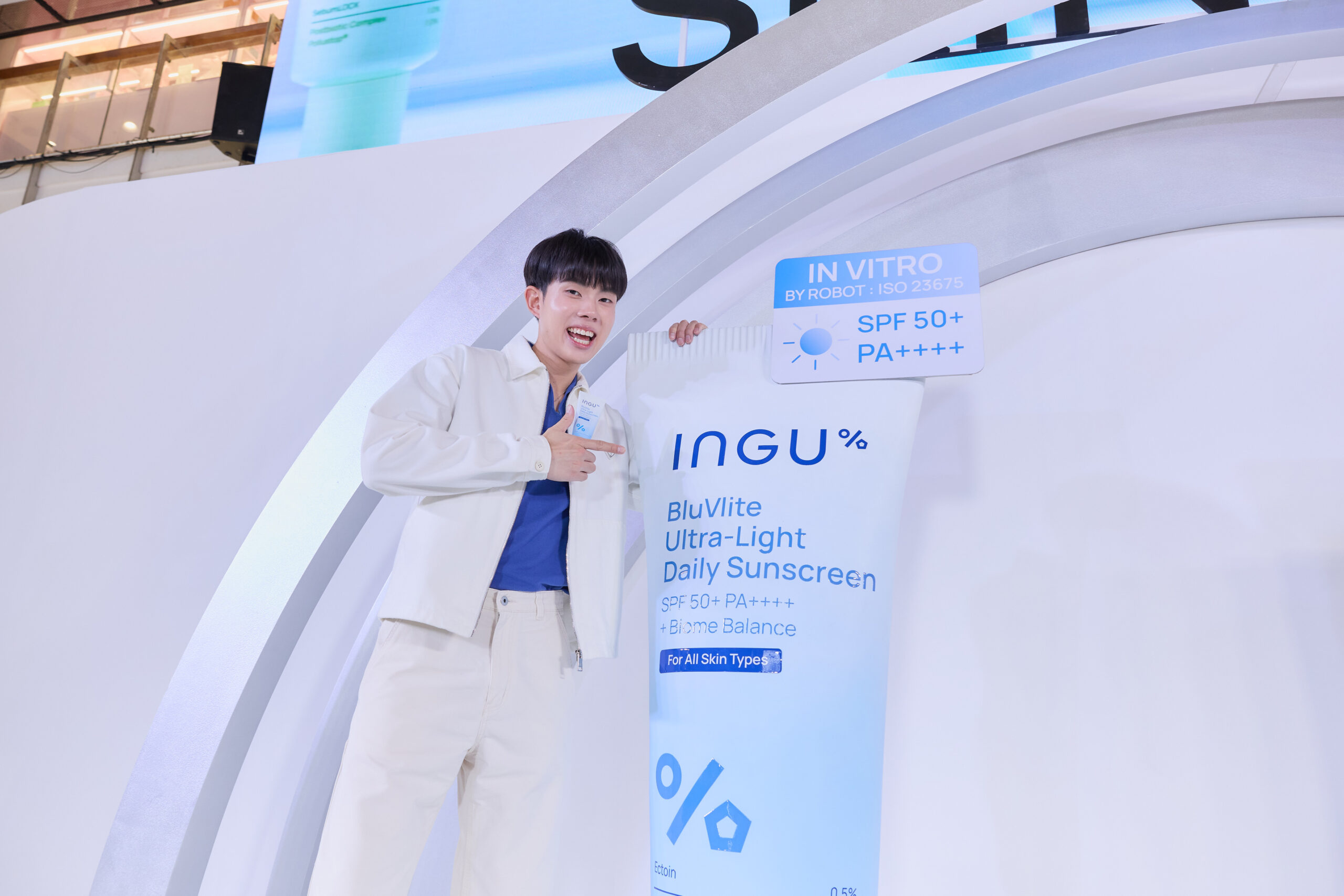
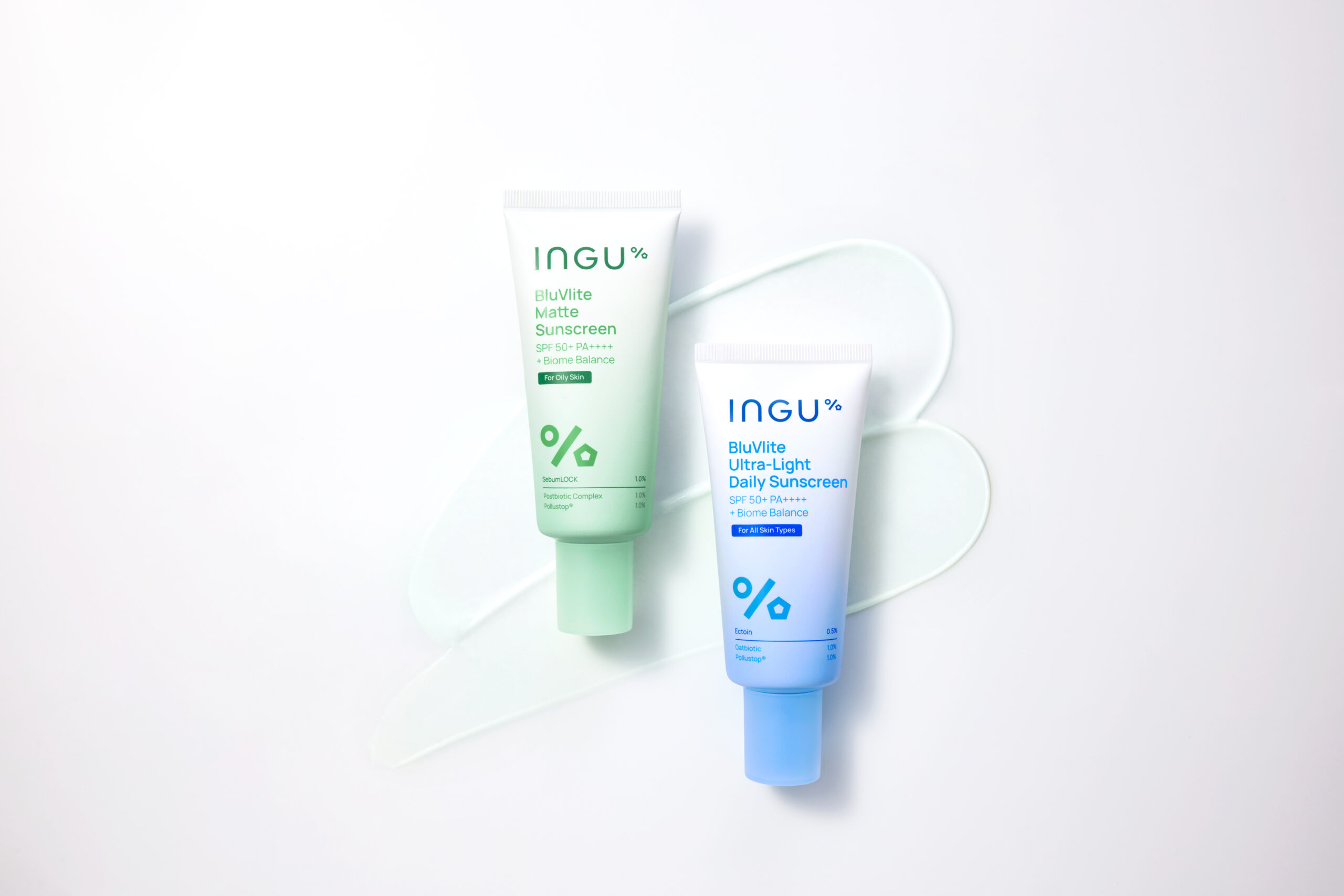
In this climate, you need fewer steps and lighter textures, not more layers. The one step you should never cut is sunscreen, because a UV index of 11 doesn’t care what season your routine was written for.
“The only wedding where the guests helped make the gift”
Tell us about the limited-edition sunscreen you created for your wedding. What’s the story behind turning a personal milestone into a product?
Ing: The wedding theme is sun and stars. I’ve spent years telling people the sun is not their friend, so it felt slightly hypocritical to invite it to my wedding without a bodyguard.
SPF is the one product I’ll defend in any argument. In Thailand, the UV index sits at 11 to 12 all year, and sunscreen does more for your skin long-term than anything else you own. So instead of favors that end up in a drawer, every guest gets SPF Ever After Sun Water, SPF50+ PA++++.
We didn’t formulate it alone, either. We asked 3,000 people from our community to vote on the texture and direction through a survey, then brought 80 of them into the office for a Skin Lab Meetup to try the options and tell us, to our faces, what they actually wanted. It’s probably the only wedding where the guests helped make the gift.
The new Brightening series looks very different, with its pink packaging. Who did you create it for, and what does “brightening” mean to you?
Ing: It’s for people dealing with the very common tropical problem of uneven tone: dark marks after breakouts, dullness from UV and pollution, the leftover evidence of heat and inflammation.
To me, brightening is not about making someone’s natural skin lighter. It’s about evenness and clarity, getting skin back to looking like itself on a good day.
The pink is a deliberate choice too. Actives can feel intimidating and clinical, and I wanted this series to feel approachable without watering down the science inside it. The look says friendly, and the formula still has to answer to the data.
“Trust isn’t about where you’re from”
When INGU launched in Singapore, 8,000 people signed up for an event that could hold 1,000, and some flew in from KL and Manila. What did that moment tell you?
Ing: It was our first event in Singapore, our first fan meet there, and we didn’t even sell INGU in the country yet. So I wasn’t walking into a room of customers. I was walking into a room of people who had only ever known us through our content and education. And they came anyway, in numbers far beyond anything we’d imagined.
That told me trust had been built before the product ever arrived, through explaining the science instead of just selling. It also told me the problem we solve isn’t only a Thai one. People in Singapore live with the same heat and humidity, and they’ve been following routines built for somewhere else.
And honestly, it made me feel the responsibility. That kind of interest isn’t a victory lap; it’s a promise, and now the products and the science have to live up to it.
Korea built an ecosystem: the drama, the idol, the product. Does T-Beauty need the same machine, or does Thailand need its own playbook? In my last piece for Resonate, I argued that copying Korea’s playbook is a trap. Where am I wrong?
Ing: On the main point, I agree with you: copying Korea move for move is a trap. Where I’d push back is on what we take from them. The drama and the idol are the visible part, but underneath was a very fast, credible pipeline from lab to shelf, and an export system behind it.
Thailand actually has a head start on that second part, because we’ve been the manufacturing base behind global brands for decades. What we haven’t done enough is put our own name on the product and tell the science story ourselves. T-Pop and Thai series are becoming very popular and helping us export our culture, but I wouldn’t skip the infrastructure or the credibility of our science. Our playbook is manufacturing depth, plus evidence, plus honest education.
INGU is built for heat and humidity, but your audience is growing in places like the UK and US. How can someone in London or New York make INGU work in a cold, dry winter? Would you ever formulate differently for Western markets?
Ing: To be honest, the line between “hot climate” and “cold climate” is getting blurrier every year. This summer, more than 80% of Europe went through strong heat stress, and France had its hottest summer on record, so London and New York may need heat-proof skincare more than they’d like to admit.
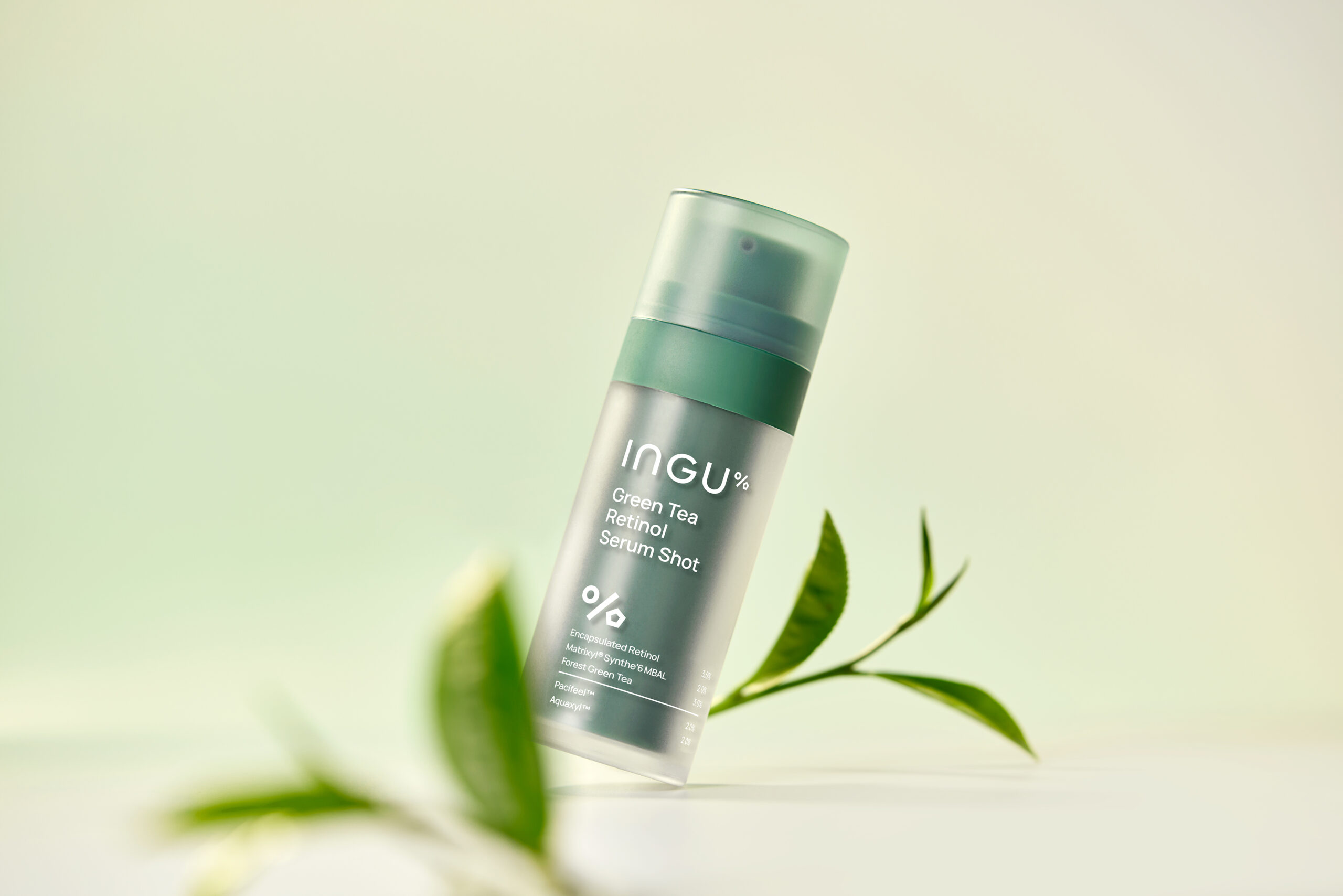
Winter is a different job, though, and that’s where our richer formulas come in. Our Green Tea Deep Repair Cream pairs ceramides with green tea from the Chiang Rai highlands to rebuild the skin barrier that cold wind and indoor heating tear apart. It does that job just as well in a London January as in an air-conditioned Bangkok office.
Read more: BLACKPINK’s Lisa Makes History at VMAs as a K-pop Solo Artist… But Not Without Backlash
The other thing people forget is that dehydration doesn’t care where you live. Skin that’s short on water feels the same in Bangkok as in Brooklyn, and our water-light formulas are built to deliver a lot of hydration without the heaviness. So for a cold, dry winter, my advice is simple: keep our hydrating layer, add Deep Repair on top at night, and please keep wearing sunscreen, because UV doesn’t take the winter off either.
Would we formulate differently for the West? We’d adjust the routine before we’d build a separate brand, because the climate is moving faster than any product launch.
There’s still a sense in Southeast Asia that foreign and expensive means better. Do you feel that bias, and how do you fight it?
Ing: I do feel it, and I understand where it comes from. International brands earned that trust over decades of research and consistency, so a young Thai brand starting from zero should expect people to be cautious. That skepticism is healthy, honestly, because it pushes us to do better.
The way I respond is with transparency instead of arguments. We show what’s in the formula and why it’s there, we test with independent clinical studies, and we explain the science until people can judge the product themselves.
Thailand has also been trusted by global brands for decades as a place to make quality skincare, so the capability has always been here. What we’re adding is our own name and our own story. Trust isn’t about where you’re from; it’s about whether you can show your work.