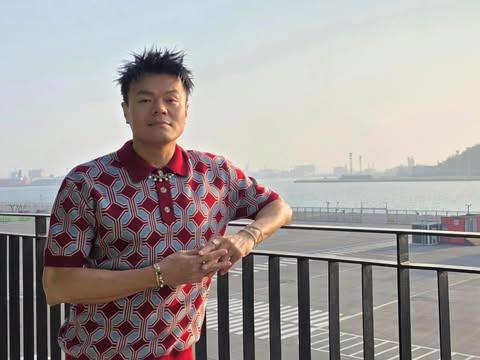
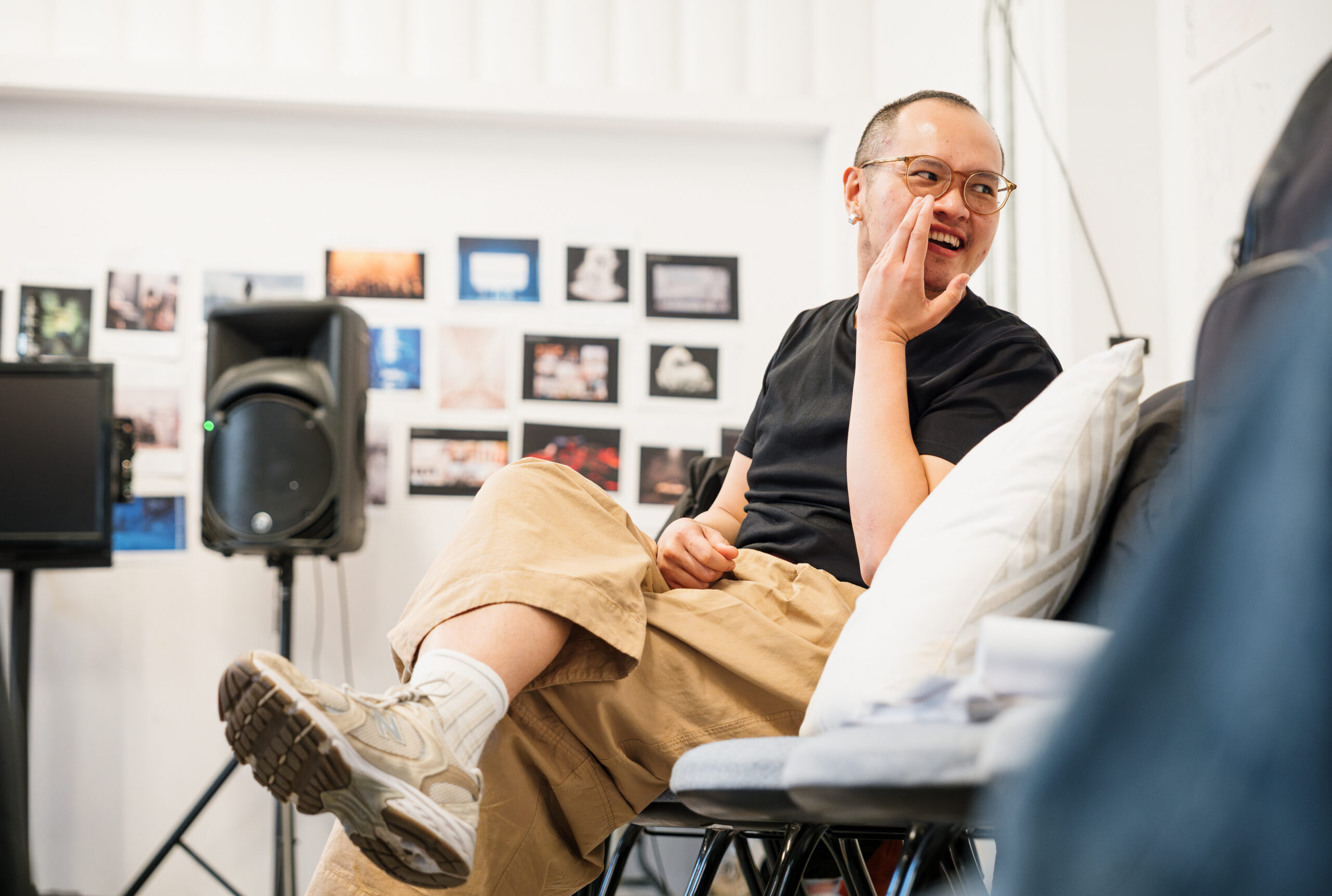
A familiar name in Singapore’s local theatre scene and an increasingly popular name in London’s sprawling theatre scene, playwright Joel Tan has been breaking boundaries and borders alike. From his reimagined comedic yet evocative version of Tartuffe for Singapore theatre powerhouse Wild Rice to his incredibly touching When the Daffodils at the Orange Tree Theatre, Tan’s work continues to move audiences and inspire the wider industry.
Scenes from a Repatriation at the Royal Court is his latest work, an adaptation of Heart of Darkness commissioned by Headlong Theatre and Beacon, presented as a new opera with composer Jonathan Shin.
Speaking to Resonate, Tan reflected on his career thus far and shared his impressions of the contrast between Singapore and London’s theatre scenes.
CC: OK. Let’s start by hearing about your background and how you got into theatre.
JT: I got into theatre because I took a playwriting class at university when I was an undergraduate. I majored in English, not theatre, and I took an introduction to playwriting because I wanted to do creative writing classes, and at the time, playwriting was the only one available.
Before that, I hadn’t properly watched any plays or anything like that. It was only when I took that course — taught by Huzir Sulaiman, who runs Checkpoint Theatre in Singapore — that my eyes were opened to how much I enjoyed the form.
At the end of that module, the play I wrote, Family Outing, was sent to Wild Rice for that year’s edition of their theatre festival, which they used to run — they don’t anymore. They picked it up, and I made my professional debut in 2011 with Wild Rice.
Since then, I’ve just been doing theatre. Most of my work now is centred around theatre, or at least some form of theatre-adjacent work.
CC: What was your experience like as a creative in Singapore?
JT: I guess it’s not that dissimilar to being a creative anywhere else in the world — it’s a mix of freedom and precarity. Freedom from having to follow the same life pathways as everyone else — which in Singapore can feel quite strict — and freedom to think for myself, which I find liberating.
And of course, precarity — financial instability. It’s a very unstable job. Also, in Singapore, you’re constantly brushing up against what is or isn’t possible to articulate, and that can be frustrating.
CC: Yeah, I guess a typical career path in Singapore isn’t usually a creative one, right?
JT: Well, it depends on what you mean by creative. Worldwide, there’s a sense that many jobs now involve creativity. There’s a lot of corporate creative work. Under modern capitalism, creative labour has been subsumed into many industries. So I don’t want to split hairs over that.
But yes, being an artist, specifically, isn’t a classic pathway in Singapore, though it feels more possible nowadays.
As you know, having covered the arts scene in Singapore, it’s really robust, energetic, and impactful. It feels really good to be making theatre in Singapore right now.
“Singapore’s great, but it’s still small, and I just needed a change of scene.”
CC: Do you feel there’s more of an appetite now among Singaporeans to go to the theatre? Have you noticed any patterns?
JT: I do think so. Maybe because of the professionalisation of theatre companies over the last 10–20 years, theatre has hit more of a mainstream nerve.
It used to be more underground — especially in the ’90s — but it’s definitely grown.
There’s more public consciousness and appreciation of theatre now. I think audiences have grown — though I don’t have numbers to hand. But just looking at Wild Rice alone, and the kind of traffic they draw, it’s really encouraging.
CC: So what made you shift your focus to the UK? What drew you there?
JT: I moved to the UK in 2017 to do my Master’s in Dramatic Writing because I wanted formal training in my craft — something I’d never really had. I also wanted to get away from Singapore for a bit. I felt like things were closing in on me — not just creatively but in terms of the range of work being made.
Singapore’s great, but it’s still small, and I just needed a change of scene. So I came to the UK and stayed for three years — until COVID hit.
“Censorship is a very real, debilitating fact of life in Singapore.”
CC: Why the UK and not somewhere like New York, which also has a strong theatre scene?
JT: It was cheaper. Also, before moving, I did a little tour of places I might want to live. London felt the most appealing. I liked the kind of plays being made here — there’s a real grounding in text, and a vibrant new writing scene.
Read more: “Oppression is not a far-away, non-white thing”, says ‘No Particular Order’ playwright Joel Tan
People take writing seriously here. In London and the UK more broadly, there’s always new work being staged — not just classics or commercial hits.
CC: Now that you’ve been there for some time, what would you say is the biggest difference between the UK and Singapore theatre scenes?
JT: Obviously, the size — which accounts for a lot. There’s so much variety here. That’s not to say there isn’t variety in Singapore, but they are very different industries.
In London, there’s always something new to see and be inspired by. In terms of working conditions, not having to deal with censorship is definitely a good thing.
CC: You’ve previously described censorship as a creative challenge. Can you elaborate?
JT: Yeah. There’s no running away from it — censorship is a very real, debilitating fact of life in Singapore. It’s just nice not to have to work under those conditions.
CC: When you think of censorship, what specific topics or themes come to mind? Were there things you wanted to explore in your writing but couldn’t?
JT: That’s the scary thing — you never quite know where the pushback will come from.
It’s like the Spanish Inquisition — no one expects it. It can range from political references to how you depict certain communities, especially around race and religion, or even the language you use. It used to extend to topics like homosexuality as well.
Technically, you can still write about these things, but it affects the rating your play gets — and that has material implications, like how many tickets you can sell. Personally, I don’t feel like I’ve been prevented from writing what I want — but at the same time, I don’t know how much of my pragmatic brain just goes, “Don’t write that — it won’t get through.”
That’s a scary place to be.
CC: When you write in the UK, do you feel more liberated?
JT: It’s strange. When I’m in Singapore, my work is very Singapore-centric — focused on social and political affairs there — and that’s more likely to trigger censorship.
In the UK, I’m writing for a more global audience. I’m not even primarily thinking about freedom of expression — I’m just looking at different subjects. Censorship in Singapore feels very small-minded, very concerned with how we talk about ourselves. Because I’m not writing primarily about Singapore here, I feel a bit freer.
CC: That brings us nicely to Scenes from a Repatriation. Can you tell us a bit about that — what it’s about, and what inspired it?
JT: When I moved to the UK in 2017, I visited the British Museum for the first time.I didn’t expect it to be such an upsetting experience — but it was. Everything from the way objects were displayed to the narratives the museum was telling about itself and British culture — it all felt very colonial.
I was already quite sensitive to colonial and imperial histories at that time, and walking into that museum made me realise just how present that legacy still is.
Especially for people like us — from postcolonial societies — empire isn’t some closed chapter; it’s something we live with every day. The British Museum really crystallised that for me, and I knew I wanted to write a play about it.
“Find the story and the form that are utterly yours.”
CC: What’s the storyline?
JT: The play follows a fictional 1,000-year-old statue of Yuan Yuan in the museum.
It’s revealed that the statue was taken from China many years ago. When that comes to light, there’s an international controversy — China wants the statue returned. But that’s the background — the foreground is a series of fragmented scenes focusing on different individuals and their relationship to the statue.
CC: Would it be fair to say it’s an Asian-led production in terms of themes and characters?
JT: Yeah, I think so. By virtue of who I am, I have a particular lens. All the actors are of Chinese or part-Chinese heritage, though they play a wide range of characters.
The play speaks to a very specific kind of Asian experience, but also touches on modern China and broader ideas of heritage and ownership.
Scenes from a Repatriation
— Royal Court (@royalcourt) October 17, 2024
By Joel Tan
Directed by emma and pj
Fri 25 Apr – Sat 24 May
A 1000-year-old statue of the Boddhisattva Guan Yin lives in The British Museum. Joel Tan's shape-shifting play unfolds the statue’s journey from China to Britain and back again, stirring up… pic.twitter.com/6lCBjYG4uy
CC: What’s next for you? Are you staying in the UK longer, or heading back to Singapore?
JT: I’m heading back to Singapore. I have another play opening with Wild Rice in October — The Serangoon Gardens Technicality, set in 1993.
CC:
What advice would you give to aspiring Singaporean playwrights, now that you have more global experience?
JT: I do a lot of playwright mentorship, and one thing I always tell people — advice that was given to me, actually — is to write the play that only you can write. I think that’s very good advice, because if you see a gap in theatre — if you feel like a story isn’t being told — then zoom in on that. Write the play that only you can offer, because that gap needs to be filled, and the only way to truly catch fire is to create something that is peculiar to yourself. It’s important not to imitate or chase trends, but instead to find the story and the form that are utterly yours, and to develop confidence in your own voice.
Feature Image: (c) Alex Brenner