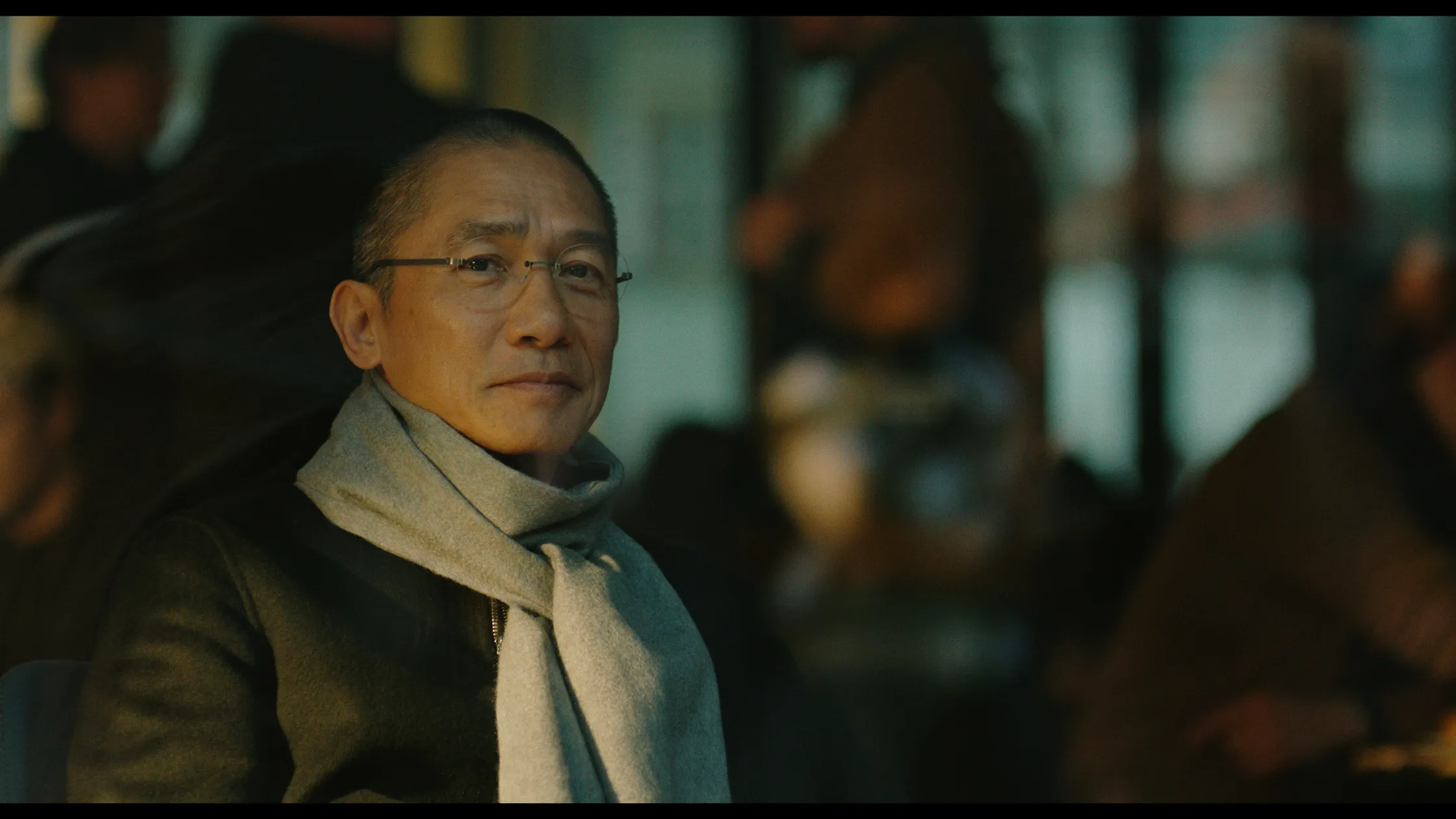
There is a moment in the middle of his recent retrospective discussion at Film at Lincoln Centre when Tony Leung Chiu-wai smiles, looks down, and dismantle the entire concept of actorly ambition. He is explaining what the Hungarian director Ildikó Enyedi told him during the preparation for Silent Friend, his new film.
Leung had sent her a message. He told her that if he had a second chance at a scene, he could do better. He wanted perfection.
Enyedi wrote back. She told him she was not looking for perfection. She said film is an act of truthfulness. It does not happen on the screen; it happens in the heart and the guts of the spectator. She told him he had already done that.
“It was quite inspiring,” Leung says, his voice quiet. He sits back. “I learned a lot from her.”
The exchange says everything about where Tony Leung is today. At sixty-three, he remains one of the most compelling actors on the planet. He has worked with Wong Kar-wai, Hou Hsiao-hsien, John Woo, and Ang Lee. He has won Best Actor at Cannes. Yet, he seems entirely free from the usual self-importance that defines the modern film star. He does not want to direct. He does not want to produce. He does not even like watching his own films because he only sees his errors. He is content to simply show up, empty himself out, and be there.
The Path of Non-Calculation
You can trace this attitude back to his early days in Hong Kong television during the nineteen-eighties. It was a brutal system. Leung spent seven years at the broadcaster TVB, working sixteen to eighteen hours a day on endless drama serials. He did comedies, thrillers, and historical epics.
He had no choice in what he played. He did what he was told.
“I think that was good,” he reflects. “It made me more versatile.”
When he moved into feature films, he carried that work ethic with him, but he abandoned any sense of career planning. Other actors plot their moves like chess grandmasters, choosing roles to position themselves for awards or international fame. Leung does not calculate. He selects directors, not scripts. If he likes a director, he signs on.
Read more: We Sat Down With Tony Leung To Discuss Trust, Technique… And Trees
This lack of calculation led to his first major international breakthrough, Hou Hsiao-hsien’s masterpiece A City of Sadness in nineteen-eighty-nine. Leung plays Wen-ching, a deaf-mute photographer caught in the political violence of Taiwan’s White Terror.
The performance is legendary for its quiet power. But the origin of the role was practical. Leung could not speak Mandarin at the time. To hide this, Hou made the character mute.
To prepare, Hou gave Leung books on Taiwanese history and Japanese literature. But after a week of shooting, Leung felt lost. He told the director he did not know how to play the character. Hou took him to meet a friend who had lost his hearing after falling from a tree. Leung watched him, copied his movements, and found his way into the film.
If you watch A City of Sadness today, Wen-ching’s silence feels like a deliberate artistic choice, a brilliant metaphor for a silenced nation.
Leung, however, is characteristically self-critical. “I watched the restored version a year ago,” he says. “I still have this feeling that I should have been more conscious about when to be slower, when to be silent.”
The Weight in the Gaze
The melancholy in Leung’s eyes has been discussed by film critics for decades. It is his trademark. It is what makes his longing in In the Mood for Love so painful, and what makes his undercover cop in Infernal Affairs so tragic.
During the conversation, he offers a rare, vulnerable explanation for that look.
“I think the sadness in my eyes is because of my childhood,” he says. He describes a difficult, unhappy upbringing. When his father left, he isolated himself from his classmates. He did not want to talk about his family, so he stopped talking altogether. He built a wall. He became a master at hiding his emotions.
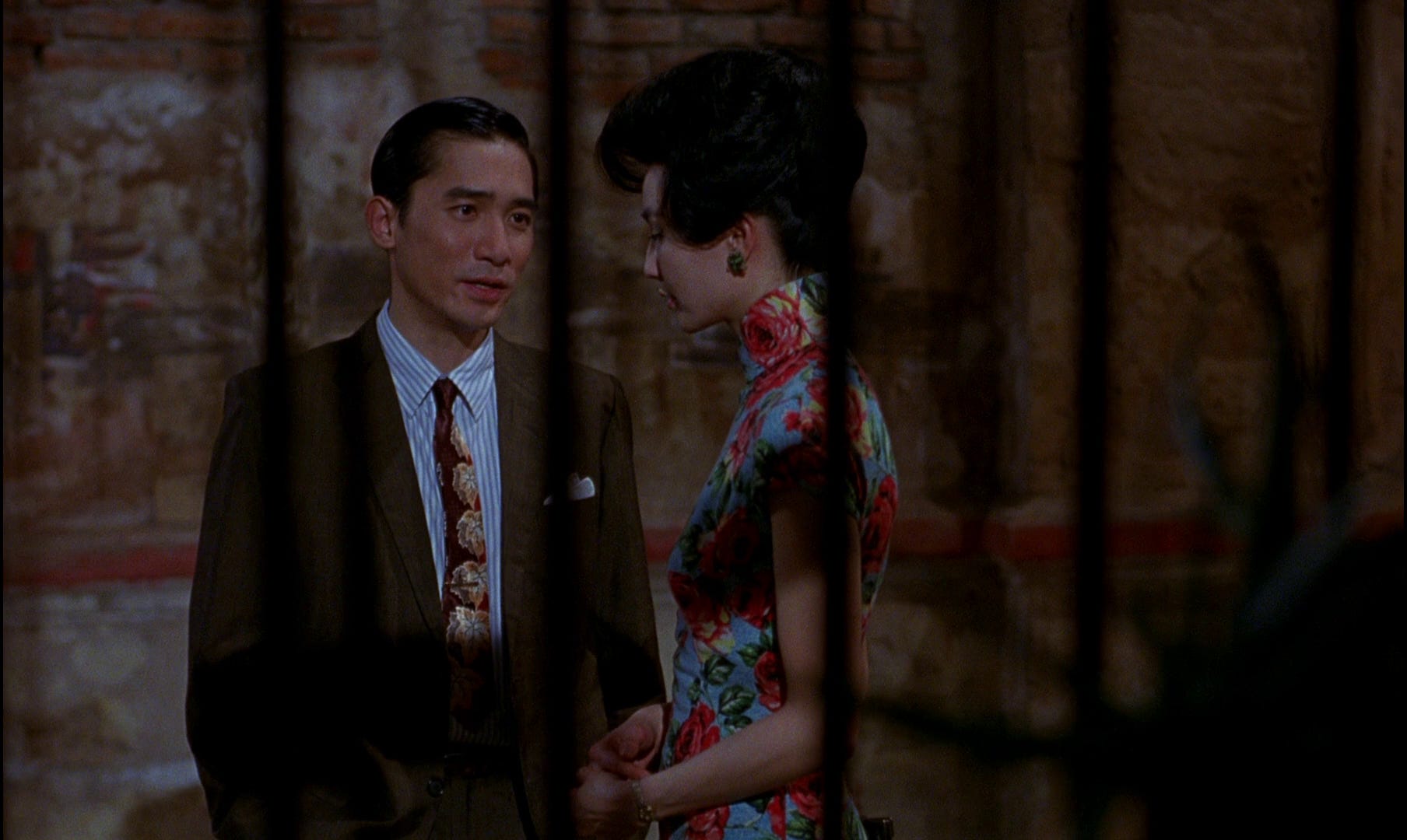
“But when I started learning how to act, I found a way to express all those feelings without being shy,” he explains. “Because they don’t know it’s me. They think I’m acting for a character.”
Acting became his safety valve. It allowed him to feel everything he had spent his youth locking away.
Read more: Tony Leung to Head Jury at 28th Shanghai International Film Festival
That emotional intensity is what drew Wong Kar-wai to him. Their twenty-year partnership produced some of the greatest films of modern times, including Chungking Express, Happy Together, and 2046. Wong’s working method is notoriously chaotic. He often starts shooting without a completed script. He shoots miles of footage, searching for the film in the editing room.
For some actors, this is a nightmare. For Leung, it became a collaborative rhythm.
He recalls shooting Happy Together in Argentina. There was no script. They simply tried different approaches, worked things out day by day, and moved on. Wong would give precise instructions for some scenes, whilst leaving others entirely open. In the famous final scene of Days of Being Wild, Wong told Leung exactly what to do—grooming his hair, putting on his jacket, counting his money—but left the tempo to the actor.
Leung thrived in this space. He developed a close connection with cinematographer Christopher Doyle. They worked in tandem. Doyle would watch Leung’s face through the lens, and if Leung made a tiny, unscripted movement with his hand, Doyle would instantly pan the camera down to catch it. They operated like musicians improvising on stage.
Rewriting the Script
That experience of improvisation gave Leung a deep understanding of his characters. Whilst he claims he has no desire to write or direct, he has occasionally taken control of his roles in surprising ways.
During the shooting of Infernal Affairs, the blockbuster thriller that Martin Scorsese later remade as The Departed, Leung decided the script was too busy. He play Chan Wing-yan, a cop who has spent ten years undercover in the Triads. The pressure has destroyed his mind.
Leung arrived on set and told the directors he had rewritten his lines.
“I changed all my dialogues, especially those on the rooftop,” he says. “Sometimes when you are in the character, you know you won’t say something like that.”
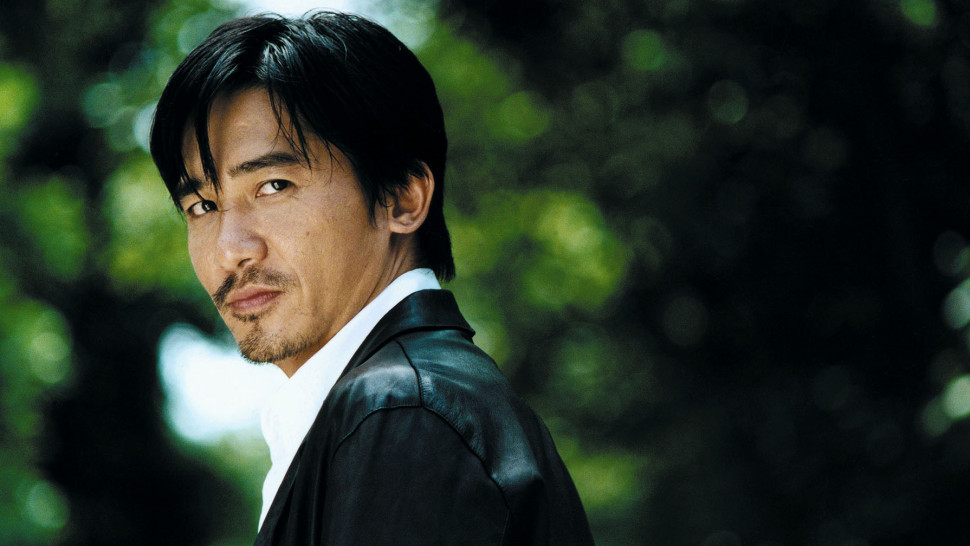
He also refused to shoot the original action-heavy ending on the rooftop. The directors wanted a big fight scene. Leung told them no. He argued that the character was exhausted, that the story was a tragedy, and that the climax needed to be dramatic, not an action spectacle.
The directors listened. They shot the scene his way, resulting in one of the most shocking and memorable endings in Hong Kong cinema history.
Leung compares the difference between the original film and the Hollywood remake to Chinese art. “It reminds me of Chinese painting,” he says. “We always have something called liubai—what is left blank. The Hollywood version has more details, it is very well written. The Chinese one is different. It leaves a lot of space for you to imagine.”
Listening to the Trees
That preference for space and quiet is what drew him to his latest project, Silent Friend. To play a neuroscientist studying early cognitive development, Leung spent six months reading scientific texts and visiting laboratories in Hong Kong.
Then he began to study plant intelligence.
The research changed his daily life. He used to jog up a mountain in Hong Kong every morning. After studying how plants share information and react to their environment, his runs became strange. He felt surrounded by conscious, sentient beings.
“It changed my whole perspective towards the world,” he says, completely serious.
When he asked the director how he should portray this shift in consciousness, she told him not to act. She simply wanted him to be there.
It is a fitting instruction for this stage of his career. Tony Leung does not need to show his work anymore. He does not need to prove his range, or impress us with theatrical pyrotechnics. He has spent forty years learning how to strip away the noise of performance.
At the end of the evening, he thanks the crowd and smiles that famous, slightly melancholic smile. He seems genuinely surprised that we are still eager to watch him. He is happy to be here, happy to help a director realise a vision, and happy to return to the silence when the cameras stop rolling.
“Silent Friend” is out now in select theatres across the US from 1-2 Special.