She doesn’t arrive so much as appear. Dorothy Huynh rolls into the lobby in a black New York Yankees cap, a black crewneck sweatshirt, and white pants — unhurried, unannounced, like someone who has long stopped needing an entrance.
“Let’s do this,” she says, and that’s that.
We make our way to a library for the recording. Nicole, our director, runs through the logistics of how far we can each turn in our seats without drifting out of frame, the invisible geometry of being on camera. It’s all a little new and nerve-wracking, at least for me. When Nicole asks if she feels strongly about keeping the cap on, given the shadows it casts across her face, Dorothy says simply: yes. A pause. Nicole asks if she’d be willing to tilt the brim up, and Dorothy obliges. No fuss, no negotiation. She simply adjusts, and we begin.
“I talk with my hands,” Dorothy mentions. “Is that okay?”
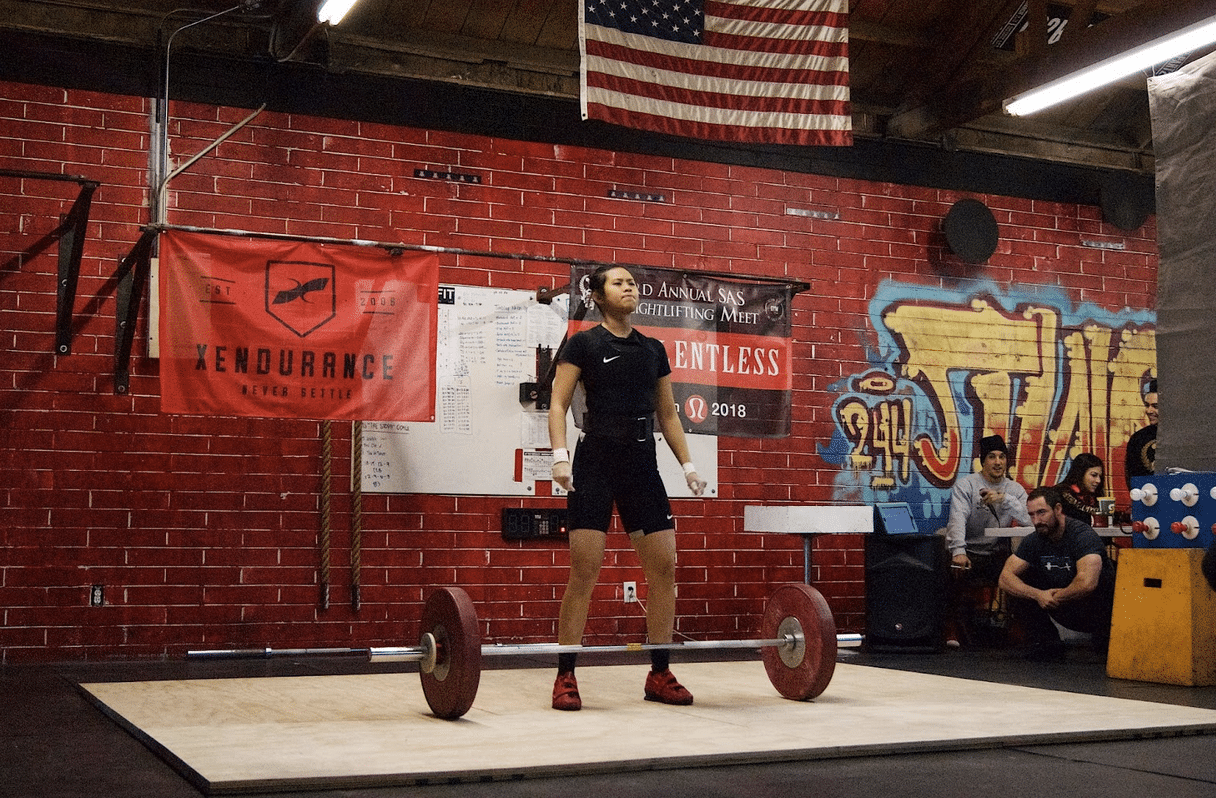
It’s more than okay, it’s the most telling thing about her. Dorothy Huynh is, in every sense, someone who communicates through action. What she has built in the world of Olympic weightlifting, first as an athlete, then as a coach who guided athletes to the 2016 U.S. Olympic Trials, was never the product of grand announcements. It was the product of unlearning as much as learning.
The Accidental Athlete
She grew up, she tells me, as a skinny kid who got bullied. Strength training found her in high school through basketball, and then again in college through the slow-burning fitness obsession of P90X. After graduation, a co-worker introduced her to CrossFit. She drank the Kool-Aid, but not all of it.
“I hate endurance,” she says, laughing. “So I just focused on the weightlifting.”
What started as a preference became a pursuit. There is something almost cinematic about the image she conjures: a 90-pound, 21-year-old learning to hoist 100 pounds above her head, and then doing it again, and again, until the plates multiplied. 30 pounds became 40, then 50. Until one day, almost by accident, she was competing.
The leap from athlete to coach was similarly unplanned. Around 2014, the owner of her CrossFit gym in Arizona noticed something Dorothy hadn’t yet recognized: that people gravitated toward her, asked her questions, and trusted her eye. He offered to pay for her coaching certification. She accepted, got her CrossFit certification, and then, because she had always cared more about the barbell than the burpee, went and got her Olympic weightlifting certification too.
That’s where she met her coach, Joe, who would shape the philosophy she carries to this day.
Not All of Us Are Going
When I ask her about coaching athletes to the 2016 Olympic Trials, Dorothy is quick to deflect credit. She doesn’t believe she paved the path alone. A theme she returns to naturally, and one that reveals everything about how she views her role in the sport.
In Olympic weightlifting, she explains, you don’t just train; you belong to a club. You plan in four-year blocks, compete in four qualifying meets, and accumulate a total that has to rank you among the top lifters in your weight class nationally just to reach the Trials. It is, by design, a long game. The athletes Dorothy coached who made it there treated training like a full-time job: two, sometimes three sessions a day, each running two hours. Nutrition. Sleep. Recovery.
“We were all paying the same massage therapist at one point,” she says, smiling, her hands moving through the air as if tallying the full list of everything it takes — the sessions, the recovery, the nutrition, the accumulated unglamorous labor of a four-year build.
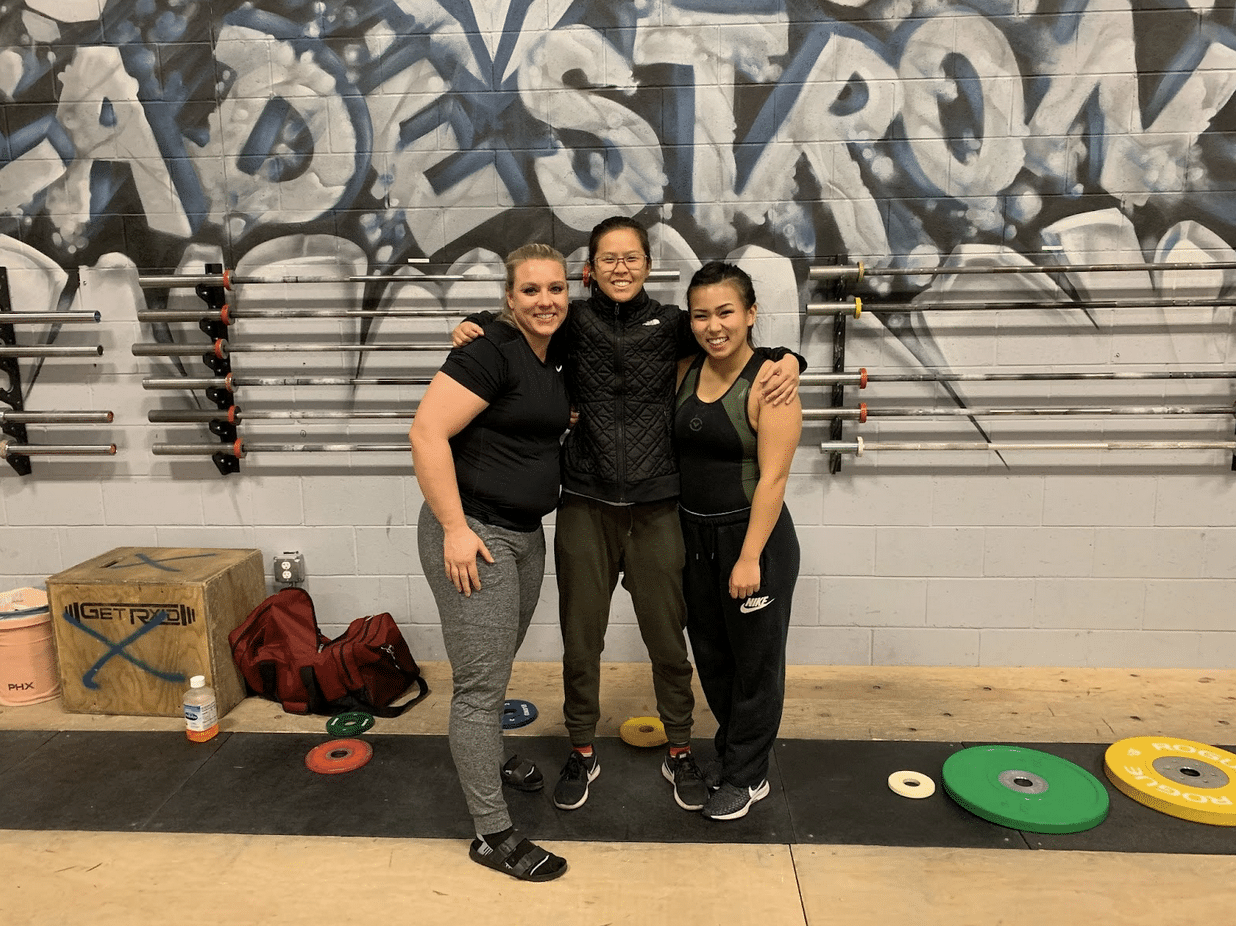
The ecosystem grew around those with the most promise. One of her teammates became a physical therapist. Others adjusted their lives to support the collective. “Not all of us are going to the Olympics,” Dorothy says, with pragmatism that contains no bitterness. “So you contribute to the teammate who you’re like — yeah, they’re probably going to be something big.”
It is a striking thing to hear from a coach: the idea that greatness is a group project.
What She Inherited
But Dorothy Huynh did not always coach this way.
She pauses when I bring up the feedback that changed her. Then she rolls her shoulders back, eyebrows jumping. “I’m Asian,” she says. “I grew up with a tiger mom.” A beat. “It was a lot more criticism than it was… positive anything. We’ll just say that.” She chuckles. Her body circles toward her outstretched hand. An open gesture, as if the rest of the sentence is already obvious to anyone who knows.
She had absorbed that language so completely that she didn’t notice herself speaking it until an athlete handed it back to her. He was 56, and she retells it with the exasperation in his voice: “Look, you don’t have to tell me everything I’m doing wrong. It would be really nice to hear something good once in a while. You tell me once in a while and it’s so meaningful and I cling onto it.”
Dorothy’s face lights up at this, her hands lifting to illustrate the weight that rare praise carried. She shakes her head, laughing. Not at him, but at herself. At the math of it. All that criticism, and one small word of encouragement was the thing he held onto.
“Oh gross,” she says. “I’m being my mom.” The groan is sharp and audible, the full-body cringe of someone catching their reflection in a mirror they never intended to hang.
The irony has a wrinkle, as good ironies do. Around the same time, a younger Asian athlete like herself told Dorothy she loved the directness, “You tell me what to do and I really like that.” Same style, entirely different reception. What Dorothy took from it wasn’t that one response was right and one was wrong, but that she had been operating on a single setting when the job required a full range.
“Every athlete,” she says, “can coach you back if you let them.”
Slow is Smooth
In the unlearning, Dorothy’s coaching philosophy took shape.
Her coach Joe used to tell her: slow is smooth, smooth is fast. The instinct with those new to lifting, as in life, is to brute-force the process. To speed through. To pile on more weight before the foundation is ready because weight looks like strength. But Joe’s version of progress was different: slow down enough to feel what you’re actually doing, and the speed will come.
“A lot of people try to compromise everything in between,” she says. “But the ‘inbetween’ is standard.”
It is a philosophy that quietly dismantles the dominant language of fitness culture — the PRs posted daily, the soreness treated as proof of work, the pressure to do more, faster, louder.
That unlearning extended beyond technique. Leading Dorothy to rethink a fundamental industry assumption: that men and women should train identically.
Built for a Different Body
I know this in part because of my own training history: years of powerlifting and bodybuilding under coaches who never once asked about my menstrual cycle. I pushed through cramps because I thought I was supposed to. I nearly lost my period during competition prep and didn’t know that was something that could happen. Nobody told me.
Dorothy nods when I say this. She has heard different versions of the same story from many women she has coached. “The advice I got,” she says, “was just start taking birth control.” She shakes her head. “Nobody talks you through how staying in a certain weight class for years would affect you downstream and how cutting weight constantly, how that affects your health.”
It is, she points out, mostly male-driven content out there. What gets studied, published, prescribed is built around a body that does not bleed monthly, does not lose its cycle under physical stress, does not carry the particular weight of being unseen. “If you’ve ever had a period,” she says, “you have to be understanding of that.”
As a personal trainer whose work now centers on women’s strength and health, I have spent the past several years trying to fill that gap for my own clients. Dorothy spent her career doing the same, adjusting training volume and intensity to match the needs of the athlete.
Before we wrap up, I ask Dorothy what her best piece of coaching advice is.
She takes a look into the distance, arching up her eyebrow for a second before taking a breath. “Don’t compare yourself to others,” she says as she readjusts in her seat, shoulders shrugging. “Some people started when they were three years old. Some are starting in their 20s. Just focus on your technique. Just focus on showing up. That’s all that really matters.”
It’s the simplest version of everything she believes. The long game. The ecosystem. The “Tiger mom” energy turned inside out. Not what are you doing wrong but what do you need, and how do we build it together?
Dorothy has her hands crossed in front of her as we finish. She breaks into a smile as she says simply, “Thank you for having me. I love women too.”