After years of incremental change, the 2026 Oscar nominations mark a turning point for Asian representation in Hollywood. From the high-octane animation Kpop Demon Hunters to the poetic period drama Hamnet, Asian actors, directors, and storytellers aren’t just participating in awards season — they’re defining it. This year’s lineup reflects not only the global reach of Asian cinema but also the shifting center of creative gravity in an industry finally widening its lens.
On Thursday, the Academy of Motion Picture Arts and Sciences unveiled its nominations for the 2026 Oscars, and across the ballot, Asian filmmakers, performers, and Asian-centred stories emerged as one of the ceremony’s most defining throughlines.
Several of this year’s Best Picture contenders foreground Asian perspectives—both on screen and behind the camera.
Chloé Zhao returned to the Oscars spotlight with Hamnet, which emerged as a major awards player.
Hamnet received nominations for:
-
Best Picture
-
Best Director – Chloé Zhao
-
Multiple writing and craft categories
Read more: Chloé Zhao Makes Oscar History With Second Best Director Nomination
The Best Animated Feature category emerged as one of the strongest showcases of Asian creative leadership, with four of the five nominated films driven by Asian directors or creatives in key roles.
Nominees include:
-
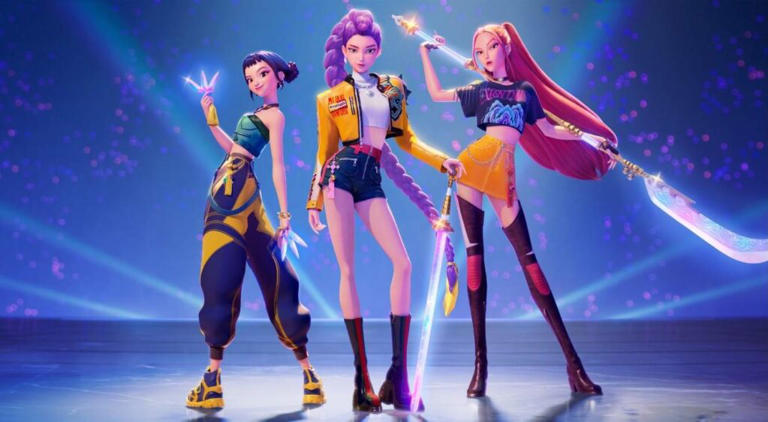
KPop Demon Hunters – directed by Maggie Kang
-
Elio – co-directed by Domee Shi
-
Little Amélie or the Character of Rain – co-directed by Liane-Cho Han
-
Zootopia 2 – starring Ke Huy Quan
Read more: ‘Elio’ Trailer: Domee Shi’s Sci-Fi Adventure Promises Intergalactic Chaos and Heart
KPop Demon Hunters also made music history. Its original song “Golden,” written by singer-songwriter EJAE, became the first K-pop track ever nominated for an Oscar.
“Golden” received a nomination for:
-
Best Original Song
Read more: Oscars 2026: ‘Kpop Demon Hunters’ Secures Historic Animation Nomination
Asian talent was also prominently represented across the Academy’s craft and technical categories—areas that have historically offered some of the earliest entry points for recognition.
Notable nominations include:
-
Best Costume Design – Miyako Bellizzi (Marty Supreme)
-
Best Makeup and Hairstyling – Kyoko Toyokawa, Naomi Hibino, Tadashi Nishimatsu (Kokuho)
-
Best Makeup and Hairstyling – Kazu Hiro (The Smashing Machine)
-
Best Visual Effects – Charmaine Chan (Jurassic World: Rebirth)
Closing out the nominations was Ryan Coogler’s genre-bending vampire epic Sinners, which led the field with a record-breaking 16 nominations—the most ever received by a single film, surpassing Titanic, All About Eve, and La La Land.
Among its many milestones, cinematographer Autumn Durald Arkapaw, who is of mixed Filipino descent, made history as the first woman of colour nominated for Best Cinematography. Arkapaw, who is of Filipino and Creole descent, is only the fourth woman to receive this nod. She follows in the footsteps of Rachel Morrison, Ari Wegner, and Mandy Walker. While women have moved into many leadership roles on set, the cinematography branch has remained a notoriously difficult glass ceiling to crack.
Sinners received nominations for:
-
Best Picture
-
Best Director – Ryan Coogler
-
Best Original Screenplay
-
Best Cinematography – Autumn Durald Arkapaw
-
Best Casting – Francine Maisler
Asian stories are also represented at this year’s Oscars. Netflix’s Train Dreams also secured a strong showing. One of the film’s most striking storylines follows Fu Sheng, a Chinese railroad labourer portrayed by Alfred Hsing, whose murder by white co-workers reflects the racial violence faced by Asian migrants in early 20th-century America.
Train Dreams received nominations for:
-
Best Picture
-
Best Adapted Screenplay
-
Best Cinematography
Meanwhile, Bugonia—a reworking of South Korean cult classic Save the Green Planet!—continued the Academy’s growing engagement with Asian source material. Emma Stone and Jess Plemons star and whilst the cast is rather lacking on the Asian representation front, the film features producers Miky Lee and Jerry Kyoungboum Ko.
Bugonia received nominations for:
-
Best Picture
-
Best Adapted Screenplay