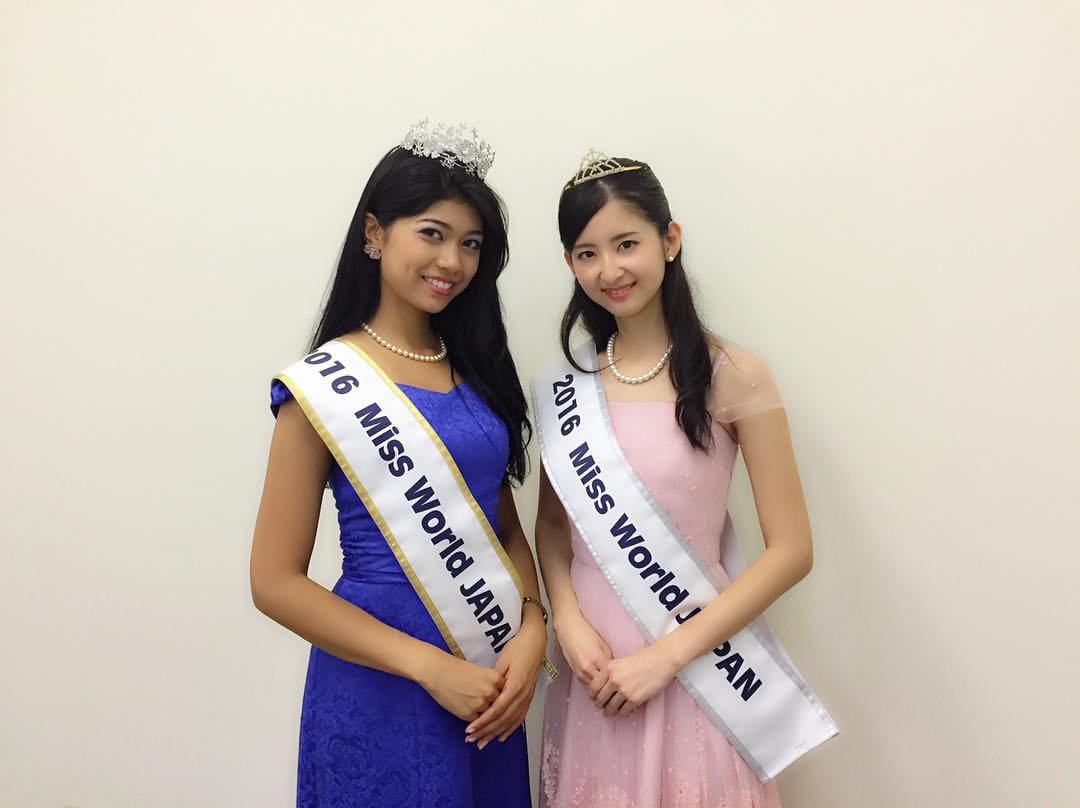
On 5 September 2016, Priyanka Yoshikawa was crowned Miss World Japan 2016, but rather than receive complete support from the community, she was actually criticized for her biracial ethnicity.
Yoshikawa was told that she was not “pure” enough- that a “hafu girl” should not have been picked to represent Japan.
Unfortunately, this was not the first time a pageant competitor was criticized for being mixed-race. In 2015, Ariana Miyamoto was the first mixed individual to be crowned Miss Universe Japan. Because she was half Japanese and half African-American, Miyamoto was accused of being “not Japanese enough”. Despite the fact that she was born in Japan and could speak the language fluently, many critics refused to accept her as the Miss Universe Japan representative simply because she is multiracial.
Like Miyamoto, Priyanka Yoshikawa’s most common critique is how she needed to be “100% Japanese”.
But the ironic part is that Priyanka Yoshikawa is 100% Japanese.
People often claim that a mixed person is not “enough” of their heritage since they are only “half an ethnicity.” Since Miss World Japan happens to be half-Japanese, many people therefore believe that she is not Japanese enough. But she isn’t 50% of an ethnicity. Yoshikawa is not 50% Indian. She is not 50% Japanese. It is ridiculous to claim that she is half of an ethnicity.
Rather, Yoshikawa is 100% Japanese. She is 100% Indian.
How can people be 100% of all their ethnicities?
Let me explain. One way to think about it, is how it is completely possible to be both a mother and a daughter. Just because someone becomes a new “mother,” doesn’t mean that their “daughter” identity is reduced or eliminated. This individual simply experiences the two cultures of being a daughter and mother simultaneously.

As for Priyanka Yoshikawa, she is also experiencing two cultures simultaneously. She isn’t a “half-time” Japanese individual. Saying she is 50% of her Japanese ethnicity is essentially saying that she experiences her Japanese culture half the time. Which is basically… impossible. Therefore, it is feasible for her to be 100% Japanese and 100% Indian.
It’s time that we all stop forcing each other into our boxed ideas of how we should act or be like because of our ethnicity label. Being multiethnic does not mean you do not understand the culture and heritage of that ethnicity. Being multiethnic simply means you get to experience two different cultures simultaneously.
We are not half of an ethnicity. We are 100% of all of our races.
This is a simple concept. And it applies to anyone and everyone who is mixed.