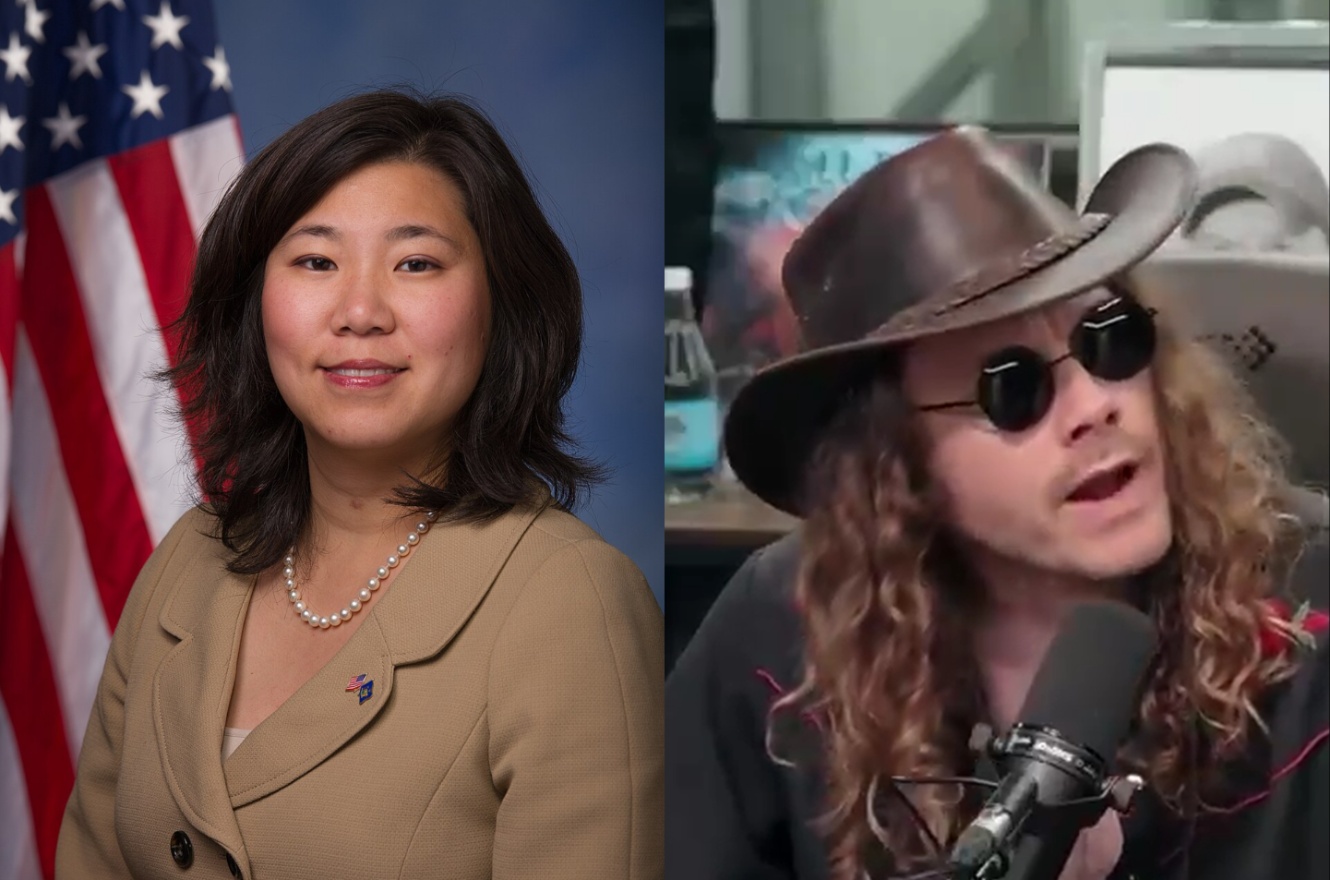
Asian-American members of the US Congress have condemned comments on a right-wing podcast suggesting Chinese-Americans could be forcibly interned during a hypothetical war with China, warning that such rhetoric could deepen discrimination and violence against the community.
The statement came from Congresswoman Grace Meng, chairwoman of the Congressional Asian Pacific American Caucus, or CAPAC; Congresswoman Judy Chu, the caucus’ chairwoman emerita; and Congressman Ted Lieu, vice-chairman of the House Democratic Caucus.
“These comments invoke centuries-old racist tropes that cast Chinese-Americans as perpetual foreigners and question their loyalty to the United States,” the lawmakers said in a joint statement.
Read more: FBI Data Shows Drop in Anti-Asian Hate Crimes But Communities Remain on Edge
“Such rhetoric fuels discrimination and violence against Chinese-Americans and those perceived to be Chinese, and contributes to a climate in which one in five Americans are currently concerned about Chinese-Americans posing a threat to US society.”
The controversy arose after an August 14 episode of Timcast IRL, a pro-Trump video podcast hosted by commentator Tim Pool, which has 2.77 million YouTube subscribers.
During the discussion, social media influencer Ian Crossland raised the prospect of detaining Chinese-Americans if conflict broke out between Washington and Beijing.
“If there was a war between the Chinese and the Americans, and the Chinese landed in, like, Alaska and started coming through Canada, what – do you think we should intern all the Chinese-Americans we can find? Because it kind of seems like we should,” Crossland said.
Crossland said he did not want to implicate all Chinese-Americans because “that’s horrific”, but went on to question where their loyalties might lie.
“How can you tell where their allegiances are? And how do you know if their allegiances will or won’t flip if the tide of war starts to change?” he added.
Another guest, Kevin Smith, questioned whether a mass internment policy could take place in today’s media environment.
“I don’t think you could do that now because I think while they were interning the Japanese, a lot of people probably didn’t know what was happening,” Smith said. “You can’t do stuff like that now – with social media and stuff, there’d be protests outside of each one of them.”
The lawmakers said the remarks were an affront to millions of Chinese-Americans and recalled the wartime incarceration of Japanese-Americans, widely regarded as one of the darkest chapters in modern US history.
“To call for a return to one of the darkest chapters in US history – the incarceration of more than 120,000 American citizens of Japanese descent during World War II – is dangerous and unacceptable,” they added. “This kind of rhetoric has no place in our country and we condemn it in the strongest possible terms.”
Read more: Kimberly Yee Condemns “Overt Racism” in Primary Ad Against Her
During World War II, the US government incarcerated more than 120,000 people of Japanese descent in camps across the country, most of them US citizens. Washington later acknowledged the policy as a grave injustice driven by racial prejudice and wartime hysteria, issuing a formal apology and providing reparations to survivors.
Pool later shared a screenshot of media coverage of the controversy on August 18. Crossland reposted it and acknowledged that the subject had been raised on the programme.
“It is true. The concept was discussed. I cannot undo that now.”
The episode comes amid wider concerns over the treatment of Chinese-Americans as geopolitical tensions between the US and China become increasingly intertwined with domestic political debate.
The latest State of Chinese-Americans Survey, released by the Committee of 100 and the National Opinion Research Centre at the University of Chicago, found that 55 per cent of Asian-Americans regularly encounter assumptions that they are foreign.
US-born and foreign-born Asian-Americans are perceived as outsiders at almost identical rates, the report said, underscoring the persistence of the “perpetual foreigner” stereotype and its psychological toll on the community.
It also pointed to the effect of political messaging around China: about 54 per cent of respondents said China-related rhetoric from US President Donald Trump had negatively affected how Chinese-Americans are treated in the country.