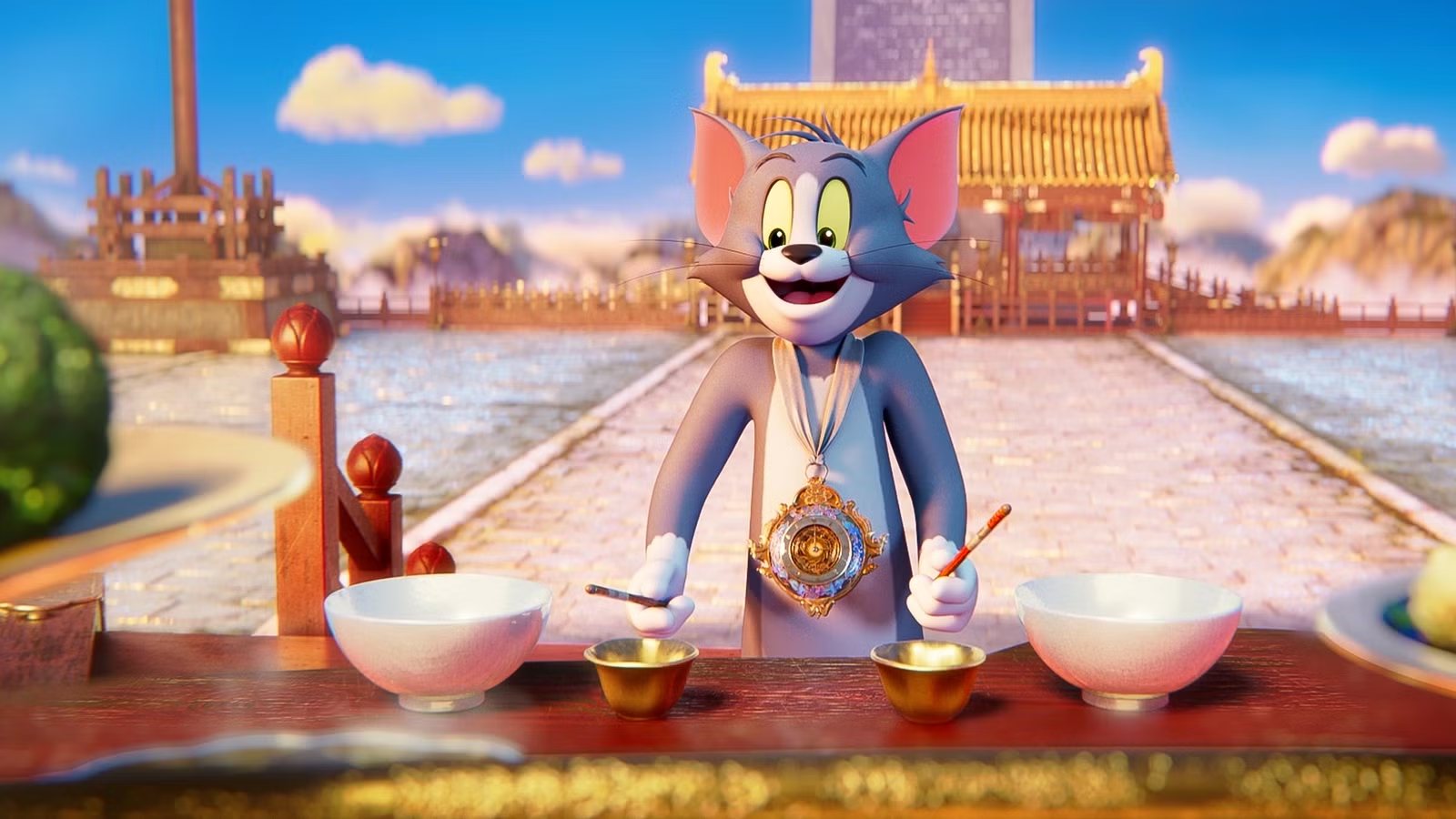
Tom and Jerry: Forbidden Compass, China’s locally produced take on the classic cat-and-mouse franchise, is drawing largely negative reviews, with critics saying the film buries its famous duo beneath an overstuffed fantasy adventure rooted in Chinese mythology.
The film, produced with Chinese partners and set against a China-rooted fantasy backdrop, appears to have been designed as a fresh regional reinvention of a global property — but many critics say the experiment leaves Tom and Jerry feeling like supporting players in their own movie.
The sharpest criticism comes from Variety, which described the film as “misbegotten and compromised,” arguing that the title characters are no longer driving the action but instead are being used to frame “what is unmistakably a Chinese property”.
Read more: Chloé Zhao on ‘Eternals,’ Manga and Why Comic-Book Movies Should Not Be Written Off
The Guardian was similarly unimpressed, calling it a “luridly bright animation” that has “none of the inventiveness of the Hanna-Barbera originals”. Empire’s verdict was even harsher, branding it “A relentless mess of a film”. Across these reviews, the same complaint keeps returning: the movie may be visually busy, but it does not feel like Tom and Jerry.
That reaction matters because Forbidden Compass was clearly meant to tap into the duo’s enduring popularity in Asia while localising the story for Chinese audiences. Polygon noted that the project makes sense in cultural terms, since Tom and Jerry have long had strong recognition in the region, and the film was developed as a China-led take on the property.
But the response suggests that cultural familiarity alone is not enough if the filmmaking does not preserve the franchise’s core appeal: timing, slapstick, and character-driven chaos. Instead, critics say the movie gets bogged down in a fantasy adventure structure crowded with new characters and mythology.
The wider review picture is also bleak. Metacritic currently reflects a generally unfavorable critical response, with one summary saying Tom and Jerry have become “supporting players in their own film”.
Read more: Chinese Animation Film ‘Niu Lai’ Was So Bad That It Became a Box Office Hit
That line captures the central problem reviewers have identified: in trying to make the characters fit a larger Chinese adventure world, the film seems to have lost sight of why audiences cared about them in the first place.
The result, critics argue, is a film that is energetic on the surface but oddly hollow underneath.
Still, the film is notable as a sign of how global franchises are being reworked for the Chinese market. Forbidden Compass reflects a broader trend in which familiar Western IP is reimagined through local mythology, production partnerships, and regional audience expectations.
In theory, that approach should broaden the franchise’s reach. In practice, at least according to early reviews, it has created a version of Tom and Jerry that feels less like a reinvention than a compromise.