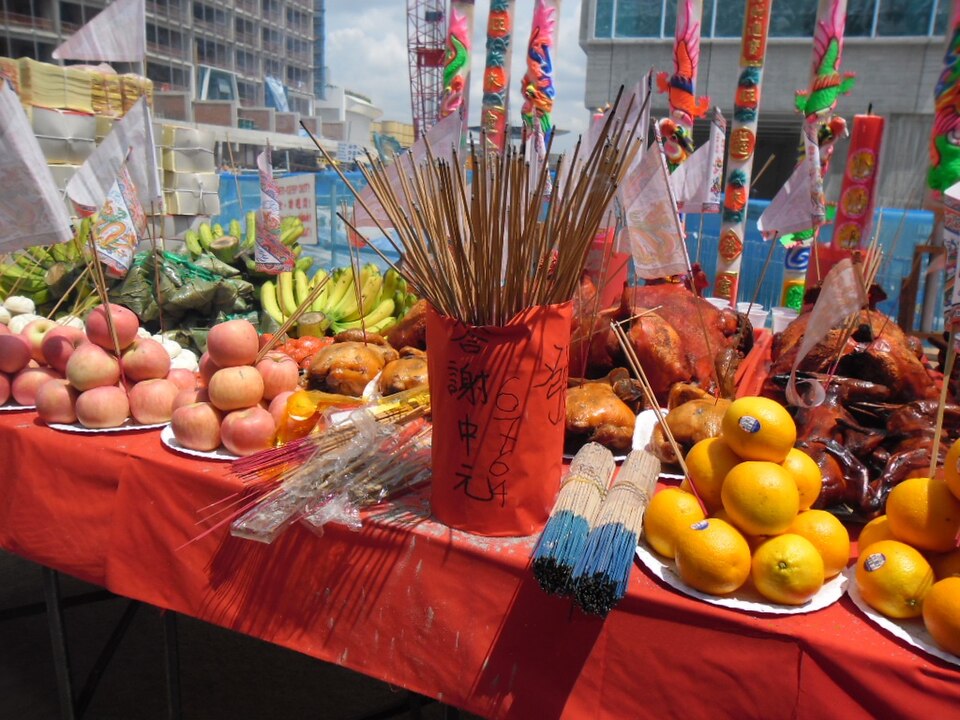
The lunar seventh month in Singapore brings a visible transformation to residential neighbourhoods and street corners. Devotees of traditional Taoist and Buddhist faiths place food offerings, light incense candles, and burn joss paper along pedestrian pathways to appease wandering souls during the annual Hungry Ghost Festival.
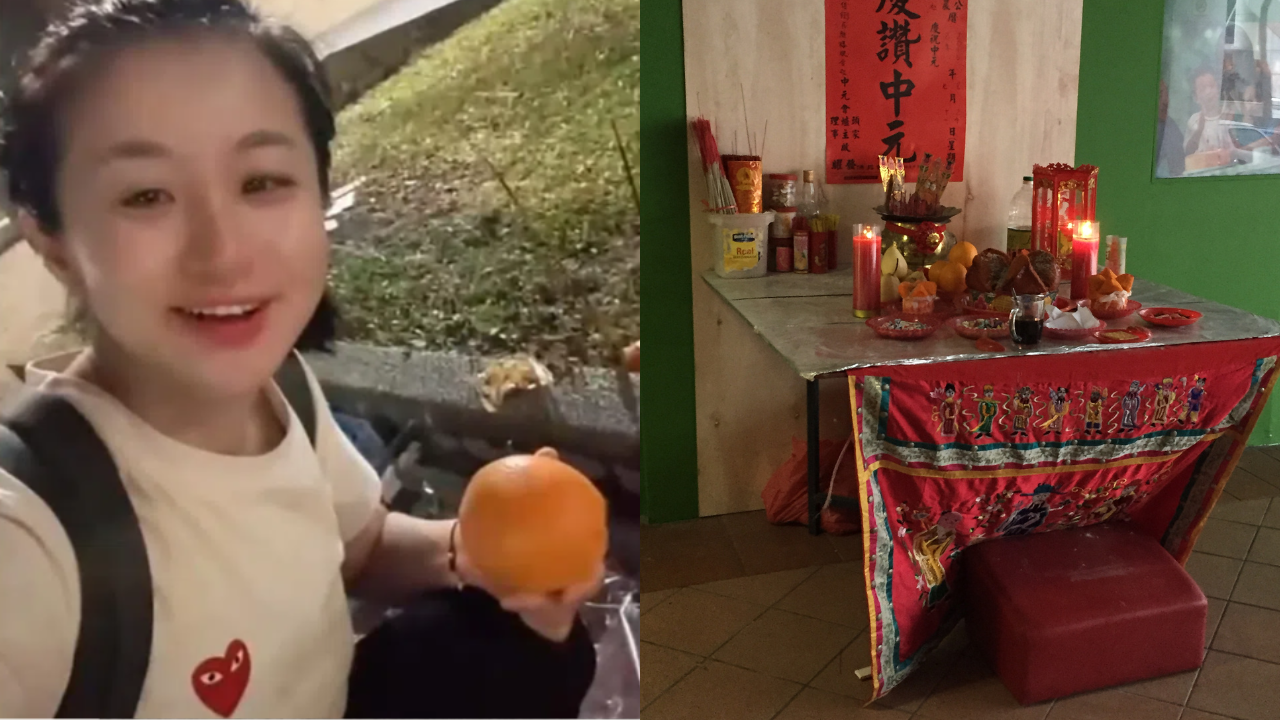
This centuries-old spiritual practice found itself at the centre of intense internet controversy after a woman filmed herself gathering roadside ceremonial fruit. Claiming to be a migrant bus driver from Sichuan, China, the woman uploaded a recording of herself crouching beside public offerings, smiling at the camera as she collected apples and oranges left for wandering spirits.
Surviving High Living Costs
In the video, which circulated widely across private chat groups and social networks before its deletion, the woman explained her financial reasoning directly to viewers.
“It’s not easy to work abroad. We have to save every penny. Fruit is so expensive in Singapore!” she said while gathering the items from the pavement.
Picking up an orange, she presented an impromptu spiritual defence to justify her actions. “Today I picked up the fruit that I offered to the Bodhisattva to eat it, so this doesn’t count as stealing,” she stated to the camera. “Thank you, Bodhisattva.”
While the recording showed her handling and collecting the fruit, it concluded without showing her eating the items on camera.
Religious Taboos and Food Hygiene Risks
The footage triggered immediate backlash from local cultural observers and the general public. Under traditional Chinese customs, roadside food items placed during the seventh lunar month differ fundamentally from home altar offerings dedicated to family ancestors. Roadside items are intended specifically for wandering spirits, and touching, stepping over, or consuming them represents a serious cultural taboo.
Speaking to local press, folklore practitioner Xu Yiting emphasised that challenging traditional customs for social media attention is deeply inappropriate. “To challenge or offend at the time of this power is likely to be self-defeating,” Xu explained. “We’d better keep the rules. Even if we don’t believe it, don’t challenge it. We should respect it.”
Read more: Chinese Animation Film ‘Niu Lai’ Was So Bad That It Became a Box Office Hit
Xu advised that the individual should return to the location accompanied by people familiar with the customs, present double the amount of food offerings, and deliver a sincere apology to show proper respect.
Beyond spiritual concerns, the incident highlighted practical health risks. Food left on open public pavements is exposed to environmental pollutants, extreme tropical humidity, pesticide residues, and pests, making consumption unsafe.
Online Debate Over Food Waste
The video sparked divided reactions across digital platforms. Many viewers condemned the act as an intentional provocation for online engagement, noting that basic respect for local customs should remain paramount for anyone living in the country.
Other commenters offered a pragmatic perspective, focusing on economic necessity and food waste. Some argued that once devotees complete their prayers and depart, leftover perishable fruit often spoils and ends up in municipal waste bins, suggesting that letting people in financial need consume unclaimed food avoids unnecessary waste.
The National Environment Agency continues to advise members of the public to maintain clean shared spaces and burn paper offerings within designated burners, balancing public cleanliness with traditional religious expressions.