While most people in Euston rush towards the train station and their next destination, a quiet exhibition space sits tucked behind the main street. White-walled and filled with melodic soundscapes, it is currently hosting Kawan! Kawan!, a contemporary art exhibition bringing together Southeast Asian artists whose work explores cultural identity, history and memory across the diaspora.
Kawan! Kawan! is the second annual summer exhibition organised by Shoes Off, an alumni network from the Royal College of Art, Goldsmiths, University of London, and the University of the Arts London. “Kawan” means “friend” in Malay, showing how the exhibition highlights the connection between the Southeast Asian communities.
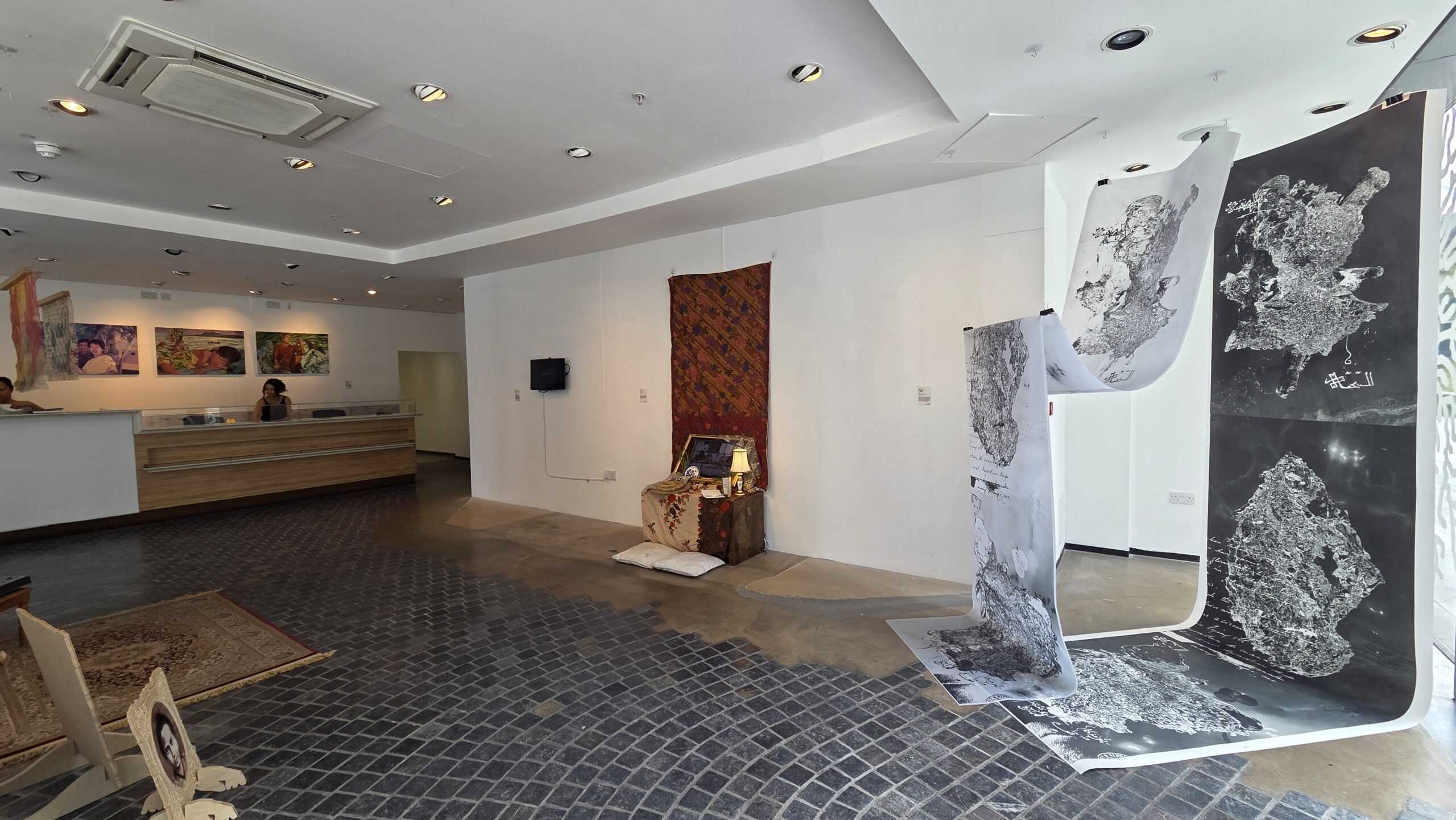
One of the exhibition’s strengths is its use of space. The gallery is almost entirely white, with floor-to-ceiling windows allowing London’s summer light to spill across the room. The works are given considerable breathing room, encouraging visitors to slow down and engage with each piece individually rather than encounter the exhibition as a crowded collection. This setting proves particularly effective for the many large-scale, three-dimensional exhibits. Under natural light, textures, surfaces and materials stand out more distinctly while subtle shadows and reflections extend the works beyond their physical boundaries.
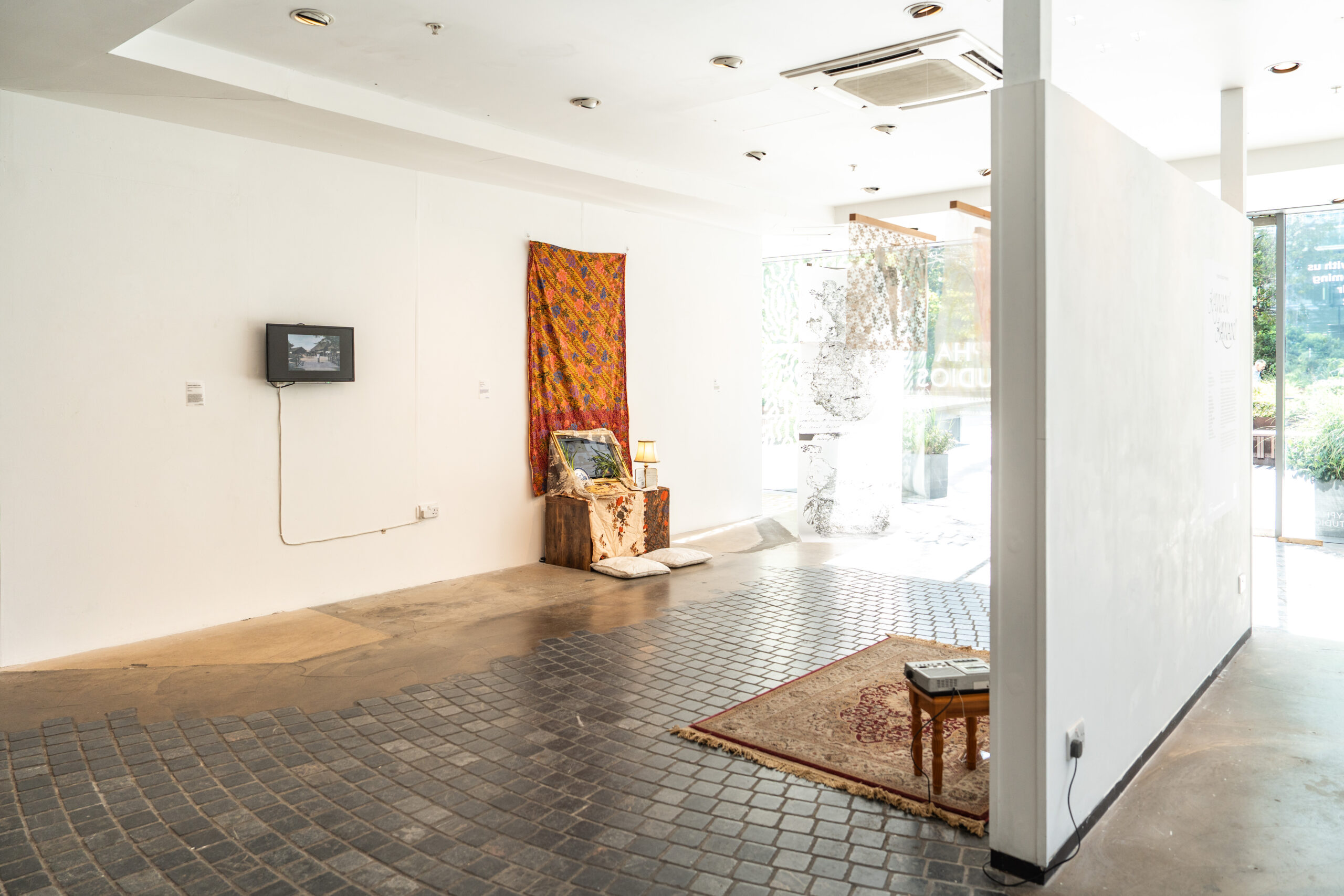
The artists employ a wide range of materials that closely echo the theme of their work. Arrti Pillai’s installation, for example, features large-scale monochrome prints on two long scrolls of rice paper and tracing paper, mapping migrants’ journeys from South India through letters held in the SOAS archives. Yadanar Aung’s sculpture Power Cell brings together letter knives, glass rings and steel, which are fractured, personal objects that evoke displacement and fraught family histories. Spanning video, print and sculpture, and moving from intimate personal memoirs to the lingering legacy of colonialism, the exhibition resists presenting “Southeast Asian culture” as a Monolithic category, choosing instead to emphasise its internal diversity.
The exhibition does not simply place the artworks alongside one another, but also encourages them to enter into dialogue. Works with related visual qualities are sometimes positioned close together, creating connections that may not have been intended by the artists themselves. Julian Udine’s Tomorrow’s Ocean, a coral-inspired sculpture, sits near Arty Nicharee’s series of sculptures resembling religious objects. Both appear rustic and stone-like, but their contrasting concepts show how differently similar materials can communicate. Udine uses flint and resin to question human intervention in nature, while Nicharee employs stoneware to reflect on ritual, hospitality and Malay culture.
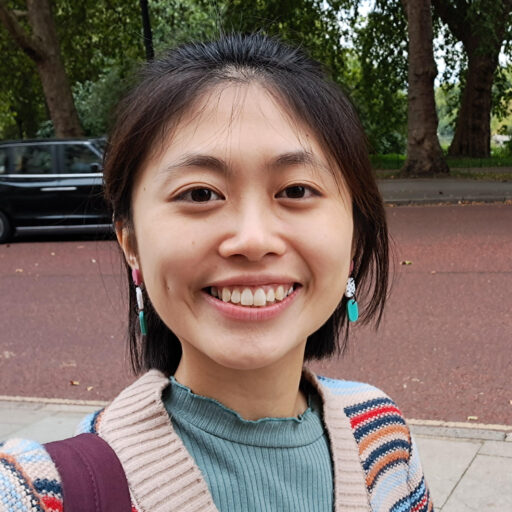
Udine explains her approach, “Some of these patterns are hand-sculpted, and some replicated coral skeletons from the Philippines, where I’m from. I collected these images when I was along the coast at home.
“These patterns are a mix of what I’ve constructed or imagined and the actual coral patterns, but you can’t tell which one is which. This questions what is truly natural with human activity.”
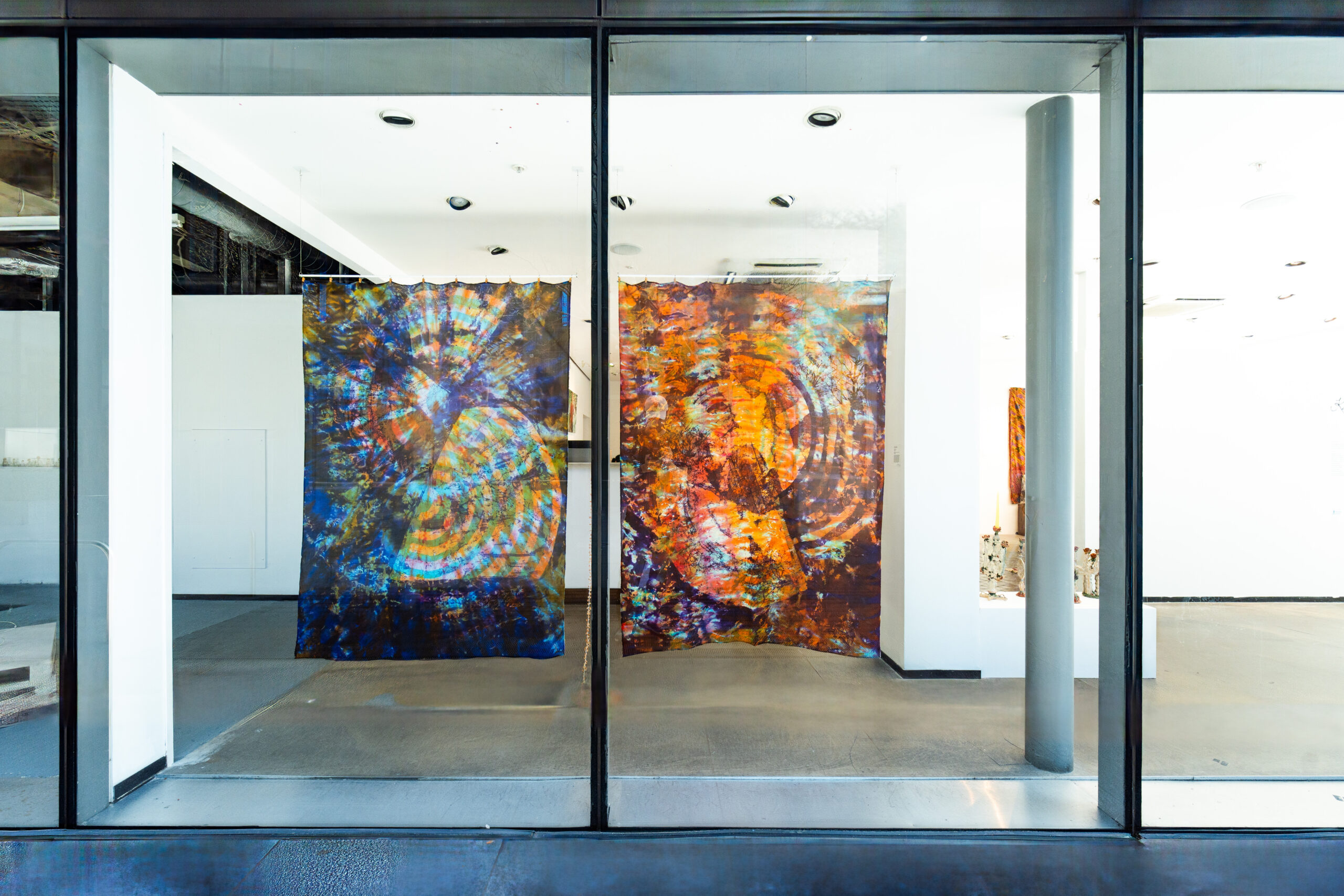
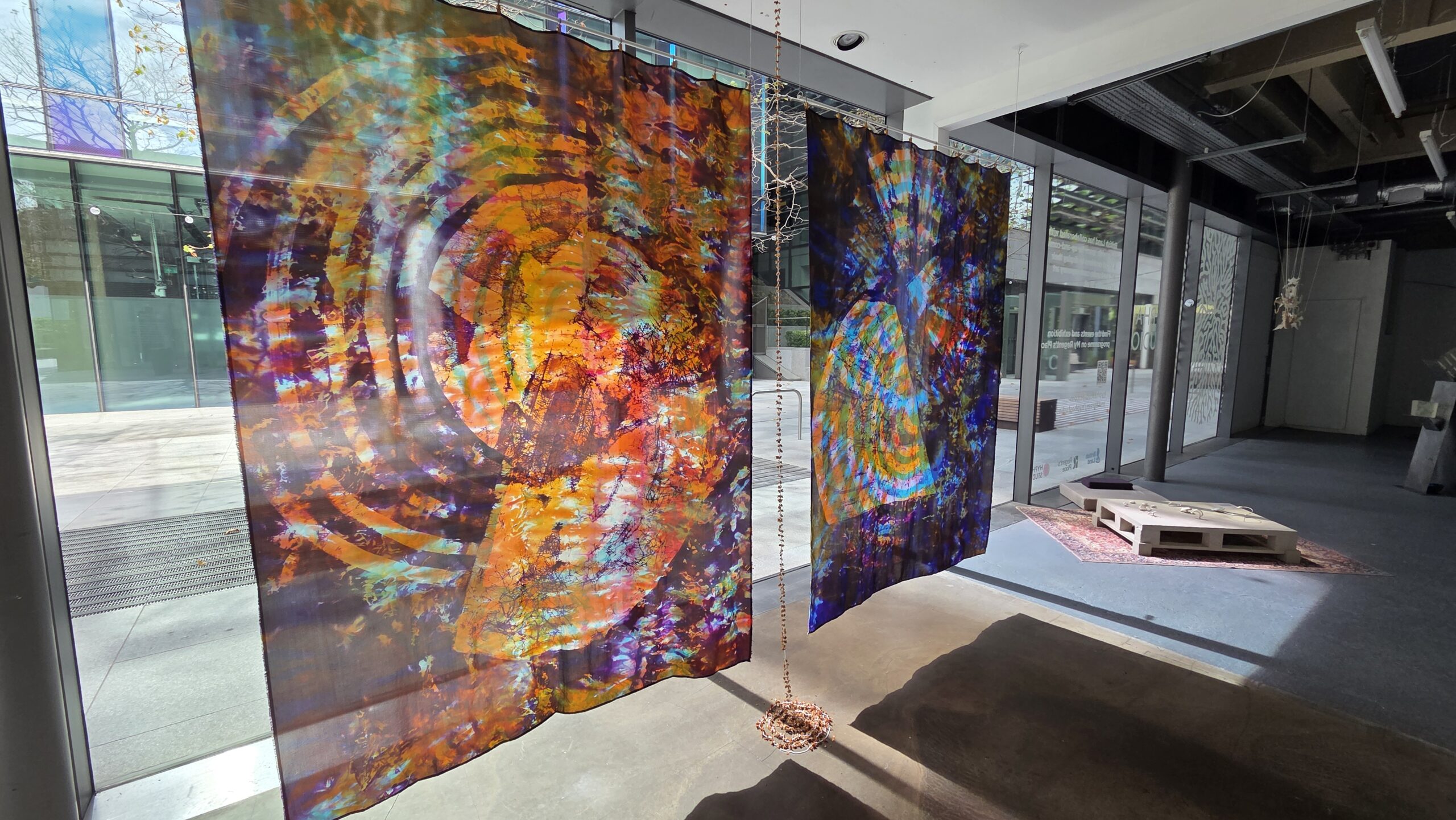
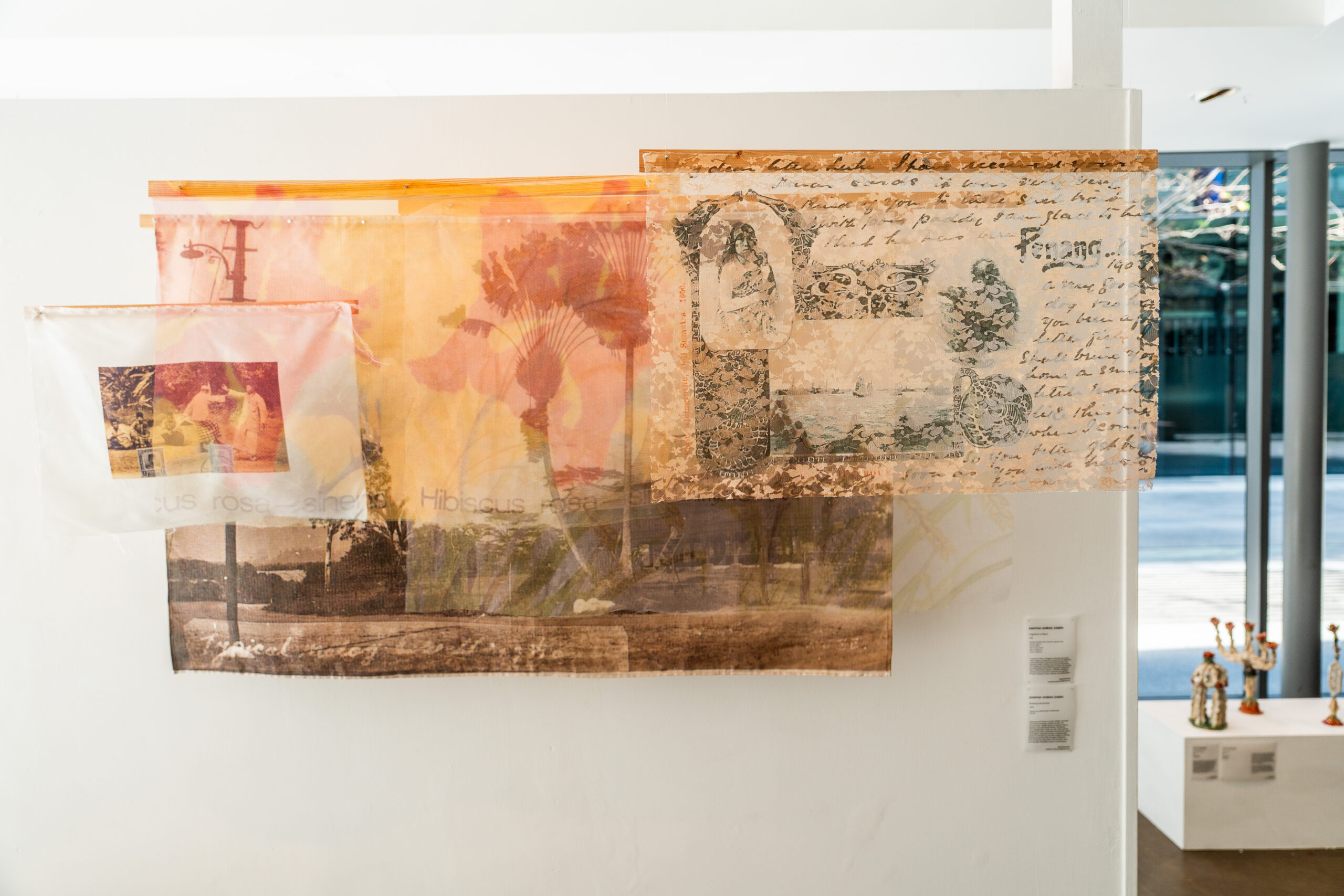
The dialogue between fabric installations is equally compelling. Fajrina Razak’s Return to series consists of two pieces of colourful silk-viscose fabric, while Zarifal Ahmad Zamri’s Fragment in Return comprises four textile pieces made from linen, polyester, organza and lace. Both are suspended from the ceiling, appearing translucent and weightless, but the different settings highlight the different themes. Positioned near the window, Razak’s work catches the shifting sunlight like stained glass, creating a contemplative atmosphere while reflecting on life and death during COVID-19 and the rapid development of the post-pandemic world. Zamri’s work, placed closer to the centre of the room under softer light, evokes a quieter, more domestic mood. This setting complements its exploration of how collective memory and nationhood are constructed and preserved through archival postcards and vintage postage stamp.
Read more: The Director’s Cut of Center Stage Restores Stanley Kwan’s Ultimate Love Letter to Cinema
Razak began the first part of her work in 2020, and the pieces had previously appeared in her solo exhibition. She believes being displayed in Kawan! Kawan! Adds extra meaning to them. “I am among the Southeast Asian artists, and you can see that we somehow connect through the medium and the materials of our work. And we’re not far from each other’s culture. It’s really special to share this space together,” she says.
For Udine, the exhibition’s collective spirit carries personal weight “Southeast Asia encompasses a very distinct set of cultures, and we express ourselves throughout our art. It is a privilege to have this group in London, and having these works together in one setting can create interesting conversation and dialogue between the works themselves – whether intentionally or unintentionally.”
Both of them think Southeast Asians often receive less cultural visibility in the UK compared to other diaspora groups, so this exhibition creates a platform to spotlight the talents and intersection between different Southeast Asian cultures. Julian recalls that around 120 people attended the private viewing on the launch evening, including many white and non-Asian visitors. “It’s a really good sign that people actually want to see Southeast Asian art,” she says.
Ultimately, Kawan! Kawan! successfully draws dialogue between different Southeast Asian artists, highlighting their interconnectiveness while avoiding treating their identity as a unified subject. It shows that art can create a space not only for representing where people come from, but for expressing how cultural identity is continuously negotiated.
Kawan! Kawan! runs until 5 September, open Thursday to Sunday 12-6pm. Accompanying workshops and art classes will take place throughout the exhibition run. Find out more details here.