
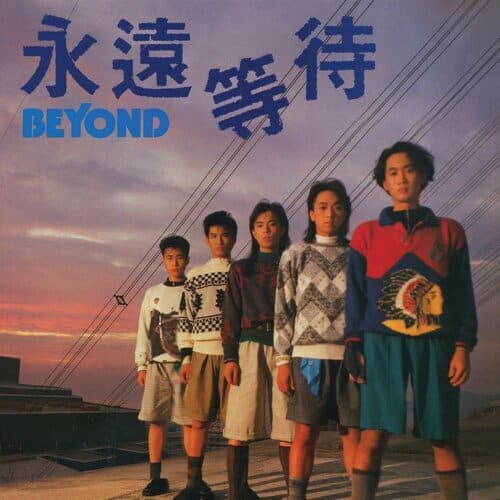
A single acoustic guitar chord rings out, followed by a sweeping piano melody. Then comes the voice—husky, defiant, and filled with a raw ache that stops you completely. If you grew up in Hong Kong or within the global Asian diaspora during the late twentieth century, you know this song instantly. It is Boundless Oceans, Vast Skies (海闊天空). The track is not merely a vintage pop hit. It is a cultural anthem that has soundtracked decades of defiance, hope, and collective grief. At the centre of this cultural phenomenon stands Beyond, a four-piece rock band that broke the mould of the commercial music industry and changed the sound of the region forever.
To understand the rise of Beyond, you must look at the landscape of 1980s and 1990s Hong Kong. The local music market, known worldwide as Cantopop, operated like a highly efficient factory. Major record labels prized polished image over artistic independence. Solitary vocalists dominated the airwaves, performing synthesised ballads that were almost exclusively translated covers of Japanese pop hits or safe, saccharine love songs.
Read more: RESONATE VIDEO: Mystery singer captivates audiences in London Chinatown
But Beyond refused to fit into this assembly line. Formed in 1983 by frontman and principal songwriter Wong Ka Kui alongside drummer Yip Sai Wing, bassist Wong Ka Keung, and guitarist Paul Wong Koon Chung, the band emerged from the gritty, self-financed underground indie scene. They spent their early years working menial jobs as office assistants and insurance salesmen, scraping together money to rent rehearsal spaces in Kowloon. They drew inspiration from Western progressive rock acts like Pink Floyd and art-rock innovators like David Bowie. They chose the name Beyond because they wanted to surpass the limitations of the local scene.
The band achieved mainstream success when they struck a delicate balance between their rock sensibilities and accessible melodies. Tracks like Great Land (大地) in 1988 propelled them into the public consciousness. What set them apart from their peers was their refusal to sing exclusively about romance. Beyond used their platform to address global human rights, historical displacement, and socio-political struggles.
In 1990, the band released Glorious Years (光輝歲月), a direct tribute to Nelson Mandela and his fight against apartheid in South Africa. The song introduced a generation of apolitical Hong Kong youth to the concept of racial equality and global civil rights struggles. The opening electric guitar riff is instantly recognisable across the Chinese-speaking world. A year later, after travelling to East Africa with a non-governmental organisation, Wong Ka Kui penned Amani, a powerful anti-war anthem that incorporated Swahili lyrics pleading for peace and the protection of children in war-ravaged nations.
“Today there’s only a battered body left to welcome the days of glory, holding on tight to freedom.” — Glorious Years (1990)
This focus on real-world issues gave the band an enduring authority. They spoke directly to the anxieties of ordinary citizens living in a colony facing immense historical transition. As the 1997 handover to China approached, the youth of Hong Kong found their collective anxieties mirrored in Beyond’s music. The songs captured the universal struggle of maintaining your identity and holding onto your dreams in the face of an uncertain future.
The trajectory of the band changed forever on 30 June 1993. While filming a Japanese television game show in Tokyo to promote their international releases, Wong Ka Kui fell from a poorly secured stage platform. He sustained massive head injuries and died six days later at the age of 31. His sudden death devastated millions across the Asian diaspora. His funeral procession brought the major thoroughfares of Hong Kong to a complete standstill as thousands of weeping fans lined the streets.
The loss felt like the end of an era. The remaining three members courageously continued to record and tour for another decade before officially disbanding in 2005, but the tragic absence of Ka Kui altered the landscape of Chinese rock music forever.
And yet, the music did not die. If anything, the impact of Beyond has grown stronger over the last three decades. Boundless Oceans, Vast Skies became the first Cantonese song to surpass 100 million views on YouTube in 2022, proving that their catalogue continues to attract new generations of listeners. Whenever communities of the Asian diaspora gather to express solidarity, desire for freedom, or shared identity, the songs of Beyond are sung in unison.
The band proved that popular music can be intellectual, politically engaged, and deeply human without losing its mass appeal. They rejected the manufactured polish of their era to create something that outlived the industry that tried to contain them. When you listen to Ka Kui’s soaring vocals today, you are not listening to a nostalgic relic of the nineties. You are listening to the living pulse of a culture that refuses to be silenced.