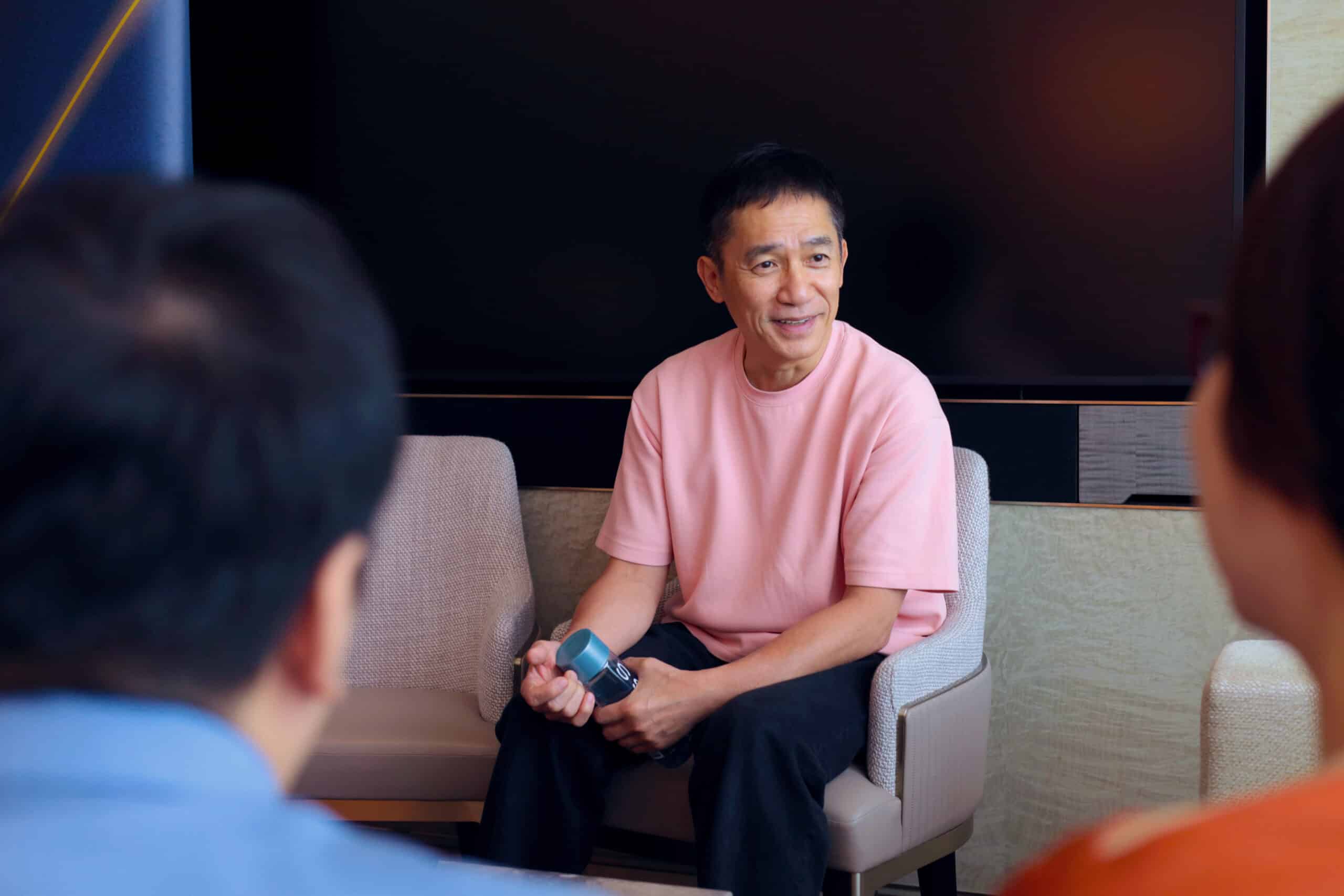
Tony Leung has delivered a blunt verdict on artificial intelligence in filmmaking: it may save time and money, but it cannot replace the human spark that gives cinema its emotional weight. Speaking in Shanghai during the International Film Festival, the Hong Kong icon called AI “a double-edged sword” and said he does not believe machine-made movies can truly be considered art.
The actor, who is serving as jury president at the festival’s Golden Goblet Awards, said the appeal of AI lies in efficiency, but its rise comes with a human cost. “‘It saves a lot of time’ means it saves a lot of money… But at the same time, a lot of people will lose their jobs,” Leung said, adding that the beneficiaries may be mainstream “popcorn movies” rather than more adventurous cinema.
Leung’s sharpest line was also his simplest: “But there’s no soul.” Asked whether an AI-generated film could be art, he paused before answering, “I don’t think so. I don’t think it’s an art. No.” The comment lands at a moment when film festivals, studios and streamers are increasingly experimenting with AI tools, even as artists raise alarms about authorship, labor and the loss of creative intent.
Read more: The Eyes of Tony Leung: Why the Legendary Actor Thrives on Letting Go
Leung’s criticism goes beyond technology for its own sake. He suggested AI-driven filmmaking is too formulaic to capture the uncertainty and emotional risk that define great cinema, saying, “You don’t need to think. There’s no creative. That’s just calculation.” In another striking line, he framed the issue in human terms rather than technical ones: “I feel sad,” he said, recalling the big-screen moviegoing experience of his childhood and lamenting how films are increasingly watched on smaller and smaller screens.
That view fits neatly with his broader belief that cinema depends on presence, texture and restraint. At a separate masterclass, Leung said his own acting style relies on tiny details that reward a theatrical viewing experience: “Sometimes it might just be something on my fingers, you must watch very carefully, and it must be in cinema.” It’s a characteristically Leung-ish argument — quiet, precise, and deeply attached to the physicality of film.
Leung also offered a few lines that help explain how he thinks about his craft and his future. On choosing projects, he said the director matters more than the genre: “What kind of story, what genre, is not important to me. I love their movies, or I love this person… That’s how I pick projects.” On truth over polish, he added, “Film is an act of truthfulness, not happening on the screen but in the heart and in the guts of the spectator.”
Elsewhere in the conversation, Leung revealed a more playful but revealing side. On acting on stage, he admitted: “I lack courage.” And on why he still prefers cinema to streaming or phone viewing, his answer was even more direct: “To me movies shouldn’t be watched outside the cinema.”
Read more: We Sat Down With Tony Leung To Discuss Trust, Technique… And Trees
Leung’s comments arrive as the film world weighs AI’s promise against its risks, from faster post-production to fears over jobs and creative dilution. His stance is especially resonant because he is not speaking as a tech outsider but as one of Asian cinema’s most revered working actors, someone whose performances have long depended on nuance rather than spectacle.
For Leung, the issue is ultimately not whether AI can imitate filmmaking processes, but whether it can reproduce the human feeling at the center of the medium. On his evidence, that answer is still no.