
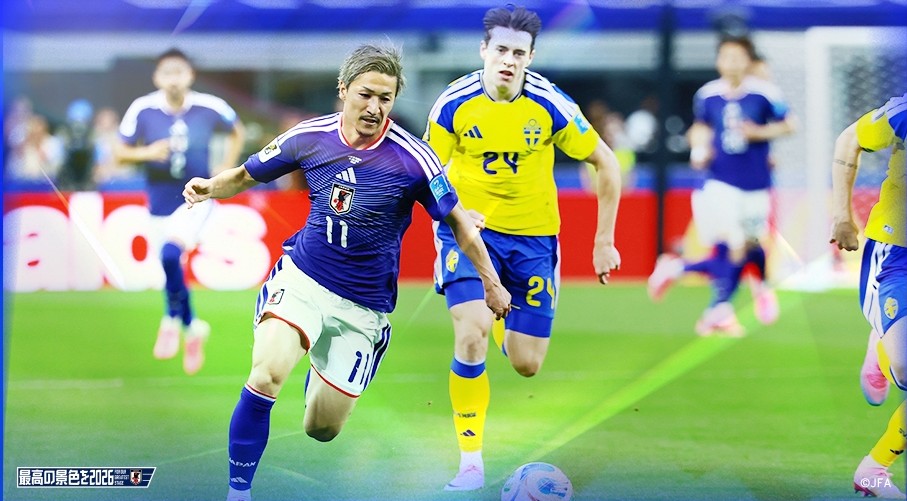
Japan are through to the World Cup knockout stage once again, but their reward is a looming clash with five-time champions Brazil — a matchup that will test just how far this Blue Samurai side can go.
A 1–1 draw against Sweden on Thursday was enough to see Hajime Moriyasu’s men finish second in Group F, sealing progression to the round of 32 for the third consecutive tournament and the fifth time in seven appearances since their breakthrough run in 2002.
Daizen Maeda broke the deadlock in the 56th minute, calmly finishing a precise setup from Ritsu Doan to give Japan control in a match they were largely content to manage. But that advantage proved short-lived. Just six minutes later, Sweden’s Anthony Elanga fired in a sharp equaliser from range, continuing his quietly effective tournament despite a modest club scoring record.
Japan’s approach for much of the game leaned pragmatic, sitting deep and playing for the point they knew would secure qualification. Yet when the moment opened up, they struck with clinical efficiency — a hallmark of a side that has now scored seven goals this tournament, their highest-ever tally at a single World Cup.
Goalkeeper Zion Suzuki proved crucial late on, producing a series of reflex saves to deny Sweden a winner, including a decisive stop from Alexander Isak in stoppage time that preserved the result.
For Moriyasu, the bigger picture is clear: Japan are no longer just participants in the knockout rounds — they are aiming higher.
“We do believe there’s a chance for us to win,” he said post-match. “And we hope that we will be able to move one step further.”
Standing in their way is Brazil, ranked No. 5 in the world and historically one of the tournament’s most dominant forces. The round-of-32 clash in Houston on Monday presents a familiar narrative for Japan — underdogs, but increasingly credible ones.
Sweden, meanwhile, continue their own consistent World Cup pedigree, advancing to the knockout stage for the fourth consecutive tournament they’ve qualified for. Their opponent will be confirmed in the coming days.
For Japan, however, the focus is already set. Progression is no longer the headline — what comes next might be.