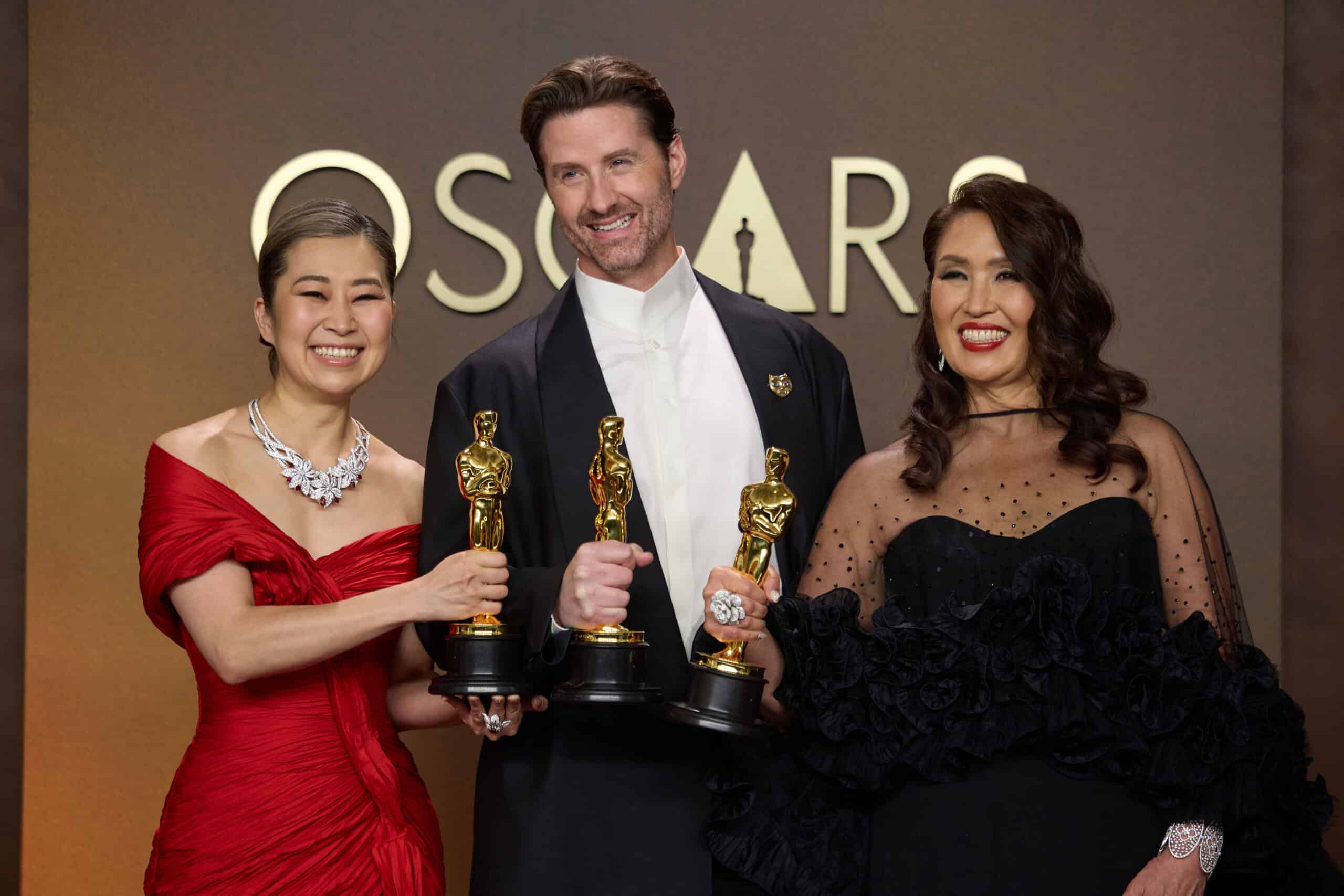
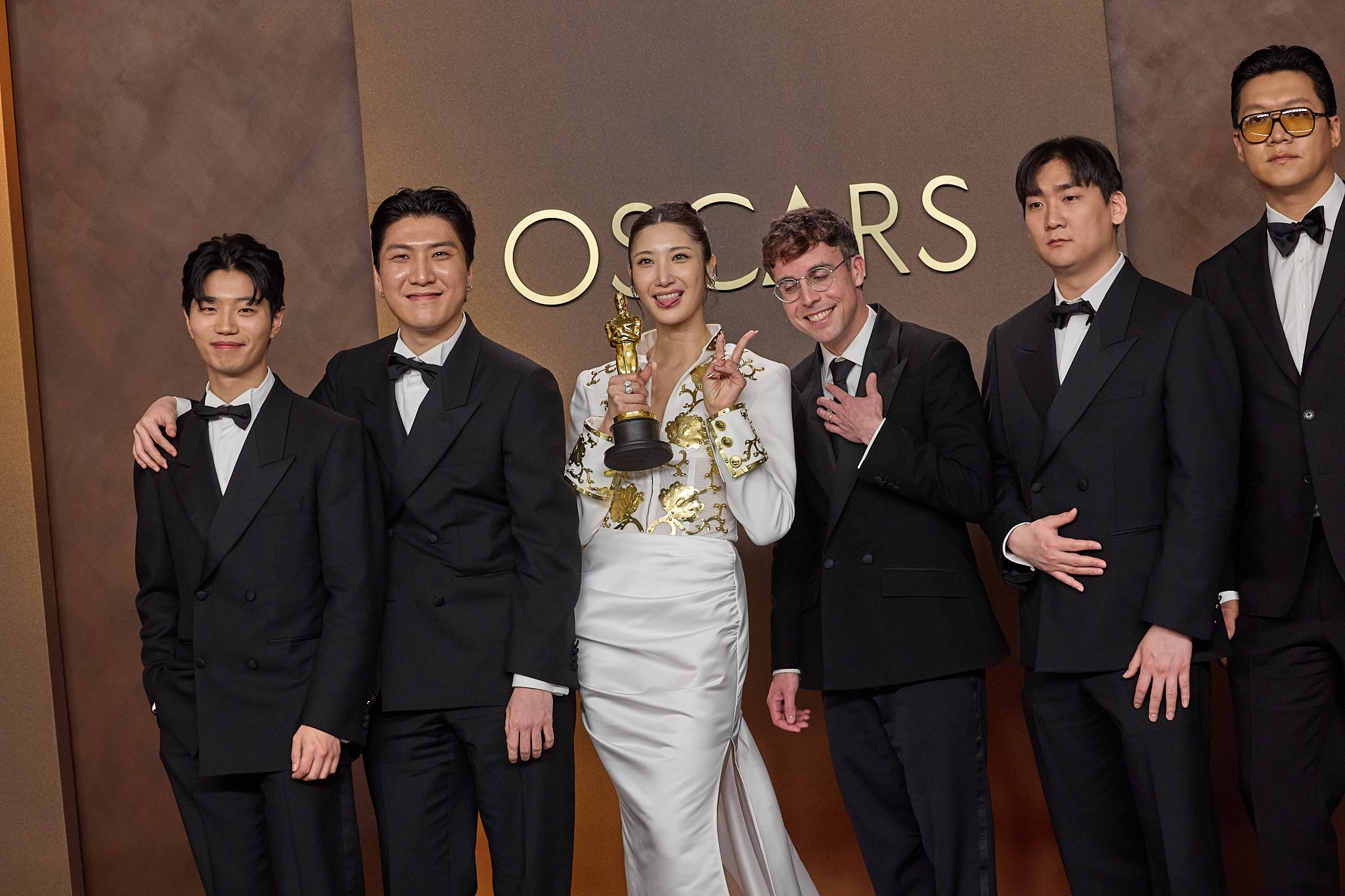
The 2026 Oscars had no shortage of viral moments, but one of the most talked-about came from what didn’t quite land—the abrupt cut-off of the ‘Golden’ songwriters and the slightly chaotic acceptance speech from the Kpop Demon Hunters team.
Now, Academy executive Walt Disney Television’s Rob Mills has addressed the moment, admitting it exposed a bigger issue with how the Oscars handles time, especially when multiple winners share the stage.
When the Kpop Demon Hunters team went up to accept their award, what should have been a celebratory stretch quickly became awkward as the orchestra began to play them off mid-speech. The confusion only grew when one of the ‘Golden’ songwriters appeared to be cut short before finishing his remarks, leaving audiences wondering if the show had simply misfired.
Read more: Golden’ Wins Best Song at Oscars, But ‘KPop Demon Hunters’ Team’s Speech Cut Short
According to the Academy, it’s not quite that simple. The real challenge lies in the unpredictability of group wins—some categories bring up a single voice, others a full ensemble, each wanting their moment. Mills acknowledged that while winners are briefed on time limits ahead of the ceremony, enforcing those limits in real time can feel blunt, especially when emotions are running high.
“We look at everything and figure out what is the most elegant solution, because it is difficult, especially when you’re cutting somebody off and it’s their one moment,” Mills said, adding that the Academy is now seriously rethinking its approach. Among the ideas being floated are designating a single speaker per win or extending speeches beyond the stage through backstage feeds or social platforms—ways to preserve the moment without disrupting the broadcast.
“One thing, as we post mortem for next year, will be to look at how we’re handling speeches,” Mills said. “You win the Oscar, you know you go on stage, it could be one person, it could be five or six. Immediately you’ll see the sort of allotted time we have for them. Do we need to look at it and say, okay, designate one person to speak. Maybe you continue it backstage, and we have a feed on social or something like that.”
— Resonate (@ResonateVoices) March 16, 2026
“We talk about it at the award luncheon, that you have this designated time to speak, and it’s difficult. I don’t know what the most elegant solution is, but it’s obviously something we should look really, really long and hard at.”
The awkwardness didn’t stop there. Viewers also noticed that ‘Golden’, one of the night’s key performances, felt noticeably shorter than expected. A full verse was missing, prompting speculation that the show had once again run over time.
But this, too, was intentional. The Academy confirmed the performance was always planned as a shortened version. With tightly choreographed segments and rehearsals locked well in advance, there’s little room for last-minute changes. Instead, the goal was to deliver a distilled version of the number—something that captured the mood of the film rather than presenting it in full.
“That was by design, that wasn’t something that you can call an audible on, because those things are so well-rehearsed,” Mills said. “Yes, they cut a verse. But I think certainly with the lead up and the production, you got a feeling of it. Probably what is the best thing musical number can accomplish is it makes you want to go and watch the movie again. I think both musical numbers, they really encapsulated both the sort of just the feeling of those movies, beyond just the music.”
Read more: Netflix Blockbuster ‘KPop Demon Hunters’ Wins Oscar For Best Animated Feature
That thinking reflects a broader Oscars strategy: performances aren’t meant to be definitive, but evocative. The idea is to leave audiences wanting more, nudging them back toward the film itself.
Elsewhere in the room, the atmosphere told a different story. The documentary contingent brought a surge of energy that cut through the ceremony’s more rigid pacing, while mentions of Sinners drew loud, euphoric reactions from the crowd. For the Academy, that kind of unpredictability is part of the magic—even if it occasionally clashes with the demands of live television.
Still, the ‘Golden’ moment lingers as a reminder of the Oscars’ tightrope walk between precision and spontaneity. For every perfectly timed cue, there’s the risk of cutting off something meaningful—and as the Academy now admits, finding a more “elegant solution” is easier said than done.