Fandom was once, at least in theory, a collective exercise in appreciation—a shared enthusiasm that brought strangers together in the quiet corners of message boards. But as the boundary between the performer and the spectator has dissolved into the 24/7 access of social media, that appreciation has, in certain quarters, curdled into something much more proprietary and punitive.
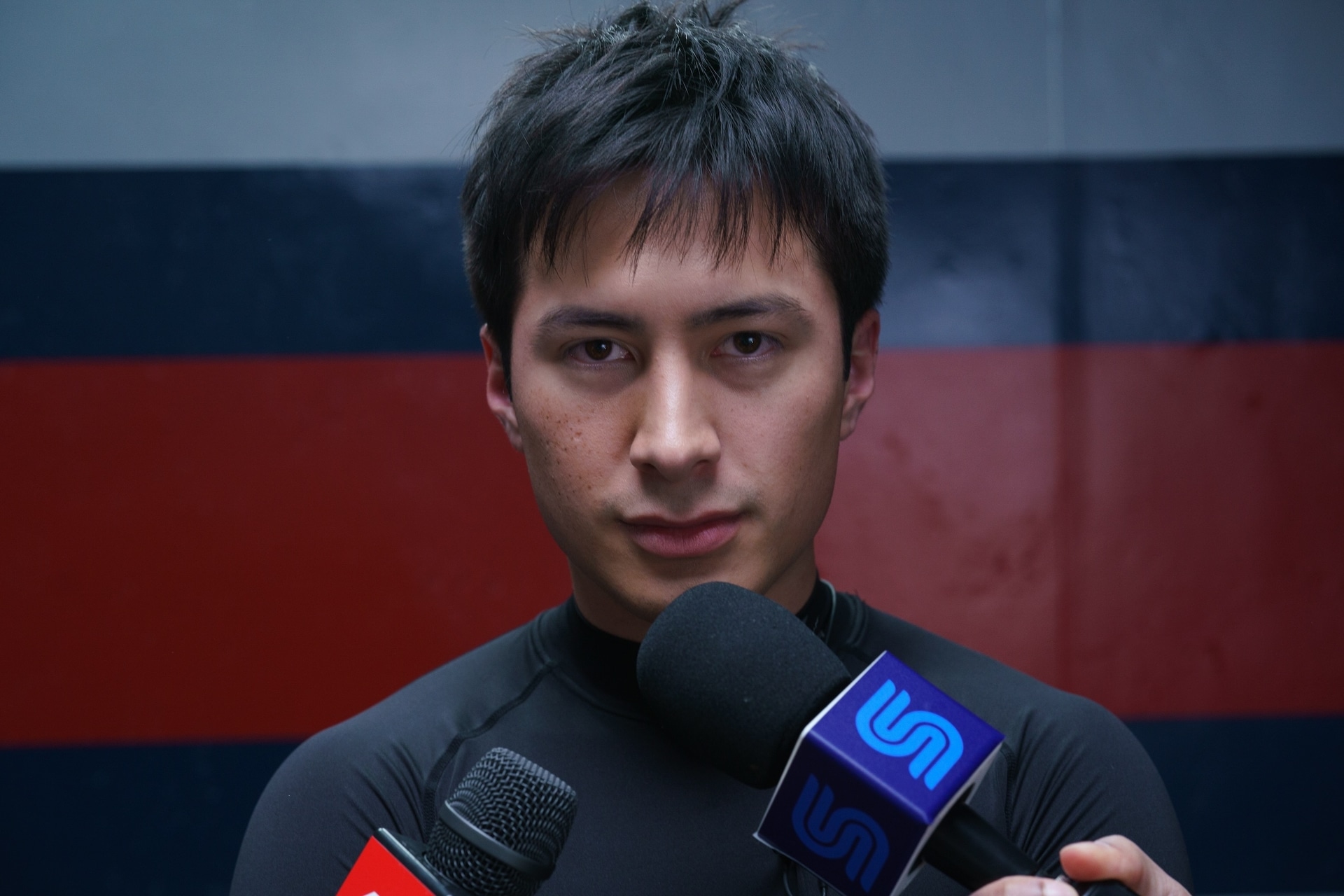
The latest victim of this shift is Hudson Williams, one of the breakout stars of the queer hockey drama Heated Rivalry. Williams, who is of Korean heritage, has spent much of the last year navigating a meteoric rise to fame. Yet, alongside the accolades and the invitations to the world’s most exclusive fashion weeks, he has faced a persistent and venomous campaign of racial harassment that has recently spilled over from the fringes of the internet into mainstream conversation.
The Myth of the Child-Friendly Idol
The irony of the vitriol directed at Williams is that it exists within a community ostensibly built around a show that celebrates queer love and acceptance. However, as the series has grown into a global phenomenon, a toxic subsection of the audience has begun to treat the actors not as professionals, but as characters in a drama they believe they control.
Read more: Why Women Love Gay Hockey Romance: How Heated Rivalry Connects Western TV to Japanese Manga
The harassment has been remarkably specific. Since the show’s debut, anonymous accounts on platforms like X (formerly Twitter) have been dedicated solely to disparaging Williams’s appearance and heritage. The rhetoric is often contradictory and bizarre; some detractors have gone so far as to photoshop his images or question his ethnicity entirely, with one user reportedly claiming he “barely looks Asian.”
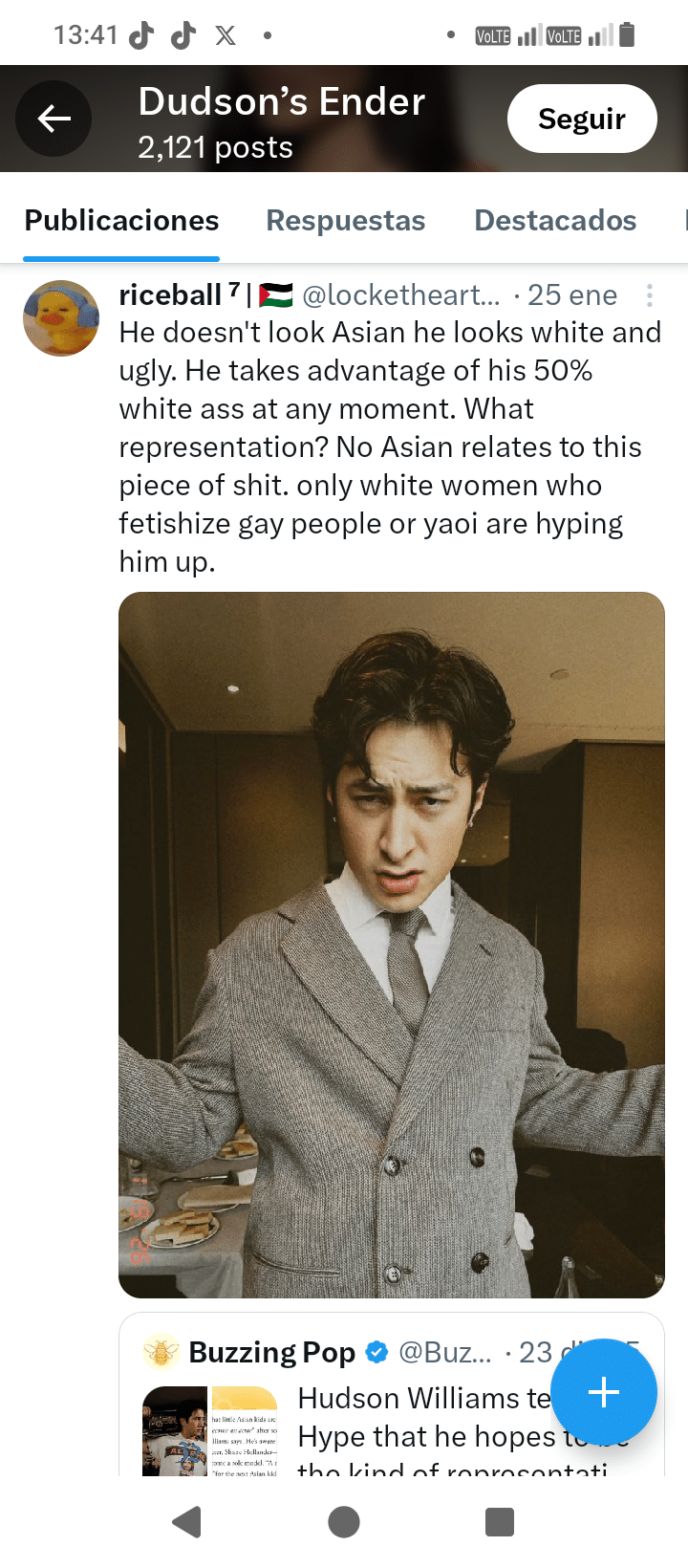
These are not merely isolated trolls. Recently, a private group chat of sixty-three individuals was exposed, revealing a catalog of racism and ableism. The group reportedly engaged in “rage-baiting”—the deliberate posting of inflammatory content to provoke arguments—and collaborated on spreading false information intended to damage Williams’s career.
The “Shipper” and the Scapegoat
Much of the animosity appears to stem from the world of “shipping”—the fan practice of rooting for a romantic relationship between two people. In this case, a faction of fans has become obsessed with a real-life pairing between Williams and his co-star, Connor Storrie. When reality fails to mirror their fiction—such as when Williams is rumored to be dating a woman, or when he spends time with other co-stars—the frustration is often channeled into bigotry.

Williams’s co-star, François Arnaud, has faced a similar smear campaign, being labeled an “enemy” of the favored fan pairing. But for Williams, the attacks take on a distinctly racialized tone. Some users have used his “Korean upbringing” as a weaponized explanation for alleged homophobia, while others have openly cheered when he experiences racism, viewing it as a just punishment for disrupting their desired narrative.
The Frontal Cortex and the Reality of Fandom
Williams himself has mostly maintained a stoic silence regarding the online hate. However, during a recent appearance on SiriusXM’s Radio Andy, he offered a rare, pointed comment on the nature of his critics. Speaking to host Andy Cohen, Williams stated that he only respects the opinions of people who have a “developed frontal cortex.”
Read more: ‘SNL UK’ and the Erasure of British East and Southeast Asians: Why “Diverse” Casting Still Fails
It was a concise dismissal of the “chronically online” behavior that has come to define his detractors. Yet, the problem remains. When fandom stops being about the work and starts being about the ownership of a human being’s identity, it ceases to be a community. It becomes a mob.
The “Heated Rivalry” controversy is a reminder that the ease of digital access does not grant fans a seat at the private tables of the people they admire. As the genre of queer romance enters the mainstream, it seems it must also contend with the growing pains of a culture that sometimes struggles to tell the difference between a person and a trope.