Michelle Yeoh has spent decades redefining what global stardom looks like for Asian women on screen. From Hong Kong action cinema to Hollywood prestige, the Malaysian-born actor reached the pinnacle of her career in 2023, when she made history as the first Asian woman to win the Academy Award for Best Actress for Everything Everywhere All At Once.
Now, just three years later, Yeoh finds herself in a very different awards conversation.
On Wednesday, the Golden Raspberry Awards announced their nominees for the 2026 Razzies — Hollywood’s annual tongue-in-cheek ceremony “honouring” the worst films and performances of the year.
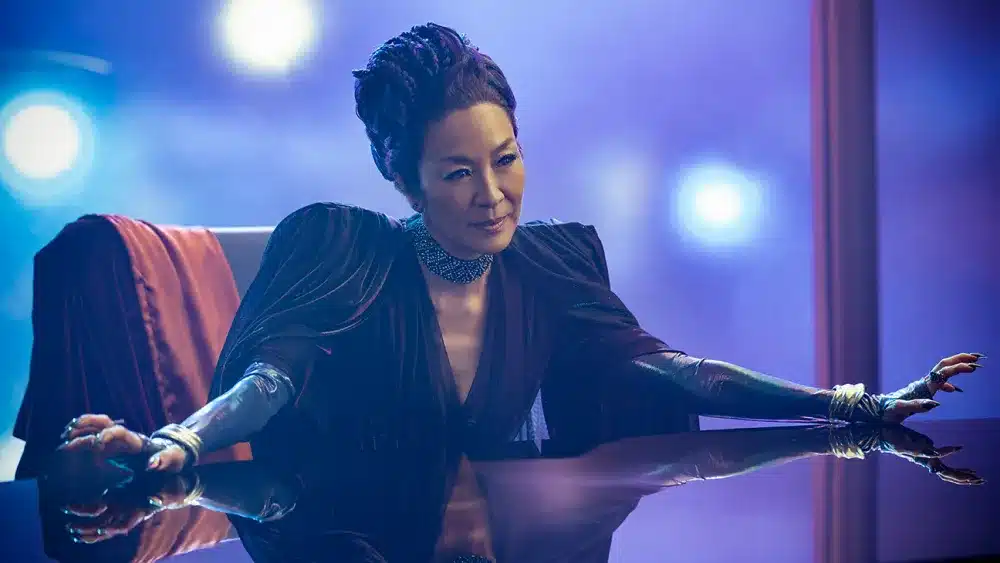
Among the nominees for Worst Actress is Michelle Yeoh for her role in Star Trek: Section 31, placing her alongside fellow Oscar winners Natalie Portman and Ariana DeBose.
The nomination has raised eyebrows not because of Yeoh’s performance pedigree, but because of what it says about the risks actors of colour often shoulder in franchise-driven Hollywood.
In Star Trek: Section 31, Yeoh reprises her fan-favourite role as Emperor Philippa Georgiou, a morally complex character first introduced in Star Trek: Discovery. The film marks a rare moment in which an Asian woman leads a major sci-fi property within one of Hollywood’s longest-running franchises.
The standalone spin-off was positioned as a bold expansion of the Star Trek universe, blending espionage, political intrigue and Yeoh’s signature commanding presence. However, critics were divided on the film’s tonal shifts and narrative execution — shortcomings that have now translated into Razzie attention.
Yeoh’s nomination sits in stark contrast to her Oscar win just a few years ago, underscoring how even the most decorated actors are not immune to the industry’s uneven expectations.
Read more: Chloé Zhao Makes Oscar History With Second Best Director Nomination
The 46th Golden Raspberry Awards will announce winners on March 14, just one day before the Academy Awards ceremony crowns the best of the year at the 98th Oscars. Razzie winners receive a US$4.97 gold spray-painted trophy — and a momentary place in pop culture infamy.
Star Trek: Section 31 joins a crowded and controversial Razzie field this year, which includes Disney’s Snow White, War of the Worlds and The Electric State. Snow White leads the pack with nominations for Worst Picture, Worst Remake and even Worst Screen Combo for its digitally rendered Seven Dwarfs.
Yet Yeoh’s presence on the Razzie list feels qualitatively different. Her nomination does not diminish her impact; instead, it highlights the volatility of Hollywood’s reward system — where groundbreaking wins and public pile-ons can exist just a few release cycles apart.
Read more: Oscars 2026: ‘Kpop Demon Hunters’ Secures Historic Animation Nomination
For Yeoh, whose career spans martial arts classics, James Bond films, arthouse cinema and blockbuster franchises, a Razzie nomination is unlikely to alter her legacy. If anything, it reinforces her willingness to take creative risks in spaces where Asian women are still underrepresented.
In an industry that often offers limited lanes, Michelle Yeoh continues to choose complexity over comfort — even when the outcome is unpredictable.