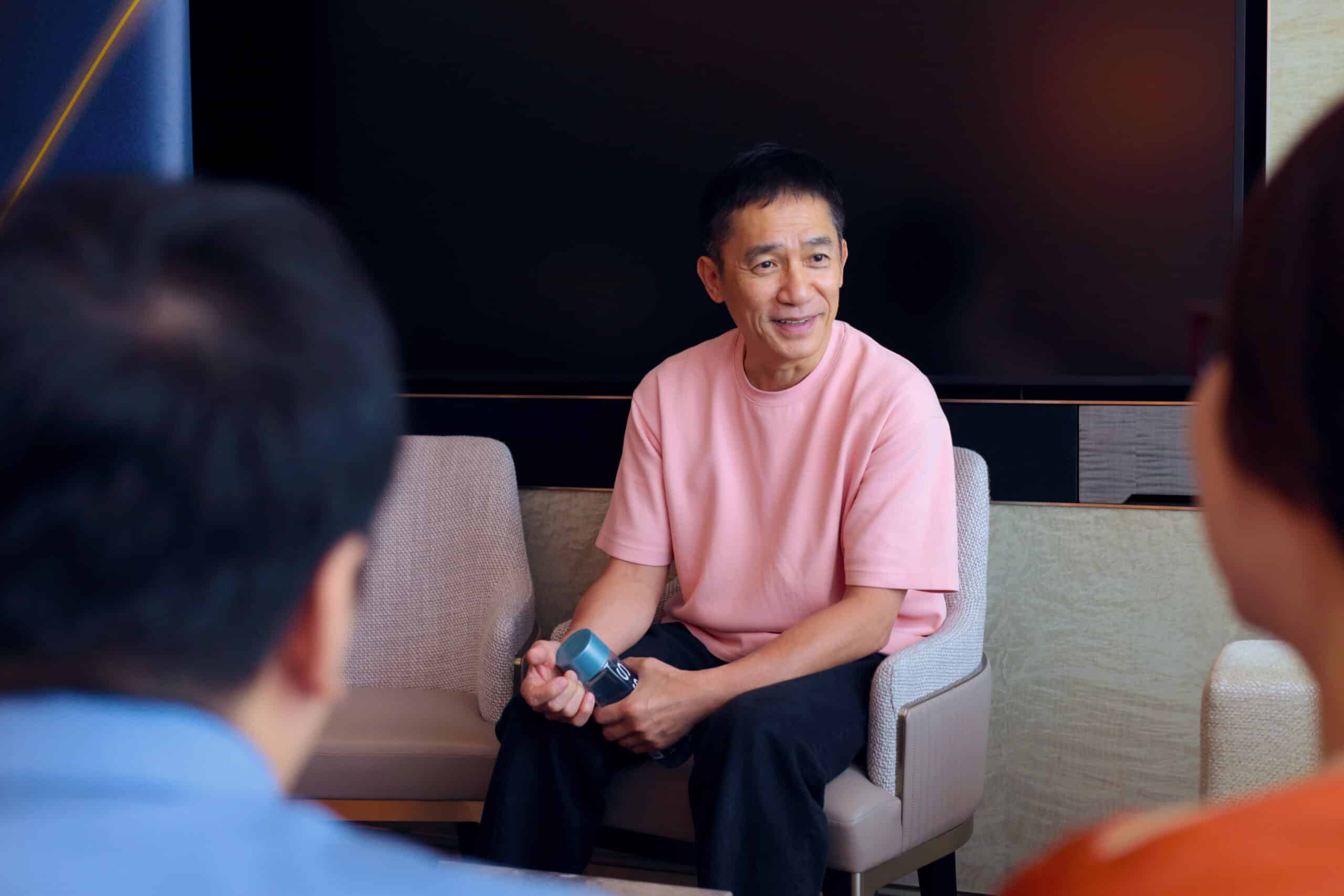
Irrespective of East or West, very few actors command the same reverence and admiration as Tony Leung. For an actor whose most powerful performances are delivered in half-sentences and lingering glances, his presence feels both disarmingly gentle and impossibly magnetic. In person, he is exactly what decades of cinema have promised: thoughtful, warm, and just a little bit mischievous—like he’s permanently in on a secret he might share if you ask the right question.
At 61, Leung remains the rare figure who can anchor a Wong Kar-wai romance and a Marvel blockbuster with equal finesse—proof that vulnerability and heroism are not opposites, but twins. Yet behind the global acclaim is a man who still blushes at compliments, worries he’s “not interesting enough,” and laughs with the sort of sincerity you wish could be bottled and prescribed.
And just when you think you’ve seen it all, he talks about his latest “scene partner”—a tree. In his new film Silent Friend, Leung turns introspection into dialogue once again, finding meaning, humour, and even connection in the stillness of nature. It’s delightfully strange, unexpectedly moving, and undeniably Tony.
In this conversation, taken from intimate interviews and exclusives Q&As held at the 36th Singapore International Film Festival (SGIFF), Tony reflects on art, ageing, and the curious power of silence—offering insights with the same understated brilliance that has made him one of cinema’s most enduring icons.
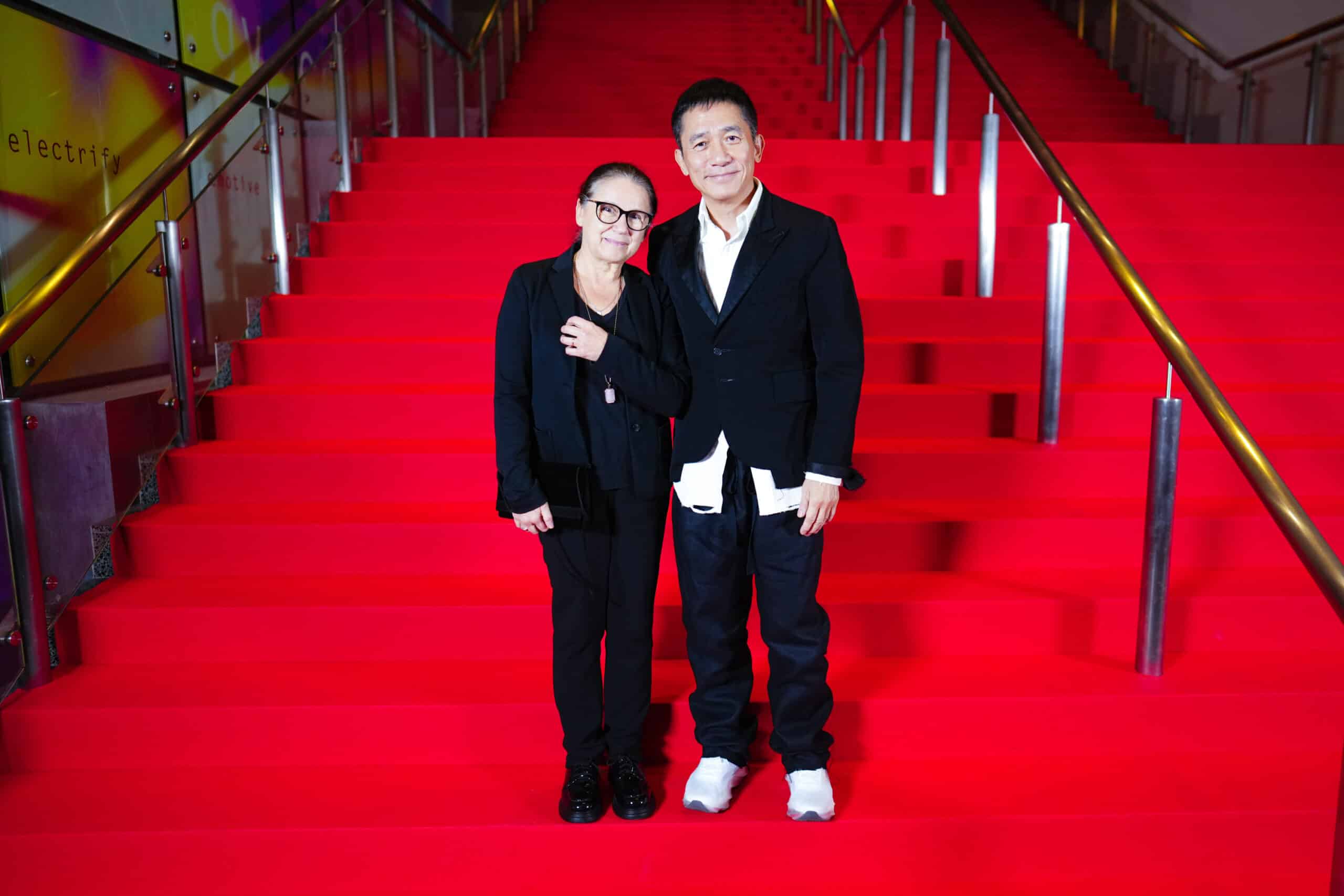
As a veteran in the industry, Leung has wells of wisdom to share with fans and actors walking in his footsteps. However, his advice might be more unconventional than you would have expected. “Frankly speaking, I never plan,” Leung earnestly reveals. “I never plan what to do next. I just let things happen. When something comes to me, and I find it interesting, and it goes into my head — the feelings of that project — then I go with it.”
For Leung, passion and hard work are the key ingredients for success in the field. “I’m not a fortune teller,” he says. “I only know I have a passion for acting, and I enjoy it very much. I can get a lot of satisfaction when I do something really good. You need to be disciplined, hard-working. and passionate.”
Read more: SGIFF 2025 Kicks Off With Shu Qi’s ‘Girl’ And Record-Breaking Ticket Sales
While some might consider Leung a superstar, the humble actor lives a surprisingly regular life. “I try very hard to keep my private life private, but it’s useless,” he said. “Anyway, I have nothing to hide. Besides work, I’m just an ordinary person like everyone else. I eat, I sleep, I exercise, I go shopping, I go to the cinema. I do what everyone does.” And in person, this humility sincerely comes across in waves.

Wong Kar Wai Years
Across his profound career, Leung has portrayed a diverse range of characters, ranging from melancholic romantic leads in films such as In The Mood For Love to more ruthless protagonists in films like Infernal Affairs. Whilst it’s hard to draw a connecting thread between his prolific characters, Leung consistently buries his characters in emotion.
Reflecting on his earlier work, Leung recalls memories of his own emotions getting the better of him. “When I was working with Wong Kar Wai — for Days of Being Wild — I remember at the beginning of the shoot, even a very simple scene, a simple shot, needed multiple takes,” he remembers.
“At least 29 takes. And I didn’t know why. He never told me why I wasn’t doing well. I didn’t understand. I was frustrated. I wondered, “Do I not know how to act? I’ve been acting for 10 years — what’s wrong with me?” Other actors could get through with one or two takes, but I needed at least 20 every day.”
“Every day, after work, I cried. It was the first time I cried because of work,” he reveals. “I didn’t know what was wrong. Maybe I was overacting or using too many techniques. Maybe he wanted me to be more authentic, without technique. But in the end, I had one of my favourite scenes in that movie — the last scene in Days of Being Wild, where I prepare to go out together. That one.”
“I’m sentimental. Sometimes I think of the characters I’ve played, but I try to forget them, let them fade away, because I have to move on,” Leung stated.
A Silent Friend And A Quiet Love For Plants
Fast forward to the current day, and Leung has taken on yet another turn in his character choice. Speaking ahead of the Southeast Asian premiere of Silent Friend, Leung said of his character, “It was quite challenging for me to play the role of a scientist. I did a lot of preparation — not just educational, but I set myself to imagine I was studying in Cambridge.”
“So six months before, I hired an English teacher from the UK to try to develop a slight British accent for the movie. It wasn’t easy for me to study all those books they sent me — some were not easy reading — but I enjoyed it very much. I wanted the character to have a bit of a British accent, so I worked with an English teacher from England. This is one of the longest preparations in my career — I spent six months on this role because the books were difficult to read and understand.”
Silent Friend is a philosophical sci‑fi drama about three outsiders in different time periods whose lives become quietly bound up with the same ancient ginkgo tree in a German university’s botanical garden. Across 1908, 1972 and 2020, the film uses this tree as a “silent observer” to explore solitude, memory, and how humans try to communicate with nature and with each other.
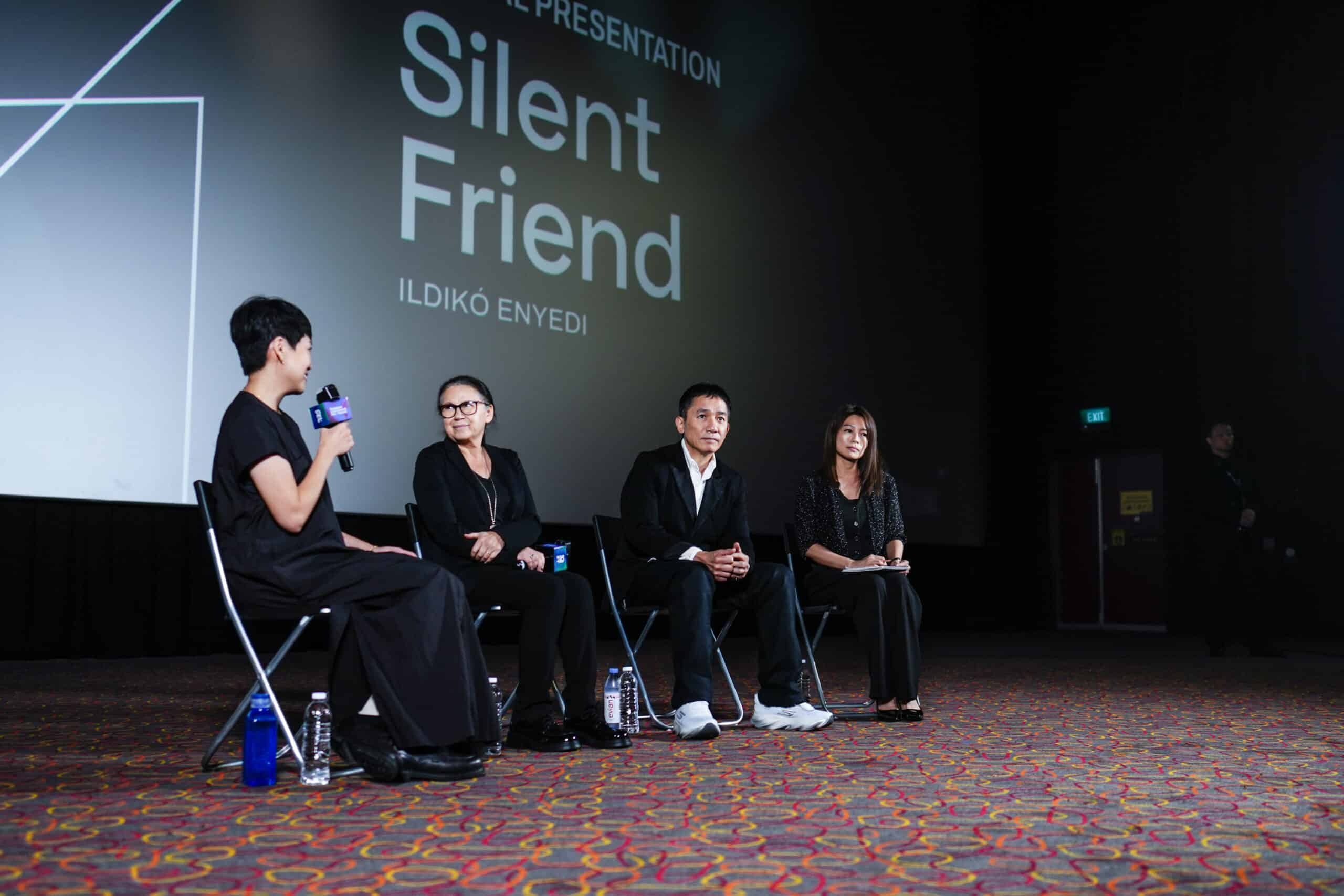
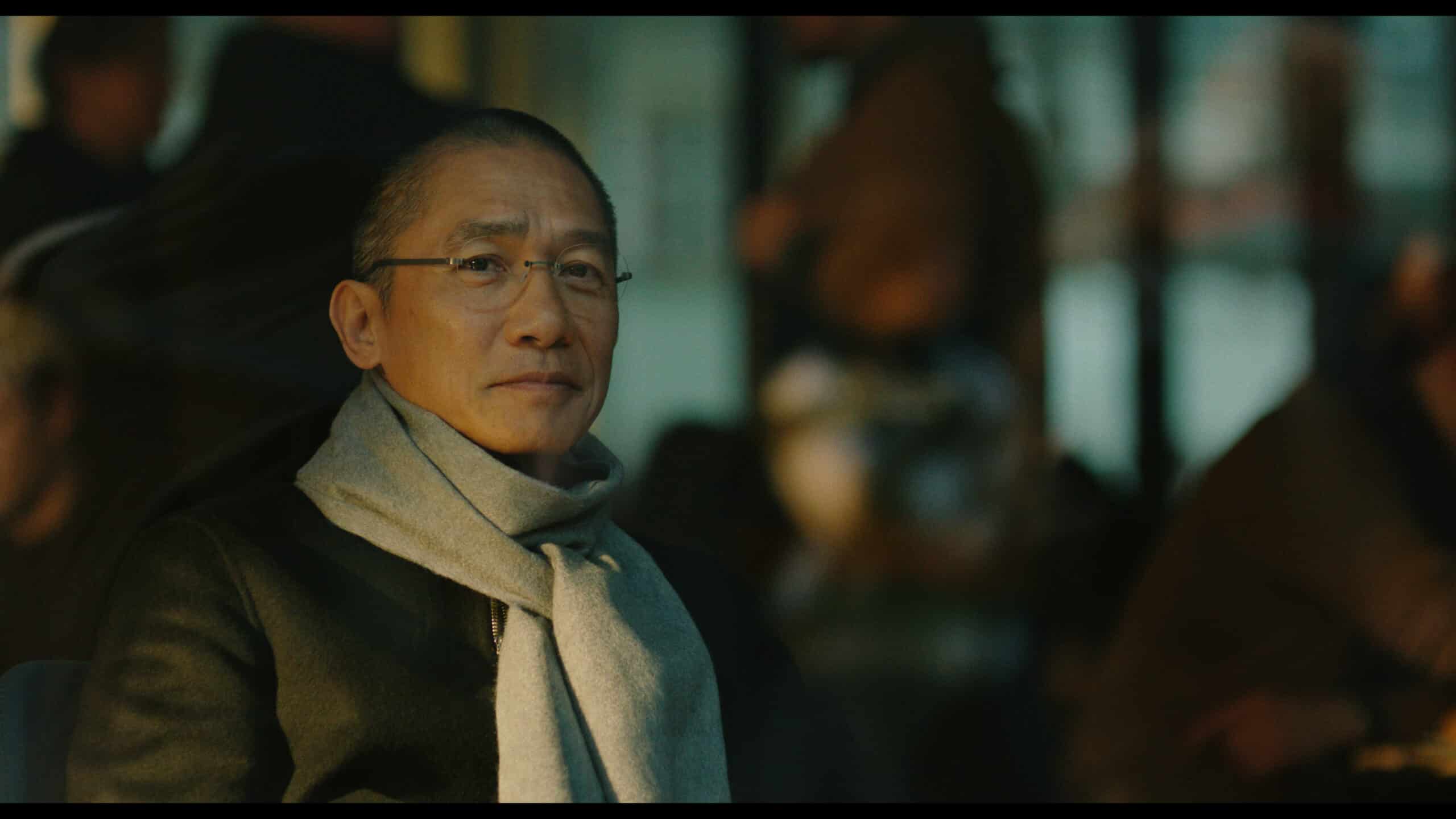
In the film, Leung plays Professor Wong, a renowned neuroscientist from Hong Kong who arrives as a visiting professor just as the COVID-19 lockdown empties the campus. Cut off from his infant-brainwave research, he starts a speculative experiment measuring the “brainwaves” or inner signals of the ginkgo tree, and his lonely routine gradually turns into a tentative, almost spiritual dialogue with the plant, guided in part by a remote collaborator played by Léa Seydoux.
“I play a neuroscientist in this movie, so I needed a basic understanding of neuroscience,” Leung continued. “I studied the cognitive development of babies. At the same time, I studied plants too, because in the movie I conduct experiments on plants. I visited different universities, met neuroscientists, and did research.”
Although Leung might not share the same career path as his on-screen Professor counterpart, he shares a similar love for plants. “I love plants,” Leung tells us.
Read more: Youn Yuh-jung And Deepa Mehta Honoured At SGIFF’s 2025 Silver Screen Awards
“I have a small garden with different kinds of plants that have different scents at different times. Before this movie, I enjoyed my garden very much, but now I sometimes feel a little sad because, as Lea says in the movie, it’s like a zoo — they’re supposed to be in nature, but now they’re planted for your own pleasure. Still, I take good care of them. I don’t do gardening, but I have a garden, and I care for it.”
When asked which flower he relates to the most, Leung said, “I’d say I’m a night-blooming flower. Outside of work, I’m ordinary. But as an actor, I can entertain people, express something meaningful, and share interesting messages with the audience.” And for director Ildikó Enyedi, Leung said, “She’s a sunflower — energetic, sunny, lovely. She’s always smiling, full of energy, flying to different countries, never complaining.”
Taking on the role was not a decision Leung took lightly either. “After I read the script, I found it very special — sci-fi with a sense of humour, and the protagonist is a tree,” he said with a laugh. “There was a quote by a neuroscientist: “We are all hallucinating all the time, but when we agree with the hallucination, we call it reality.” I thought maybe there were hidden layers.”
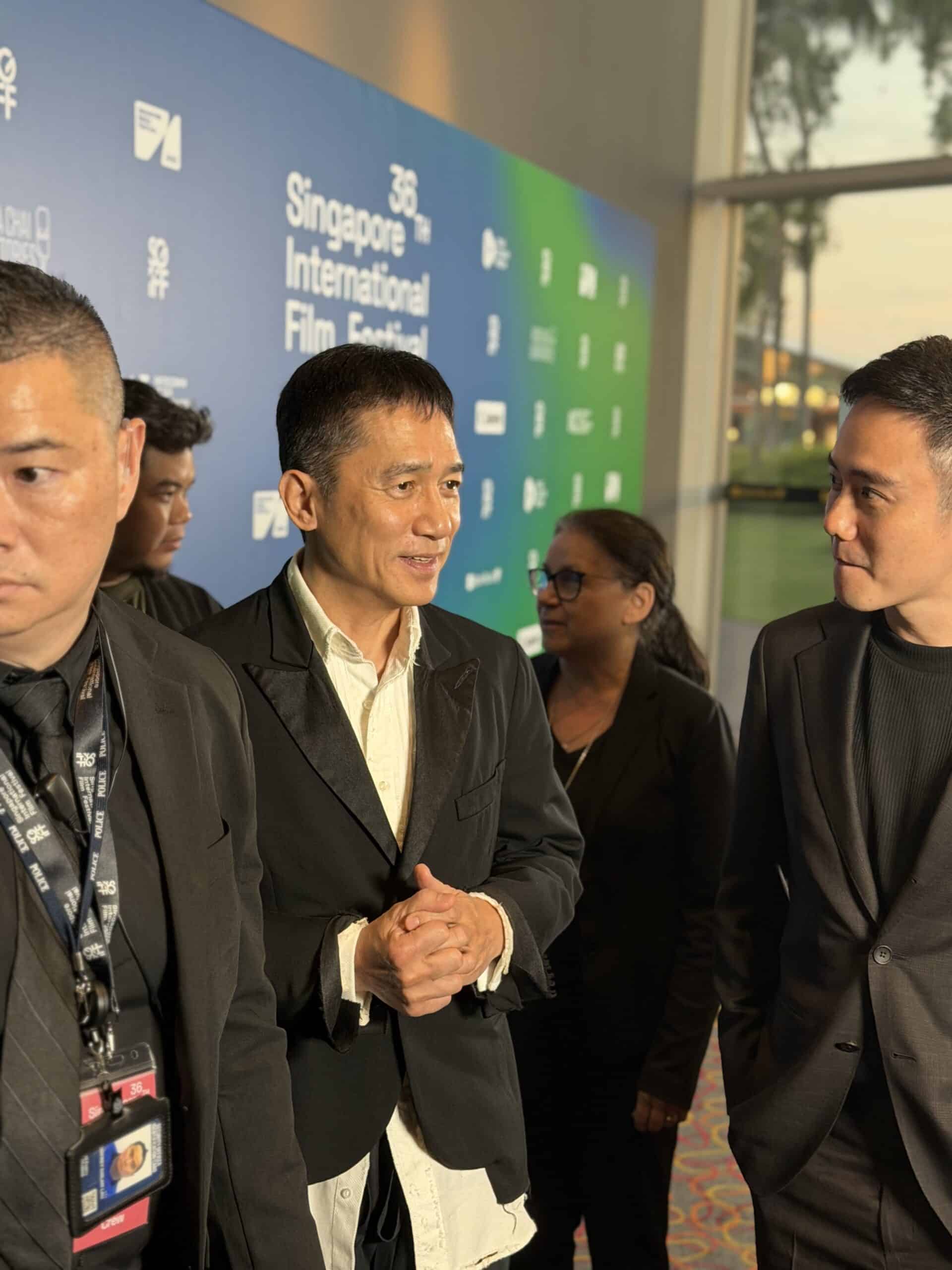
“Then we had a Zoom meeting. For me, the script is not the most important thing — the person is. Even with a good script, if it’s in the wrong hands, it won’t become a good film,” he explained, emphasising the importance of trusting your gut feeling. “I try to feel the director. I found her very easy-going, intellectual, humble, but confident. I could feel she knew exactly what she wanted. I trusted my instinct. That’s why I agreed on our first Zoom meeting.”
Although Leung has appeared in over 100 films, the seasoned actor felt he still learned a lot from being part of Silent Film. “[The film] changed my perspective towards the world — especially towards plants and trees,” he said. “Before, plants were just… plants. Now I see them as sentient beings. If you respect plants like that, you respect all living beings — even insects. You become more humble.”
Leung also gained experience shooting in Europe – an experience he found surprisingly familiar. “Working in Europe is very much like working with Wong Kar Wai — an arthouse atmosphere,” he said. “It’s almost the same. Good directors are good at leading actors into the character. I think the whole process was amazing — very memorable, inspiring, and enjoyable.”
“Marburg (where Leung’s segments were filmed) is very peaceful,” he said. “I’ve never been to university, but because of this movie, I got to stay on a university campus and film in the university and library. It felt like I experienced university life — that meant a lot to me. And the ice cream in Germany — so good. I used to have lunch at a salad bar near my hotel, and they had super good ice cream. I ate ice cream every day. After salad — ice cream. I still have many memories there.”