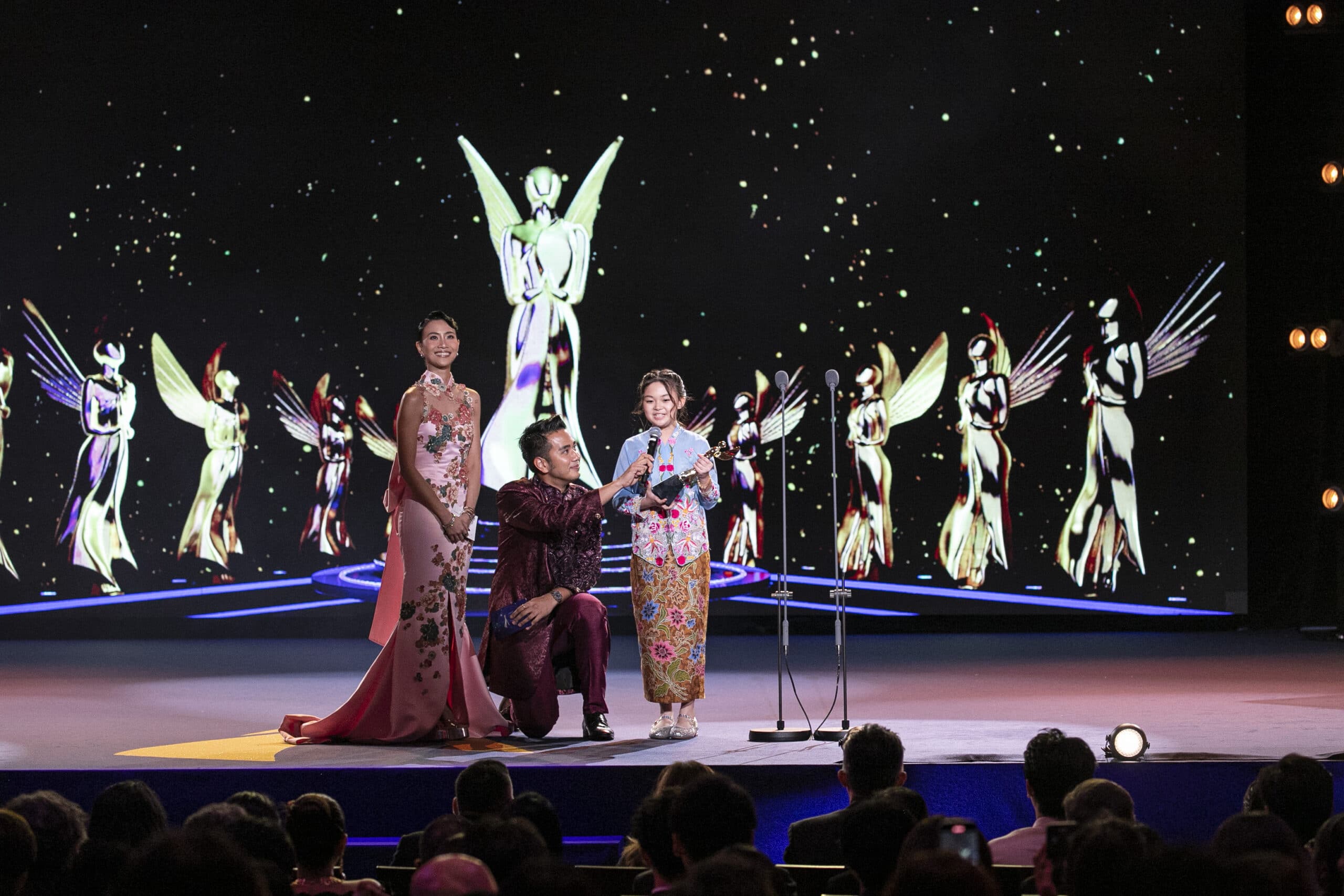
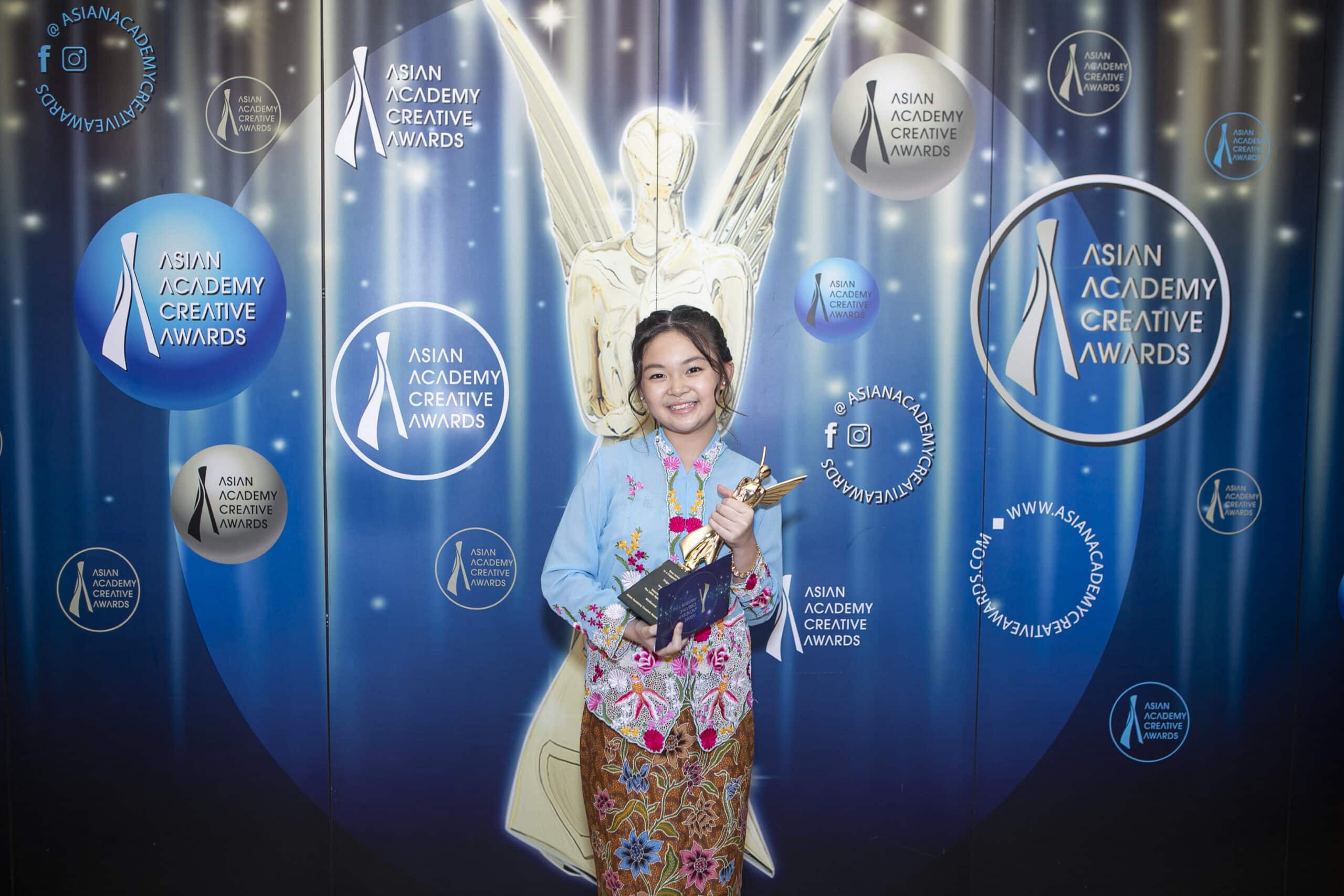
At last night’s 2025 Asian Academy Creative Awards (AACA), held at the Capitol Theatre, Ivory Chia made history as the youngest actor ever to win at the AACA, clinching Best Actress in a Supporting Role (Asia-Pacific) after a dramatic tie-breaker.
The proud moment marked a milestone not just for the young star, but for Singapore’s creative industry, as audiences watched a local talent outperform some of the region’s most established names.
Ivory won for her role as the plucky, street-smart younger version of Tasha Low’s Xinniang in Mediacorp’s hit drama Emerald Hill: The Little Nyonya Story (2025) — a performance that proved both emotionally sharp and culturally resonant.
Read more: Singapore Doubles Down on Film & TV Talent With New S$200M Accelerator
Dressed in a kebaya, the nine-year-old thanked her team on stage, “Thank you for trusting me in this role and guiding me patiently.”
She added, referring to her on-screen maternal figures: “I would also like to thank my on-screen ‘nya nyas’ Chen Liping and Jesseca Liu. Thank you for giving me warmth and confidence.”
A Win Decided by Inches
Ivory’s victory came down to one of the tensest judging outcomes of the night. She tied with Indian actress Garima Vikrant Singh (Gram Chikitsalay) — forcing an additional round of judging. The Singaporean newcomer ultimately emerged on top, beating contenders including Oscar winner Youn Yuh-jung (Pachinko) and Hong Kong actress Yoyo Chen (D.I.D. 12).
The young actress has been steadily building her résumé since her debut in Love At First Bite (2022–2023), with appearances in Soul Detective (2022), Family Ties (2023), Shero (2023), All That Glitters (2023), Once Upon A New Year’s Eve (2024), Moments (2024), Hope Afloat (2024) and I Believe I Can Fly (2025). She has been nominated twice for the Star Awards’ Young Talent Award.
Chinese Mainland Scores the Night’s Top Titles
Beyond Ivory’s breakthrough moment, it was also a monumental night for Chinese Mainland, which claimed Best Feature Film and Best Drama Series.
MuMu and Strange Tales of Tang Dynasty: To The West achieved the coveted scripted double, edging out Korea’s highly fancied When Life Gives You Tangerines by just 0.06 in the tense final award.
Meanwhile, Bilibili’s It’s OK to Feel Bad took home Best Original Production by a Streamer (Non-Fiction)
&list=PLlCrV9TCfzMbxW67d4pOrIR6yjMgUKLWdJapan, Korea and Streaming Giants Dominate Key Categories
Japan’s momentum was strong, with The Queen of Villains star Yuriyan Retriever taking a surprise win over Cate Blanchett and Minha Kim, while the Netflix wrestling drama also secured Best Direction (Fiction).
Prime Video’s The Traitors India and Netflix’s Black Warrant each took home two awards — the latter including Karan Johor for Best Entertainment Host.
Korea scored five wins, including Best Comedy, Best General Entertainment (MAMA Awards), and Best Original Production by a Streamer for Study Group.
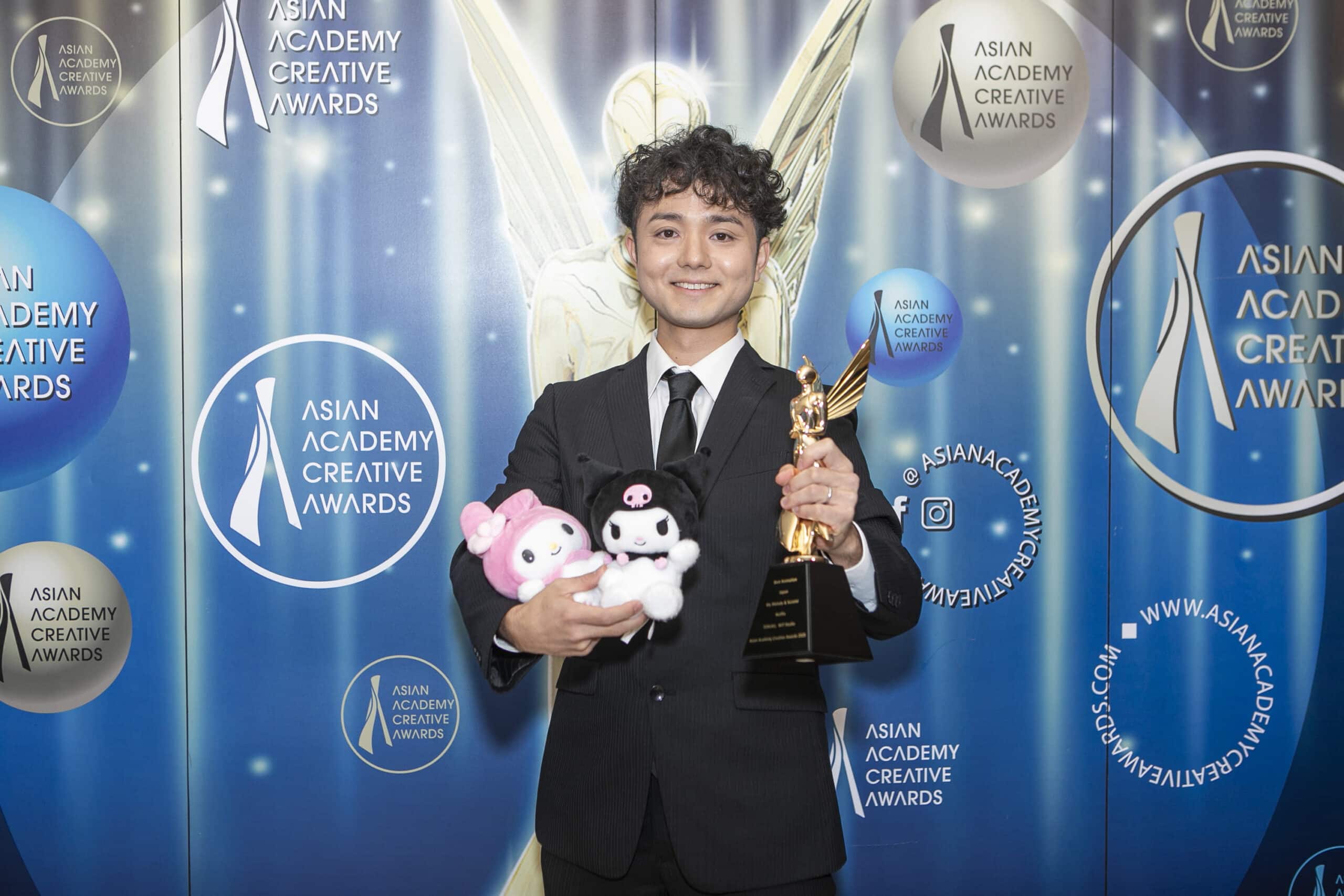
Additionally, My Melody & Kuromi won Best Animation.
Singapore’s Medal Haul — Tying Japan at Six Wins
Ivory wasn’t the only Singaporean success. The nation tied with Japan for the most wins of the night, notching six awards, including:
-
Best Short Form (Non-Scripted): Diablo: Father Antonio Beyond The Veil (2024)
-
Best Branded Programme: Monumental Macao (2024)
-
Best Direction (Non-Fiction): Rowena Loh for Karikal Mahal: A Silent Witness (2025)
-
Best Documentary Series: Addicted – The Synthetic Curse (2025)
-
Best Theme Song or Title Theme: Bebas by Andy Gan and Zalelo for Korban Part II (2025)
Read more: SGIFF 2025 Kicks Off With Shu Qi’s ‘Girl’ And Record-Breaking Ticket Sales
A Diverse Showcase of Asian Storytelling
In total, 11 nations and territories walked away with wins across 40 categories, underscoring how close many races were — often separated by a single point.
Winners by Nation/Territory:
-
6 – Japan, Singapore
-
5 – Korea, India
-
4 – Chinese Mainland, Hong Kong (SAR)
-
3 – Taiwan
-
2 – Australia, Malaysia, Philippines
-
1 – Thailand
Hong Kong SAR claimed four statuettes amid somber industry support following last week’s tragic fires.
AACA’s Global Stage
Now in its eighth edition, the AACA remains the Asia-Pacific’s largest showcase of creative excellence across film, TV, streaming, digital, and emerging media — with works from 17 nations judged by an international panel of industry professionals.
But this year, the story that resonated most was local:
A nine-year-old Singaporean talent rewriting AACA history — and perhaps changing what the next generation of Asian actors can imagine for themselves.