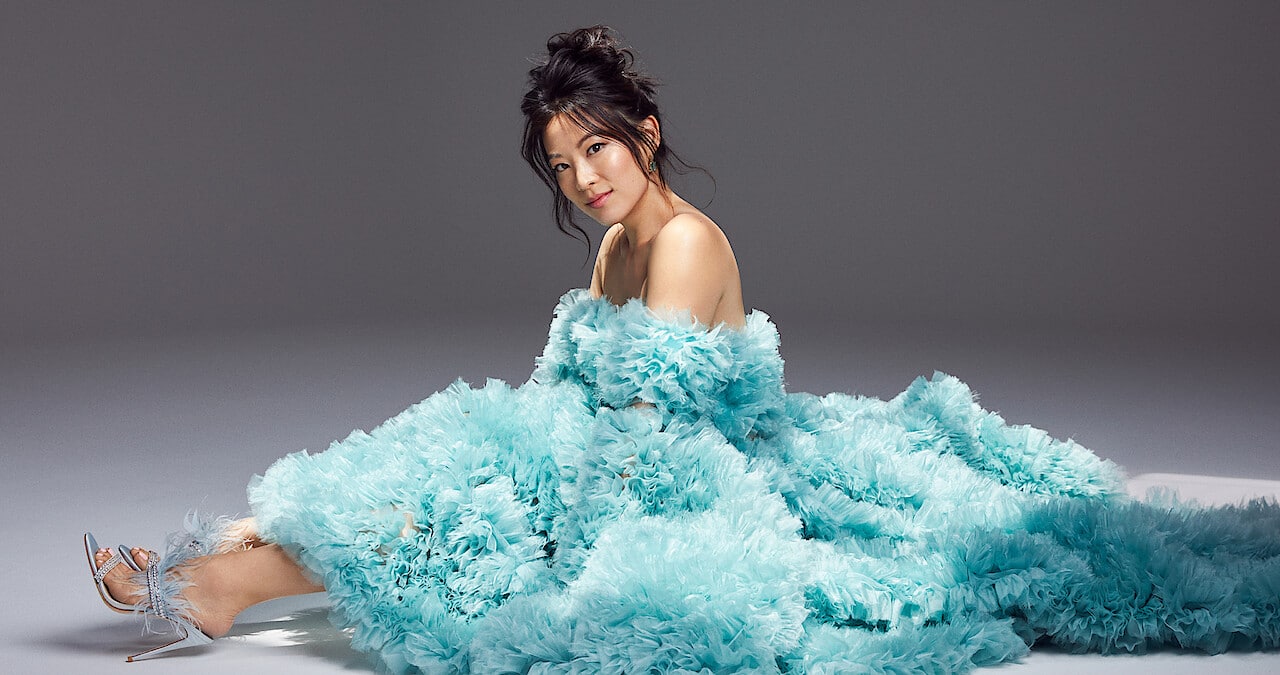
Kpop Demon Hunters star Arden Cho has been celebrated in waves along with the success of the hit Netflix film, but for the 40-year-old Korean-American actress, life wasn’t always as glorious as her animated Kpop counterpart.
Reflecting on her childhood to the BBC, Cho candidly recalled, “I hated that I looked Asian, that I didn’t have blue eyes and blonde hair, because that’s what was beautiful at the time.”
For Cho, who voices Rumi in Netflix’s chart-topping animated film KPop Demon Hunters, the shame she carried in Texas as the eldest daughter of Korean immigrant parents shaped her entire understanding of identity, belonging, and beauty.
So when she read the script for KPop Demon Hunters — a story about a K-pop girl group saving the world while one of them grapples with being part human, part demon — something clicked.
“Being born in America, feeling American but having people treat me like I’m not, trying to figure out my identity as an Asian-American, as a Korean-American, as a woman,” she said.
Read more: ‘KPop Demon Hunters’ Ineligible For BAFTAs Despite Global Success
These were the same tensions she felt growing up. “I can honestly say that at different points in my life, I hated a lot of myself and I wanted to be someone else. As kids, what you see shapes who you become and I feel like I just didn’t see enough people that look like me.”
Released in June, KPop Demon Hunters didn’t just go viral — it exploded. The film pulled 33 million views in two weeks and hit Netflix’s top 10 in 93 countries. For Cho, starring in the first Hollywood animated film set in Korea with fully Korean leads was “a dream come true.” For many Asian-American kids, it was validation.
Korean-Americans have told her it feels like “such a refreshing moment,” giving them newfound pride in their cultural roots.
“I feel like K-Pop really, truly, has paved the way. K-beauty has had such a big impact on Korea being loved. But I feel like this movie is the one that tipped it over the edge of, everybody wants to go to Korea, now,” Cho says.
But the path there wasn’t smooth. Even with K-culture’s global dominance, Cho says the industry still treats Asian-led projects cautiously.
“I feel like it kind of sucks to say this, but any time there’s an Asian-led project, people feel like it’s a risk,” she says. To counter that, she made a point to meet the whole production team herself — a gesture of solidarity and belief in the film.
View this post on Instagram
The film landed during escalating US immigration raids, adding a layer of urgency to its themes.
As an Asian-American, Cho says the climate has been “heartbreaking and disappointing. Immigrants have made America what it is.”
With Korean media estimating that 150,000 undocumented Koreans — including adoptees — are vulnerable to deportation, the issue is personal. Cho now recognises that the racism she faced as a child often came from ignorance.
“But now in this day and age, when I feel like the world and people should know better, it is beyond disappointing and sometimes I feel like we feel so hopeless,” she says.
Which is why the film’s impact feels bigger than entertainment. It feels necessary.
KPop Demon Hunters, she says, has brought “hope and joy and love to all these different communities”.
“Maybe that’s why it’s sort of like this movie of the summer, because we just needed some hope and something to unite us all together.”
Read more: ‘KPop Demon Hunters’ HUNTR/X Mattel Dolls Priced at $150, Pre-Sale Date Revealed
As AI technology accelerates, Cho is watching the industry change — cautiously.
“Sure, I’m sure they’re going to have AI actors and singers. I know they already exist. I know our voices are already being manipulated, but I hope people have some respect and want and love for something real.”
Meanwhile, the film’s music continues its global takeover. Seven tracks from the soundtrack have charted on the Billboard Hot 100, and fan art communities are exploding with demand for a sequel.
Cho can’t confirm anything yet. “I know there’s lots of murmurs, I’ve heard wonderful things,” she says. “So we shall see, and I think everyone in the world would riot if there wasn’t.”
Whether a sequel arrives or not, Cho’s voice — once something she wished sounded different, attached to features she wished looked different — is now part of a global Korean story reshaping what Asian representation looks like.