
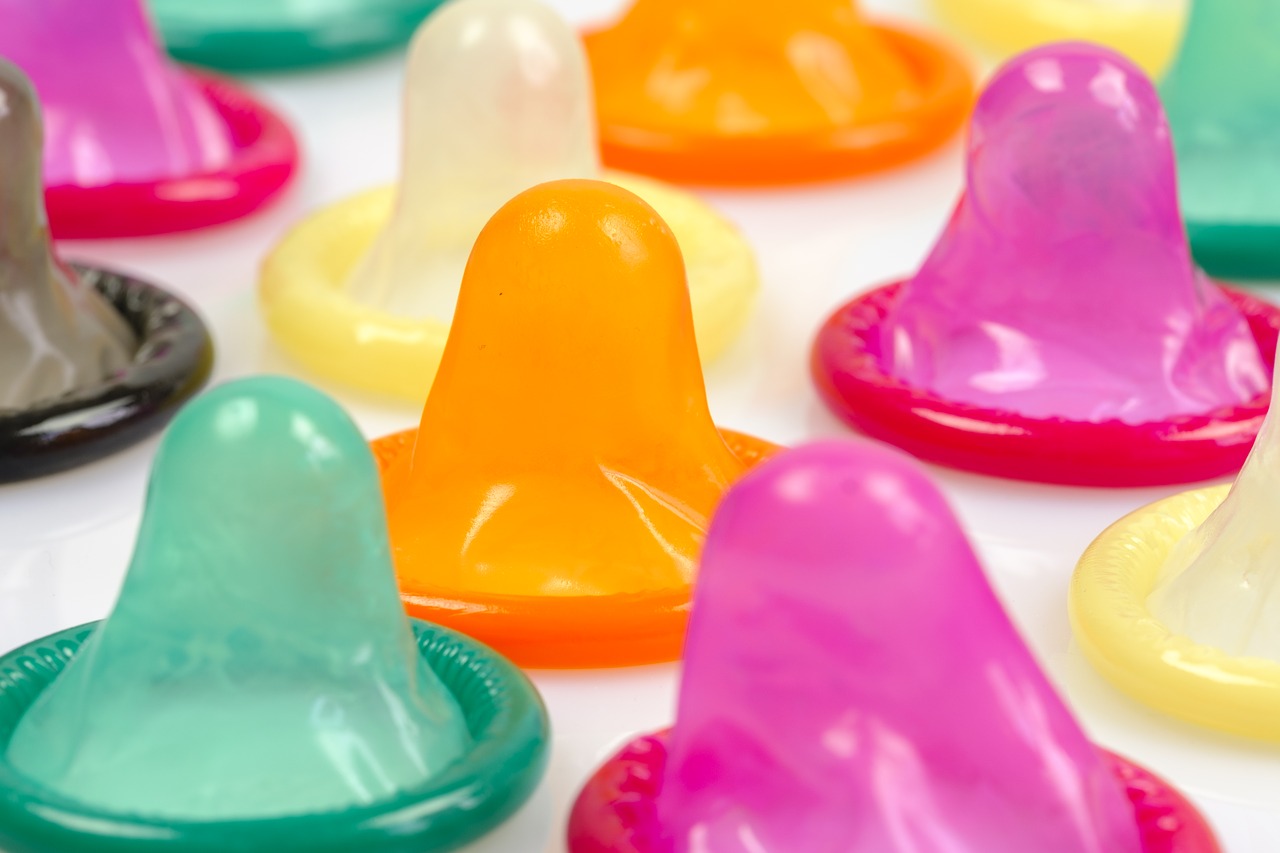
Japanese condom companies are preparing to showcase their products at the Tokyo 2020 Olympic Games.
Condom companies in Japan are gearing up for the Tokyo 2020 Olympic Games according to CTV News.
Every four years, the Olympic Games brings the opportunity for countries of all sizes to showcase their quickest, strongest and talented athletes. Traditions such as the handover of the Olympic torch, the Opening Ceremony and the Closing Ceremony, are rooted deep in Olympic heritage.
However, one rather unspoken Olympic tradition is playing an increasing importance for a certain industry. As hundreds and thousands of competitors from around the world herald to the Olympic Games, condom companies seize the opportunity to promote safe sex.
Over 150,000 condoms were distributed for free at London’s 2012 Olympic Games, whilst a whopping 450,000 condoms were supplied at Rio’s 2016 Olympic Games; that’s an average of 42 condoms per athlete in Rio.
Therefore, in preparation for Tokyo’s 2020 Olympic Games, Japanese condom companies are gearing up to seize the opportunity. What’s more, the Japanese companies believe they have a gold-medal worth innovation: the 0.01mm condom.
“We are planning to provide condoms as one of the amenity items at the athlete’s village, although how many and which brands has yet to be decided,” an anonymous committee official said.
The ultra-thin condoms are also made of polyurethane, which is suitable for those allergic to latex.
“It’s only Japanese companies that now manufacture condoms as thin as 0.01-0.02mm,” said Hiroshi Yamashita, senior manager and spokesman at Sagami Rubber Industries. “We see (the Tokyo Games) as an extremely precious opportunity to let the world know about Japan’s high-technology.”
He added that the firm was extremely excited ever since Tokyo was chosen to host the Olympics, “when Tokyo was selected to host the 2020 Olympics, condom distribution at the athlete village immediately came to our minds.”
“The company worked hard to get the 0.01mm products to market well before the Tokyo Olympics.”
Japanese condom company Okamoto Industries is tied third with Australia’s Ansell as the world’s biggest condom makers, sitting behind the UK’s Durex and the USA’s Trojan. Sagami comes in as fifth.
“Condoms are an effective means to help people protect themselves from contracting sexually transmitted diseases, and the thinner they are, the more men tend to use them,” said Tomonori Hayashi, marketing manager at Okamoto.
“We expect that our products will be highly valued at the (Tokyo) Olympics”.
Okamoto first introduced their ultra thin condoms in 2015. “We had lots of debate in the company about whether there would even be demand for 0.01mm condoms when we already had 0.02 mm products on the market,” Hayashi said. “But they have proved to be popular with customers.”
Yamashita also sees the value in ultra thin condoms, adding that they are preferred to western competitors. “Condoms thinner than those overseas are very popular,” he said. “Many visitors from abroad come here and buy (Japanese) products because they are thin and high-quality.”