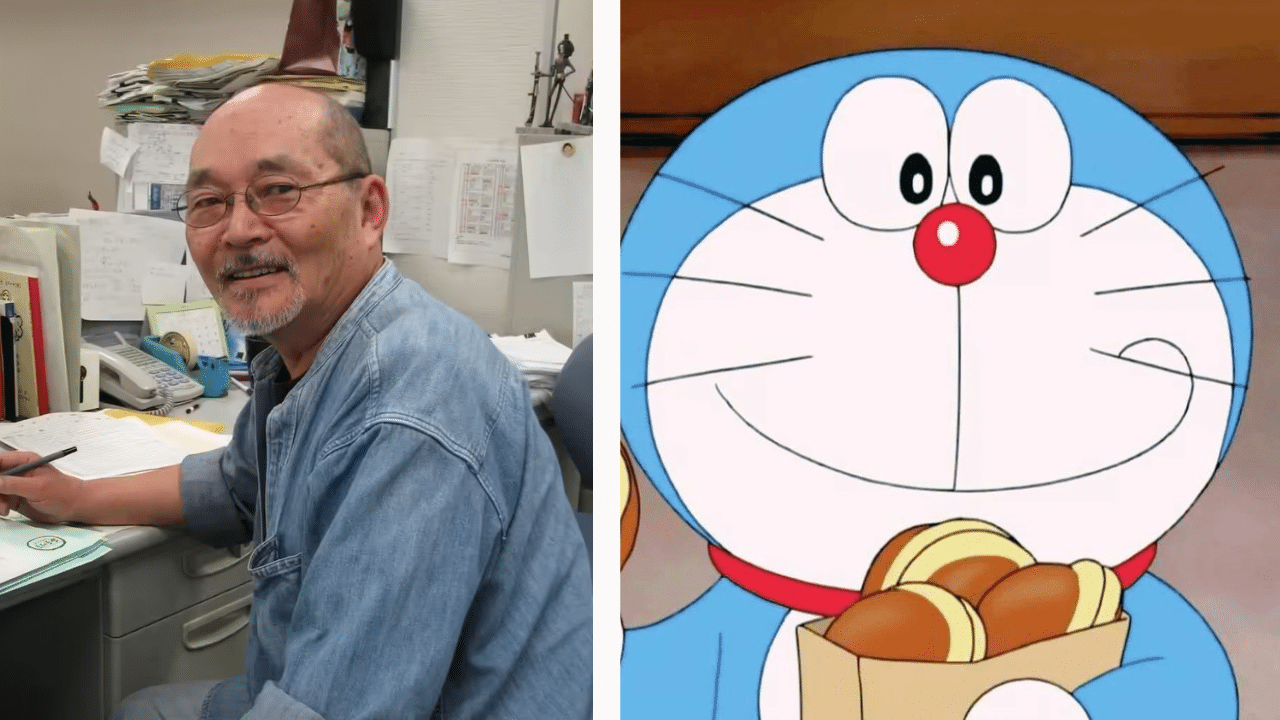
Tsutomu Shibayama, a central figure in the evolution of Japanese animation and the long-time director of the Doraemon franchise, died on March 6, 2026. He was 84. His studio, Ajia-do Animation Works, confirmed the news this week, noting that Shibayama had been suffering from lung cancer.
For more than twenty years, Shibayama served as the primary creative hand behind Doraemon, the story of a blue robotic cat from the future sent back in time to help a young boy named Nobita. While the character was created by the duo Fujiko Fujio, it was Shibayama who translated that vision into a global phenomenon. He directed twenty-two feature films for the franchise, including favorites like Nobita and the Castle of the Undersea Devil.
Read more: Nobuyo Oyama, Voice of ‘Doraemon’, Dies at 90
Born in the Asakusa district of Tokyo in 1941, Shibayama entered the industry during a period of rapid transformation. He began his career in 1963 at Toei Animation, the studio that served as a training ground for many of Japan’s greatest animators. Starting as an “in-betweener”—the artist responsible for the fluid motion between key frames—he quickly moved into more prominent roles.
In 1978, he took a risk by co-founding his own studio, Ajia-do Animation Works. This move allowed him to step away from the rigid structures of larger companies and establish a more personal style. From this base, he directed some of the most recognizable series in Japanese history, including the first season of the martial arts comedy Ranma 1/2 and the long-running Nintama Rantarō.
Building a Global Icon
Shibayama’s work on Doraemon is often cited as a masterclass in pacing and accessibility. He understood that the series functioned best when it balanced gadget-driven science fiction with simple, human humor. Under his leadership, the show moved beyond Japan, becoming a staple of childhood for millions of viewers across Asia, Europe, and Latin America.
His peers recognized his impact early on. In 2012, the Japanese government’s Agency for Cultural Affairs gave him its Lifetime Achievement Award. He received a similar honor at the Tokyo Anime Award Festival in 2018. These awards highlighted not just his productivity, but his ability to create stories that stayed with viewers well into adulthood.
A Private Farewell
The studio announced that a private funeral has already taken place, attended by close family members. While Shibayama spent his later years in a more advisory role as the CEO of Ajia-do, his influence remained a constant presence in the Tokyo animation scene.
He leaves behind a library of work that defined the childhood of several generations. His colleagues at Ajia-do expressed their “great respect” for his life’s work, acknowledging that the industry has lost one of its most steady and influential hands.