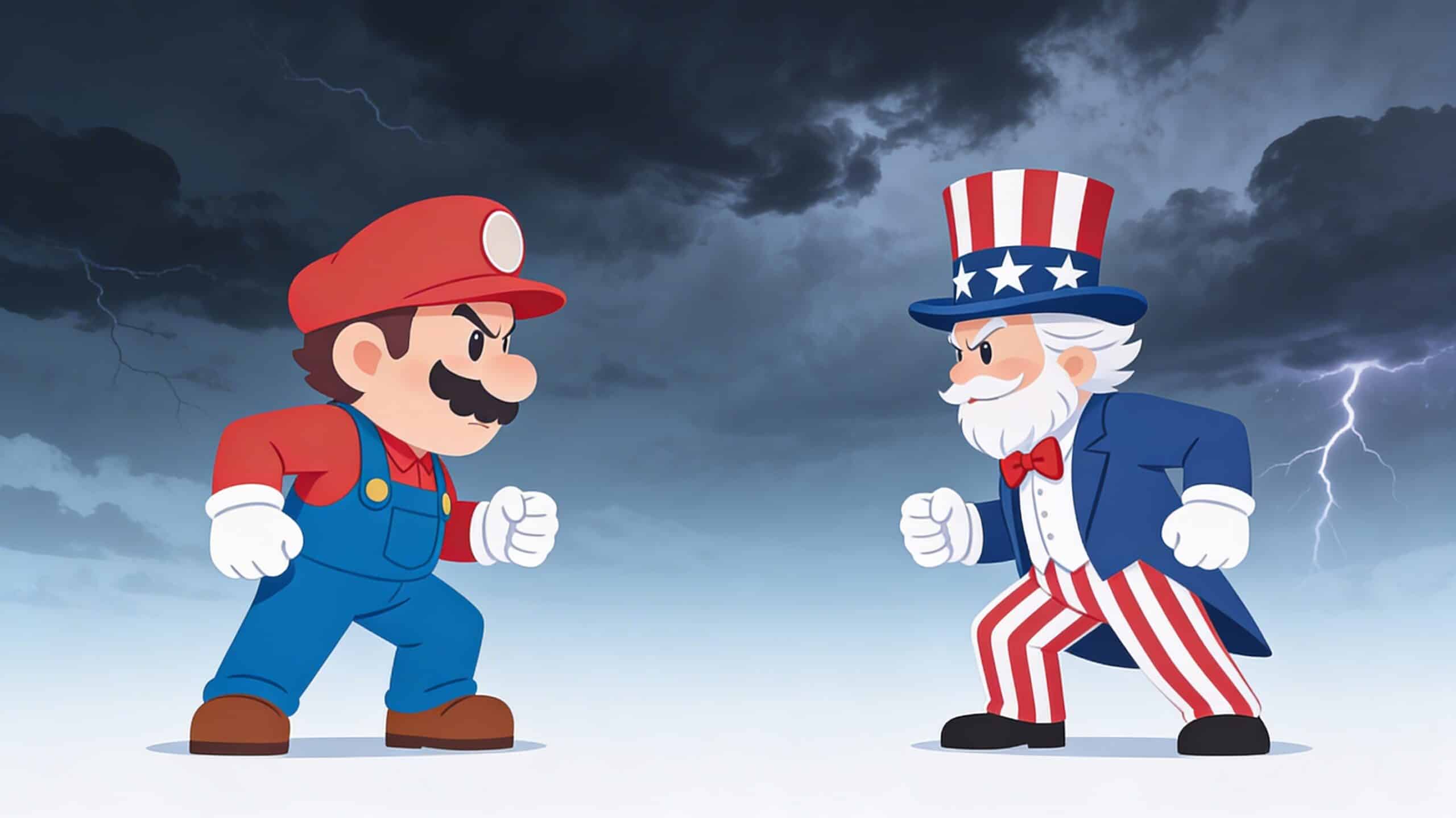
It’s not every day that Mario takes on the U.S. government — but here we are.
After a chaotic launch year for the Nintendo Switch 2, Nintendo has decided it’s time to get its coins back. On 6 March 2026, Nintendo of America filed a lawsuit in the United States Court of International Trade, demanding refunds for tariffs it says were unlawfully imposed on its products.
And Nintendo isn’t just asking politely — it wants everything back: the duties it paid, interest on top, and its legal fees.
Nintendo vs… basically the whole government
The complaint targets a surprisingly long list of federal agencies. Named defendants include the United States Department of the Treasury, the United States Department of Homeland Security, the Office of the United States Trade Representative, U.S. Customs and Border Protection, and the United States Department of Commerce.
In other words: Nintendo has entered boss-battle mode.
The company argues it was harmed by tariffs imposed under the International Emergency Economic Powers Act of 1977 by former U.S. President Donald Trump.
Here’s the twist: the Supreme Court of the United States ruled in February 2026 that those tariffs were unlawful because the president didn’t actually have the authority to impose them under that law.
Translation: Nintendo believes the government owes it a massive refund.
The Switch 2 tariff saga
When the Nintendo Switch 2 launched in June 2025 for $449.99, things got messy fast.
Just months earlier, Trump announced sweeping tariff hikes during his “Liberation Day” trade announcement. The move rattled global markets and forced Nintendo to delay U.S. pre-orders while it figured out how the tariffs might impact pricing.
At the time, Chinese imports were facing a combined tariff rate of 54%. China fired back with its own tariffs on American goods, and suddenly launching a new console in the U.S. became a geopolitical puzzle.
Nintendo eventually worked around the problem by routing many U.S.-bound consoles through its manufacturing operations in Vietnam, which carried a lower tariff rate.
Readm ore: Keanu Reeves Returns To ‘John Wick’ Franchise – This Time In A Playstation Game
But the workaround didn’t protect everything.
Accessories — including the Nintendo Switch 2 Pro Controller and Joy-Con 2 — ended up getting price hikes.
Nintendo now argues those added costs were the direct result of tariffs that shouldn’t have existed in the first place.
Nintendo isn’t the only one suing
If this all sounds dramatic, that’s because it’s part of a much bigger legal pile-up.
More than 1,000 companies have filed similar lawsuits in the trade court seeking refunds for tariffs they say were illegally collected. The list reads like a mall directory: Costco, FedEx, L’Oréal, Dyson, Revlon, Bausch & Lomb, and CVS Health are all in line.
According to court filings, tariffs imposed since February 2025 may have collected over $200 billion from importers.
That’s a lot of coins.
The government’s refund problem
The court has already said companies are entitled to refunds. But there’s a practical problem: actually paying them.
U.S. Customs and Border Protection has admitted it currently can’t process the massive volume of repayments demanded by thousands of businesses.
Its existing systems simply weren’t built for it.
Officials estimate it could take at least 45 days just to build the technical infrastructure needed to start issuing refunds through its Automated Commercial Environment system.
So while Nintendo might win the case, the money may take a while to show up.
The silver lining? Interest keeps ticking up while the government sorts things out.
The cost for everyone else
Tariffs don’t just hit corporations — they eventually land in consumers’ wallets.
According to estimates from the Tax Foundation, the tariffs amounted to roughly a $1,000 tax increase per U.S. household in 2025, potentially rising to $1,300 in 2026 if they remained in place.
Read more: ‘Exit 8’: Japanese Thriller Based on Viral Video Game Gets First Trailer
For gamers, the price hikes on Nintendo Switch 2 accessories were a pretty clear example of how those costs trickled down.
Whether any future refunds would make their way back to consumers is another question entirely.
Mario’s next boss fight
For now, Nintendo is keeping things brief. In a statement, the company confirmed it filed the complaint but declined to comment further.
Which means the showdown continues.
Mario vs. the U.S. government is officially underway — and the final level is the United States Court of International Trade.
Game on.