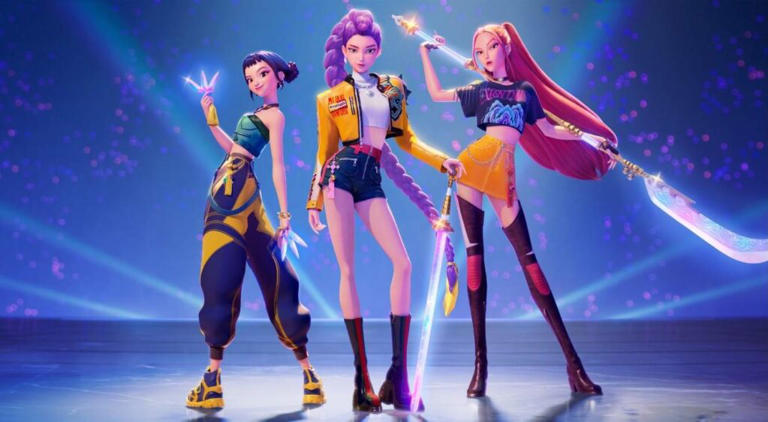
The usual trajectory for a Hollywood animated feature involves a lot of waiting, but for the cast of Netflix’s K-Pop Demon Hunters, the delay was a decade-long exercise in persistence. In a recent conversation with Variety, the women behind the voices of the film’s lead trio—EJAE, Ji-young Yoo, Audrey Nuna, Arden Cho, May Hong, and Rei Ami—shared how a story about teenage girls hunting demons became a vessel for their own experiences with identity and professional rejection.
View this post on Instagram
For many of the actors, the process started years ago with nothing more than a smartphone and an NDA. May Hong, the speaking voice of Mira, recalled signing her paperwork back in June 2022. She recorded her first auditions in a cramped home office. “The callback is the reason why I bought a mic,” Hong said, noting that she had performed all three lead roles on her phone before it became clear she was the right fit for Mira.
Arden Cho, who voices Rumi, had a similar start. She initially went out for the role of Celine, the group’s mentor, using a low-pitched “mom-like” voice. “I remember when I got the callback, but it was for Rumi,” Cho told Variety. “I feel super blessed to be able to say that I took a shot for Celine and was super happy to be a part of it, but then to somehow end up the lead.”
Breaking the “K” Barrier
The film’s success has reignited a conversation about how Korean art is categorized in the West. While “K-pop” and “K-drama” have become household terms, the cast suggested that the “K” prefix might eventually become redundant as the culture moves into the global mainstream.
“This movie is now, and I feel this is the beginning of showing the world that K-pop, K-fashion, K-beauty … The K is …” Arden Cho began, before Rei Ami, the singing voice of Zoey, finished the thought: “It’s no more. Drop the K.”
EJAE, who was involved with the project longer than anyone else, pointed out that the film’s unique perspective comes from its diaspora roots. She noted that a director from Korea might have made a different movie. “The fact that it was made by a Korean Canadian means that we were able to make a film like this that can resonate with both Korea and the world,” she said.
Cultural Details and Retroactive Healing
Beyond the supernatural plot, the film includes small, specific touches of Korean life that the cast found deeply moving. Audrey Nuna, the singing voice of Mira, spoke about the pain of being an immigrant child and having schoolmates mock traditional food like gimbap. “I think it’s really interesting the types of things that move me when it comes to the film, because it’s the deeply personal things that seem like small details to me that are the ones that hit the hardest,” Nuna said.
The film also navigates the cultural weight of filial piety and respect, which Arden Cho noted can sometimes be misunderstood by non-Asian audiences. She observed that viewers from different backgrounds sometimes wondered why the characters didn’t simply rebel against their elders. “Our culture is so much about respect, honor and doing the right thing,” Cho explained. “I realized we have this repressed weight and stress. It’s trauma.”
Impact Beyond the Screen
The response to the film has been felt in unexpected places, from the queer community to parents of neurodivergent children. May Hong shared a story about a nonverbal autistic child who spoke after watching the movie. “It’s intense to have that shared with you,” Hong said. “When you feel how it’s impacting other people that deeply, there is a weight that you walk away with too.”
For Ji-young Yoo, the success of K-Pop Demon Hunters is a rebuttal to the industry idea that original stories led by women of color are a financial risk. “The film has broken some notion of what we thought the ceiling was like,” Yoo said. “We didn’t think a streaming movie that had been out for a few months could top the box office for one weekend.”