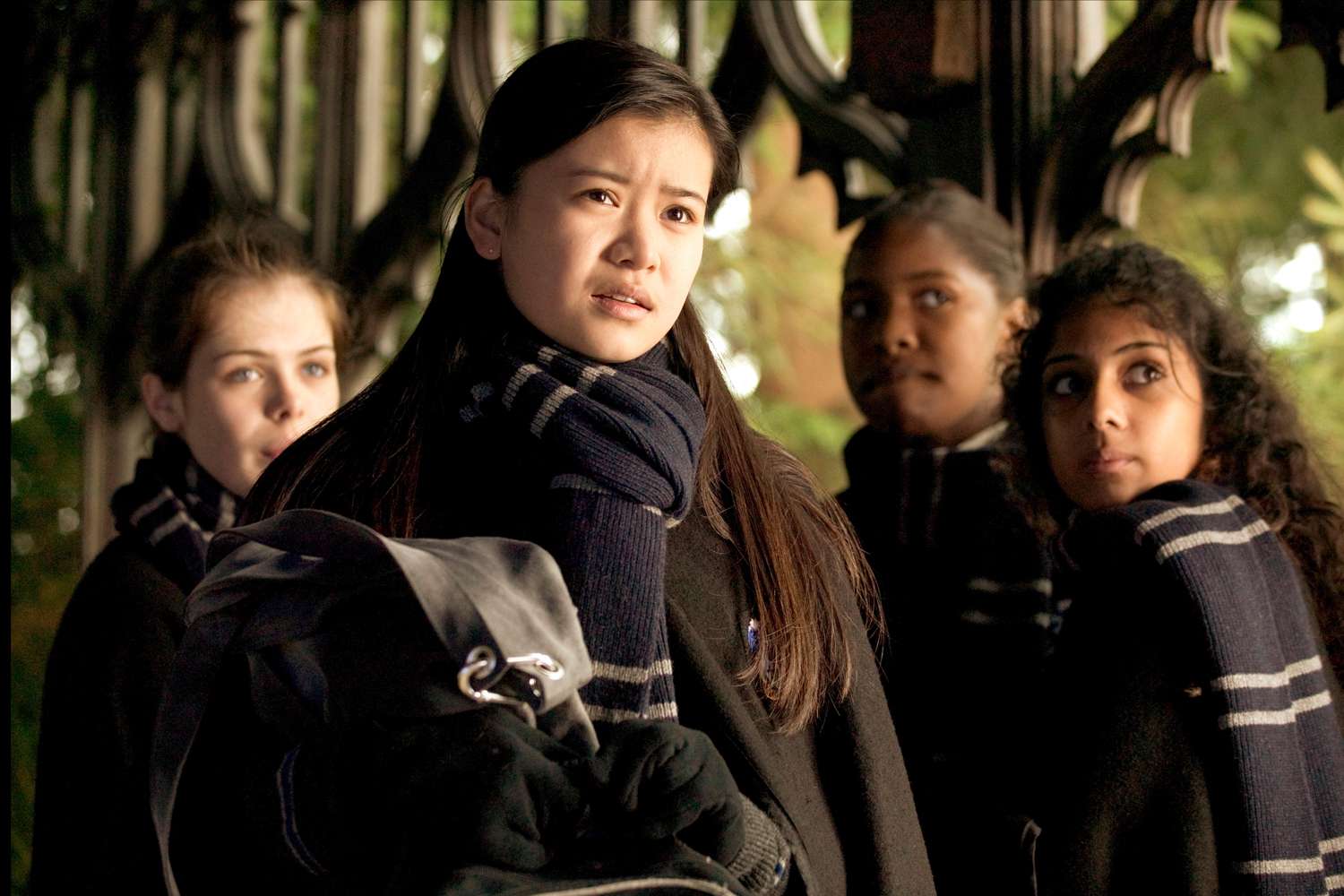
More than 20 years after enrolling at Hogwarts, Katie Leung is still reckoning with the damage left behind.
Cast at just 16 as Cho Chang in the Harry Potter films, Leung entered one of the most intense fandoms in modern pop culture at the exact moment online spaces were becoming louder, harsher and largely unmoderated. What followed was not just fame, but a sustained wave of racist abuse that she says she never truly processed at the time.
“I didn’t,” Leung says, when asked how she coped. “I think it just sat with me, and it affected me in ways like, ‘Oh yeah, I made that decision because people were saying this about me.’ It probably made me less outgoing. I was very self-aware of what was coming out of my mouth.”
The scrutiny wasn’t simply about her performance — it was racialised, personal and relentless. And because she was young, insecure, and suddenly visible on a global scale, it quietly reshaped how she moved through the world.
Read more: Katie Leung On ‘Harry Potter’ Fame And Her New ‘Bridgerton’ Role
Leung has often spoken about feeling undeserving of the success that followed Harry Potter. Looking back, she recognises how deeply that mindset was tied to the way she was treated.
“It happened by pure chance,” she has said of her casting, repeatedly downplaying her own ability. “And for the longest time, I may have tried to make up for it, and overcompensate.”
That pressure — to prove she belonged, to justify her presence — lingered long after the franchise ended. “I think I was so afraid of meeting these expectations that I gave up, or didn’t give myself the chance, after it, to try and continue acting.”
Instead of confidence, success produced paralysis.
In the years that followed drama school, Leung found work — but often within a narrow racial frame. She played characters shaped by migration, displacement and geopolitics, including roles connected to China and North Korea. While meaningful, they also reinforced a sense of limitation.
“It’s one of these things where just because there weren’t many roles out there, I was incredibly grateful to be considered,” she says. “A large part of that was me, again, giving myself a hard time, thinking I wasn’t deserving of anything.”
Even praise came with constraints. When peers compared her to Lucy Liu, it landed less as a compliment and more as a reminder of how small the box was.
View this post on Instagram
“Obviously, I’m a huge fan of Lucy Liu, she’s had great longevity in her career, but that irked me,” Leung says. “I remember thinking, why not Meryl Streep? I was kind of restricted by my race, and I guess Lucy Liu was the only other Asian actor that was, at the time, on the big screen.”
Now in her thirties, Leung speaks openly about how that early exposure to unchecked racism shaped her personality, her career decisions and her sense of self. But she’s also clear-eyed about what has changed — and what hasn’t.
Born in Scotland and raised primarily by her father and grandmother after her mother moved to Hong Kong, Leung grew up navigating fractured family structures alongside cultural dislocation. Today, she is acutely aware of how race shapes daily life in Britain — even in supposedly progressive spaces.
“I feel as if I’ve experienced it, in the supermarket, in day-to-day life,” she says, speaking about the rise of anti-immigrant rhetoric. “I’m very aware that I live in a bubble in London… and even then, I’m experiencing it. I’m concerned. And it’s not just Britain, it’s all over the world.”
“I’m envious of the younger generation who are getting to see people that represent them on screens now,” she says. “I know it would have done me good.”
That envy isn’t bitterness — it’s recognition. Recognition that visibility, when done right, can be protective. That representation isn’t just symbolic; it alters what young actors believe is possible.
Leung will next appear as Lady Araminta Gun in season four of Bridgerton, a role that finally allows her to exist on screen without her ethnicity being the narrative engine. It’s progress — but not closure. The show’s colour-conscious casting has been criticised, but Leung sees its value plainly.
Read more: Bridgerton Star Yerin Ha on Intimate Scenes: ‘Without Fear, You Won’t Grow’
“Their inclusion and diversity behind and in front of the camera is just …” she smiles. “You can see it and feel it, and that made me feel really safe to be able to kind of play as an actor.”
What matters most, she says, isn’t visibility alone — but relational depth. Mothers with daughters. Families with histories. Characters whose ethnicity exists, but doesn’t explain them away.