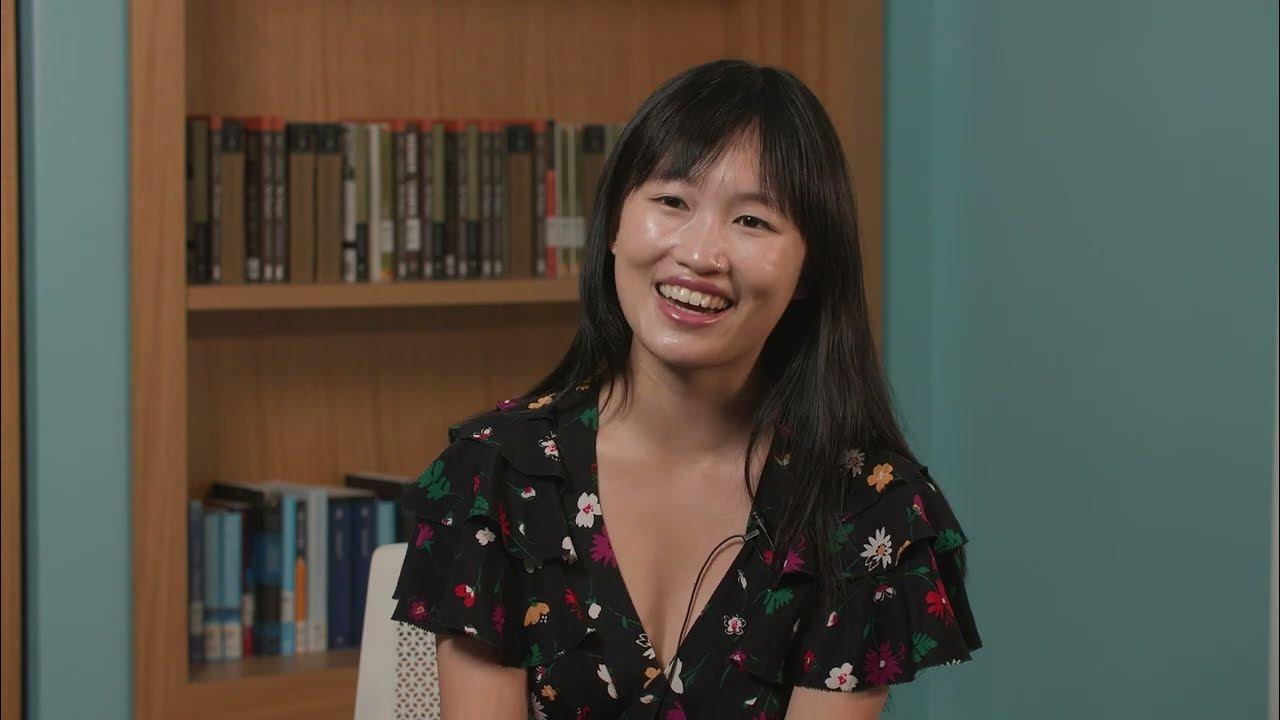
Bestselling novelist and Yale PhD candidate Rebecca F. Kuang, the #1 New York Times and Sunday Times bestselling author of the Poppy War trilogy, Babel: An Arcane History and Yellowface, says America’s universities are “in a tailspin,” broken by sky‑high tuition, rising censorship and a growing dependency on AI that leaves students doubting their own minds.
Known for dissecting racism in publishing, cultural appropriation and the politics of storytelling in novels like Yellowface, Kuang now turns her critical gaze on the institution she works inside—arguing that higher education has stopped teaching people how to think and instead become an expensive, precarious sorting machine.
“Higher education has been in a tailspin”
“Higher education has been in a tailspin for a really long time. The affordability crisis, the rocketing tuition prices, and it’s made itself an easy target as something that is frivolous and elitist and like a hotbed of woke leftist ideologies,” Kuang tells Channel 4’s Ways to Change the World. Since 1978, she notes, tuition has risen “at a rate of something like 300%… quadrupled the rate of inflation,” putting a degree out of reach for anyone without family wealth or major scholarships.
Read more: A New UK Magazine Seeks Financial Support to Preserve ESEA Cultural History
The result is a generation crushed by “hundreds of thousands of dollars in loans” and still unable to find secure work, even with a diploma. “This is devastating,” she argues, because the very humanities skills being devalued—“slow, attentive, close reading and critical thinking and arguing in good faith”—are precisely what societies need to survive political fragmentation and social‑media tribalism.
Academic freedom under attack
On campus, Kuang says, an old anti‑intellectual playbook has returned with new force. “There’s literally topics that at some universities you can’t talk about anymore. You can’t teach in all of its depth and nuance,” she says, pointing to policies that restrict teaching on gender and sexuality to the claim that “there are two genders, two sexes,” a position she notes “nobody in the field of biology or gender theory agrees upon.”
In this climate, she argues, “they get fired—this has happened” if professors introduce certain questions, while DEI programmes are shuttered as “inconvenient truths for this administration’s systematic ideology.” The effect is “a huge silencing effect” that “makes you a bad teacher” because you can no longer expose students to the full range of literature and opposing viewpoints.
Debt, pressure and the AI shortcut
Kuang is unsparing about how students are actually using AI: “Anybody who teaches is just complaining endlessly about students writing essays with AI, cheating with AI… using AI to write their emails explaining why they can’t come to class.” In the classroom, she says, it “makes you a poor thinker… it’s cognitively debilitating,” with evidence that it leaves students less confident: “If there’s a machine that can do all this thinking better than me then why should I ever learn how to or why should I trust myself to do this?”
View this post on Instagram
But she insists the problem is structural, not simply individual cheating. “Imagine you’ve taken that enormous gamble to study at an elite institution” in a job market where a degree may not improve your unemployment odds, she says; of course you look for ways to cut corners when you “need that perfect transcript” to pay off your loans and support your family. Expecting “a whole country of 18‑ to 22‑year‑olds” to show “Herculean self‑restraint not to take the easy option” is, she argues, “insane”—and a sign the system itself needs re‑designing.
“The machine can’t do it better”
Despite the panic around AI, Kuang rejects the idea that machines could replace real writing. “Can the machine do it better? No, the machine can’t do it better,” she says. “Writing is about communicating a subjective experience from your skull, this inaccessible part of you, your consciousness, to another person.”
Read more: Kaila Yu’s New Book ‘Fetishized’ Examines Yellow Fever and the Cost of 2000s Empowerment
To do that, she argues, you must “decide what you think,” “work through the logic of your argument,” and then “articulate it in a way that is clear and concise and legible to somebody who is not you.” AI “will just tell you what lots of other people have thought on this topic and assemble a response that looks passively human,” she says—but that shortcut means you have “sidestepped all of the important work of figuring out your position on an issue and what you want to get across to another person.”
A call to “totally reform” higher education
Asked how she would change the world, Kuang’s answer starts with universities. “I would totally reform higher education. I would make it so that students could study under conditions of total academic freedom… including the ability to graduate debt‑free without taking on loans that follow them for the rest of their lives,” she says.
“I would make higher education popular and accessible at every point in your life. I would turn a good education from a luxury product to something that everybody is entitled to,” she adds. What she wants most is “a defense of the best things about the academy that would be accessible to everybody”—a system where teaching critical, humane thinking is not a privilege for the few but a shared right.