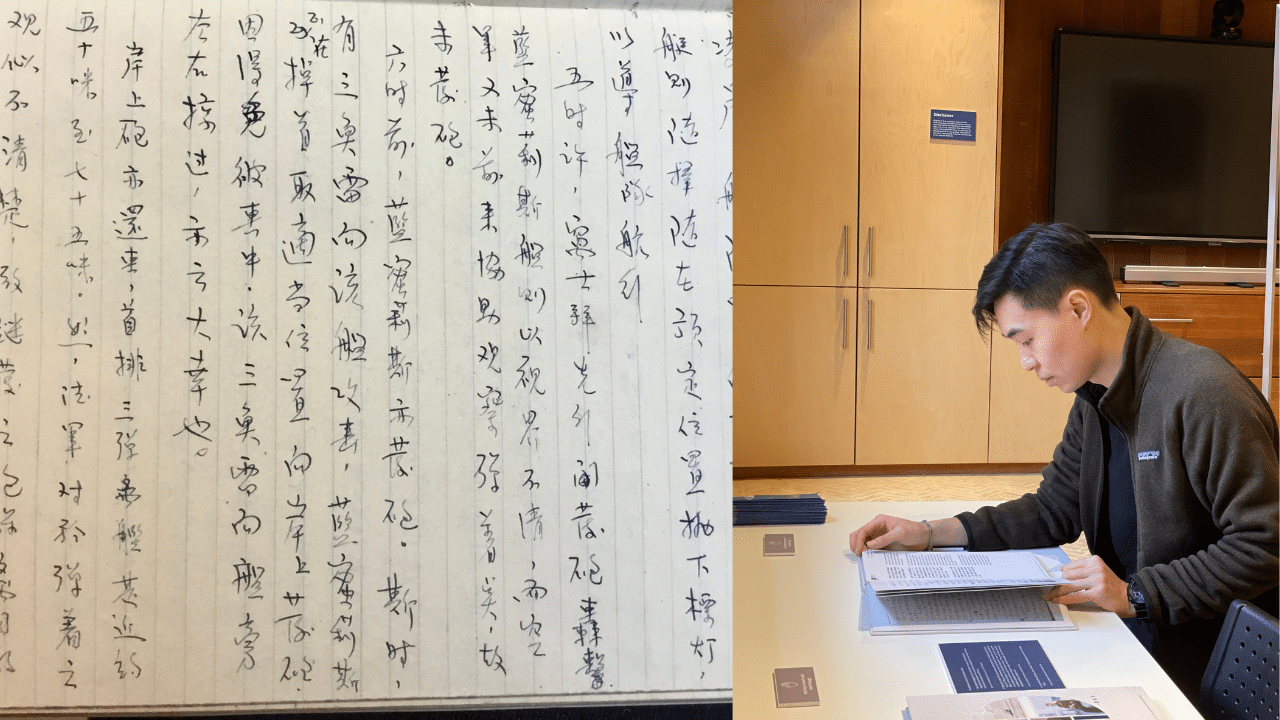
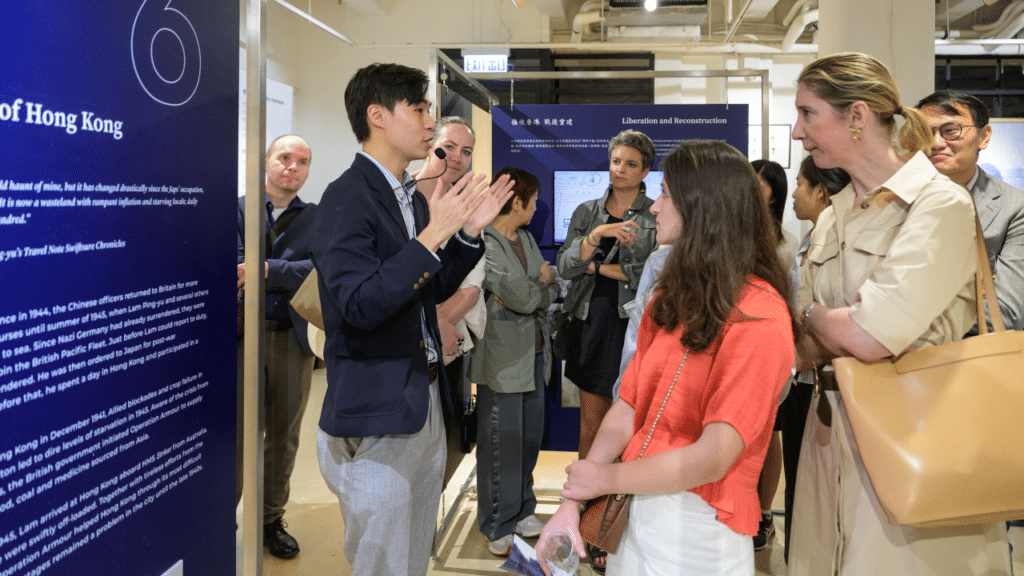
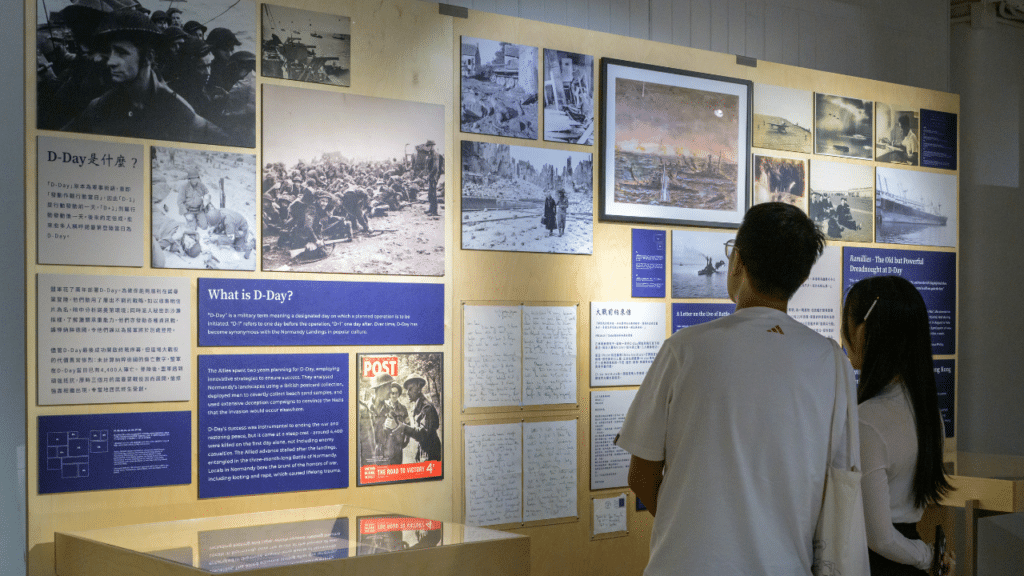
Between 24 and 28 September, Chelsea History Festival unfolded in London. Inside Royal Hospital Chelsea, the home to around 300 British army veterans, a group of young Hong Kong history researchers presented a ground-breaking exhibition ‘Lost and Found in Hong Kong: The Unsung Chinese Heroes at D-Day’. It centred on the wartime diary of Ping-yu Lam, one of 24 Chinese naval officers sent to Britain during the Second World War for training. They also participated in the D-Day landings.
Visitors came from across the country, including the granddaughter of Chu, another officer fighting on D-Day with Lam. She travelled to London by train for hours, with her grandpa’s belongings. The team, exhilarated, studied the artifacts at the hospital café with special equipment. Even the hospital staff members were touched and told the team, “It is exactly what the Chelsea Royal Hospital aims to achieve – to connect local neighbourhood and all walks of life with history.”
Read More: Remembrance Sunday – the forgotten Chinese soldiers of WWI
John Mak and Angus Hui, the researchers and exhibition curators, recalled the encounter excitedly. Their journey began in 2015 when a group of Hong Kong history enthusiasts discovered Lam’s diary in a soon-to-be-demolished building. What was nearly discarded turned out to be a doorway to an untold story.
From China to the English Channel
After the Sino-Japanese War broke out in 1937, China’s navy almost collapsed. Following the outbreak of World War II, China and Britain began military collaboration. The Chinese government selected 24 men, including Lam, to train in Britain and help rebuild the navy. They later took part in crucial operations like D-Day.
Yet, they were not hailed as heroes when they returned home. China was descending into civil war, and the Kuomintang government that sent them to Britain was soon defeated and exiled to Taiwan. At that crossroads, Lam chose to begin a new life in Hong Kong.
Lam’s diary provides rare, intimate insight into the wartime partnership between China and the Allied forces. When discovered, it was the only known primary source documenting Chinese involvement in D-Day, which has long been overlooked by the academic field.
Read More: Titanic Survivors: The Untold Story of Six Chinese Men and the Racism They Faced
Even the research team did not know the presence of Chinese officers in the Royal Navy before. “Angus always jokes that it is difficult to imagine a Chinese man who looks like us standing next to Tom Hanks in Saving Private Ryan,” John laughed.
The keyword of this story is ‘connection’. Angus explained, “Current research does acknowledge the participation of the Chinese in the war, but it tends to see Asia and Europe as two isolated war fronts. When we link these 24 young men with wider context, the history of Europe, the UK, China, and Hong Kong is put together. It is an important puzzle that forms the full picture of international effort during the war.”
A global tour for the 80th anniversary
This year marks the 80th anniversary of World War Two, and the team’s exhibition has travelled to Hong Kong, Britain, and France. They exhibited in different ways in different countries. For instance, they need to explain the background of D-Day to the Hong Kong public because they often consider it a distant event happening in Europe. This elementary introduction was not needed in France and Britain, but they had to introduce the Chinese context and the historical interaction between China, Hong Kong, and Europe.“In the France exhibition, we discussed earlier Chinese migration to France and French officers’ participation in Hong Kong’s resistance against Japan,” John stressed. “We want people to see these naval officers as part of a longer history of China-Europe collaboration, not an isolated incident.”
Angus noticed growing global awareness of the diversity within wartime history. “At the Arromanches Museum in Normandy, curators told us how eager they were to uncover stories of overlooked participants,” he recalled. “They were moved that these Chinese officers travelled so far from home to fight for others. Everyone we met felt they deserved more recognition.”
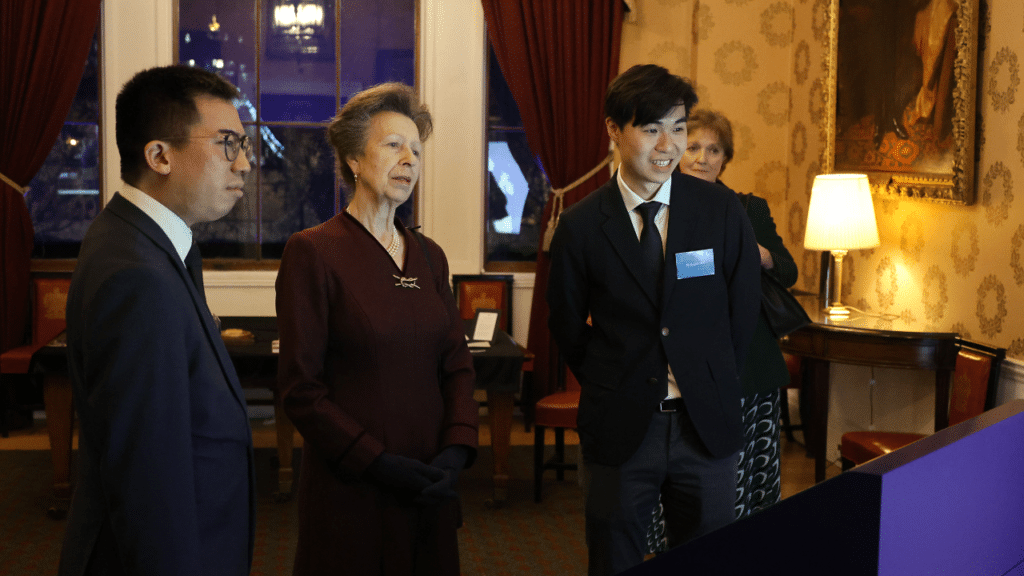
The project has earned international respect, and the exhibition has been visited by high-profiles like the royal family. Yet, for the team, the greatest reward lies in how the exhibition connects people to history. John said, “History loses meaning if it just stays in the archive. We met many different people and thus discovered a lot of organic stories, which is possible only through an in-person exhibition.”
In Chelsea, the team met the daughter of a British diplomatic officer whose wartime telegram from Chongqing was featured in the exhibition, and Chu’s granddaughter, who had long searched for answers about her grandfather’s possessions. . No museum she reached out to could tell her their story, until this exhibition. Thus, they were very touched when they met each other. The team’s findings pieced together Lam’s full journey, which has closed a gap in historical knowledge and family memory.
‘History is not just about kings’
As Angus described, these moving encounters have brought discoveries and continually shaped their research. John added, “Exhibition not just preserves history, but also lets it be seen and promoted. It is what living history means. History is not just about kings and generals, but ordinary people making choices in extraordinary times.”
History is a rigorous conversation between the past and present. Although all of their exhibitions will conclude this year, their project will continue. The team plans to publish their research in a comprehensive volume and produce a documentary with Hong Kong filmmaker Dora Choi.
Through their work, the researchers have built bridges—between East and West, between individuals and the past, and between Hong Kong history enthusiasts and living sources around the world. John concluded carefully, “I want to say this accurately in English… even in dark times, cultural exchange and international solidarity existed. At the end of the day, we just want to bring it back to the human level—to show the world as it should be.”