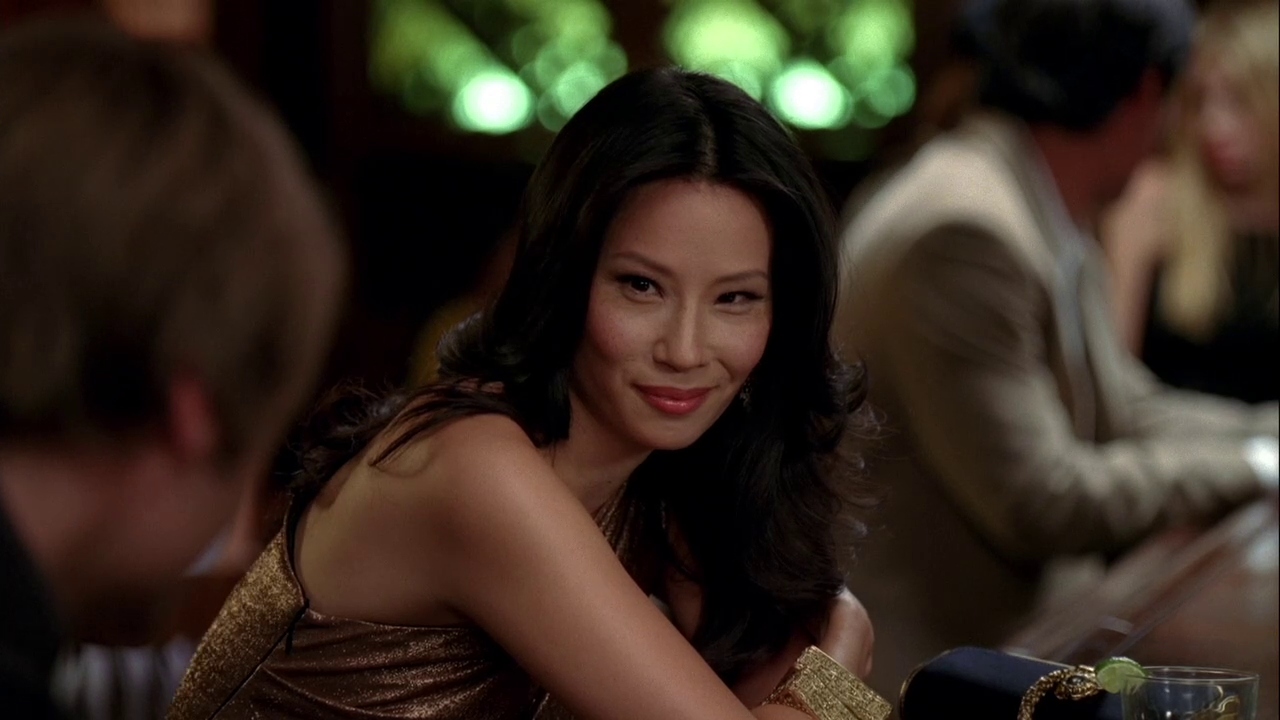
Lucy Liu‘s career has been a quiet but persistent rebellion against the narrow roles offered to Asian women in Hollywood. She’s inhabited a diverse range of characters, from the steely assassin to the brilliant detective, but her journey has been defined by a constant push against the industry’s tendency to confine Asian women to simplistic, often offensive stereotypes.
This fight began early in Liu’s life. Growing up in Queens, New York, as the daughter of Chinese immigrants, she rarely saw herself reflected in mainstream media. “When I was growing up, no one on television, in movies, or on magazine covers looked like me or my family,” she shared in The Washington Post. This lack of representation fueled a desire to challenge the status quo, a desire that would later shape her career.
Her parents, who came to the US from Taiwan and mainland China, respectively, worked tirelessly to provide for their family. Her father, a trained civil engineer, resorted to selling digital clock pens on the streets of New York, while her mother worked as a biochemist.
Liu herself was a bright student, excelling in academics and eventually earning a degree in Asian Languages and Cultures from the University of Michigan. This diverse upbringing, straddling cultures and socioeconomic realities, instilled in her a strong sense of self and a determination to defy expectations.
Read More: Lucy Liu to Receive Artistic Achievement Award at Philadelphia Film Festival
When Liu decided to pursue acting, she was met with skepticism and discouragement. “A lot of people said to me, ‘There’s nobody that’s out there… You’re going to be very limited, and you’re never going to make it,'” she recalled in an interview with the Los Angeles Times. But Liu refused to accept these limitations. “I don’t know what ‘never’ means,” she asserted. “So let’s just try.”
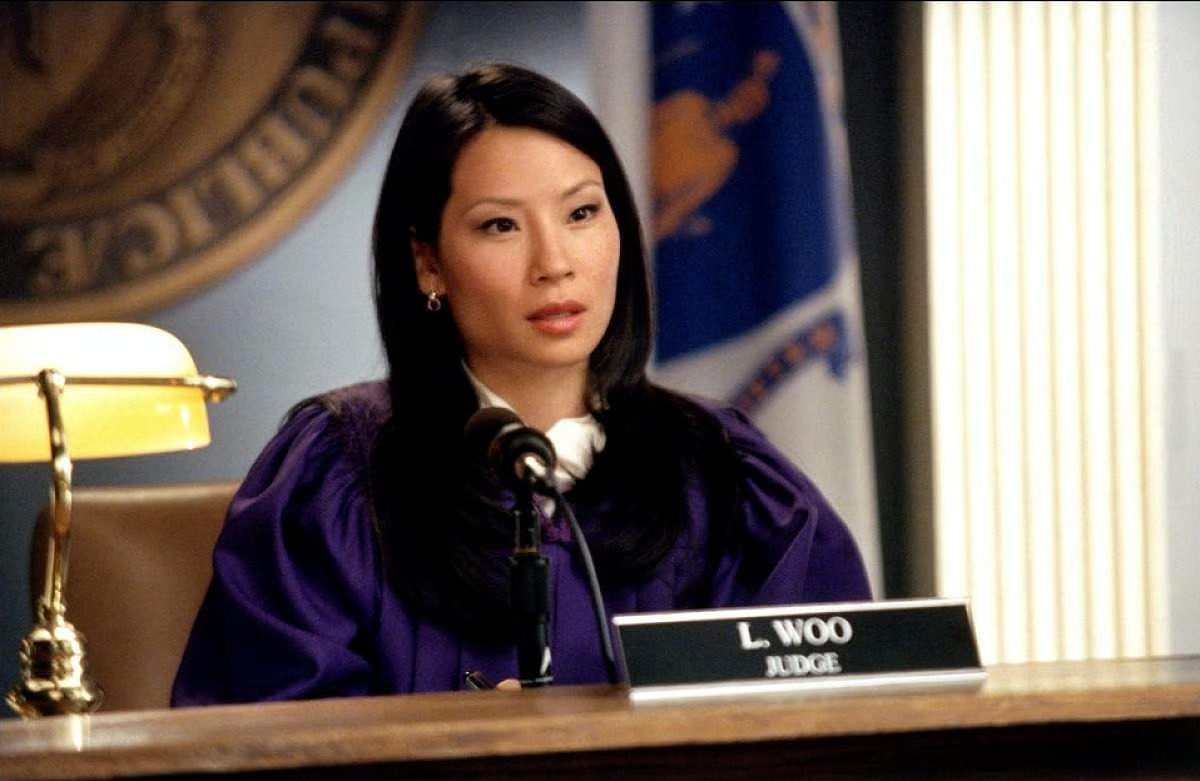
This spirit of defiance propelled her forward. She landed her first major role in the TV series Ally McBeal, playing the sharp-tongued lawyer Ling Woo. While the role brought her recognition, it also exposed her to the frustrating reality of being typecast. “People would criticize the role of Ling Woo as somebody who was considered stereotypical because she was strong and had an opinion,” Liu explained to Woman’s Day. “So they would label her a Dragon Lady…”
The “Dragon Lady” trope, with its roots in racist caricatures of Asian women as cunning and manipulative, is just one of the many harmful stereotypes that Liu has fought against throughout her career. This stereotype, often depicted as a seductive yet dangerous woman who uses her sexuality to control and manipulate men, reduces Asian women to a one-dimensional figure devoid of humanity and complexity.
It perpetuates harmful misconceptions about Asian women’s character and reinforces their otherness in Western society. Liu has been vocal about the damaging effects of such stereotypes, recognizing the power of media to shape perceptions and influence real-world consequences.
She understands that these portrayals not only limit the range of roles available to Asian actresses but also contribute to the broader societal prejudice and discrimination faced by Asian women.
Read More: Lucy Liu: The Hollywood Star’s Secret Artistic Side
Liu’s breakthrough in film came with Charlie’s Angels, where she starred alongside Drew Barrymore and Cameron Diaz. However, the experience was not without its challenges.
Liu has spoken openly about an on-set incident with Bill Murray, where he allegedly directed insults at her during the filming of a scene. “Some of the language was inexcusable and unacceptable, and I was not going to just sit there and take it,” she shared on the Asian Enough podcast.
“So, yes, I stood up for myself, and I don’t regret it.” This incident not only highlights the difficulties Liu faced in navigating a sometimes hostile work environment but also demonstrates her courage and refusal to be silenced.
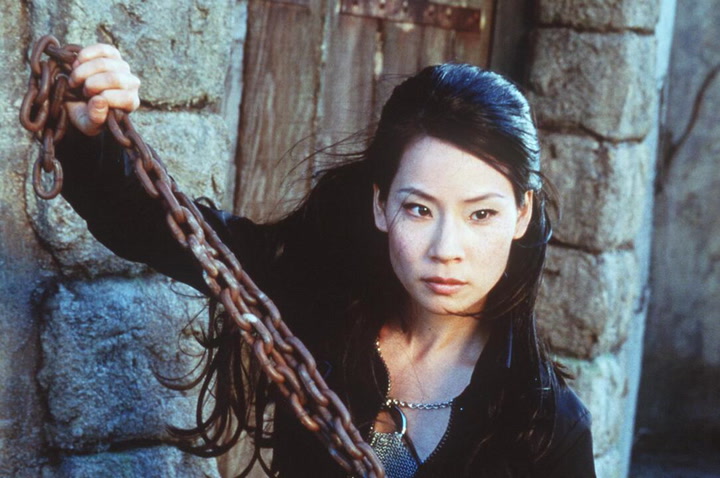
In 2000, Liu achieved another milestone by becoming the first Asian woman to host Saturday Night Live. This accomplishment further solidified her status as a trailblazer in the entertainment industry, breaking barriers and expanding the possibilities for Asian representation in mainstream media.
“Hollywood frequently imagines a more progressive world than our reality,” she observed in The Washington Post. “It’s one of the reasons ‘Charlie’s Angels’ was so important to me. As part of something so iconic, my character Alex Munday normalized Asian identity for a mainstream audience and made a piece of Americana a little more inclusive.”
Her commitment to pushing boundaries extended to television as well. In Elementary, a modern update of the Sherlock Holmes stories, she played Dr. Joan Watson, a role traditionally portrayed by a white man. This gender-bending and race-conscious casting choice further expanded the possibilities for Asian representation on screen.
Liu’s portrayal of Watson was groundbreaking in several ways. Not only did it challenge the conventional image of the character, but it also subverted the expectation that Watson would be merely a sidekick to Sherlock Holmes. Instead, Liu’s Watson was intelligent, capable, and an equal partner in solving crimes. This nuanced portrayal of an Asian woman in a leading role was a significant step forward for representation in television.
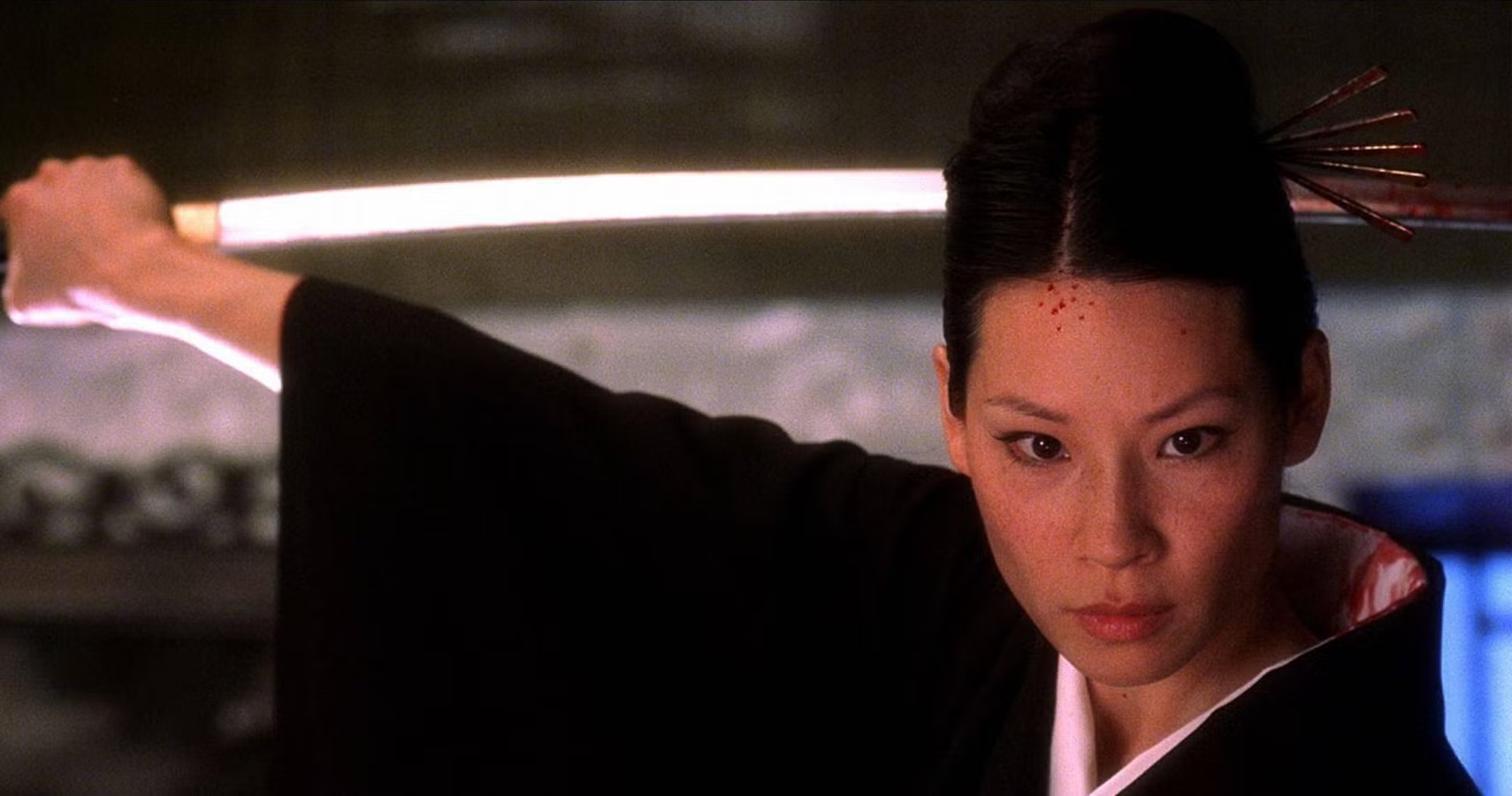
Liu’s fight for more nuanced roles continued with her portrayal of O-Ren Ishii in Quentin Tarantino’s Kill Bill: Volume 1. While the film was a critical and commercial success, Liu’s performance as the katana-wielding assassin drew criticism from some who saw the character as perpetuating the “Dragon Lady” stereotype.
However, Liu defended her choice, stating, “If Renée Zellweger was playing this role, I’m sure she wouldn’t be referred to as a ‘dragon lady.'” This experience underscores the complexities of navigating representation, where even seemingly empowering roles can be subject to scrutiny and interpretation through the lens of existing biases.
In 2019, Liu’s contributions to film and television were recognized with a star on the Hollywood Walk of Fame. During her acceptance speech, she paid tribute to Anna May Wong, the first Chinese-American movie star, and Bruce Lee, acknowledging their pioneering roles in paving the way for greater Asian representation in Hollywood.
“If my body of work somehow helped bridge the gap between stereotypical roles, first given to Anna May, and mainstream success today, I am thrilled to have been part of that process,” she said. This recognition marked a significant milestone in Liu’s career, solidifying her legacy as a trailblazer and an advocate for change.
Her journey, from feeling like an outsider to receiving one of the industry’s highest honors, is a testament to her perseverance and her commitment to challenging the status quo.
As she eloquently stated in her Walk of Fame acceptance speech, “I’ve learned the specific things that made me feel like an outsider were actually the biggest contributors to my success… This dream-fulfilling honour I am receiving today affirms anyone who feels like an outsider can take her place among the stars.
Liu’s influence extends beyond her acting roles. She’s used her platform to advocate for greater diversity in Hollywood, both in front of and behind the camera. She’s spoken out against the lack of opportunities for Asian actors and filmmakers, stating, “You add race to it, and it became, ‘Well, she’s too Asian’, or ‘She’s too American’. I kind of got pushed out of both categories.”
She has championed the work of those who are challenging the status quo, recognizing the need for a collective effort to create a more inclusive industry.
The recent success of films like Everything Everywhere All At Once, with its predominantly Asian cast and its exploration of complex themes related to identity and family, is a sign of progress that’s been made.
Liu herself has celebrated the film’s achievements, seeing it as a sign that the industry is finally starting to embrace a wider range of stories and perspectives.
“I think it’s the beginning,” she said of the film’s impact. “I understand that a lot of places have a check box and they have to meet a certain percentage, and sometimes that has to happen before it becomes the norm. So I still think we have a long way to go, but it is creating a space and hopefully some sense of normalcy to see that as it activates itself in hopefully a more natural way.”
Read More: Chinese American actress Lucy Liu to receive Hollywood Walk of Fame star in 2019
Lucy Liu’s career is a powerful example of how one person can make a difference in challenging deeply ingrained stereotypes and advocating for meaningful change. Her path, marked by both obstacles and triumphs, has paved the way for a more inclusive and representative Hollywood.
She has not only broken barriers for Asian women in the entertainment industry but has also inspired countless individuals to pursue their dreams, regardless of the limitations that society may impose. As she said in her speech at the Gold Gala, “I’m here because of this community.”
View this post on Instagram