Long before Rock Springs becomes a ghost story, it is a story about absence — about what gets erased, unmarked, and paved over. Vera Miao’s debut feature doesn’t simply ask audiences to confront spirits in a house, but to sit with the uncomfortable truth that much of immigrant history in America exists only as residue: felt, rarely acknowledged, and almost never taught.
That tension — between visibility and erasure — is where Miao locates her horror.
“There’s a lot in the film that is a reflection of me as a fan of horror,” she says. “I love a creepy doll movie. So I do intentionally subvert the horror tropes I include in the film. A creepy doll is not necessarily a creepy doll. You find out instead how it’s connected to this supernatural world. That reveal, I hope, comes back to the real-life horror.”
In Rock Springs, genre devices aren’t used for shock value alone. They act as conduits — pulling suppressed histories into the present, forcing both characters and viewers to reckon with what has been left unresolved.
Set in the aftermath of personal loss, the film follows Emily (Kelly Marie Tran), who relocates with her daughter (Aria Kim) and mother (Fiona Fu) after her husband’s death. What begins as an attempt to rebuild quietly transforms into an encounter with a much older grief. Their home sits atop land where Chinese immigrants were massacred in 1885 — a historical atrocity largely absent from mainstream American memory.
For Miao, this convergence of family mourning and historical violence mirrors the emotional reality of diaspora itself.
“I knew two things,” she says. “I consider myself a child of the diaspora. I’m a child of immigrants. I knew I wanted to explore what it felt like to be part of diaspora through horror. What was interesting to me was the emotion about loneliness and being haunted. That’s obviously a ghost story, and that’s one of my favorite subgenres of horror. I knew it was going to be a contemporary story, but I did actually want to include some untold history of the first Chinese communities in America.”
In this sense, Rock Springs reframes haunting as inheritance — the weight of stories never passed down cleanly, but still carried in the body.
View this post on Instagram
Miao’s choice to cast Kelly Marie Tran at the film’s center was deeply intentional. Having known Tran for years, she saw dimensions rarely afforded to Asian women on screen — particularly in high-profile franchises where visibility often comes without interiority.
“I remember thinking she carries a lot of weight and gravitas inside of her,” Miao says. “There are dimensions to her that perhaps you wouldn’t see. You’d see a fresh-faced, young, innocent, naive woman. But she has a darkness. She has grief. She carries a pain, and she’s so bright and so winning. But that pain that she carries, that grief that she carries inside, is what drew me to her.”
Tran later expanded on this idea while speaking at the Variety Studio presented by Audible, describing how the film articulates a dialogue between generations of trauma.
“The grief exists not just in her present day, but also the grief of things that happened in the past, and how these things seep into our environments, into our energy. They can very much feel heavy and like a mystery, because we don’t know where it comes from,” Tran says. “I think that’s one of the most beautiful things about the script and the film is how she is working through these past tragedies that have been historically erased.”
Here, grief isn’t linear. It’s environmental — embedded in spaces, silences, and inherited unease.
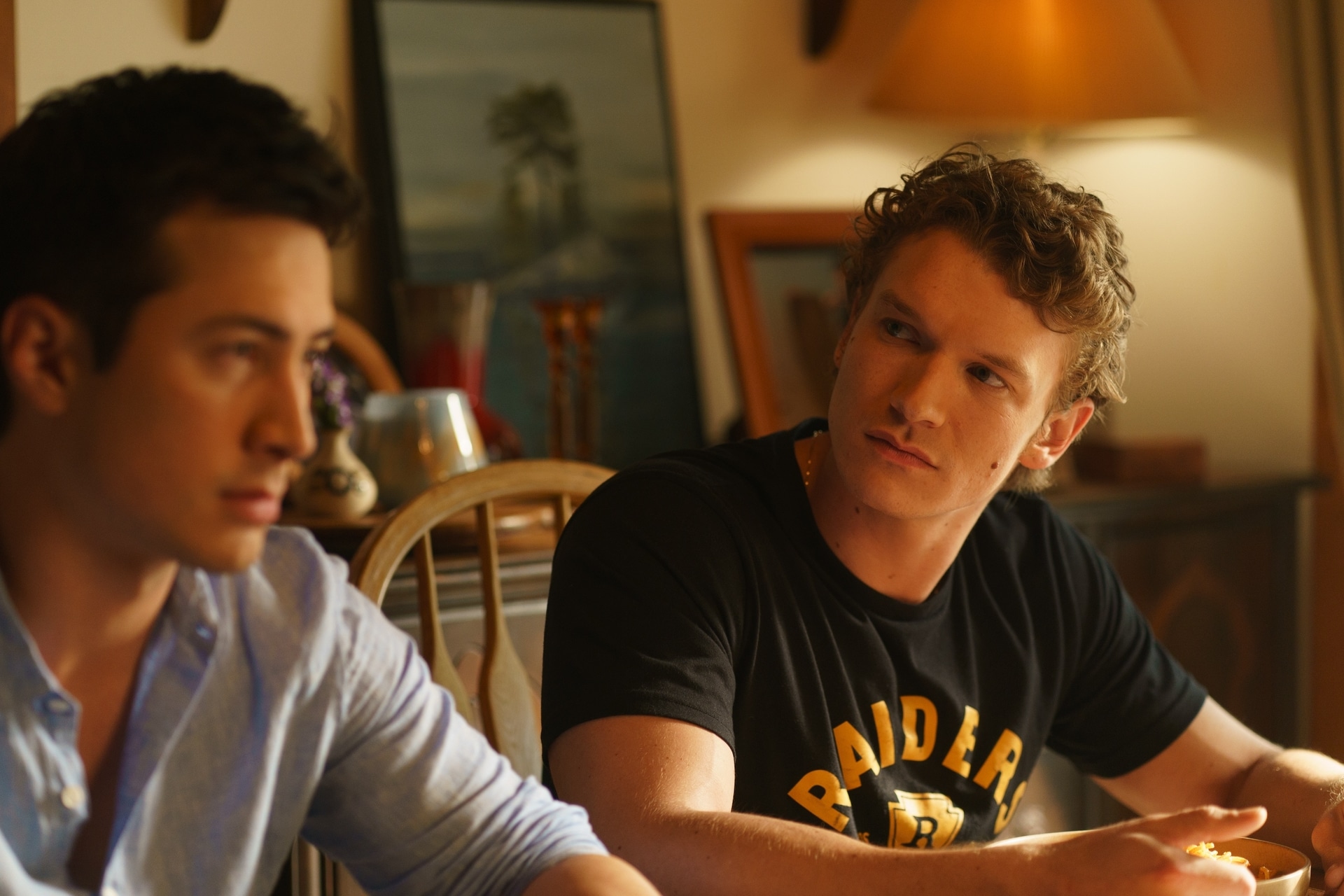
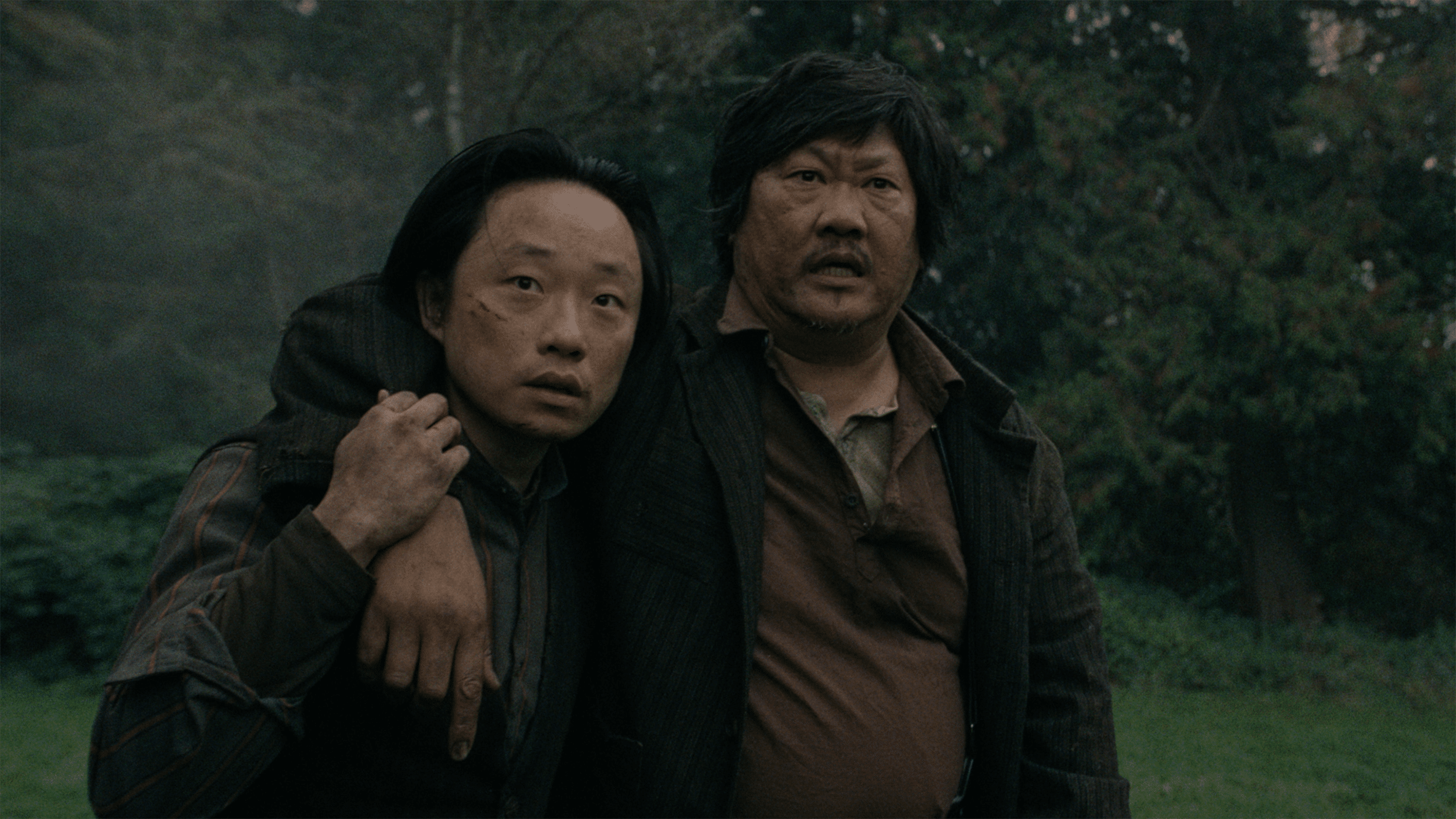
The film’s cast embodies this intersection of personal and collective histories. Alongside Tran is Benedict Wong, whose presence often brings layered depth to genre cinema, and Jimmy O. Yang, adding complexity to the story’s unfolding mystery.
Younger talents Aria Kim and Fiona Fu round out the family at the story’s center, their performances anchoring the narrative’s emotional stakes in lived experience. Together, this ensemble transforms Rock Springs from a simple haunted house tale into a tapestry of voices that reflect the film’s themes of lineage, loss, and resilience.
Read more: Chloé Zhao Makes Oscar History With Second Best Director Nomination
Rock Springs arrives amid renewed hostility toward immigrants in the US, a backdrop Miao does not shy away from. For her, storytelling has never been neutral — especially when working with histories that have been systematically excluded.
“Storytelling is the way that humans make meaning,” she says. “So there is no such thing for me as a story purely for entertainment purposes. Every time anybody tells a story, including when you tell your kid a story at night, you are making meaning together. I take that responsibility really seriously. As a filmmaker, I want to make meaning with people who watch the film.”
Rather than positioning violence as spectacle, Miao frames remembrance as an ethical act — one that opens the possibility of repair.
“I wanted to put forth a different path that could come out of this history where this family, which is really struggling to process death, comes across this history and, in the learning and the acknowledgement and the acceptance of that history, finds healing,” she says. “That is my offering, to perhaps what this timeline that we’re in now might yield, perhaps in our generation, perhaps in future generations. What looks horrifying and brutalizing now, and just like the utmost cruelty now, we have to acknowledge it, and we have to do everything that we can to protect its victims for ourselves, as well as for them.”
Despite its subject matter, Miao is careful to resist narratives that frame immigrant histories solely through suffering. Rock Springs, she insists, is not meant to trap audiences in despair.
Read more: Park Chan-wook at the BFI IMAX: The Director on Paper, Power, and the Body in the Bonsai Wire
“‘Rock Springs’ can sound like a tragedy-focused story,” she says. “It would be a mistake on my part to pass up the opportunity to say that I think it’s actually a redemption story. I think it’s a story of healing. That was my intention and my purpose, and I don’t want the conversation around the film or the anticipation around it to live and die on tragedy, because that wasn’t the intention. It’s not what these fine actors brought to the film in terms of creating so much dimension to the characters. I want to let folks know that, especially in this moment in time that we’re in, where things can feel really dark, I’m hopeful that ‘Rock Springs’ is one tiny contribution to a little bit of light.”