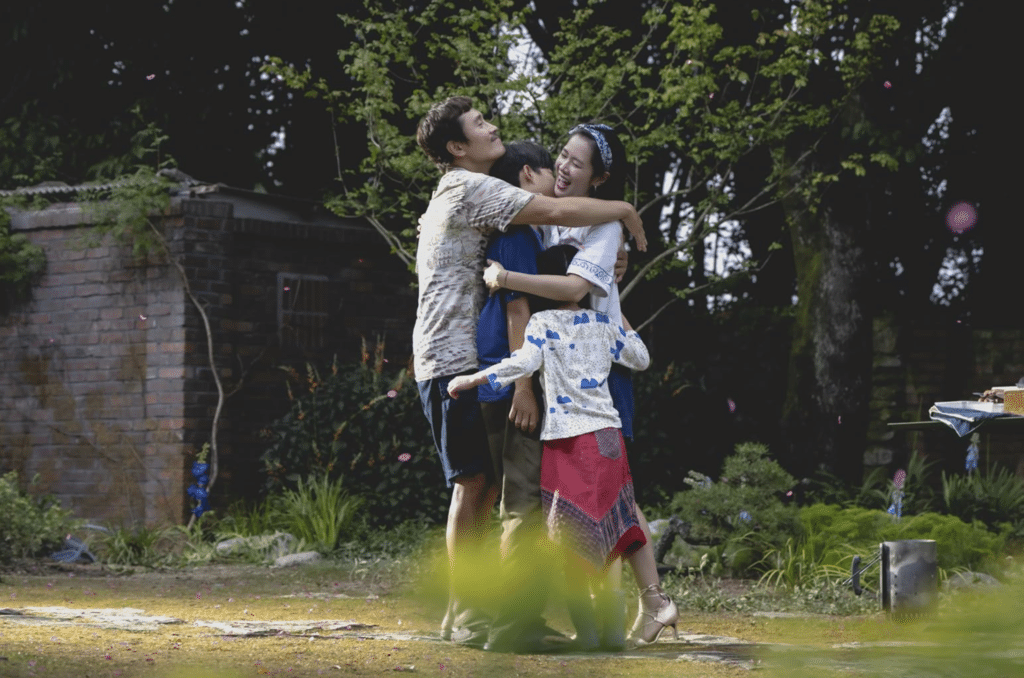
In the opening moments of Park Chan-wook’s new film, Man-su (Lee Byung-hun) stands in his garden grilling eels. He looks like a man who has won at life. He has a beautiful wife, two children, a pair of golden retrievers, and a home he spent years restoring. He is an executive at Solar Paper, a man so dedicated to his trade that he carries the title of “Pulp Man of the Year.” Then, American investors buy his company. Man-su is fired.
The film follows his steady descent from confident professional to a man who views homicide as a logical career move. After a year of unemployment, Man-su decides that the only way to get a new job is to remove everyone else who could do it. He isn’t a natural killer. He is a middle manager who applies the same tedious attention to detail to murder that he once applied to paper manufacturing.
Park adapted the film from The Ax, a 1997 novel by Donald Westlake. While the book is nearly thirty years old, the film feels current. It trades the manual labour fears of the nineties for the digital anxieties of today. The paper industry is shrinking. Automation and AI are mentioned as the new, invisible enemies of the human worker. When the American bosses fire Man-su, they tell him they have “no other choice.” It is a phrase Man-su eventually adopts to justify his own violence.
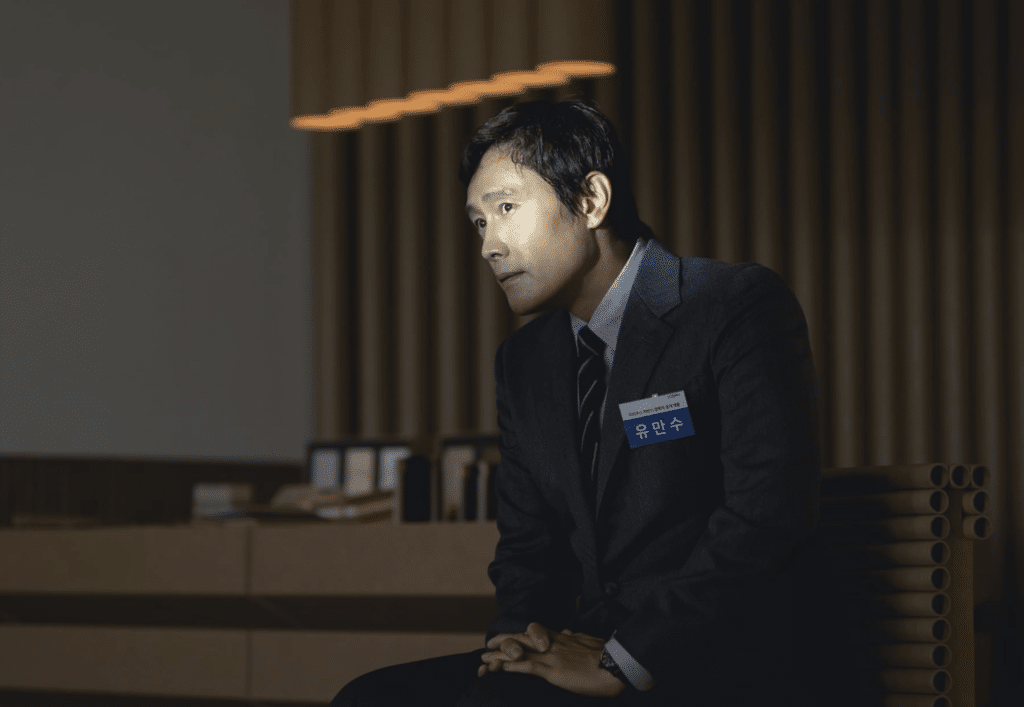
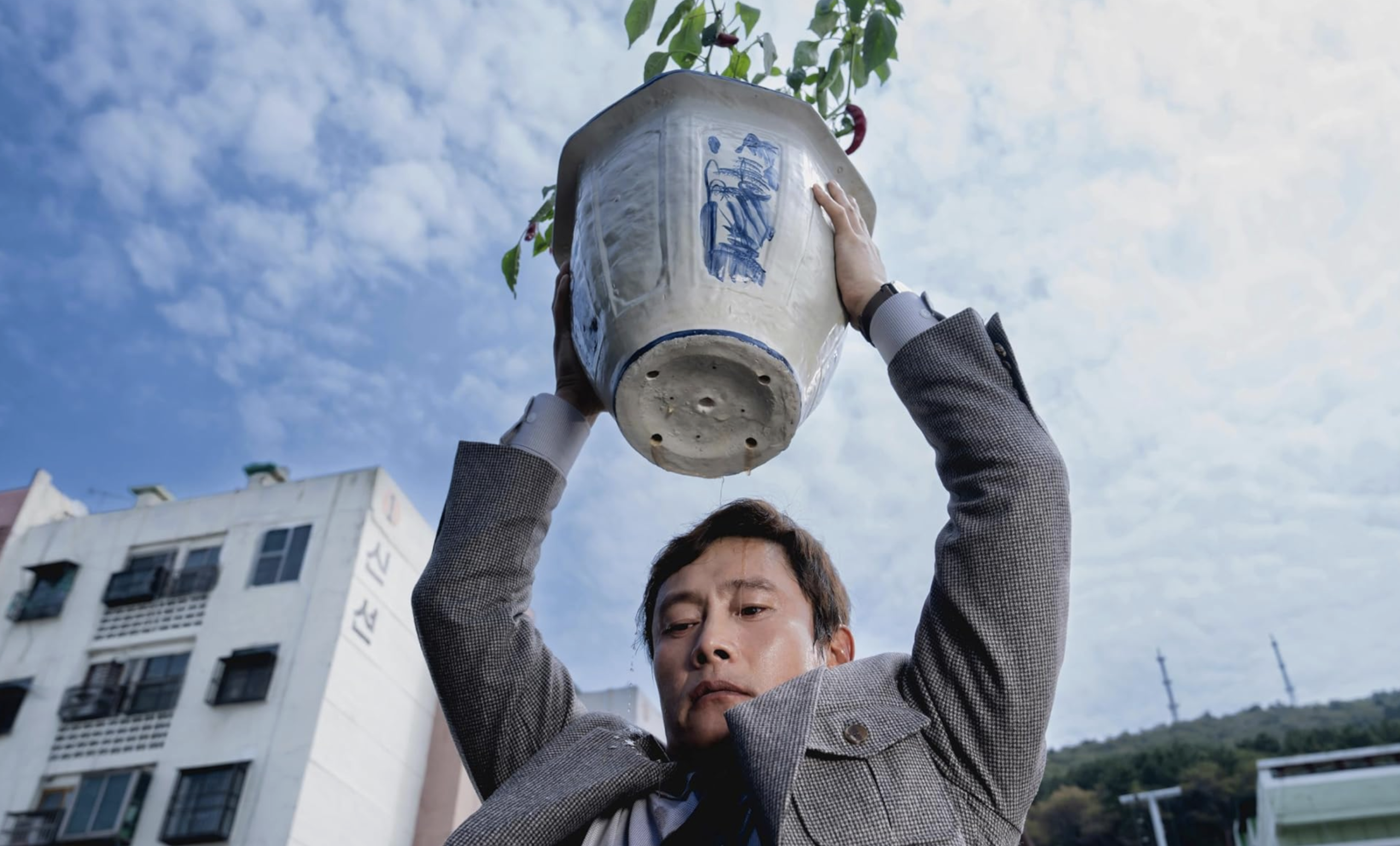
The look of the film is a major part of its success. Park and his cinematographer, Kim Woo-hyung, create a world that feels both hyper-real and deeply stylized. The family home is bathed in warm, sun-dappled light that makes the early scenes feel like a dream of domestic bliss. As the story moves into the sterile offices of Moon Paper and the cluttered apartments of Man-su’s targets, the visual language shifts. The camera glides through these spaces with a predatory smoothness. There is a specific shot in a greenhouse that stands out, where the deep greens of the plants contrast with the cold reality of Man-su’s plan. The compositions are precise, making the most mundane objects—a paper cutter, a roll of tape, a heavy flowerpot—look heavy with threat.
Read more: K-Culture’s Paradox: Why Netflix is Winning the Global Race, but Korea’s Film Industry is Starving
Lee Byung-hun is excellent here. He avoids making Man-su a simple villain. Instead, he plays him as a man who is terrified of losing his status. He isn’t worried about starving. He is worried about his daughter losing her cello lessons and his wife, Mi-ri (Son Ye-jin), having to work as a dental assistant. The film suggests that the desire to keep a certain lifestyle can be as dangerous as the struggle for survival.
The looming shadow of Artificial Intelligence adds a cold, modern edge to this version of the story. In Westlake’s original book, the threat was simple outsourcing. Here, the paper industry serves as a metaphor for the last stand of the analog world. Man-su is an expert in textures and pulps, things that require a human touch. But his new bosses view his decades of expertise as data that can be coded away. The film highlights the irony of a man who is being replaced by an algorithm using a very analogue, hands-on method—murder—to fight back. It presents a world where the “human element” is being erased from the bottom line, leaving the humans themselves to behave like malfunctioning machines.
Thematic weight is also found in how the film explores the concept of “perceived” necessity. Man-su constantly repeats the title phrase to himself like a mantra. It becomes a shield against his own conscience. Park pushes the audience to look at how corporate language—the cold, bloodless talk of “restructuring” and “optimization”—trickles down into our personal morality. If a company can destroy a thousand lives for a better quarterly report and call it a “necessity,” Man-su concludes he can take three lives to save his family and call it the same thing.
Son Ye-jin provides a necessary balance as Mi-ri. She is practical and observant. While her husband plots in the dark, she finds ways to keep the family afloat. Their relationship feels real, grounded in years of shared history and subtle tension. She is not the silent wife of a thriller; she is a woman making her own hard decisions to protect the life they built.
Read more: South Korea Selects Park Chan-wook’s ‘No Other Choice’ for Oscar Consideration
The movie is funny, though the humour is often grim. Park stages murder attempts like slapstick routines. In one scene, a struggle in a living room happens over blaring music that prevents anyone from hearing what is actually going on. It is awkward and messy. It reminds you that real violence is rarely as clean as it looks in action movies. This clumsiness makes the character more relatable. You see a man who is clearly out of his depth, yet he continues because he believes his dignity depends on it.
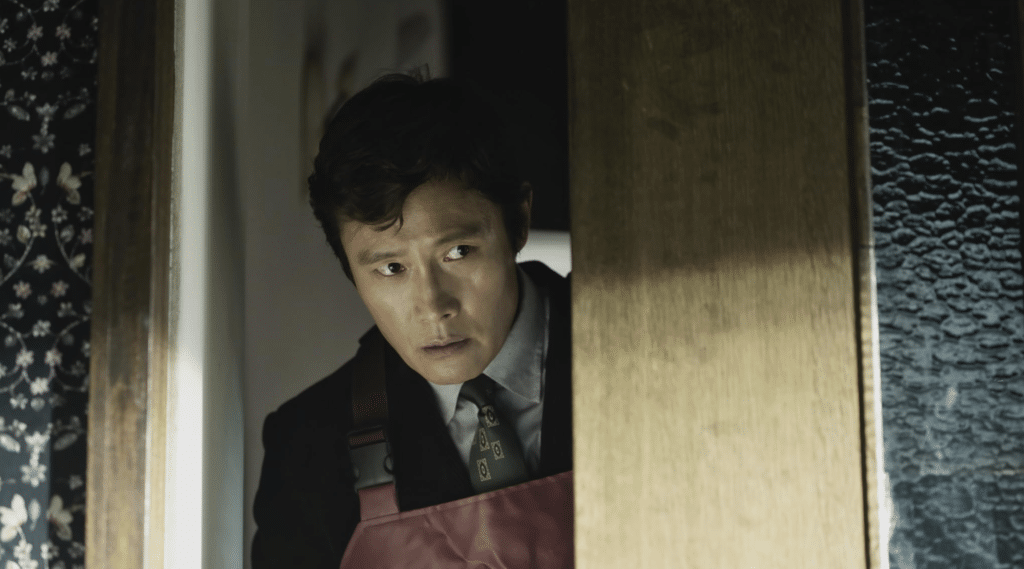
But there is a sadness beneath the jokes. Man-su is killing people who are exactly like him. They are other “paper men” who have been discarded by the same system. He is destroying his own community to save himself. The film looks into the hollow centre of a life built entirely on professional achievement. When that achievement is taken away, there is nothing left but a desperate need to reclaim it at any cost.
Some might find the length a bit much. There are subplots involving Man-su’s children and his suspicions about his wife’s boss that take up significant time. However, these scenes build a world that feels lived in. They show what Man-su is trying to protect, even as his actions make him less worthy of the life he wants. The family dynamic adds a layer of tragedy that a simpler thriller would miss.
Read more: Lee Byung-hun: From Hollywood Action Hero to Squid Game’s Global Star
Park Chan-wook has made a movie about what happens when we tie our entire identity to our jobs. It is a warning about a system that treats people like disposable parts. It is also a very entertaining thriller. The final sequence is particularly haunting, leaving you to wonder if the monster is Man-su or the world that pushed him into a corner.
No Other Choice is in theatres in wide release starting in January 2026.