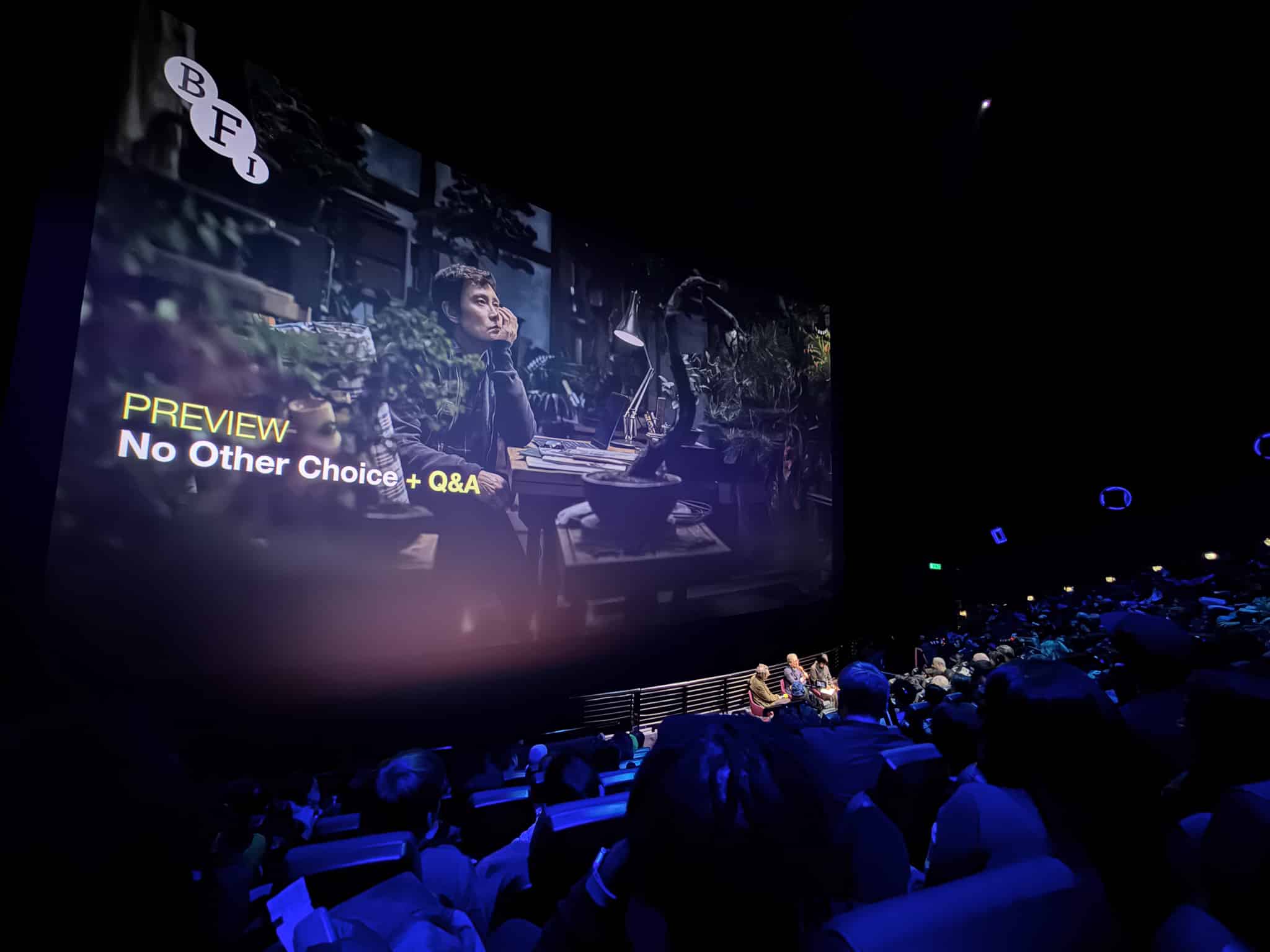
On a rainy evening at the BFI IMAX in London, the air carried the kind of electric hush that usually precedes the arrival of royalty. In the world of international cinema, Park Chan-wook is exactly that. The director, whose name became synonymous with the “K-Wave” long before the term was a marketing gimmick, sat down for a career-spanning Q&A that revealed as much about his own anxieties as it did about his latest feature, No Other Choice.
Adapted from Donald Westlake’s novel The Ax, the film follows Man-su, a paper industry executive who, upon losing his job to American “restructuring,” decides to systematically murder his competition. It is a premise that suggests a return to the blood-soaked vengeance of Oldboy, but as the evening progressed, it became clear that Park has found a new, more domestic kind of horror.
Warning: Spoilers for No Other Choice follow.
The project was twenty years in the making. When asked about the delay, Park’s answer was refreshingly devoid of artistic pretension. “There’s a very simple answer to that: money,” he told the crowd. After years of negotiating with French and American studios that didn’t share his budgetary vision, Park chose to wait until he could make the film on his own terms in Korea. This shift from West to East allowed him to replace the Fourth of July with Halloween and, more importantly, to introduce the bonsai—a plant that becomes a gruesome cinematic tool.
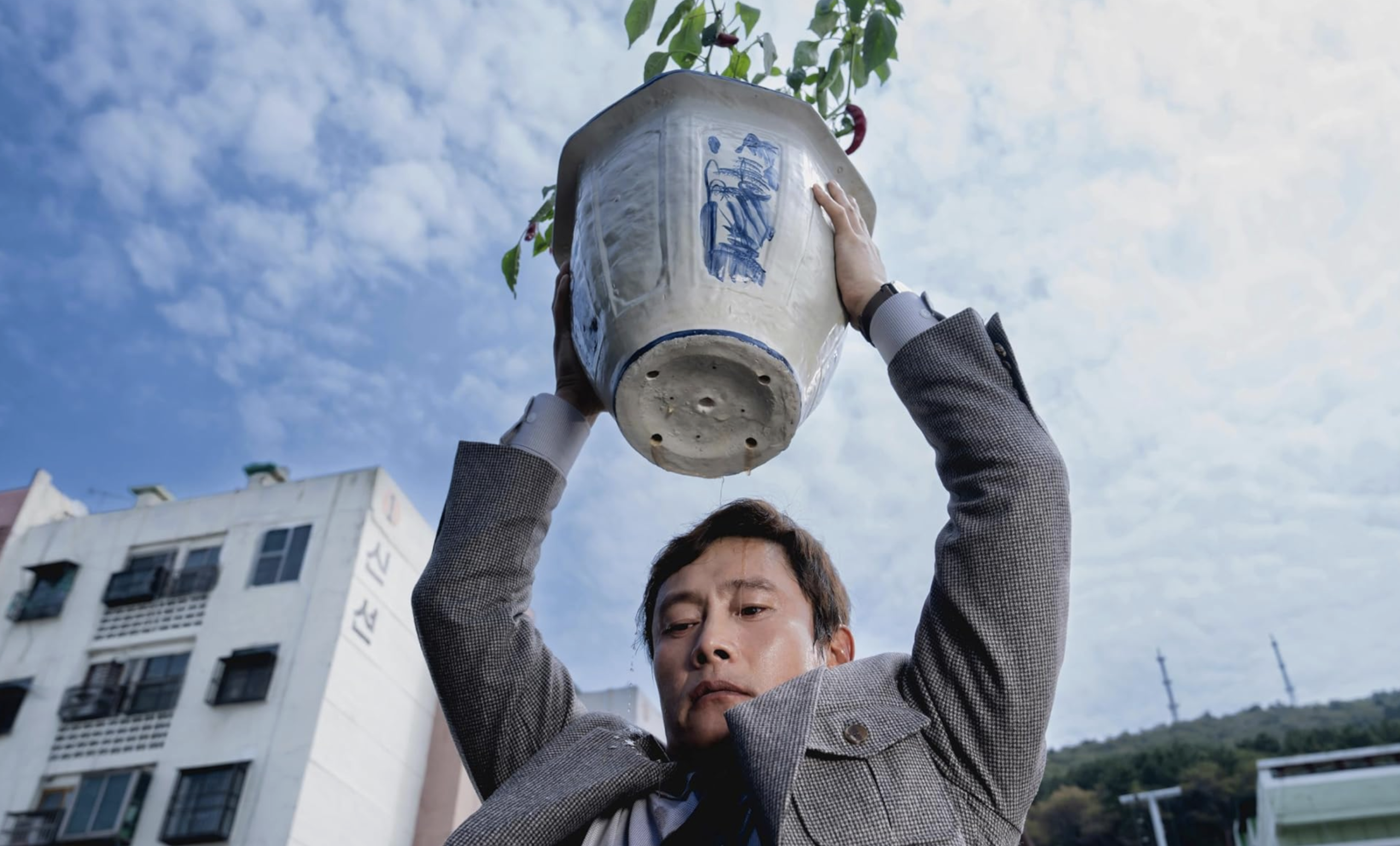
“Cinematically, I utilised the bonsai in many ways,” Park explained. “Most significantly in the scene where Man-su uses bonsai wire to ‘take care’ of the dead body, reducing its volume to bury it. I love that image; the body tied in wire was beautiful in a dark way. It allowed us to avoid a ‘bloody’ scene involving a chainsaw.”
This aesthetic choice—finding beauty in the grotesque—is a hallmark of Park’s style. However, the film moves beyond mere visuals to address the rot inside the modern man. While the original book focused on the mechanics of murder, Park chose to expand the role of the family and the house itself. He noted that while the satire of capitalism was inherent in Westlake’s writing, he intentionally amplified the themes of masculinity and the fragility of the “provider” identity.
There is a startling vulnerability in how Park relates to his protagonist. He admitted that the paper industry, which seems mundane to outsiders, mirrored his own obsession with film. “Paper is only truly important to the people making it,” he said. “I think film is the same. Most people see a film as two hours of entertainment, but filmmakers like myself devote our entire lives to it.”
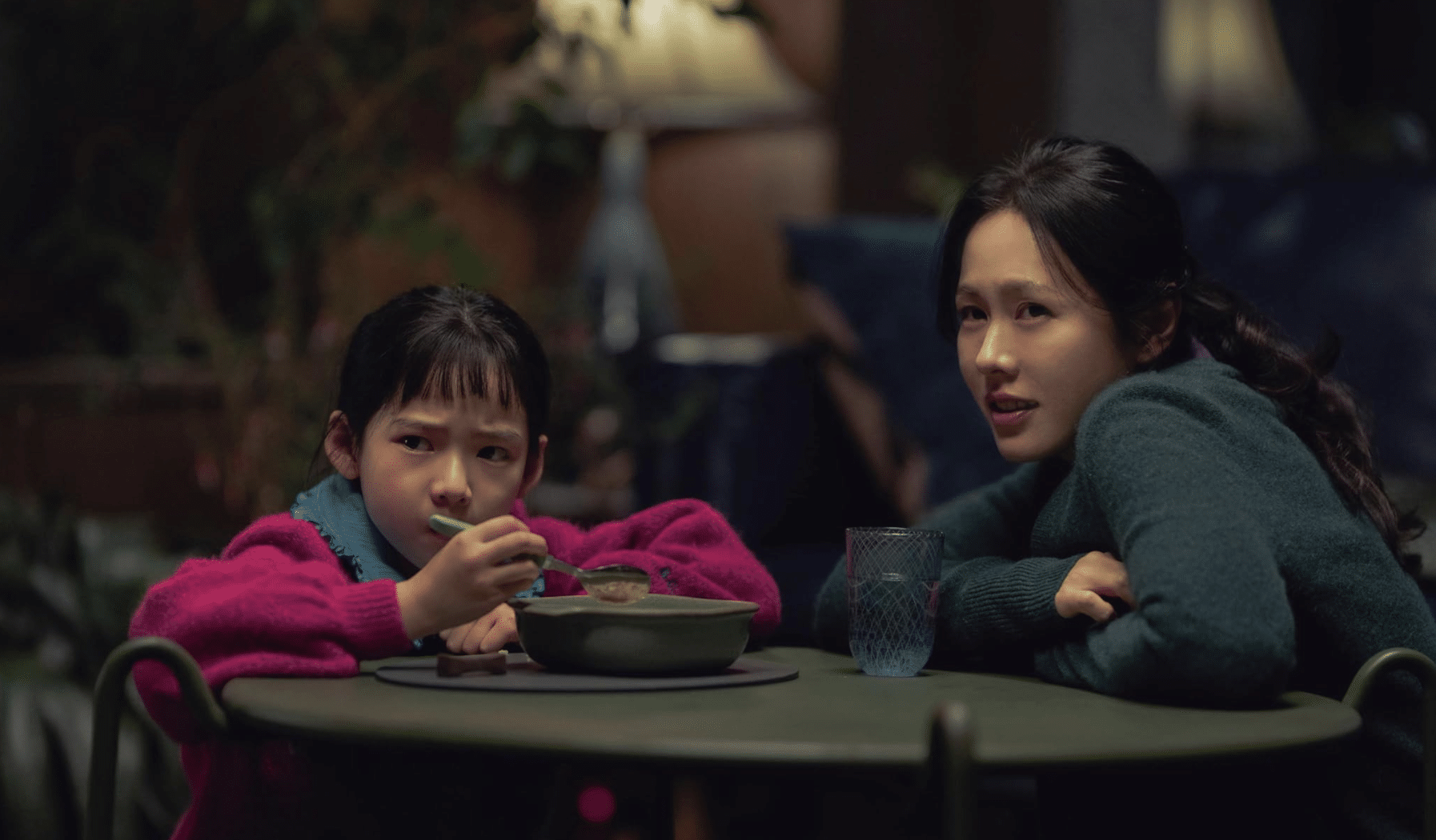
He recalled writing a line for Man-su’s wife, Mi-ri (played by Son Ye-jin), who tells her husband, “You shouldn’t have worked that hard.” For Park, this was a moment of rare self-reflection. “I wrote it with deep regret for my own life, having long equated my identity with my occupation. What am I without being a filmmaker? I’d be a shell of a person.”
The film also sees the return of the “tooth” motif, a recurring nightmare for anyone who remembers the hammer-and-pliers scene in Oldboy. In No Other Choice, the toothache represents Man-su’s rigid, almost pathological discipline. He refuses to visit the dentist until he has a job, believing he can overcome physical pain through sheer will. When he finally pulls the tooth during a drinking session, it marks a dangerous liberation. Park revealed the scene is an homage to Yu Hyun-mok’s 1961 classic, An Aimless Bullet, linking his modern satire to the history of Korean cinematic tragedy.
Read more: Park Chan-wook’s ‘No Other Choice’ Review: A Bloody Satire for the AI Age
The relationship between Director Park and his leading man, Lee Byung-hun, also provided some levity. Despite twenty-five years of friendship since Joint Security Area, their working styles still clash in amusing ways. Park is a meticulous planner who creates detailed storyboard booklets for his cast. Lee, however, refuses to look at them.
“He didn’t want his imagination to be ‘boxed in’ by the drawings,” Park laughed. “Sometimes he’d say, ‘Oh, I thought this was a close-up, but it’s a long shot of my back?’ and I’d yell back, ‘That’s why you should have read the storyboard!'”
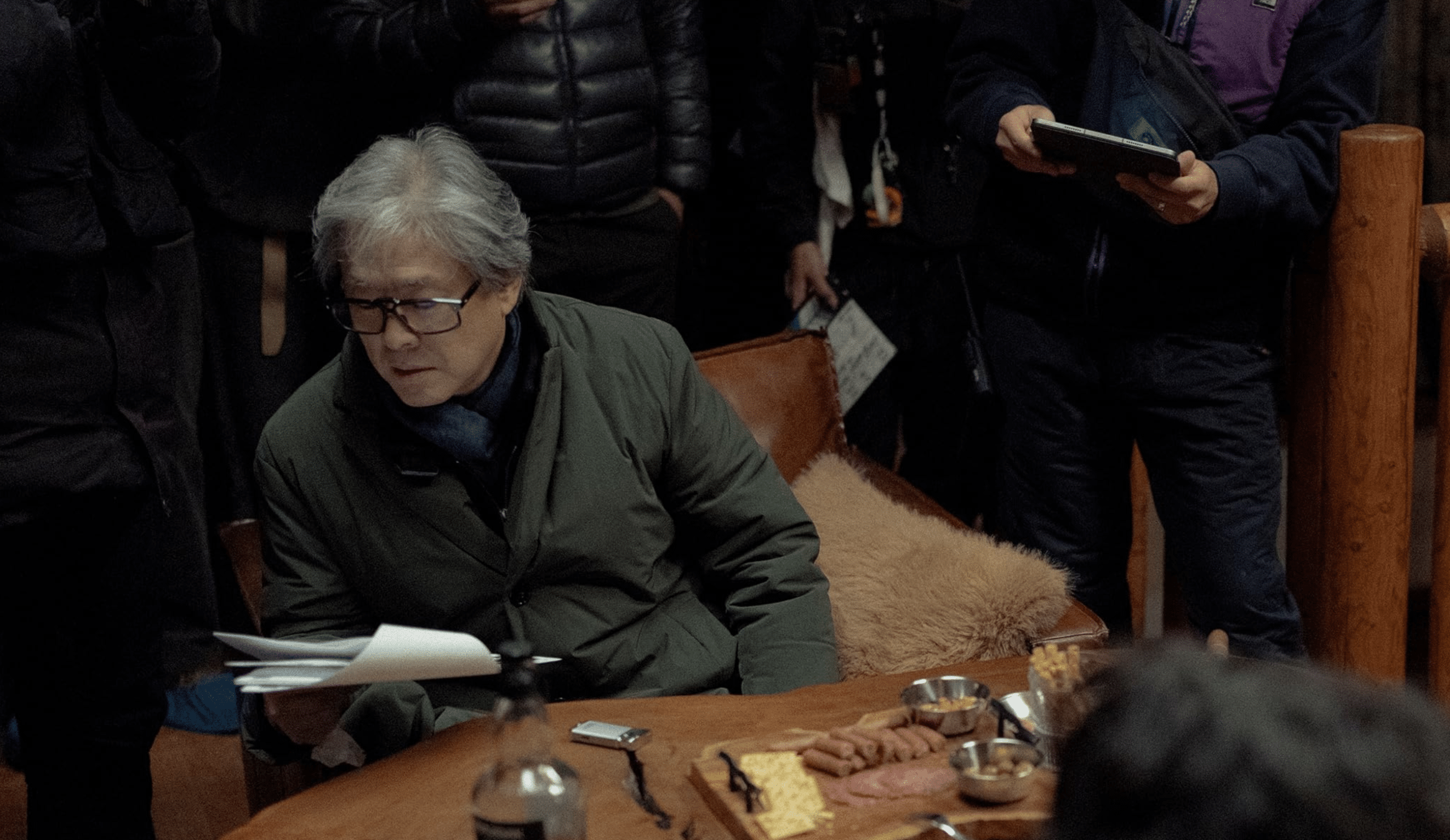
This tension between the blueprint and the performance is where the film finds its life. Park explained that he storyboards so heavily specifically to free himself up on set. By having the technical setup pre-designed with his Director of Photography, he can spend his day listening to the actors. It is a process that allows for a “blueprinted” film to feel surprisingly spontaneous.
The emotional core of the film, however, belongs to the daughter—a cello prodigy whose talent is initially hidden behind “uncomfortable” and “scratching” sounds. Park based her character on a real-life autistic cellist in Korea who records music through abstract drawings. In the film, these drawings are sheet music that only she can truly decipher, making her a “young female prophet” within the crumbling walls of the family home.
As the Q&A concluded, it was evident that No Other Choice is more than a thriller about a man with an ax. It is a commentary on the “loss and gain” of a life spent in pursuit of professional perfection. It asks what happens when the paper we make—or the films we direct—is no longer enough to hold a life together.
No Other Choice is in theaters in wide release starting in January 2026.