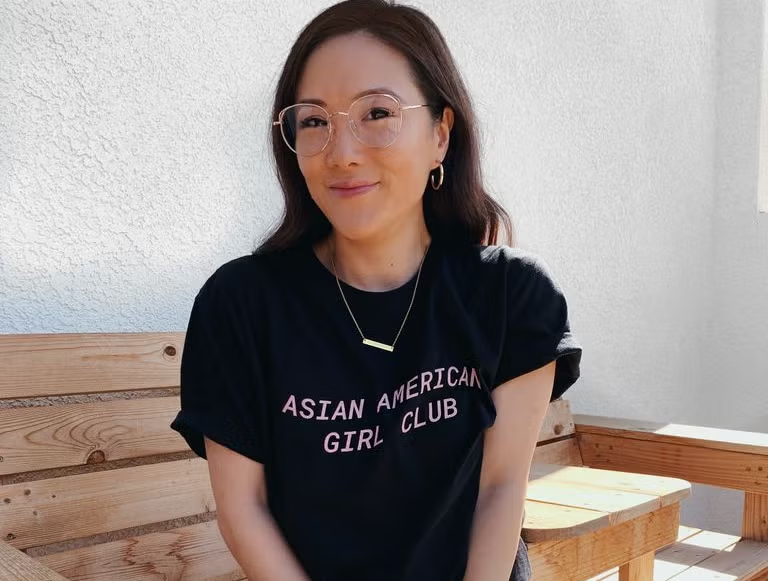
The Asian American Girl Club Target partnership was supposed to be a celebratory moment. Instead, it has become one of the most talked-about controversies surrounding the brand since its founding.
When Ally Maki announced that Asian American Girl Club (AAGC) would be partnering with Target on a Lunar New Year capsule, the collaboration instantly pushed the culture brand into mainstream retail visibility. The collection — featuring crewnecks and accessories stamped with AAGC’s signature messaging — marked the first time Asian American Girl Club products would be sold at a national big-box retailer.
Within hours, however, the conversation online shifted from celebration to backlash.
Across Instagram posts and Reels discussing the Asian American Girl Club Target collaboration, commenters began questioning not the designs themselves, but what the partnership symbolised.
Much of the criticism centred on Target’s growing entanglement in immigration enforcement controversies in Minnesota, where the company is headquartered, and how that context clashes with AAGC’s identity as a community-first Asian American brand.
“Really disappointed in your decision to sell with Target,” one Instagram user wrote under a Reel discussing the drop. “ been a faraway supporter for a while and i am really saddened to know that your company values profit over supporting our communities and defending them against 🧊.”
View this post on Instagram
Another commenter was more direct: “Yall got the 🎯! Yall love that 🧊! Good for you! All you needed to do is backstab your own community! 👏👏👏.”
The reference was to recent enforcement activity by U.S. Immigration and Customs Enforcement in the Minneapolis–St. Paul area. Over the past month, ICE has escalated operations across Minnesota, including high-profile raids and detentions that have sparked protests, walkouts and sit-ins at Target’s corporate headquarters.
Although Target has stated that it does not formally cooperate with ICE, federal agents have been documented staging arrests in and around Target locations, including one incident in which two workers were detained inside a Target store in Richfield.
View this post on Instagram
Target has declined to publicly condemn the operations or outline clear protocols for how employees and customers are protected during ICE activity. That silence has placed the retailer under increasing scrutiny — and, by extension, the brands choosing to partner with it.
Read more: ‘KPop Demon Hunters’ Just Became the Most-Watched Title in Netflix’s History… By a Mile
For critics of the Asian American Girl Club Target partnership, the issue is not just optics but accountability. “The Target collaboration feels deeply tone-deaf,’” one commenter wrote. “In 2026, amid a climate where anti-Asian sentiment remains very real, partnering with Target is disappointing and calls the integrity of this brand into question.”
Another comment, liked hundreds of times, read: “you have a stand alone website but chose to collab with people that don’t like diverse people – when we are part of what they consider diverse.”
In another post celebrating their Target partnership, Asian American Girl Club disabled the comment section.
View this post on Instagram
The brand then issued a statement in another Instagram post. “Your feedback underscores the need for us to push back,” a note signed by Ally Maki said. “We are in direct conversations with Target, demanding options for the future of this collaboration, as well as advocating for other minority-led small businesses and exploring ways to give back.”
“Building AAGC has been deeply meaningful to me, born from love. We greatly value our responsibility as a brand and platform rooted in community, and we will continue forward with discernment and accountability.”
View this post on Instagram
Maki founded AAGC as a response to invisibility in media and fashion, positioning the brand as a space where Asian American women could feel seen, affirmed and empowered. Over the years, Asian American Girl Club has grown from a niche community project into a recognisable cultural label. The Target partnership represents its biggest commercial leap yet — but also its most politically charged.