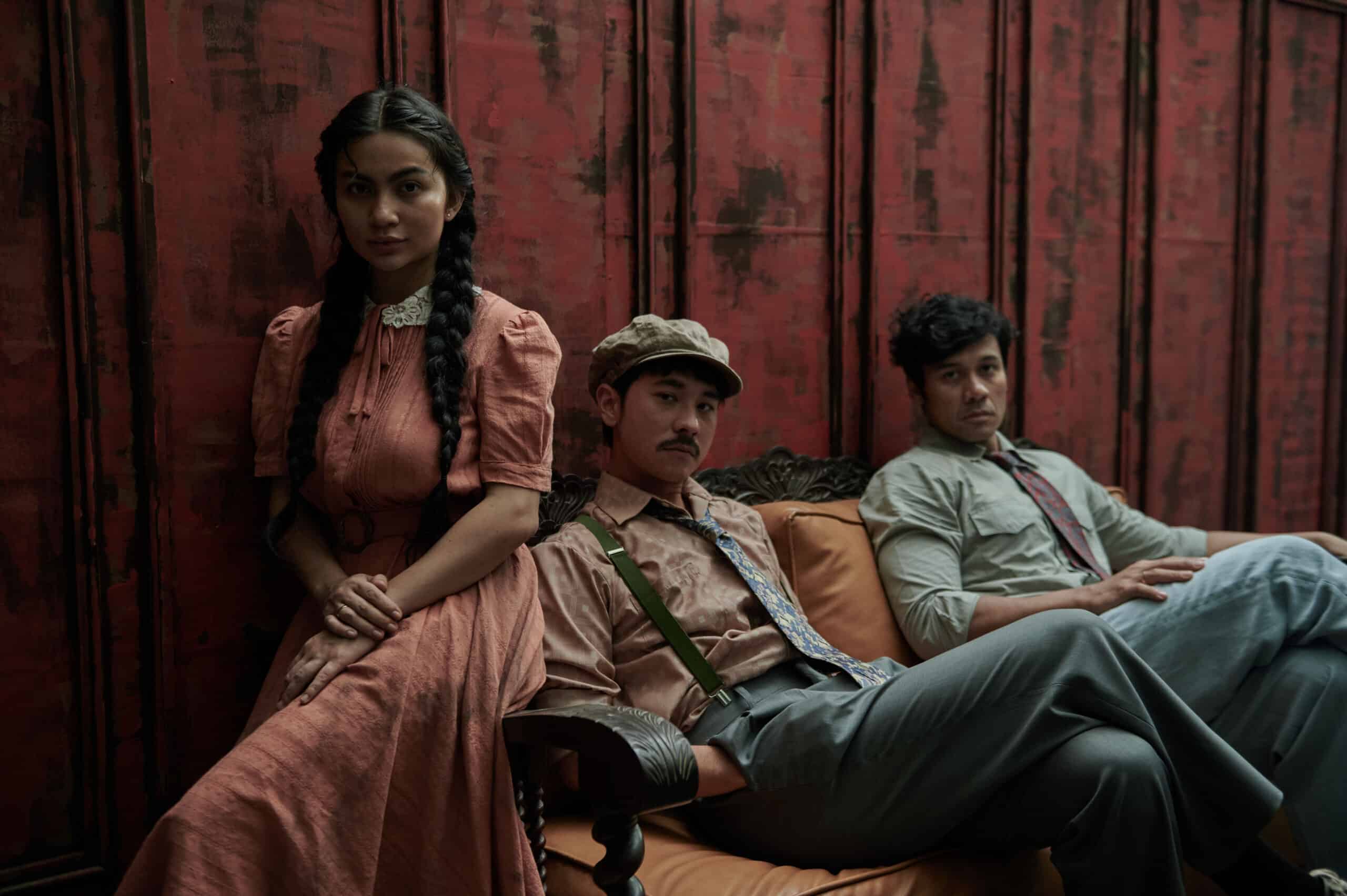
When This City Is a Battlefield rolled into this year’s Singapore International Film Festival, it arrived with the weight of history on its shoulders. Set in Jakarta in 1946 and adapted from Mochtar Lubis’ classic novel Jalan Tak Ada Ujung, the film captures a city still reeling from occupation, independence, and unfinished wars of identity.
Directed by Mouly Surya and led by Chicco Jerikho as Isa, Ariel Tatum as Fatimah, and Jerome Kurnia as Hazil, the film traces how love, loyalty, and resistance collide in the intimate spaces of a family home. Resonate sat down with the three leads to talk about personal growth, the weight of playing history, and what their 1940s characters would make of 2025 Indonesia.

Becoming Fatimah, Hazel, and Isa
For Ariel Tatum, acting and personal evolution are inseparable. Playing Fatimah—a quietly fierce woman negotiating the limits placed on her—forced her to rethink how she carries herself both physically and emotionally.
“She’s so internal and composed, which is very different from me. I had to tone myself down to become her.” – Ariel Tatum
“This is my first period film and the longest I’ve ever prepared for a character,” she shares, describing workshops that ranged from dialect coaching and traditional weaving to intimacy choreography and action training. Fatimah, barely fleshed out in the source novel, became a character Ariel built from fragments of herself and imagined details.
Jerome Kurnia, who plays Hazil, approached his role as both research and reconstruction. Speaking to an aunt who lived through the era and happens to be a professor, he collected stories about speech patterns, daily habits, and social codes that would never appear in textbooks. Hazil, impulsive and hungry for approval, is a far cry from Jerome’s own personality—but that dissonance became fertile ground.
Chicco Jerikho’s Isa is the film’s quiet center—a schoolteacher, violinist, and resistance fighter whose loyalty is constantly tested. “He barely speaks, but he’s always thinking strategically,” Chicco reflects, noting that Isa’s internal world is far more crowded than his dialogue suggests.
Learning History Through Bodies and Stories
The cast’s preparation went beyond reading about independence-era Indonesia. They turned to family, oral histories, and embodied practice—how people stood, walked, or sat in a room where danger was a constant possibility.
“Portraying history makes it real. Colonization may have ended politically, but its effects are still felt.” – Jerome Kurnia
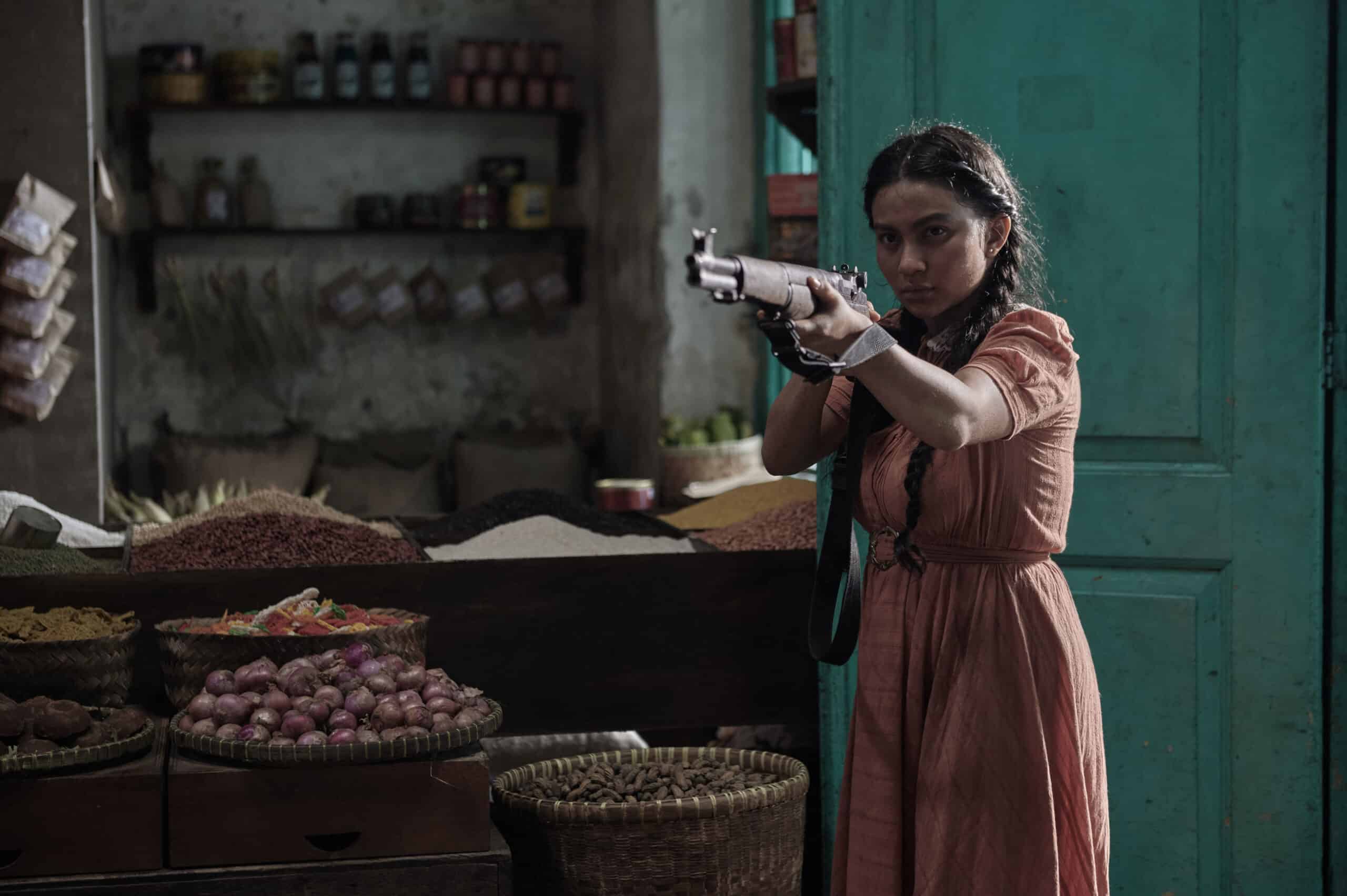
Ariel describes history as something they had to “wear,” not just recite. The restrictions on women in 1946 felt jarringly unfamiliar, yet the resilience and care they carried felt instantly recognizable. For her, the role became a way to honor both how far women have come and how much strength has always existed beneath the surface.
View this post on Instagram
“From a woman’s perspective, I see it as a celebration of how far we’ve come. Back then, women had limited choices, often confined to being mothers or wives,” she said. “Fatima’s world reflects that. Today, thankfully, women have the freedom to choose—to pursue careers, love, or independence. I think the film honors that evolution.”
Read more: We Sat Down With Tony Leung To Discuss Trust, Technique… And Trees
Jerome frames the film as an exercise in empathy across time. The details of 1946 may be specific, but the emotions—fear, desire, shame, longing—remain painfully contemporary.
Despite the time period, people were still the same,” he explained. “I hope audiences can empathize with what our ancestors felt and understand how that shaped who we are today as a community and as a nation.”
He hopes international audiences in places like Singapore will see their own histories reflected in Indonesia’s struggle, saying, “by portraying what their brothers or sisters or neighbours had to go through is also relatable share the same fire that we had.”
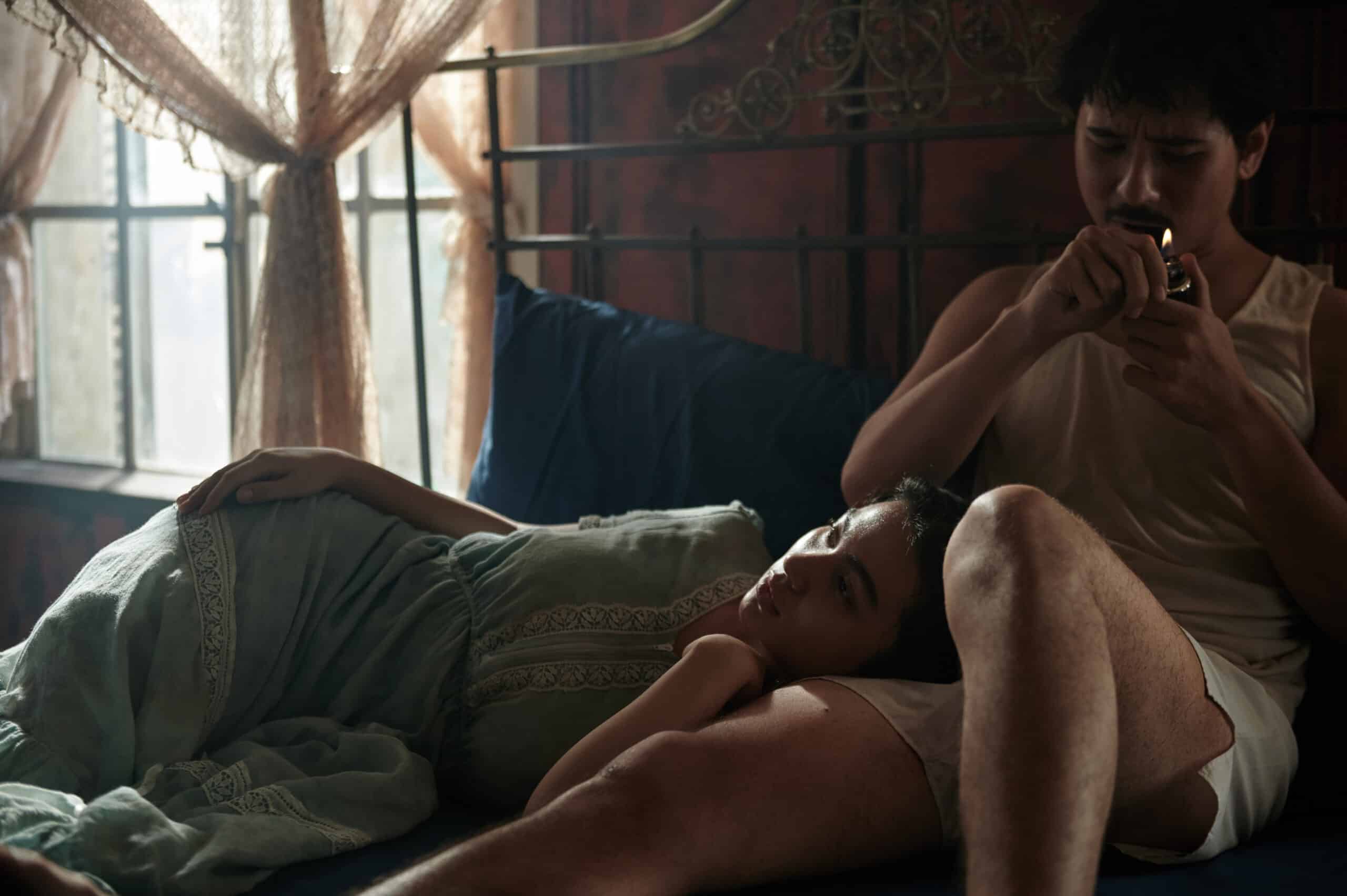
For Chicco, Isa’s unwavering commitment to family and cause anchored him. As both an actor and producer, and a father in real life, he draws clear boundaries between work and home but admits that questions of loyalty, sacrifice, and responsibility follow him across both worlds.
Mouly Surya’s Cinema of Stillness
All three actors speak about working with director Mouly Surya with a kind of hushed reverence. Surya, known for films that balance genre with sharply observed human detail, brings the same precision to This City Is a Battlefield.
“She has a way of capturing emotion through stillness. Every actor in Indonesia wants to work with her.” – Jerome Kurnia
On set, she would occasionally add new scenes or adjust storylines, but always with a clear sense of where the emotional arc needed to land. For Chicco, the biggest lesson was restraint: allowing a shift in the eyes or a tightened jaw to carry more meaning than any line of dialogue.
The result is a film where the most brutal battles are often waged in silence—over dinner tables, in cramped rooms, and in the space between two people who love each other but no longer speak the same emotional language.
From Law, Dance, and Coffee to the Battlefield
Beyond the film, the cast’s individual journeys add texture to their performances. Jerome, who once studied and practiced law, walked away from a conventional career after realizing that performing brought him a joy he couldn’t ignore. His family’s initial doubts have softened into pride, especially after awards and premieres began stacking up.
“Back in school, while everyone was playing ball and sports, I was doing theatre,” Jerome recalled. “It was just a hobby for me. I studied law, worked as a lawyer for a while, and felt completely empty. I quit my job right away, despite family disapproval.”
“My dad had already passed away, so he didn’t weigh in. I didn’t care what my aunts or uncles said, but my mom always told me, “Do what you want, as long as you’re happy and it’s halal.””
Ariel, meanwhile, continues to champion Indonesian culture off-screen. Her work with Jaipong dance through Happy Salma’s Titibangsa foundation and her habit of wearing kebaya or batik when traveling reflect the same commitment to cultural memory that underpins the film.
Chicco’s work as a producer on the Philosophy Kopi films underscores his investment in telling Indonesian stories on Indonesian terms—he jokes that his dream is for the coffee franchise to go “bigger than Starbucks,” powered entirely by local beans from Aceh to Papua.
“I want Philosophy Kopi to go international—bigger than Starbucks!” Chicco shares. “We only use Indonesian beans from places like Aceh to Papua. And as an industry, I’m proud of local milestones like Si Juki the Movie, our first major animated hit.”
If 1946 Met 2025
Asked what modern Indonesia might look like to their 1946 counterparts, the cast’s answers offer a glimpse of how they see their own country today. Ariel immediately cites Gojek, FaceTime, and credit cards—symbols of mobility, connection, and autonomy she believes would astonish someone like Fatimah.
Jerome, half-joking, imagines Hazil on Tinder, navigating a new battlefield of swipes, matches, and digital desire. Chicco, with a wry smile, points to online loans—pinjol—as a distinctly contemporary Indonesian phenomenon his character might find both useful and troubling.
Read more: Youn Yuh-jung And Deepa Mehta Honoured At SGIFF’s 2025 Silver Screen Awards
What grounds all three is the sense that Indonesia remains a place of contradictions: progressive and traditional, bruised and hopeful, fractured and fiercely alive. With This City Is a Battlefield, they are not just revisiting the past—they are insisting that history is something to be felt, argued with, and carried forward.