Korean cinema is undergoing a structural shift as filmmakers turn to micro-budget production models and AI-driven workflows to counter a steep decline in output, rising production costs and weakening box office performance. In response, directors including Yeon Sang-ho and Kang Yun-sung are experimenting with radically leaner filmmaking methods that challenge long-standing industry norms—and could signal a turning point for the sector.
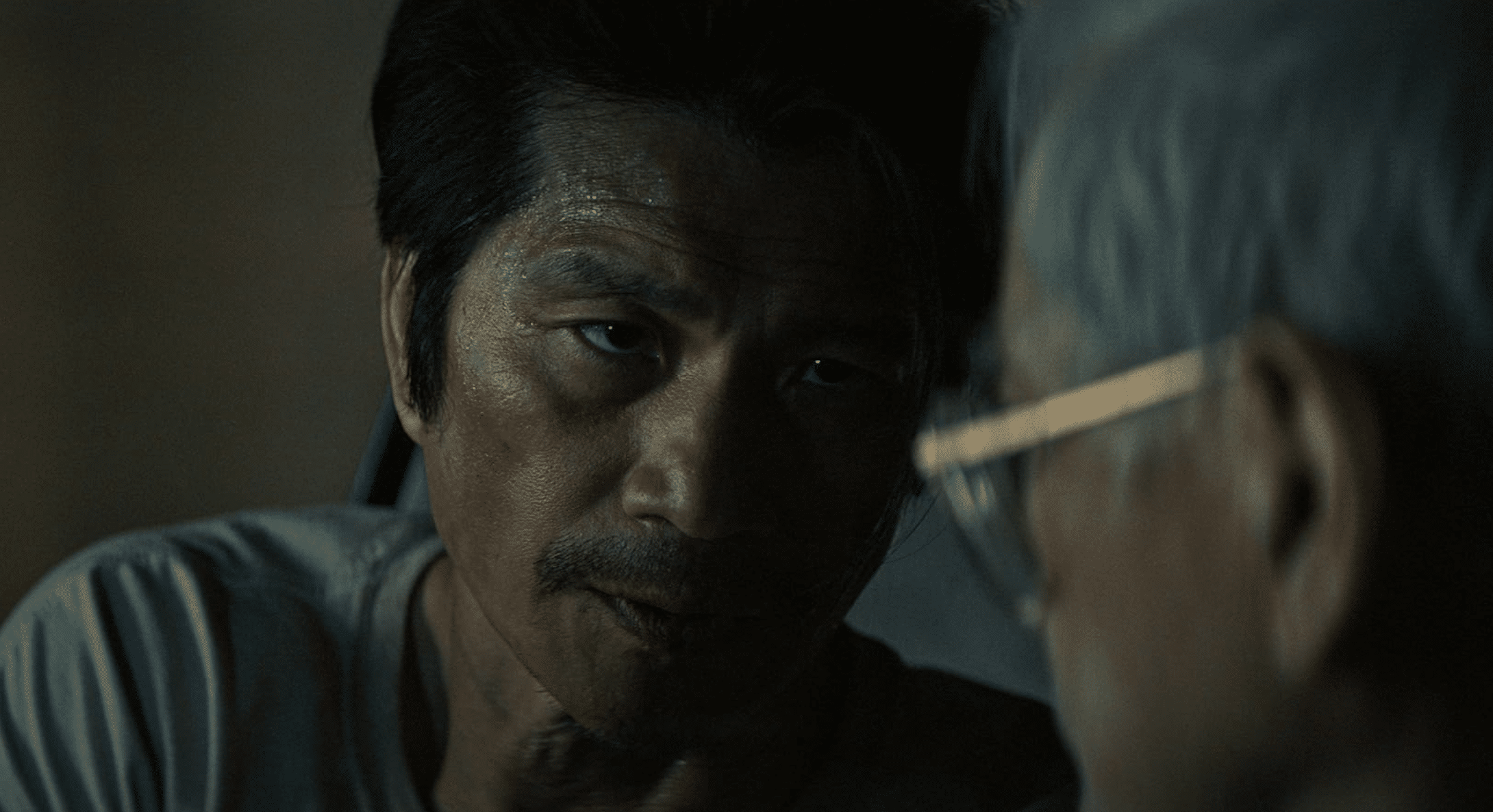
Leading the push is director Yeon Sang-ho, the genre disruptor behind Train to Busan (2016) and Netflix’s Hellbound. His surprise hit of the year, The Ugly, was produced on what is essentially lunch money by today’s standards—around 200 million won (US$136,275). Against the odds, the film pulled over 1 million viewers and generated roughly 11 billion won, more than 50 times its cost.
Fuelled by that success, CJ ENM and Yeon’s own Wowpoint have announced a new project: Paradise Lost, a mystery centered on a boy who reappears nine years after his disappearance.
With a 500 million won budget and Kim Hyun-joo—who previously collaborated with Yeon on Hellbound and Netflix’s Jung_E (2023)—in a leading role, the film is already drawing industry attention. Its distribution through Korea’s dominant studio, CJ ENM, further underscores a broader shift toward lower-risk, fast-turnaround productions.
Yeon hopes his approach will evolve from an experiment into an industry-wide framework.
“When I was young, I was inspired by legendary Asian films, and most of those films were low-budget movies. There is a power that only low-budget films have,” he said after premiering The Ugly in Seoul, Sept. 10.
“I became ambitious about whether attempts like ‘The Ugly’ could be systematized, rather than just being a one-time experiment. I believe we need a new standard for making films, different from the criteria we’ve used so far, and I hope that standard can become systematized.”
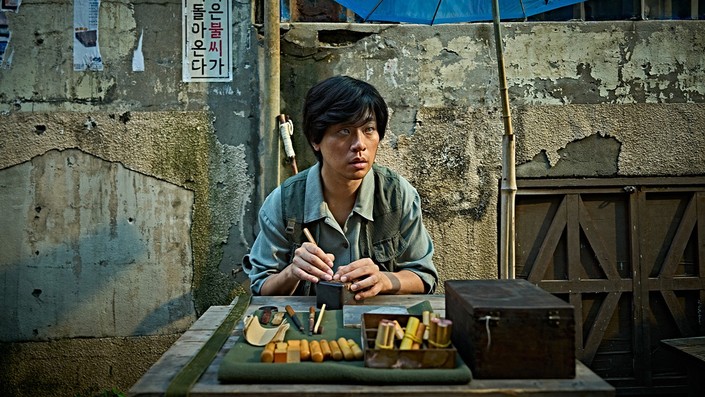
Another major attempt at reinvention is coming from director Kang Yun-sung, known for the 2017 hit The Outlaws. His newest work, Run to the West, ventures into uncharted territory for Korean film: extensive use of AI to dramatically compress production time and budget.
Starring Byun Yo-han and Kim Kang-woo, the 60-minute film is Korea’s first feature-length title to rely so heavily on AI-generated visual effects—from chase scenes to car explosions to collapsing buildings. Kang said a car explosion that typically requires four to five days of CG work was completed in just 10 minutes using AI. Even with such ambitious effects, the film’s total production cost remained around 1.5 billion won.
“I started the project because I wanted to prove that when making a film with AI, it is possible to implement blockbuster-level computer graphic effects even with a small budget,” he said during a press conference for the movie, Oct. 13.
“Existing films can cost upwards of 10 billion won. Also, securing investment becomes difficult. That forces creators to limit their imagination and narrow their genres to fit within the budget they can secure.”
But innovation doesn’t always translate into ticket sales. Despite its technological leap, Run to the West drew only 27,996 admissions after its Oct. 15 theatrical release—far short of the 200,000 needed to break even. The muted turnout suggests that while AI may slash costs and speed up production, audiences still expect strong narratives and polished execution, regardless of budget.
For now, Korea’s micro-budget experiments and AI-powered filmmaking point to an industry eager to adapt. Whether these approaches mature into sustainable models—or remain isolated experiments—will depend on whether audiences embrace this new era of lean, tech-driven storytelling.