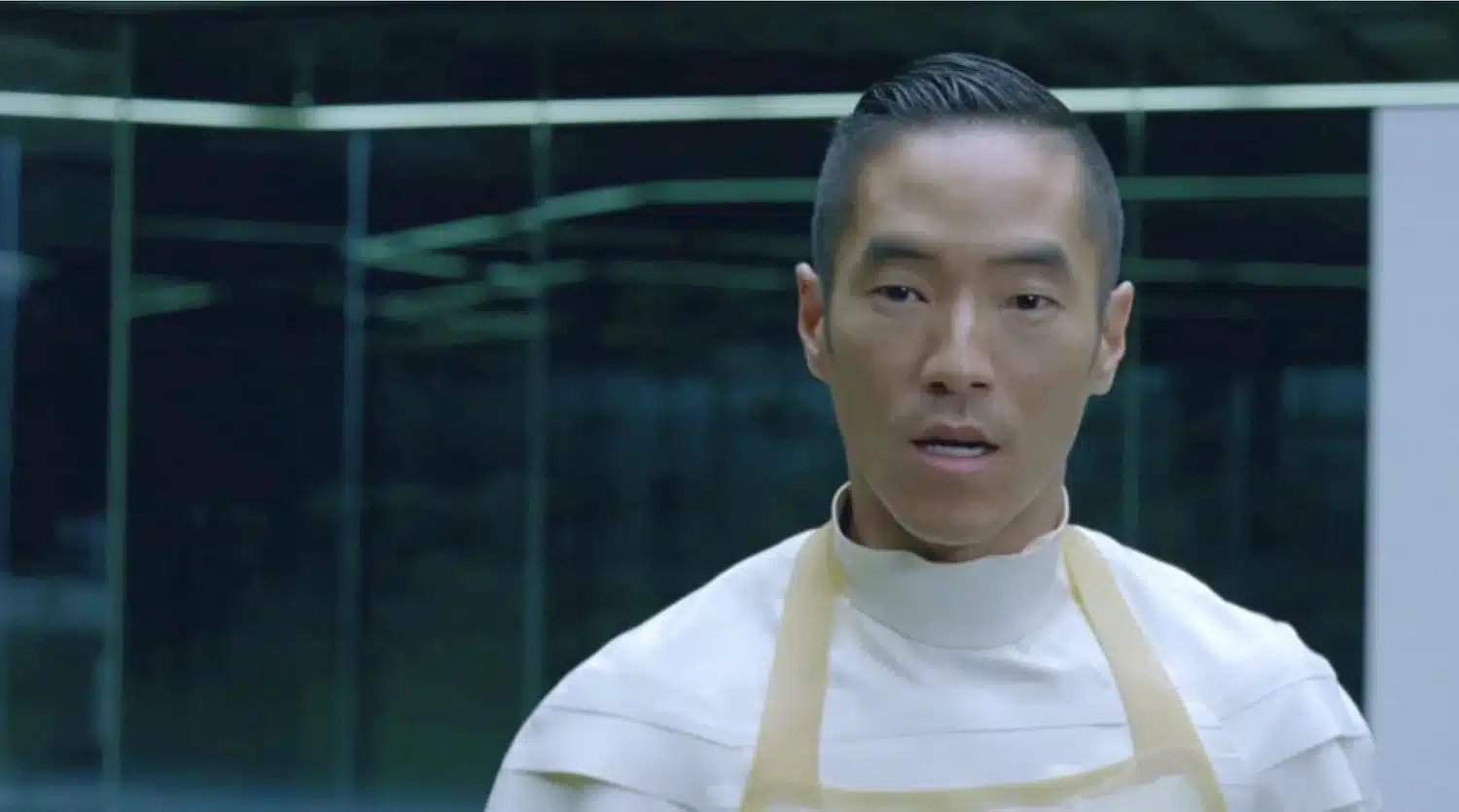
The HBO machine is a demanding place, and few shows are as globally watched and fiercely debated as Westworld. Behind the scenes, the actor Leonardo Nam plays Felix Lutz, the park technician whose quiet compassion for the android Hosts launched a thousand fan theories and earned him a Screen Actors Guild nomination in 2016.
But Nam’s own story is far more intricate than any line of code. Born in Buenos Aires to South Korean immigrant parents, raised in Sydney, and now working in Hollywood, Nam embodies a truly global identity. We sat down with the actor to discuss the pioneering spirit of his family, the financial gamble he took on his career, and why seeing an Asian face lead a major movie franchise matters now more than ever.
The View from Three Continents
Nam’s childhood was one defined by constant movement, a unique blend of cultures that gave him an outsider’s perspective early on. His parents, Korean immigrants, settled first in Argentina where he was born, then moved the family to Australia when he was six. This set him apart even within the immigrant community.
“I was born in Argentina and then grew up in Australia,” he explains. “My parents, ethnically, I guess you could say, did come from Korea.”
This created a rare complication in defining where he belonged. He described the pressure of belonging to several communities—and none of them fully. “I grew up as a double immigrant… we weren’t born or grew up, we weren’t born in Australia, we were born in Argentina. So there was this sense of even like a double otherness, like an outlier feel.”
For Nam, this search for selfhood involved a rebellious stage. “I remember at times where I had bleached my hair and had shaved my head and had these little red horns that I dyed,” he recalls. “I was going through a very rebellious stage where i didn’t know where i belonged.” But he now encourages others facing similar dilemmas to stop looking for a single answer. “I hope that people really realize that it isn’t just a one-way journey into finding your Asianness or your place, it’s a multi-layered and a greyscale and to embrace that.”
Abandoning the Blueprint for a Belief
Like many children of immigrants, Nam initially pursued a stable career, studying architecture at the University of New South Wales.1 But the need for creative expression became too powerful to ignore. The pull of the stage was immediate, intense, and forced him to make a dramatic choice.
“I remember having such a clear feeling that I needed to go right,” he says, recalling the university split between the architecture and drama buildings. “I was like, Leo, go right. And there was that voice inside of you that it starts off in whispers and really only gets louder and you need to listen to that.”
When he left a secure future to move to New York at 19 to pursue acting, the reaction from his community was harsh. But his commitment was driven by a powerful desire to avoid regret. “I remember very vividly thinking, I don’t ever want to live in the what if… I made the decision young and very… There’s such a very clear moment for me to say i no longer want to live in the what if. i live in the what i do.”
This choice flew in the face of all convention. “I did it in the face of my parents and other people i knew that were like, what do you mean you’re going to be an actor? I don’t see any Asian faces on screen, what are you talking about?”
The Hustle and the Hollywood Breakthrough
The decision to chase acting in New York was expensive and brutal. Nam had little money, and his training options were limited to what he could afford. He recalls the stark financial reality of his early days.
“You know, there was a period of time that when i first moved to New York, i didn’t have a place to stay. So i was, i slept in the park. i was homeless, i guess you could say, but not hopeless.”
His big break came with the 2004 comedy The Perfect Score. Nam had to work the system just to get his foot in the door. He meticulously followed casting breakdowns, eventually seeing a role open up from specific ethnicity requirements to “open ethnicity.”
“I saw that it was open ethnicity,” Nam explains. “And i thought, well, hot damn, I fit into that. … Lo and behold, they opened it, and I got my audition for the public score.”
Following that, he took on roles in major films like The Sisterhood of the Traveling Pants and The Fast and the Furious: Tokyo Drift. Even then, he sought to add complexity. For the villain Morimoto in Tokyo Drift, he avoided the simple ‘baddie’ stereotype. “I made the decision to go into a direction with this character, to kind of see him as a post-modernist Japanese skinhead and the idea of bleaching his hair was representation of that of being other of otherness and being xenophobic to that… for me, that’s the really interesting part.”
The Felix Effect and Global Themes
Now, the actor’s visibility has exploded thanks to the prestige of Westworld. The shift in how he is viewed by the industry and the public has been palpable.
“I think that now when people see me and see the work that i have done, they take me differently, they take me from a different point of view, because to see how huge and how amazing this project is, and to know that i have been a part of that, i think has really changed my career,” he says.
The show’s success, he believes, lies in its ability to combine massive entertainment with important global conversations. “What this does is that it takes you on this massive journey of entertainment, of mystery, of this thriller, but then along the way it brings forward these themes that… it brings it up and then it moves on to entertainment, entertainment… Everything from AI and where we are in relationship to that now and in the future. And to the racial stereotypes that have been played out on screens previously.”
He sees his character, Felix, as central to these themes. “I think the character Felix is a story of a of freedom and of awakening. I see his journey as a very, very reflective of humanity. It really is a love journey that you see with him of life.”
The Asian-Led Mainstream
Nam’s career is dedicated to ensuring that the next generation sees a more complete reflection of humanity on screen. He remembers the difficulty of having to choose roles while constantly checking for racial stereotyping. This is a burden that few white actors face, he notes. This mission drives his work, including his ambassadorship with the HBO Asian Pacific American Visionaries Short Film competition.
He recalled receiving invaluable advice from fellow actor Sandra Oh about navigating limiting roles. “I remember Sandra saying to me that she had gone up for a role… she said to me, you know, Leo, i made the decision that… you either go in for it… or you go in and you give as many shades of depth that you can, as many different layers that you can offer. And then that’s where you stand.”
His excitement is building over the coming wave of Asian-led cinema. He is particularly optimistic about the reception of films like Crazy Rich Asians. “I think that it’s already a win,” he says. “I’m so grateful, never been more grateful to be Asian and to be part of this world where a studio is really backing a film like this, but also put it in this tried and true formula.”
His sights remain fixed on the highest goals, driven by his pioneering spirit. “I next envision myself as the lead of a major movie franchise. i haven’t seen one that looks like me yet, so it’s time to say yes to that.”