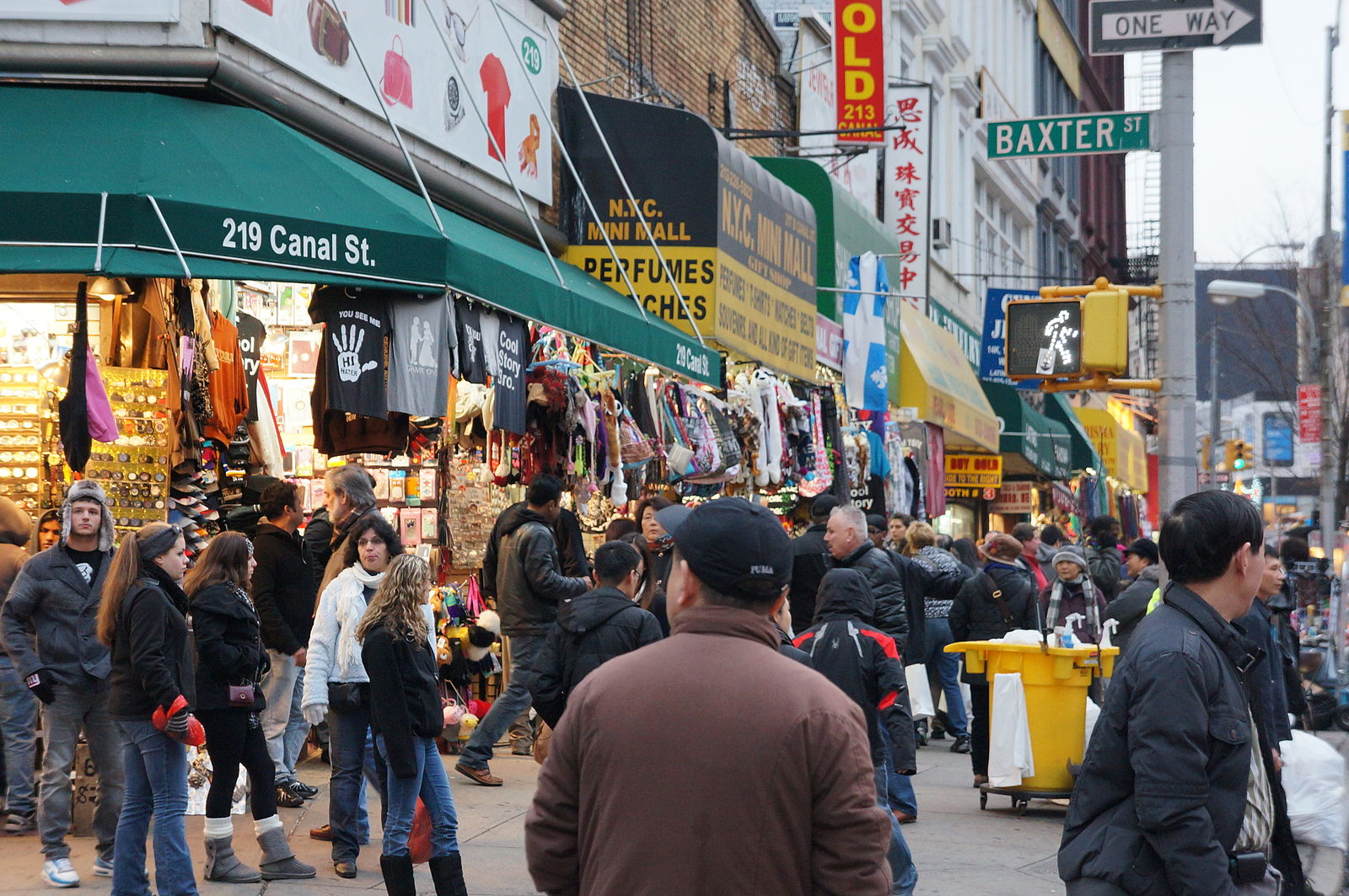
The New York Times has been slammed for racism after it published an article criticising Canal Street.
As reported by The Huffington Post, an article by The New York Times has caused quite a stir after it criticised Manhattan’s Canal Street, which runs through Chinatown.
Originally headlined ‘Canal Street Cleans Up Nice’, the Times’ article that is now titled ‘The Gentrification of Canal Street’ praised how Canal Street has developed and gentrified. The article has been criticised for praising gentrification and ignoring the displacement of Chinese people from the area.
“Think Canal Street and the following sights and sounds likely spring to mind: shrink-wrapped counterfeit purses displayed on a blanket (ready to be rolled and stowed in a flash),” reads the first paragraph of the article, written by Hayley Phelan.
The Huffington Post highlights how design firms and jewellery labels that entered the area resulted in the displacement of Chinese people.
In the article, Phelan quotes Beth Bugdaycay, a founder of fine jewellery label Foundrae that opened in Canal Street as saying, “I think people were afraid of Canal Street for so long, and now they’re recognizing there are just so many advantages to the area.”
Herb Tam, curator and director of exhibitions at the Museum of Chinese in America in Manhattan said he was rather perplexed by the quote. “I’m not sure what was meant by being scared of Canal Street in the article, but one could read it in a historical lens,” he said. “Chinatown was once a place of vice and gambling and opium dens.”
“But to call Canal Street and Chinatown scary, that is very much based on an Orientalist perspective.”
Tam called for the editors at The New York Times to research the historical context of their pieces. “Editors need to do a better job of providing historical context,” Tam said. “If they’re going to write about real estate and not talk about the affordable housing issues, it seems really out of touch for the journalistic chops that they claim to have.”
“I don’t care what section of the newspaper it’s in. Whatever section, they need to do a better job.”
Twitter users also expressed outrage at the article. “The quotes in this story illustrate how gentrifiers often view communities of color,” one user wrote.
“The basic gist of this article is that Canal Street was scary and awful when it was predominantly Chinese, but now that businesses catering to rich white people are moving in, everything is okay,” wrote another. “Almost every quote in the article is coded racist bullshit.”
“when the @nytimes wants to say “chink” but in a fancy way,” wrote one user.
when the @nytimes wants to say “chink” but in a fancy way pic.twitter.com/Eyu3JqJKdO
— E. Alex Jung (@e_alexjung) May 16, 2018
The basic gist of this article is that Canal Street was scary and awful when it was predominantly Chinese, but now that businesses catering to rich white people are moving in, everything is okay. Almost every quote in the article is coded racist bullshit https://t.co/EhMemYfpQK
— Gary He (@garyhe) May 16, 2018
The quotes in this story illustrate how gentrifiers often view communities of color: “People were afraid of Canal Street for so long, and now they’re recognizing there are just so many advantages…we’re just beginning to see the neighborhood come alive.” https://t.co/SGydVEo6pR https://t.co/OZsed45ppB
— Rachel Swarns (@rachelswarns) May 17, 2018
In response, Times’ Styles editor Choire Sicha told The Huffington Post,“we can do better! This should have been better. And I’m glad people spoke up.”
Jordan Cohen, New York Times communications director, told said the publication will learn from the incident.
“The Times takes the reactions and critiques seriously and use them to encourage conversations about better ways to report and present stories,” Cohen wrote. “We urge desks, especially for stories that might be culturally sensitive, to seek out a wide range of colleagues’ perspectives before publication.”